New third-party wireless infrastructure company buys 5 Bars’ stadium business

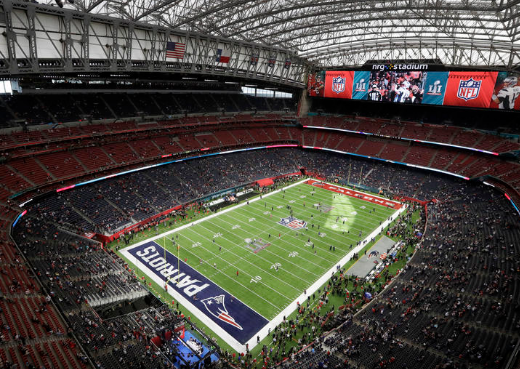
NRG Stadium during Super Bowl LI. Credit: AP / Morry Gash/ Patriots.com

Neutral Connect Networks (NCN), a newly formed third-party operator of wireless systems for sports and entertainment venues, has purchased the stadium business part of 5 Bars as part of its inception, a transaction publicly announced last week.

As part of its rollup NCN also acquired DAS Communications, a third-party infrastructure provider with deployments in Boston and New York. The new company also received a $30 million funding round from M/C Partners, a Boston-based private equity firm.

Though 5 Bars recently basked in the successful glow of its biggest stadium project — building the Wi-Fi network at Houston’s NRG Stadium, home of the recent Super Bowl LI — the firm had faced challenges winning deals due to its smaller size, according to Paul McGinn, the CEO of NCN. With more personnel resources along with the $30 million war chest, McGinn said the 5 Bars sports business has a better chance to compete.

“We’re going to put tens of millions into 5 Bars,” said McGinn in a phone interview. “We’re looking forward to growing that business quickly.”

In addition to NRG Stadium, 5 Bars had built third-party networks at the Los Angeles Angels of Anaheim’s Angels Stadium, and is constructing DAS and Wi-Fi networks at the new football stadium at Colorado State University, which is scheduled to be completed in time for this fall’s season.

McGinn, who was most recently at Vertical Bridge as director of business development, leads a team that includes Brian Porter, a former vice president of in-building operations at telecom gear provider Ericsson. Porter will be NCN’s senior vice president of sales and operations. Bruce Banigan, II, vice president of business development for 5 Bars’ sports operations, will continue in that role at NCN.

John Clarey, 5 Bars’ former CEO, who will continue as an investor in NCN, said in a prepared statement that “the financial commitment from NCN and M/C Partners provides 5 Bars the needed resources to continue to build and operate the large projects it has in its pipeline.” The terms of the all-cash deal for buying 5 Bars’ sports business were not revealed. UPDATE: 5 Bars said its other main business line, a nascent operation looking to provide third-party wireless infrastructure for cities and communities, will continue to operate under the name XG Communities.

Though some recent comments by telco executives seem to be signaling a change in their companies’ willingness to participate in third-party DAS and Wi-Fi deployments may be waning, NCN’s McGinn said his new company will approach third-party deals with a different mindset, mainly one that looks longer into the future.

“We’re not going to be looking to recoup 100 percent of the cost of the system in one to three years,” said McGinn. Instead, McGinn said the new NCN/5 Bars approach will be one of looking for smaller cash contributions over a longer time frame.
Westfield brings high-density Wi-Fi to LA’s Century City mall

We’re gonna shop in Century City… Credit: Paul Kapustka, MSR (click on any photo for a larger image)

It might not look like a stadium, but if you take a close examination of the technology being put into the renovation of the Westfield Century City mall, you’ll see a familiar use of wireless and networking technology aimed at improving the visitor experience while also benefiting the mall’s bottom line.

Some of that has to do with the fact that the mall’s new IT team includes veterans of the sports-arena networking market; the other has to do with the fact that shopping malls, like stadiums, struggle with some of the same issues around bringing connectivity to crowded public areas and trying to connect digitally with the people there, in this case shoppers and visitors rather than ticket holders.

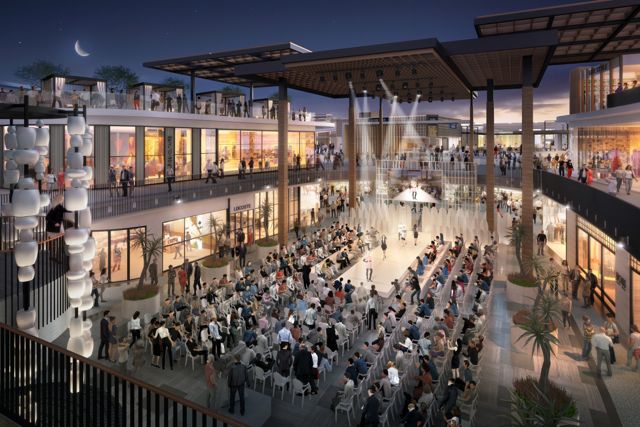
So as part of a $1 billion redevelopment of the historic mall space, bringing high density wireless connectivity to the venue via a Wi-Fi network was a necessity for mall owner Westfield, as it seeks to enable the digitally connected future of the next-generation of bricks and mortar shopping malls. Now nearing the completion of its makeover, which is being rolled out in the fall of 2017, the “new” Westfield Century City will eventually be host to more than 1.3 million square feet of commercial space, with more than 200 shops and restaurants, and other amenities including a mid-mall concert and entertainment space with professional staging and lighting infrastructure.

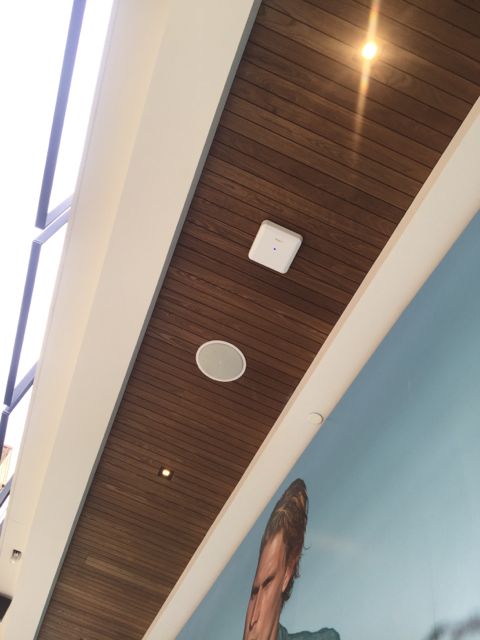
A Wi-Fi AP nestles in with other components in a mall walkway. Credit: Paul Kapustka, MSR

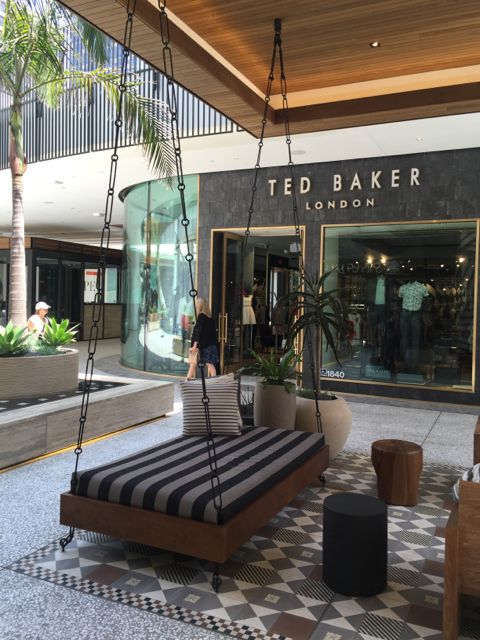
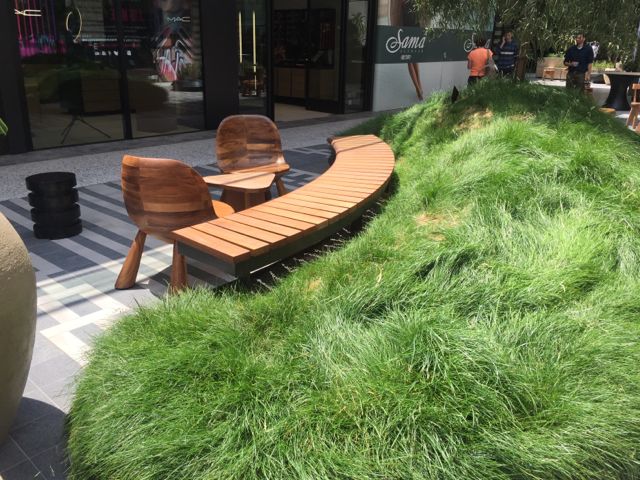
The historic shopping spot on Santa Monica Boulevard is also now getting a dose of newly designed outdoor gathering spaces, from hanging couch-beds to small grassy hills where visitors can just hang out and connect as part of their Century City experience. Having reliable, high-performing Wi-Fi to cover those spaces was a necessary shopping-list item, according to Denise Taylor, chief information officer for Westfield and point person for the new network and all its connected features at not just Westfield Century City but for other similar ongoing projects at some of the company’s 35 mall properties in the U.S. and the U.K.

Technology enables the new mall experience

Editor’s note: This profile is an excerpt from our latest STADIUM TECH REPORT, our Summer 2017 issue that has in-depth profiles of network deployments at the Atlanta Braves’ new SunTrust Park, the Colorado Rockies’ Coors Field, and a profile of a new Wi-Fi network at Red Bull Arena. DOWNLOAD YOUR FREE COPY of the report today!

In an age when shopping malls may seem less relevant due to online shopping, many of the larger malls worldwide are rapidly shifting their business models to become more of a destination location for entertainment events, eating or “showroom” shopping, instead of just a place to go and buy things. And in a world where staying connected is as accepted and expected as breathing, a mall without wireless connectivity sounds like a place nobody would want to visit.

“I knew I had to integrate a physical and digital environment,” said Taylor, who left stadium-ownership concern AEG (where she oversaw tasks like bringing wireless networks to stadiums like LA’s Staples Center) to head up Westfield’s digital departments a couple years ago. “A big part of the mall transition was [installing] enabling technology.”

One of the new ‘hanging couch’ gathering areas. Credit: Paul Kapustka, MSR

Since its opening in 1964, Century City has been known for being part of the wave of “outdoor” shopping malls, becoming part of the cultural landscape of LA and the Southern California lifestyle. (It was even the subject of a song by rockers Tom Petty and the Heartbreakers.) But like many sports venues that have been around awhile, these days Century City was lacking in a modern digital infrastructure to connect with its digital-device carrying customers.

According to Taylor, before the makeover project started the mall had no communication equipment rooms, no network backbone and maybe a couple hundred digital “endpoints,” including security cameras and intercoms. When the renovation is complete, Westfield Century City will have more than 2,000 end devices, including approximately 515 Wi-Fi APs, numerous digital displays, directories and LED sign boards.

One of the centerpieces of the renovation is a dedicated event space called The Terrace, which will be booked in part by Westfield’s own event production team.

The event space is just part of the new business plan for the mall and its visitors, a model for the future that includes on-location digital advertising not just for mall-based retailers but also for other brands who want to connect with the people at the mall, either through digital displays or app-based communications. While some of the plans are still concepts, without a baseline of a high-performing wireless network, none of the future ideas would be possible.

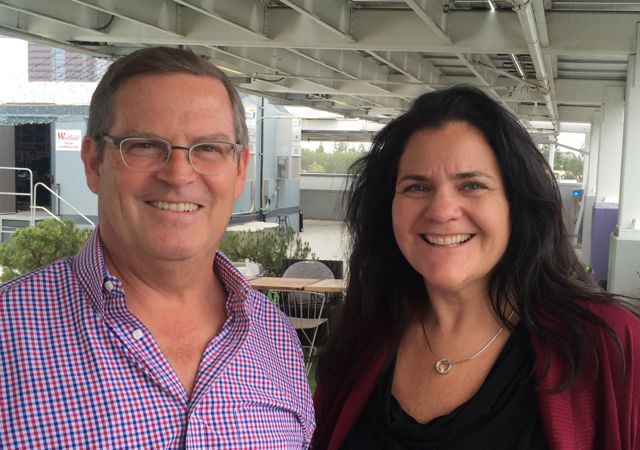
Ward Ross (L) and Denise Taylor

“If there is a fashion show at the mall event space, it’s important for visitors to be able to share what’s happening right at that moment,” said Taylor. “That called for a big shift as to what a good Wi-Fi experience was.”

Building for stadium-type foot traffic every day

If there was one thing that “floored” Taylor coming into the job, it was the steady, unending flow of people into the venue — a pace and total much different from stadiums, where people arrive sporadically for games and concerts.

“What really surprised me was the footfall,” said Taylor during an on-site visit by Mobile Sports Report in May, after the mall’s Phase 1 opening in April.

With its cellular system still tied up in the terms of a previous contract, Westfield Century City turned to Wi-Fi to bring a higher level of wireless connectivity to its public spaces, teaming up with Cisco and CDW for Wi-Fi gear and implementation efforts. Taylor also brought in veteran stadium technology expert Ward Ross as a consultant to help lead a somewhat different deployment at a venue that was never really closed for business, even as major construction efforts took place.

The need to ensure the deployment fit into the mall’s visible aesthetics, Taylor said, was particularly challenging, in an environment that “was never [originally] designed for central cabling or a communication infrastructure.” There was also the need to run construction efforts through leased retail spaces, a process that took “lots of effort and lots of conversations,” according to Taylor.

“The finished product is an amazing job of architecture,” said Taylor, who showed off the results of the work in a walk-around tour of the completed areas. “We had a big learning lesson on how to hide APs in a modern outdoor center.”

Though the initial public-facing service was gated to limit speeds, the plan is to eventually increase the bandwidth available to visitors as more of the mall’s construction and renovation is finished. With access to the “hidden” SSID that was running without restrictions, our tests over multiple places in the Phase 1 area saw Wi-Fi speeds in the 50 to 60 Mbps range for both download and upload.

Touchscreen kiosks, LED boards and better parking services

While video boards, Wi-Fi and a stadium app may be the primary technologies for stadiums these days, for shopping malls Taylor said there is a much different first priority: Where to park your car.

“I thought parking was important at arenas, but at malls the number one issue is parking locations,” Taylor said. At the time of our visit not all of Century City’s parking initiatives were live, but future shoppers there are in for pleasant surprises when it comes to the mall’s use of technology to eliminate as many parking pain points as possible. Ross and Taylor showed the under-development VIP reserved parking area, where customers can reserve and pay for a larger, centrally located spot that is held for them in a special garage area. When it’s working, customers will be able to pull into the spot by finding their name on an overhead screen — and then just leave when they are ready, without having to worry about parking tickets or paying attendants.

A ‘grassy knoll’ relaxing area. Credit: Paul Kapustka, MSR

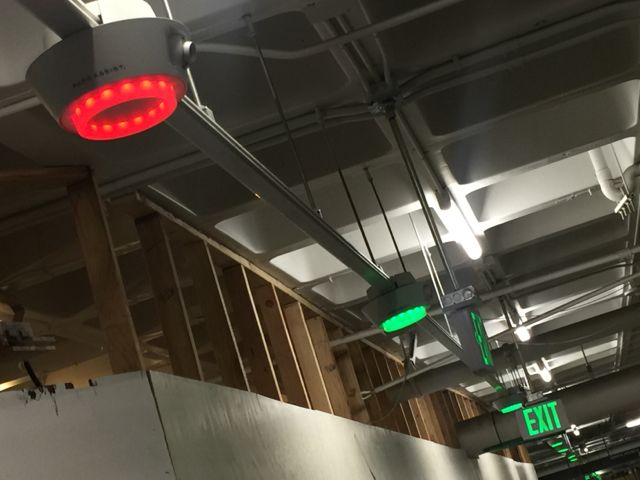
In other areas of the mall’s planned 5,000 parking spots, development is underway to bring a system of red and green lights that hover above each spot, letting drivers know if a space is open or not from far down the row.

“Both here and at Westfield Valley Fair [a mall in Silicon Valley] we’ve taken down lots and rebuilt and reconfigured them,” Taylor said. Future visitors can expect more wayfinding and tailored validation schemes for parking as Taylor seeks to use technology to bring “a VIP concept” to perhaps the most painful part of a visitor’s experience.

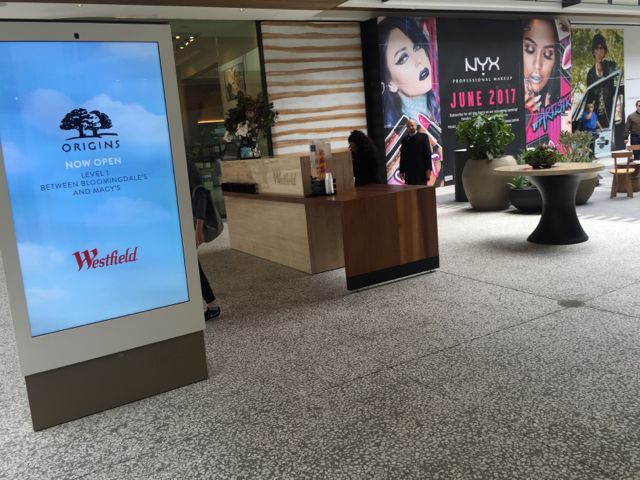
Once inside, more technology is visible in the form of touchscreen kiosks for mall directions, and big stadium-like LED screens for information and advertising. As the mall refurbishing is completed and the Wi-Fi network services more customers, Taylor is also looking ahead to when she can use network analytics to offer a more customized list of services to visitors via a forthcoming Century City app.

“We want to build a view of our customers, to let them know what’s relevant to them — if they want to see a show, or hear about a sale at Bloomingdale’s,” Taylor said.

The Wi-Fi network and its connected technologies also will let Westfield and Century City offer more information and opportunities to the retailers leasing space there, as well as other brands and companies who might want to advertise in one form or another to reach the demographic that physically shows up at the mall.

“Our primary customer used to be the retailers,” said Taylor of the role of mall-based IT. “Now we reach consumers, retailers here as well as other brands who are looking to connect. It’s a huge shift in thinking.”

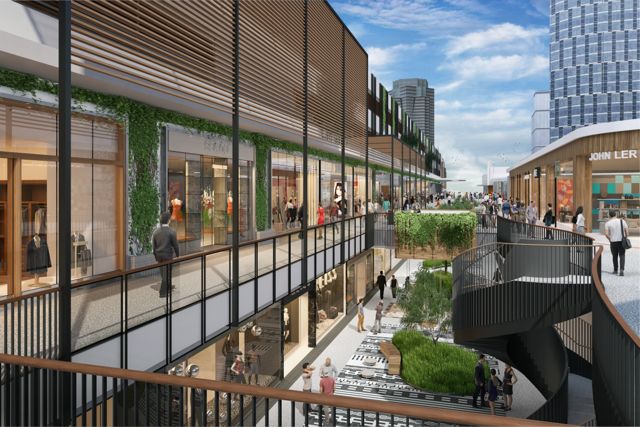
Artist rendering of the event space being built at Century City.

Another artist rendering of what the completed renovation will look like.

Red and green lights will alert drivers to taken or open parking spots. Credit: Paul Kapustka, MSR

A digital-display kiosk next to a concierge stand at the mall. Credit: Paul Kapustka, MSR

TapIn2, Float Hybrid and Bud Light team up on food/drink delivery for minor-league ballpark

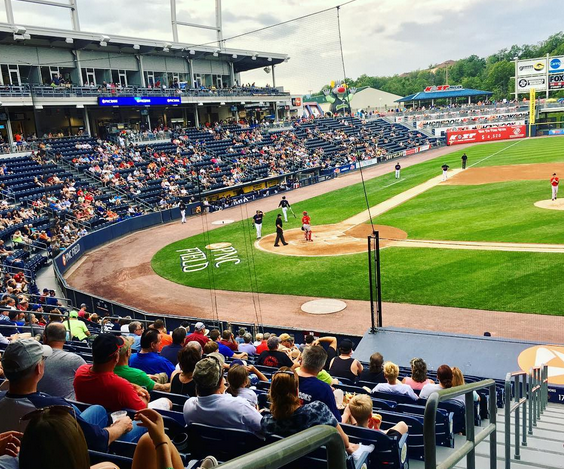
PNC Field, home of the Scranton/Wilkes-Barre RailRiders. Credit: RailRiders Instagram

The Scranton/Wilkes-Barre RailRiders have introduced a mobile-device food and beverage order and delivery system for fans at PNC Field, the 10,000-seat home venue for the 2016 Triple-A national champions.

Behind the new system is a partnership of TapIn2, a delivery-app startup that provides a similar service for the NBA’s Cleveland Cavaliers and the Cincinnati Bengals; Float Hybrid, an “interactive experience” design agency; and Bud Light, a title sponsor for event delivery services like the new food/beverage service for the RailRiders. The RailRiders are a New York Yankees affiliate.

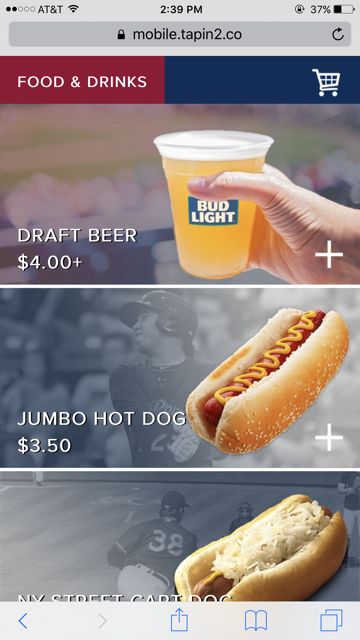
Screenshot of PNC Field ordering app

According to a press release about the deployment, PNC Field integrated TapIn2’s SmartVenue delivery software system with the existing point of sale system to provide the support for mobile-device ordering and delivery. Available to fans in reserved-seat sections of the park only (not in general admission bleachers or lawn spaces), the delivery system supports a wide range of options for both food and drink ordering and delivery.

In an email reply, Keith Bendes, vice president of marketing and strategic partnerships for the San Francisco-based Float Hybrid, said the system saw an average order total of $18.85 on the opening day of the service, and about $16.08 per order ongoing. Average delivery times so far are about 6-7 minutes per order, Bendes said.

Though PNC Field doesn’t have in-stadium Wi-Fi or an enhanced cellular DAS system, Bendes said the macro networks in the stadium’s town of Moosic, Pa., appear to be strong enough to keep fans able to connect on their mobile devices.

It will be interesting to follow the deployment of delivery services in smaller venues like minor league parks, which may be an easier operation than the system that supports in-seat delivery to venues like the San Francisco 49ers’ Levi’s Stadium.

AT&T to provide backbone bandwidth for Mercedes-Benz Stadium Wi-Fi

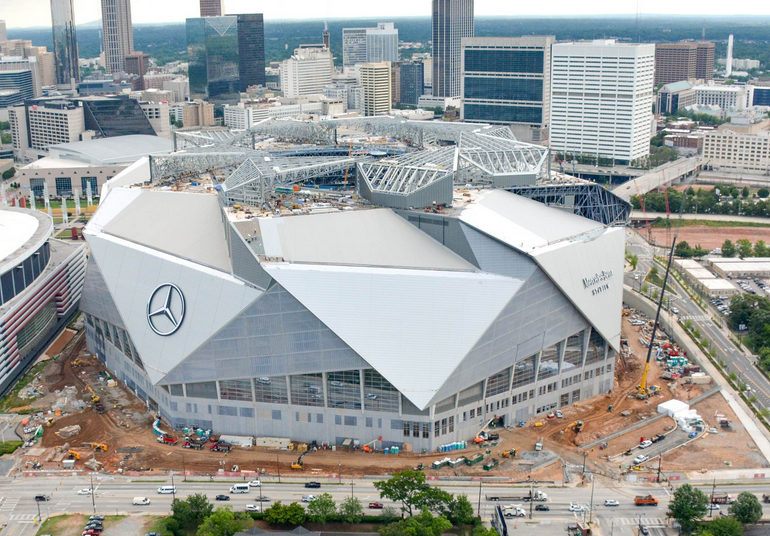
In a somewhat surprising announcement, AT&T said it will provide backbone bandwidth for the Wi-Fi network at the new Mercedes-Benz Stadium in Atlanta, as part of a partnership deal that makes the carrier the “Official Communications Provider” for the Atlanta Falcons’ new home.

Announced today, the deal calls for AT&T to provide twin redundant 40 Gbps pipes to power the 1,800 Wi-Fi APs that are inside Mercedes-Benz Stadium. As reported earlier by MSR, the Mercedes-Benz Wi-Fi network will primarily use under-seat AP deployments in the seating bowl.

AT&T said it will also provide “monitoring and maintenance” for the stadium’s Wi-Fi network, and will also bring its DirecTV service to the venue’s IPTV system, making that content available to the more than 2,000 digital displays in the stadium. Mercedes-Benz Stadium is scheduled to formally open later this summer, for one of the Falcons’ preseason games.

What makes this announcement interesting to the stadium networking industry is the fact that there is no mention of any participation by AT&T on the venue’s DAS network, which will be running on Corning equipment. For most of the recent past, AT&T has been pulling away from stadium Wi-Fi deployments and concentrating on DAS funding in large public venues. Its main competitor Verizon Wireless has been much more active recently on the stadium Wi-Fi front, helping fund Wi-Fi deployments in a number of NFL stadiums, including those in Green Bay, Denver, Seattle, Houston and others. AT&T does continue to participate in network deployments at AT&T Park in San Francisco and AT&T Stadium in Arlington, Texas, among others.

The press release out today does not say whether or not AT&T customers will have their own SSID or network space reserved, a feature Verizon usually secures for its customers when it helps fund a stadium’s Wi-Fi network. The release did say that as part of the deal AT&T will also sponsor the “AT&T Perch,” which is described as “a permanent interactive gathering spot” located on the concourse above the stadium’s west end zone. According to the release the Perch will have multiple screens where fans can watch NFL content including DirecTV’s Sunday Ticket programming and the NFL Network’s RedZone channel.

Verizon, JMA bring high-speed DAS to Sonoma Raceway

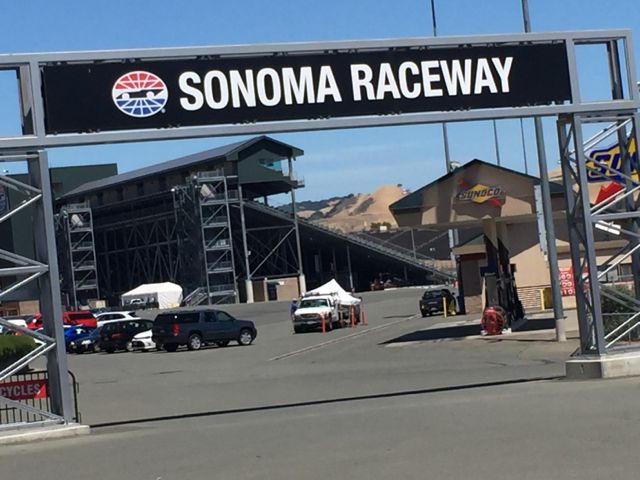
Entrance to the track at Sonoma Raceway. Credit all photos: Paul Kapustka, MSR (click on any photo for a larger image)

For the second year in a row, NASCAR fans who are Verizon Wireless customers should have a speedy cellular experience at this weekend’s Toyota/Save Mart 350 at Sonoma Raceway, thanks to a neutral-host DAS Verizon built there two winters ago.

According to Verizon, at last year’s races the carrier saw 2.7 terabytes of data used by its customers over the weekend of race activity. The 2017 Monster Energy NASCAR Cup Series event includes practice and qualifying heats Friday and Saturday on the 12-turn, 2.52-mile road track built into the hills just south of Northern California’s famed Wine Country, before Sunday’s main event.

With one main grandstand and numerous other seating areas spread out around the course’s twists, turns, climbs and dips, bringing enhanced cellular connectivity to the venue had as many curves to conquer as a driver during a 350-mile race. Built during the winter of 2015-16, Verizon said the deployment was a “considerable construction project,” using more than 25,000 feet of underground boring runs and conduit to reach different tower locations on the raceway property.

On a recent tour of the raceway, Jere Starks, the facility’s vice president for facilities and operations, showed why the boring was necessary, since trenching of fiber would have disrupted the integrity of the hills and surfaces that support not just the track but the seating areas, many of which back into hillsides.

When the NASCAR series was sponsored by Sprint, Starks said cellular connectivity for the NASCAR event was provided mainly by mobile COWs, or cell trucks on wheels. Like any other large venue, the increased digital activity of fans on mobile devices (“they do everything on their phones except their income taxes,” joked Starks) meant that a higher-capacity solution was in order.

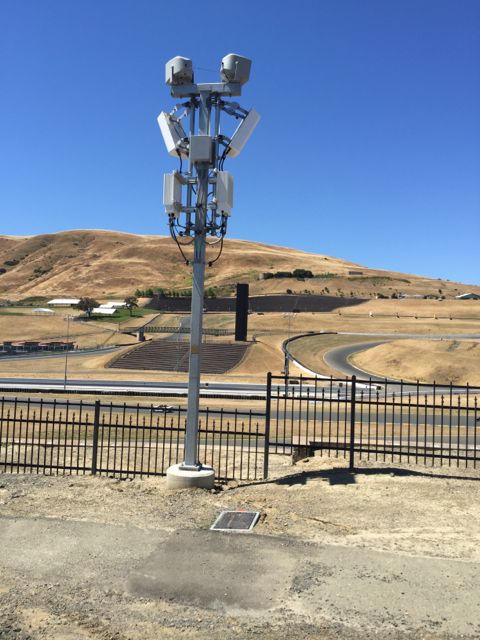
A new DAS tower at the track

According to Verizon, its customers used another 1.7 TB of data during last fall’s IndyCar race, the other “big” event on the Sonoma Raceway calendar. Though it is designed as a neutral network, according to Verizon no other wireless carrier is yet using the DAS.

Getting power to the towers

Editor’s note: This profile is an excerpt from our latest STADIUM TECH REPORT, our Summer 2017 issue that has in-depth profiles of network deployments at the Atlanta Braves’ new SunTrust Park, the Colorado Rockies’ Coors Field, and even a profile of a new Wi-Fi network for Westfield Century City Mall! DOWNLOAD YOUR FREE COPY of the report today!

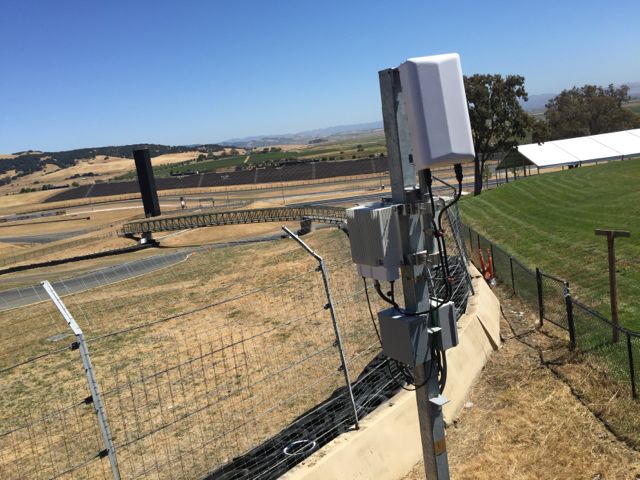
For its DAS hardware, Verizon turned to JMA Wireless, which said it used its multi-band, multi-carrier TEKO DAS gear at the raceway. According to JMA, there are 76 low-power, five-band remote units and four high-power, five-band remote units, as well as 88 ODAS (outdoor DAS) antennas deployed at various strategic locations around the track as well as between seating and parking-lot areas. The deployments mesh in well with existing infrastructure, even sometimes sharing poles with speakers to blend in with the racetrack elements.

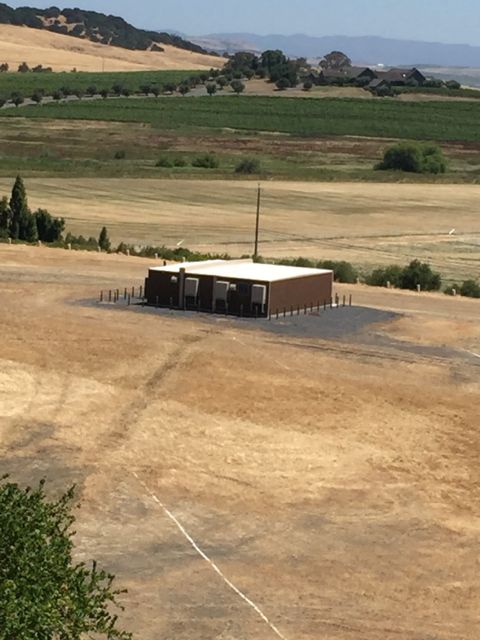
The headend building (can you see the fiber lines?)

JMA said the deployment also made use of its FUZE wireless power technology, which can bring electricity to DAS tower gear without having to have the local utility bringing AC power to each location. According to JMA, using digital electricity also allowed for the use of composite cable (fiber and copper together in one sheath), making installation faster and easier by utilizing a single “pull” cable.

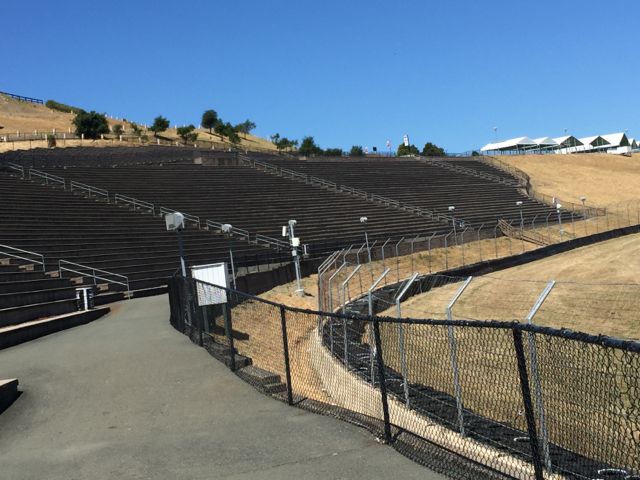
Touring the facility with Starks, Mobile Sports Report saw towers located at the front of main grandstand areas pointing back, and at the back of some seating areas with antennas pointing both toward the seats as well as down the hills to the main parking areas located to the east of the racing area. Farther east to almost the edge of the property is the network’s headend building, a facility whose build-in story is probably worth a novel-length essay all by itself.

According to both Starks and Verizon, the prefab headend building was shipped to Sonoma from Louisiana, a process that took months both due to the logistics of simply shipping such a large, heavy building (according to Starks the trailer bringing in the main part of the facility had 11 axles) as well as negotiating its passage with the highway patrols and departments of transportation for states along the way. According to Starks and Verizon, the headend deployment process included having to build a new road across the dirt parking lot to support the buildings’ transport, as well as a strengthened concrete pad to support the facility.

A trackside tower that points back to seating

(Starks told a longer, great story about how some local ingenuity helped speed up final deployment after a legal delay kept the main building tied up at a state border for a few weeks. After the delay meant certain crane placements wouldn’t work, someone suggested the crew spread sand on the concrete pad and bulldozer the bigger building into place, a trick that Starks said worked well — “it just slid right in there.”)

Ready for more connectivity

With another 100,000-plus fans expected during the NASCAR weekend, as well as at the venue’s popular drag-racing events and the fall IndyCar stop, Starks is happy that fans will be able to use their mobile devices as much as they want, now for Verizon Wireless customers and for other carriers’ subscribers in the future.

“When you have 50,000 people all doing video [on their phones] at the same time, we knew we had to overhaul the system,” Starks said. “Verizon did a great job, they were very sensitive to the facility and it was a great experience working with them.”

A look at one grandstand area, with several DAS antennas in front

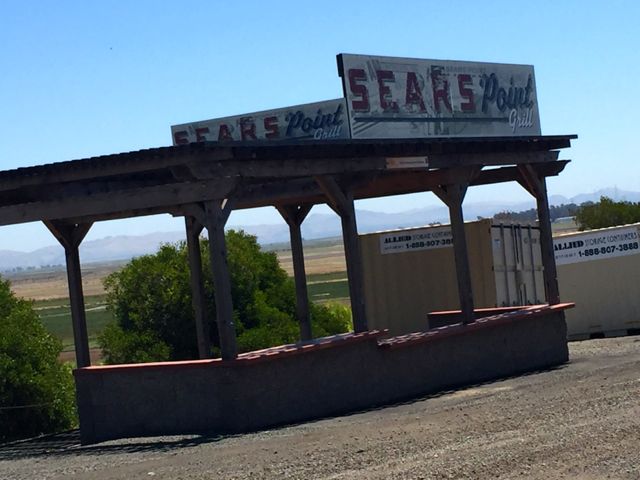
A concession stand for old-school fans who remember the track as simply “Sears Point”

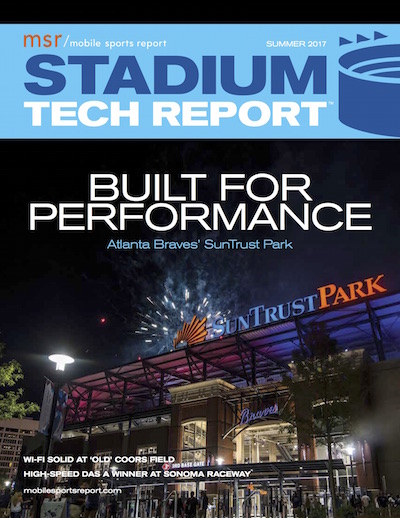
New Report: State of the art Wi-Fi network at Braves’ new SunTrust Park

MOBILE SPORTS REPORT is pleased to announce the Summer 2017 issue of our STADIUM TECH REPORT series, the ONLY in-depth publication created specifically for the stadium technology professional and the stadium technology marketplace.

In addition to our historical in-depth profiles of successful stadium technology deployments, our second issue for 2017 has additional news and analysis, including a look at how the business model for DAS deployments is changing. Download your FREE copy today!

Inside the report our editorial coverage also includes:
— SunTrust Park first look: A review of sizzling network performance at the new home of the Atlanta Braves;
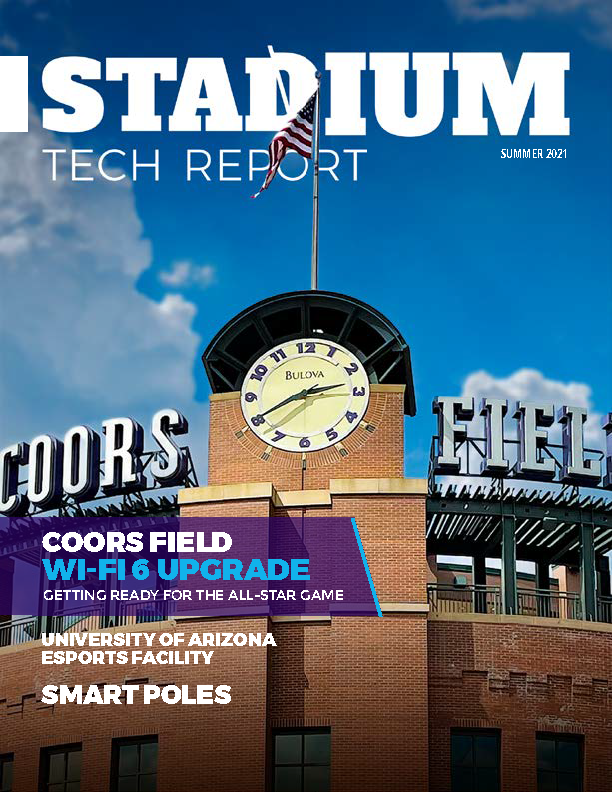
— Coors Field profile: A look at how the Wi-Fi network at “old” Coors Field is still serving fans with solid performance;
— Westfield Century City Mall profile: A close look at a new Wi-Fi network and other digital services emerging at an extensive renovation of this historic Los Angeles shopping center;
— Additional profiles of a new DAS deployment at Sonoma Raceway and new Wi-Fi for Red Bull Arena!

Download your free copy today!