Sporting Innovations’ lawsuit against former co-CEO is dismissed

Asim Pasha

Asim Pasha

The somewhat bizarre lawsuit brought last year by Kansas City-based Sporting Innovations against its former co-CEO Asim Pasha for allegedly conspiring to set up a competing firm using Sporting Innovations assets and intellectual property has been dismissed, with a stipulation that the firm cannot re-file similar charges at a later date.

According to a document dated Feb. 29 provided to us by Pasha’s lawyers from Lathrop & Gage LLP, Kansas City, Sporting Innovations’ claims against Asim and his son Zain Pasha (who also worked for Sporting Innovations) were dismissed with prejudice, meaning they cannot be filed again in the future. As part of the negotiation, Pasha also agreed to dismiss his counterclaims against Sporting Innovations, basically meaning that the legal entanglement between the two parties is over.

Robb Heineman

Robb Heineman

Neither Pasha nor Sporting Innovations (now called FanThreeSixty) or FanThreeSixty CEO Robb Heineman would comment on the lawsuit dismissal, but with this result you have to wonder why exactly the case was brought in its initial fashion with its initial claims, including Sporting Innovations’ claim of $75,000 in damages. Though Pasha seems to have perhaps lost any claim to his 20 percent ownership stake in the company — according to Pasha’s lawyers he no longer owns any part of Sporting Innovations — Pasha also announced that he is taking over as the chief technology officer for the new stadium being designed for the AS Roma club, the Stadio Della Roma, which is scheduled to open in 2017 or 2018. We are trying to schedule some time to speak with Pasha about the new stadium, which seems like a very interesting, advanced project, so stay tuned.

On the Sporting Innovations/FanThreeSixty side, the firm is still apparently continuing with part of its original lawsuit, against other defendants. According to the legal document:

The Stipulation of Dismissal, with prejudice, does not affect Plaintiff Sporting Innovations KC LLC’s claims against Vernalis Group, Inc., Nader Hanafy, Inventory Intel, LLC, and Ubi Technologies, LLC, which parties remain as Defendants.

We have emails in to FanThreeSixty for comment, and we also asked Heineman to comment on the case in an “ask me anything” session he recently held on Twitter, but have not gotten a reply to either query. As we noted previously, Sporting Innovations/FanThreeSixty hasn’t announced any new clients recently for their stadium app program, and several high-profile customers, including the Pac-12 and the Tampa Bay Lightning, are no longer using Sporting Innovations software.
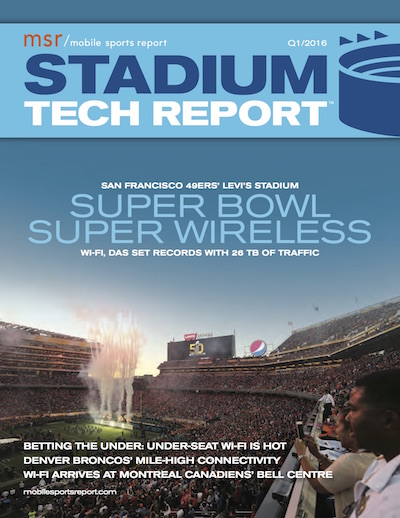
New Report: Super Bowl 50’s super wireless, under-seat Wi-Fi feature and more!

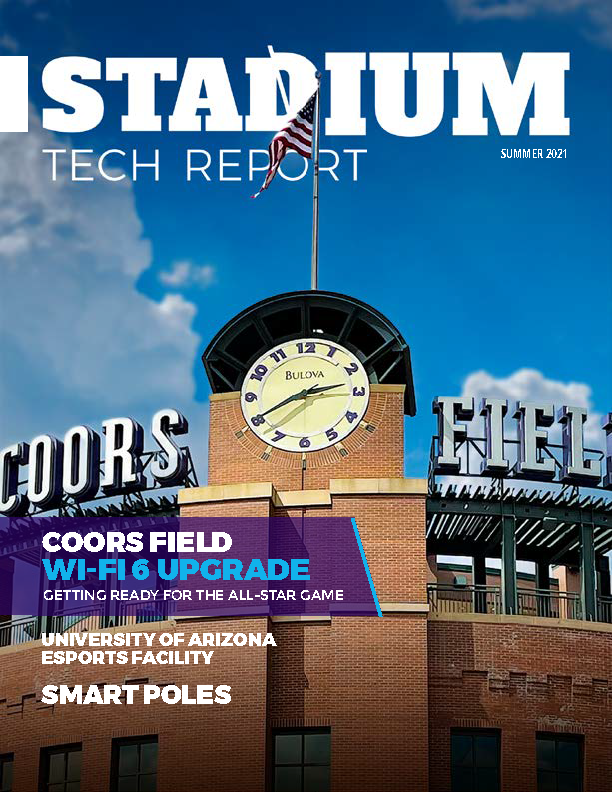
STR Q1 THUMBThe record-setting wireless network consumption at Super Bowl 50 is one of the lead topics in our latest STADIUM TECH REPORT, our long-form publication that takes an in-depth look at the most important news of the stadium technology world, alongside some great in-depth profiles of successful stadium technology deployments. Download your free copy today!

With fans consuming 26 terabytes of wireless data — 15.9 TB on the stadium’s distributed antenna system (DAS) and another 10.1 on the Wi-Fi network — the Super Bowl provided the ultimate test for the Levi’s Stadium wireless infrastructure, one that the venue passed with flying colors. One unique factor of the stadium’s wireless deployment, under-seat antennas for both the DAS and the Wi-Fi networks, is covered in-depth in our most recent issue, with a feature story about how under-seat deployments got started, and why they may become the default antenna placement for large public venues going forward.

Also in the issue: A profile of Wi-Fi and associated mobile device strategies at the University of Wisconsin, including geo-fencing for fan marketing at away games; a close-up look at the wireless infrastructure at the Denver Broncos’ Sports Authority Field at Mile High; a profile of the new Wi-Fi network at the Montreal Canadiens’ Bell Centre; and a look at some new social-media strategies deployed by the Miami Dolphins. All this information is available now for FREE DOWNLOAD so get your copy today!

We’d like to thank our Stadium Tech Report sponsors, who make this great content free for readers thanks to their support. For our Q1 issue our sponsors include Mobilitie, Crown Castle, CommScope, Samsung, Corning, JMA Wireless, Aruba, SOLiD, Xirrus and 5 Bars.

PGA bans fan mobile-device videos, audio recordings at all events

Screen Shot 2015-04-30 at 12.40.33 PMThe PGA Tour has issued some new rules governing fan use of mobile devices during tournaments, including a new ban on any fan video or audio recording during any PGA tournament.

In a press release titled “PGA TOUR expands use of mobile devices by spectators at PGA TOUR tournaments,” the Tour claimed it was expanding the days and times fans could use their mobile devices to take photographs, but the accompanying restrictions seemed aimed more at reducing fans’ ability to obtain images, not expanding them. Though the new rules allow pictures to be taken during competition days, it also states that photos may not be taken “within any areas of competition,” including greens, tee boxes and landing areas — maybe leaving putting greens and clubhouses the only “new” areas where competition-day photos can be legally taken.

The new specific rules on audio and video — “Devices may not be used to capture audio/video at any time during tournament week” — may be an attempt to correct a seeming disparity that gained notice last year when a reporter’s PGA Tour credentials were pulled in part for her use of the live-streaming video Periscope app. At that time, fans were still permitted to shoot video and use Periscope at certain times, a strange double standard that the PGA Tour never fully explained. Now, it appears that nobody other than the PGA’s approved media partners will be able to show or record videos from golf tournaments.

Of course, rules are one thing and enforcement is another, and the idea that the PGA Tour could police every instance of fan mobile-device usage is somewhat absurd. Even if Tour officials were watching a fan, it’s hard to tell how the official could determine if a fan was taking a picture or a video, so our guess is the new “rules” are meant mainly as a self-policing measure. It’s possible that the Tour could work with app providers like Periscope, YouTube or Instagram to try to get golf videos removed from those sites, but so far we haven’t heard of any such instances.

We will update this post if and when we can talk to PGA folks. In the meantime, the new rules are below.

Screen Shot 2016-02-29 at 10.26.14 AM

Wi-Fi for concourses, suites makes its debut at Daytona 500

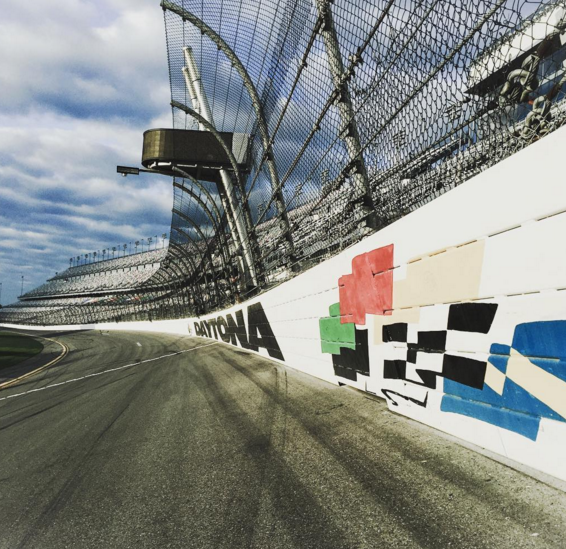
The famed banked track at Daytona International Speedway. Photo: Daytona International Speedway

The famed banked track at Daytona International Speedway. Photo: Daytona International Speedway

Ladies and gentlemen, start your engines! Then connect to Wi-Fi!

Fans at Sunday’s Daytona 500 NASCAR season opener will be able to connect to free Wi-Fi services in the new, wide concourses, suites, and midway area of the newly refurbished Daytona International Speedway, thanks to a new deployment led by Arris International, using Wi-Fi gear from Ruckus Wireless, management software from Aptilo and a new wiring infrastructure from CommScope.

According to Pete Wagener, senior vice president of sales operations at Arris, the already operational “phase 1” of the Wi-Fi network serves the new concourses, the VIP suites and the front-stretch “midway” area behind the seating structure. As part of the $400 million refurbishing of the historical racetrack, the first permanent deployment of Wi-Fi at Daytona was targeted at areas where the 101,500 fans who fill Daytona can congregate, Wagener said. A “phase 2” deployment will bring Wi-Fi to campgrounds and parking areas next year, but a “phase 3” plan to bring Wi-Fi directly to seating areas is still not yet a confirmed deal, Wagener said.

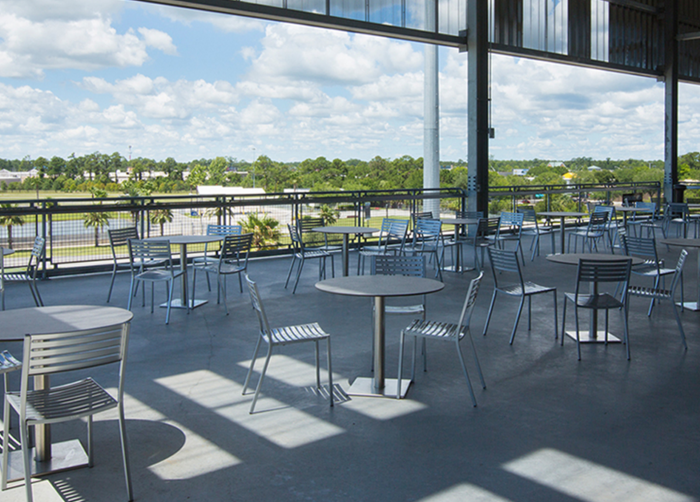
New concourse area at the track. Photo: DIS

New concourse area at the track. Photo: DIS

Under the “Daytona Rising” refurbishing of the speedway, the addition of wide concourse areas behind the main seating area and a newly designed “midway” area on the ground level gives fans more areas to congregate, and with video monitors and Wi-Fi, they can stay connected to the action on the track. A new mobile app is also ready for its Daytona 500 debut, with features like live wayfinding inside the stadium and a parking locator, no small thing in the huge lots that are filled on race days.

Wagener said the Wi-Fi network has already been tested a couple times, at the Rolex 24 hours at Daytona on Jan. 30 and Jan. 31, and at the Daytona qualifying events earlier in the month. He added that the network management system has already allowed the IT team to make adjustments, adding more Wi-Fi access points (there are now 250 in the current phase) to get ready for the expected traffic on race day.

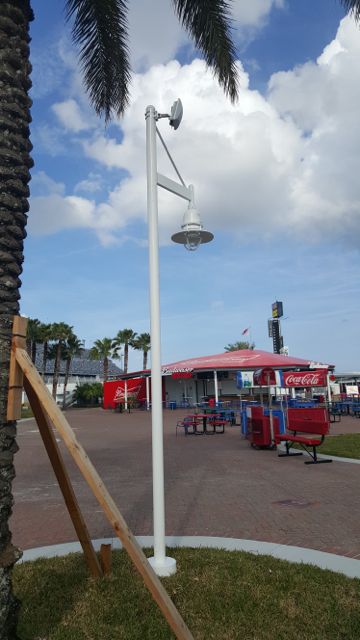
Wi-Fi antenna on light pole at Daytona. Photo: Arris

Wi-Fi antenna on light pole at Daytona. Photo: Arris

Planning for future needs now

Putting fan-facing networks into huge race tracks like Daytona has always been something owners were reluctant to do, since it was hard to justify the costs of covering hundreds of thousands of seats that only might be filled with fans a few days a year. Daytona itself had seen some mobile Wi-Fi deployments, mainly to cover areas like campgrounds or parking, but had never brought Wi-Fi into the actual stadium itself.

But now with more events scheduled for the Daytona facility — and a plan to use the Daytona network operations center as the central control unit for Wi-Fi deployments at other International Speedway Corporation tracks — Wagener said that with the highly granular analytics its system will produce, NASCAR will be able to more easily justify the cost of the network through targeted marketing and maybe even charging for higher tiers of service in the future, especially at the campgrounds and parking areas, where fans may want to consume more bandwidth during their overnight stays.

Wagener also said that Arris, which deployed Wi-Fi networks at the Charlotte Arena and at World Cup soccer sites in Brazil, is looking toward more stadium deployments in the future, calling it “the next frontier for our industry.” Best known perhaps for its work providing gear and infrastructure for Comcast’s consumer network, Wagener said Arris brings “carrier class expertise” that is necessary for deployments on the scale of a Daytona Speedway.

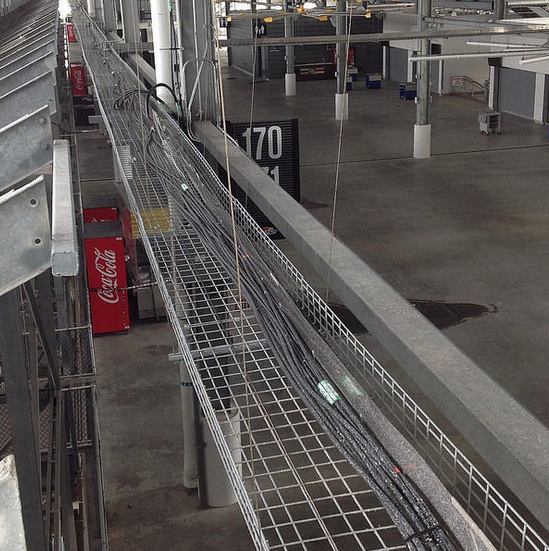
In a separate announcement, CommScope said that it was also a partner in the communications infrastructure for “Daytona Rising,” deploying miles of copper cabling and fiber optic lines to support the new Wi-Fi system as well as TV displays and other stadium infrastructure needs.

Cabling run inside speedway. Photo: CommScope

Cabling run inside speedway. Photo: CommScope

Super Bowl 50 app use sets Levi’s Stadium records, led by video watching and drink orders

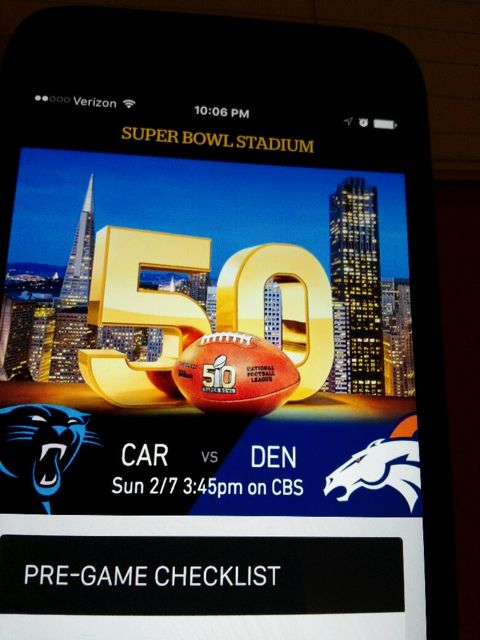
Screenshot of home page of Super Bowl 50 stadium app. (Click on any photo for a larger image)

Screenshot of home page of Super Bowl 50 stadium app. (Click on any photo for a larger image)

As part of the Wi-Fi and cellular usage records set at Super Bowl 50, fans at Levi’s Stadium also set new records for usage of the main stadium app features, including overall app adoption, viewing of action replays and Super Bowl commercials, and food and drink ordering.

According to the San Francisco 49ers networking staff, 46 percent of the 71,088 fans at the game downloaded the Super Bowl 50 stadium app, an NFL-specific app built by VenueNext, designers of the regular Levi’s Stadium app. That total is 16 percentage points higher than any recorded at a San Francisco 49ers regular-season game, according to the Niners.

One of the more unique features of the Super Bowl app was the ability for fans to use the app to order food and drinks, either for express window pickup, or for drinks only, the option for in-seat delivery. According to the Niners there were 3,284 food and beverage orders, 67 percent higher than the previous top order number ever recorded at a Levi’s Stadium game.

The Niners did not provide separate statistics for how many orders were for express pickup and how many were for in-seat delivery out of the larger total. Unlike the regular-season Levi’s Stadium app, which supports food and beverage delivery service to every seat, the Super Bowl app only offered drink delivery, per the wishes of the NFL.

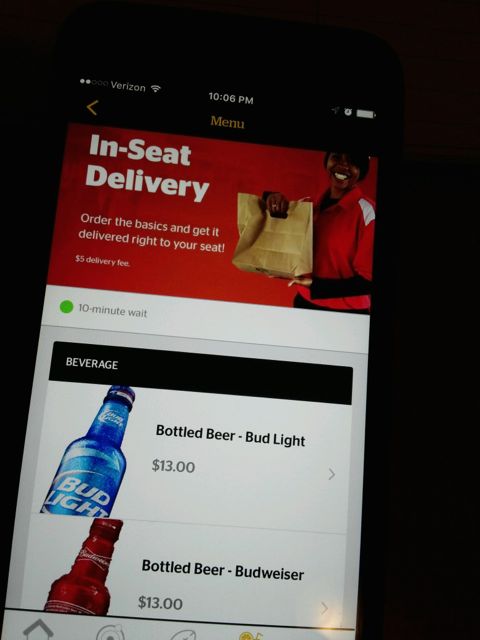
Drink delivery order page on Super Bowl stadium app, including the $13 Bud Light.

Drink delivery order page on Super Bowl stadium app, including the $13 Bud Light.

According to VenueNext and the team, the average in-seat delivery time for drinks was 10 minutes. The top drink item ordered was Bud Light beer, while the top food item ordered via the app was chicken tenders, VenueNext said.

The Super Bowl 50 crowd also set Levi’s Stadium app records for video viewing, a stat helped perhaps by the availability of Super Bowl broadcast commercials, which fans at the game could watch via the app after they aired on TV. A full 55 percent of all app users either watched a video replay or Super Bowl commercials, the Niners said, 36 percent higher than the previous Levi’s Stadium record for video app views.

The app’s unique wayfinding feature, which uses the 2,000 beacons inside Levi’s Stadium to provide interactive maps, was used by 33 percent of the app users, according to the Niners. Fans could also use the app to purchase Super Bowl merchandise (which could be picked up at a concession stand or delivered to a suite), and according to the Niners all the mobile inventory was sold out before the game actually started, with an average order price of $212. Previously, the high-water average mark for app-ordered merchandise was $77 at a concert.

AT&T brings DAS to Winter Park ski area

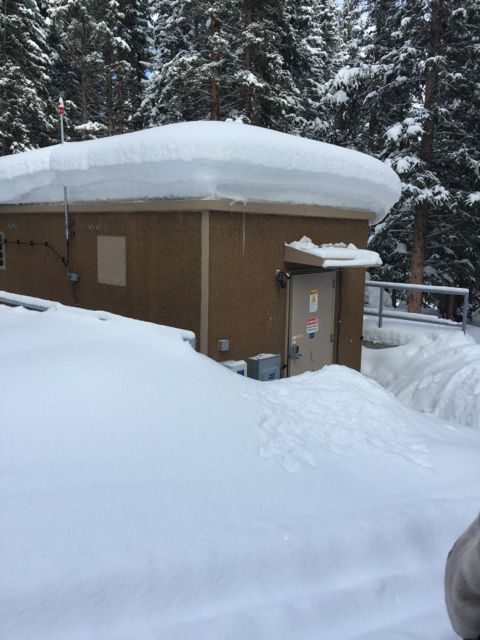
New AT&T DAS headend building at Winter Park ski area. No problem keeping equipment cool here! All photos: AT&T

New AT&T DAS headend building at Winter Park ski area. No problem keeping equipment cool here! All photos: AT&T

AT&T customers visiting the Winter Park and Mary Jane ski areas in Colorado this winter will have a better chance at getting those vacation selfies sent from the hill, thanks to a distributed antenna system (DAS) upgrade installed by AT&T.

Prior to the snow flying, AT&T deployed 28 new antennas across six sectors as part of a DAS designed to bring better coverage to places where skiers congregate at the two mountains, which sit side-by-side roughly an hour’s drive west and north from Denver. J.J. Henrikson, senior real estate construction manager for AT&T, said in a phone interview that the DAS was put in to “help enhance coverage in the gaps that the macro towers [in the area] can’t reach.”

Like fans at stadium events, skiers are now more active on their mobile devices, sending photos and videos and making friends jealous with real-time updates on their vacations. Prior to the DAS install, there were only two macro towers in the Winter Park resort area, which sometimes got overloaded by customers trying to connect.

“On the Martin Luther King holiday there were more than 16,000 skier visitors, as well as workers at the resort,” Henrikson said. Big crowds and coverage-challenging terrain means traditional macro towers “can get overwhelmed,” Henrikson said.

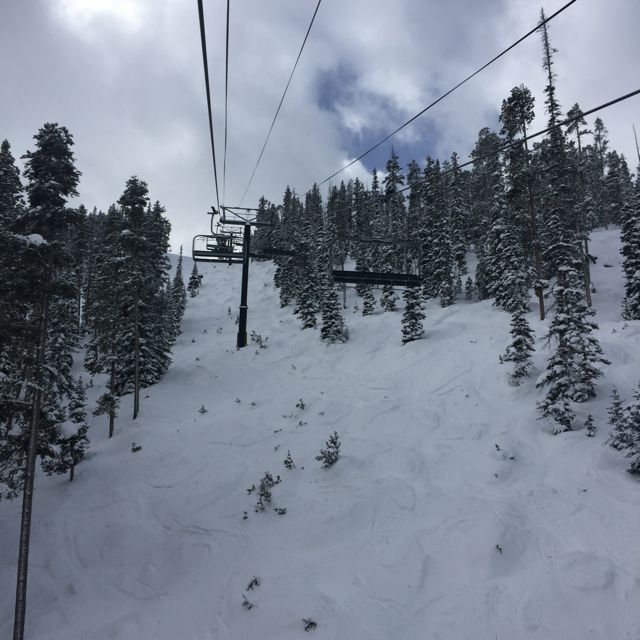
Super Gauge lift, Mary Jane

Super Gauge lift, Mary Jane

DAS relieves the coverage pressure

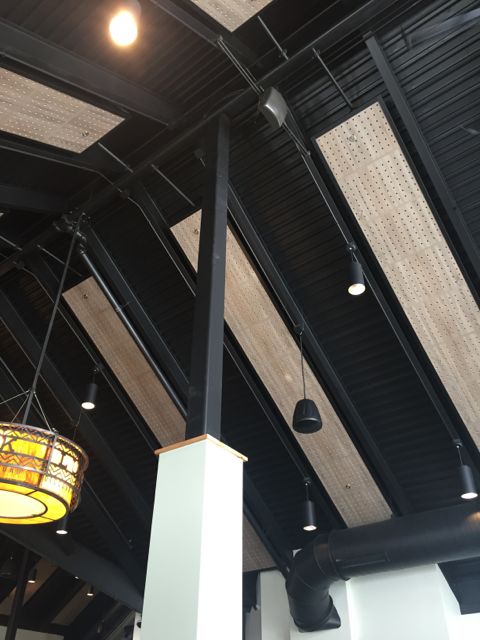
But with a new fiber-optic network “spier-webbing” up the hills, AT&T was able to carry 200 gigabytes of wireless data on the DAS between Christmas Day 2015 and New Year’s Day of 2016, Henrikson said. For those who know the ski area, new DAS antennas are in place at the Mary Jane lodge, the Vintage Hotel (located between the two resort bases), up the path of the Super Gauge lift, the main express lift at Mary Jane, at the Lunch Rock restaurant at the top of Mary Jane, and at the Snoasis mid-mountain restaurant on the Winter Park side.

AT&T also built a new head-end building for gear at the Mary Jane base, and Henrikson said there is also battery backup that can run the system for two to four hours if the power goes out, as it sometimes does in extreme storms. While Henrikson said AT&T “definitely” has more ski-area deployments on its radar, he noted the short building season makes it an extra challenge to bring better connectivity to the slopes.

“Usually you can’t start digging until July, and then you could be surprised by snow in September,” said Henrikson of the high-mountain DAS deployment challenges. “You really have a small window of time to get it done.”

DAS antenna visible at top inside Lunch Rock building

DAS antenna visible at top inside Lunch Rock building