Stadium Tech Report: Verizon, AT&T DAS upgrades at MetLife Stadium await Super Bowl Sunday

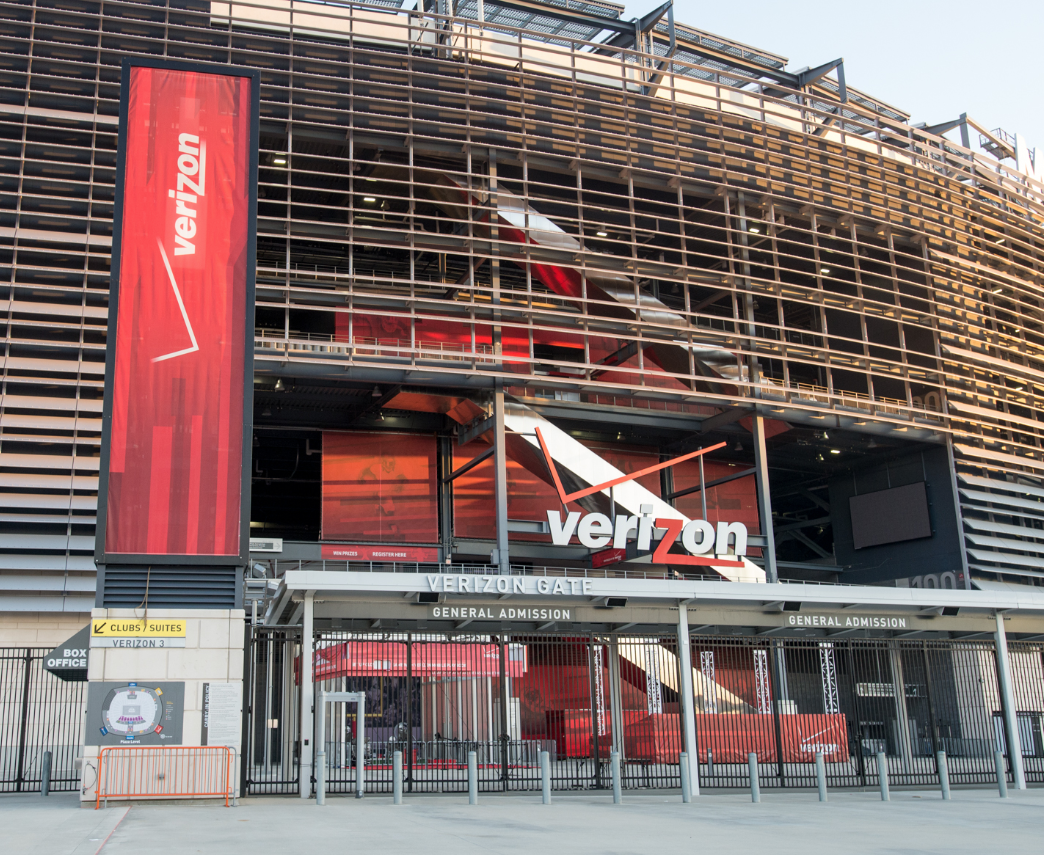
Verizon branded gate at MetLife Stadium. Credit: Verizon Wireless

Verizon branded gate at MetLife Stadium. Credit: Verizon Wireless

Super Bowl foes the Seattle Seahawks and the Denver Broncos have only had two weeks to prepare for each other. But Verizon Wireless and AT&T have been preparing for the roman-numeral date at MetLife Stadium for more than a year. Will the Verizon Wi-Fi and DAS, and AT&T’s separate DAS be able to handle the wireless needs of the fans at the NFL’s biggest game? Tune in Sunday to see!

We might be one of the only news outlets who care more about the wireless networking at Super Bowls than the game itself, but for many in the stadium tech industry the biggest single game in America’s most popular sport is always somewhat of a wireless watershed. Perhaps at no other event do attendees spend so much time shooting selfies and posting them as they do from the site of Super Bowl Sunday. Even in the expected cold, it should be no different this week at Super Bowl XLVIII at MetLife Stadium in New Jersey, where game time is scheduled for around 6:30 p.m. Eastern.

But well before that, fans will be testing the Verizon-built Wi-Fi network and both of the big carriers’ DAS deployments inside MetLife. According to reps from both companies that we spoke with last week, the carriers are ready.

Verizon spokesman David Samberg told us via email last week that an upgrade of the Verizon DAS in MetLife this past season means there are now more than 500 DAS antennas inside the facility. See some of the photos provided by Verizon that show the clever hiding spots Verizon engineers have found over the last 18 months as they’ve added capacity to a network built just a few years ago.

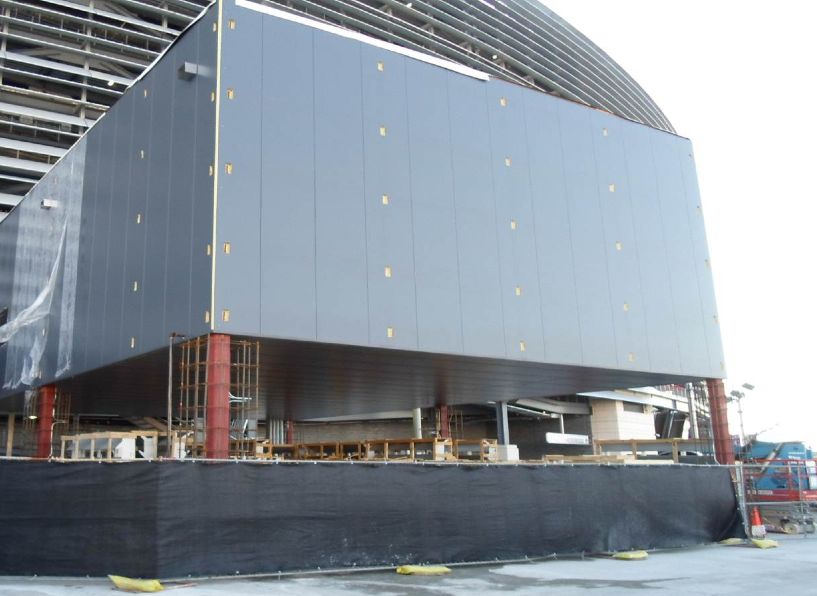
AT&T has also put in a brand-new DAS over the past year, with another 500-plus antennas of its own. “For the last year or so we’ve been working on our pre-game and game day network playbook in an effort to provide the best possible wireless experience for our customers,” said Michael Maus, assistant vice president of network services at AT&T, via email. “In anticipation of the huge volume of data and voice usage expected [for the Super Bowl], we’ve built a new state of the art antenna system inside the stadium, we’re rolling in portable cell sites both at the stadium, and to support the tailgate areas, and we’ve augmented coverage in New York City to support the activities there.”
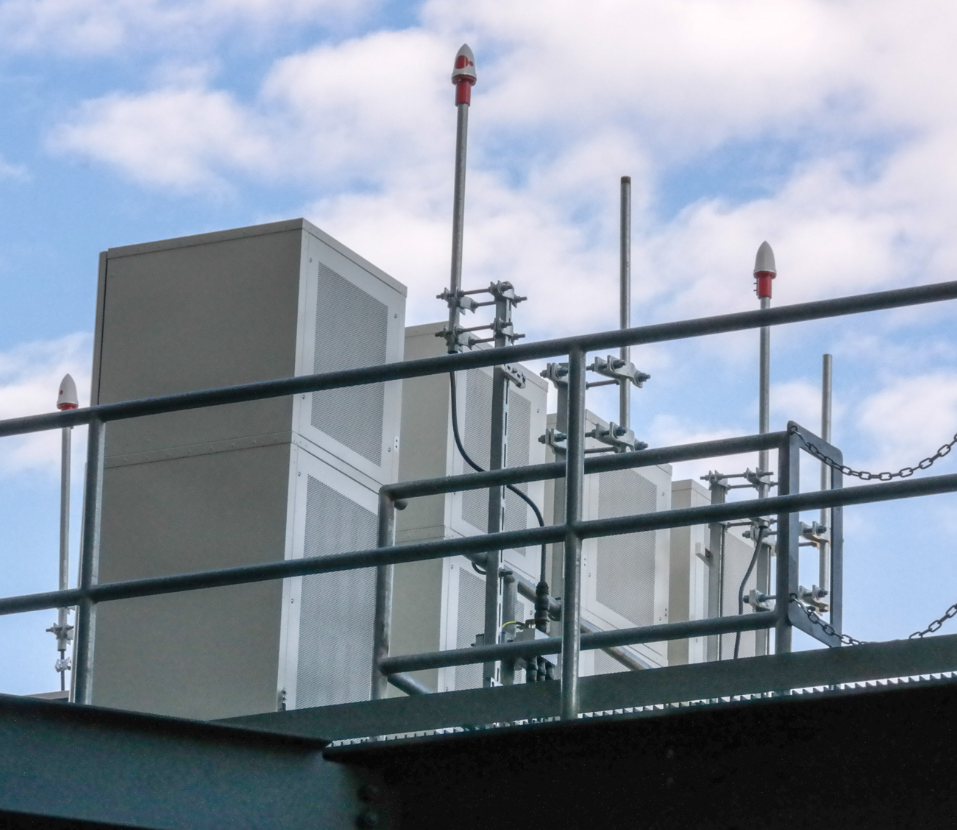
Rooftop DAS equipment. Credit: Verizon Wireless

Rooftop DAS equipment. Credit: Verizon Wireless

For Verizon’s own customers, 4G LTE capacity at MetLife has been quadrupled since last year, according to Samberg, who said that all stadium upgrades were completed by October, giving Verizon multiple chances to test its system against crowds at New York Giants and New York Jets home games. So far, Samberg said, so good.

More traffic than last year’s Super Bowl already

While yours truly opined earlier this year that this year’s Super Bowl might not set a wireless traffic record, we didn’t take into account some simple numbers — mainly, that MetLife Stadium’s official capacity of 82,566 is bigger than the Superdome’s 72,003. So, even if it’s cold, having 10,000 more people on hand probably means more bandwidth consumed, even if this year’s game doesn’t have a power blackout in the second half. (And even if it does, Samberg said the network shouldn’t go down since Verizon has backup power supplies on hand.)
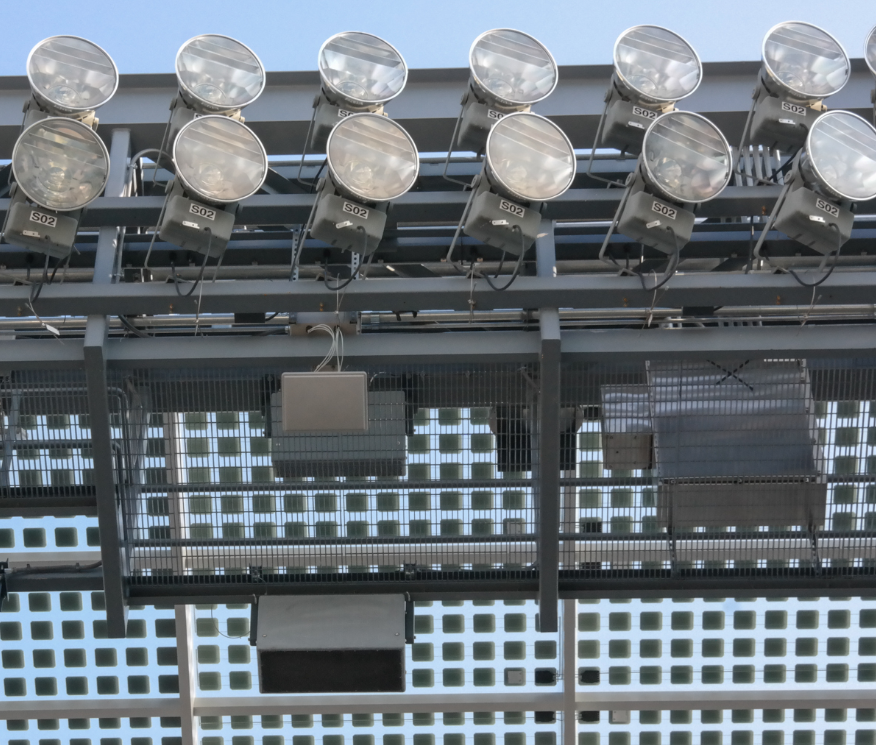
Find the DAS antenna! Credit: Verizon Wireless

Find the DAS antenna! Credit: Verizon Wireless

Our only problem with record wireless numbers from Sunday’s game is that we probably won’t ever see an actual number, since Verizon historically shies away from providing a score. Instead it just issues press releases saying things like “way more traffic this year than last!” and then expects us all to believe that without numbers. The good news for fans at the game is that the in-stadium Wi-Fi network, also built by Verizon, is free and open to customers of all carriers, or basically anyone with a device that has a Wi-Fi chip. But Verizon, like big competitor AT&T, has been beefing up its DAS installations significantly because most people try cellular first, even at stadiums, before instructing their phones to find a Wi-Fi network. AT&T, to its credit, usually does deliver a wireless scorecard quickly after big events. So at least from AT&T’s perspective we should find out if this year’s game sets another record.

Aside from the stadium improvements, Verizon will be showing a demonstration of a technology this week that could make DAS more of a competitor to Wi-Fi on the high bandwidth side of things. Called LTE multicast, the technology basically establishes set channels for LTE devices that will “broadcast” video, like a TV channel. (This idea is similar to the StadiumVision Mobile technology Cisco uses at stadiums like Barclays Center.) Theoretically, LTE multicast could let fans use a cellular connection to view multiple video streams, something you would need to use Wi-Fi for it to have any chance of working. But the multicast demo won’t take place at MetLife, but instead at Bryant Park in Manhattan this week. If you are in the city, check out the demo and let us know what you think.

No NFL Mobile at MetLife

And here’s something else you won’t be able to use at MetLife during the Super Bowl: Verizon’s own NFL Mobile app, which outside the stadium will be the only smartphone platform you’ll be able to watch the game on. (The Fox streaming site and app will only work with tablets and desktops or laptops, per the league’s rights agreement with Verizon.) Next year, the rights for NFL Mobile will change and if the local game (like, say, the Super Bowl) is on TV, you’ll be able to use NFL Mobile to watch it even if you’re at the stadium. But not this year! (To give one answer as to why, if you are at the game, you might want to watch it on your cell phone, we say: Bathroom or beer lines!)

More stadium infrastructure photos below:
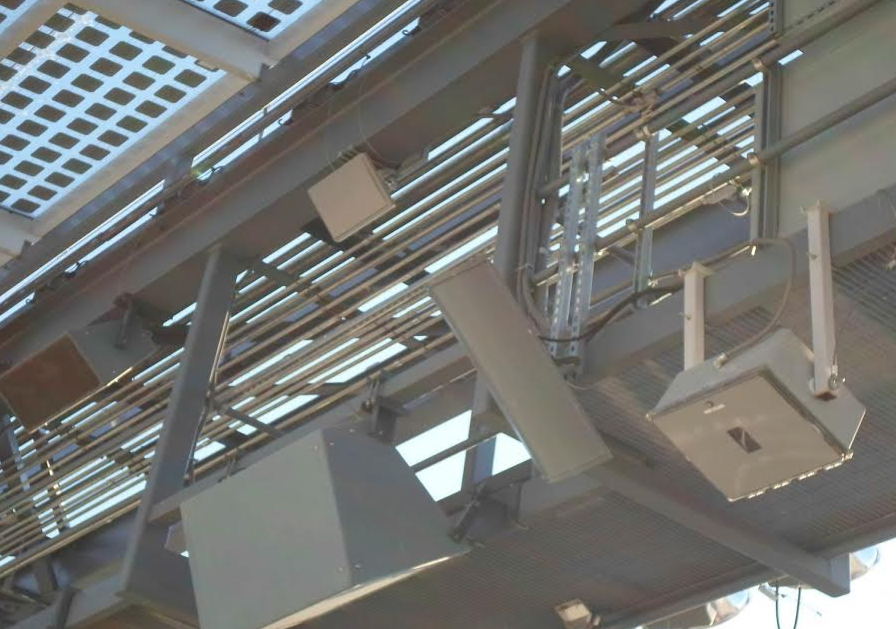
AT&T DAS antennas at MetLife. Credit: AT&T
AT&T DAS antennas at MetLife. Credit: AT&T

AT&T's new head-end building at MetLife, where its DAS gear is housed. Credit: AT&T

AT&T’s new head-end building at MetLife, where its DAS gear is housed. Credit: AT&T
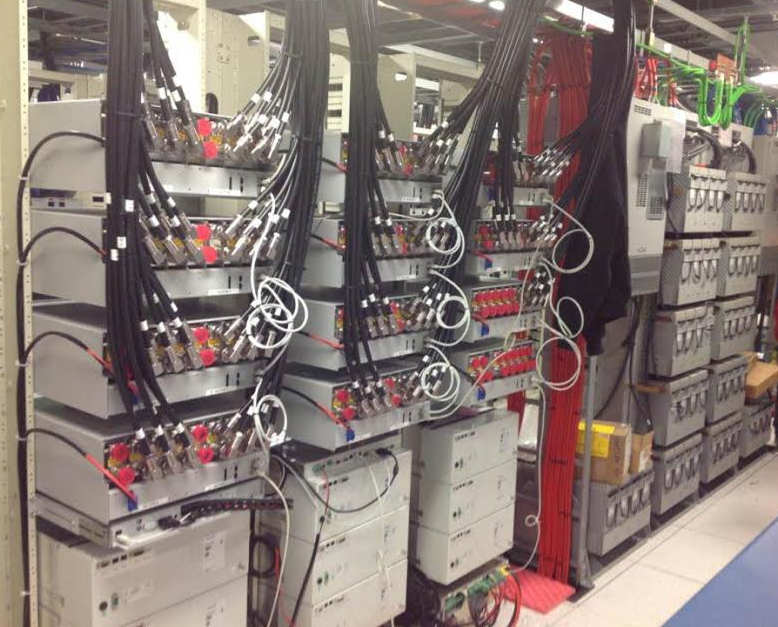
Inside the AT&T head-end building at MetLife. Cables! Credit: AT&T
Inside the AT&T head-end building at MetLife. Cables! Credit: AT&T
Fox: We’re ready for big Super Bowl streaming audience

While nobody can predict how things like a stadium blackout or a polar vortex might affect the broadcast of an event like the Super Bowl, executives at Fox are doing all they can to prepare to make sure this year’s online coverage of the NFL’s championship game goes off as well as possible.

With viewership expected to exceed last year’s total of 3 million unique online viewers, the live stream of Super Bowl XLVIII will be available on iPads in the Fox Sports Go app and via a browser at FoxSportsGo.com. The online feed will be available free to anyone with an Internet connection starting at 12 a.m. ET on Sunday, Feb. 2, and will also include access to a Spanish-language broadcast.

But remember: The live streaming from Fox is only available for desktops or laptops, or via an iPad using the FoxSportsGo app. Because of NFL rights contracts, to watch the game live on a smartphone you need to be a Verizon customer and have the $5 per month premium version of the NFL Mobile app installed.

No matter which platform you choose to use, as always the Super Bowl should be a compelling story, even if that tale is something other than the game between the Denver Broncos and the Seattle Seahawks. Super Bowl XLVIII is scheduled to start around 6:30 p.m. ET from MetLife Stadium in New Jersey, where snow and cold may be part of the equation.

“It should be interesting, with [possible] weather in New Jersey,” said Clark Pierce, senior vice president of mobile and advanced platforms for Fox Sports, in a phone interview earlier this week. “We’re ready for traffic to spike at some moment when something happens, and we get a lot of concurrent users. We’ll see how we do.”

Tablet audience keeps fueling growth

Granted, the online viewer numbers for the Super Bowl are completely dwarfed by the regular TV viewers, which for last year’s game totaled 164 million. But having 4 million unique viewers online is a huge digital audience, and it’s one that Pierce said Fox has been planning for over the past few years.

“We know what CBS did [for streaming] and we know what NBC did,” Pierce said of the networks which had the Super Bowl broadcast the past 2 years. “And we’re working with [content delivery network provider] Akamai, and it’s not their first rodeo. So I think we’re ready for whatever can happen.”

Perhaps the biggest number of online viewers for this year’s Super Bowl will come via Apple iPads, the market leader in the tablet form factor. While Fox has not yet released viewer numbers by device or platform for its restricted streaming of the NFC playoff games, it did say it had a record 2.4 million visitors to its FoxSports.com website on championship Sunday, a 53 percent increase over the previous year. Pierce said increases in digital viewers are partially due to the expanding tablet market, and tablet owners getting more comfortable watching sports on a smaller screen.

“The concept of watching TV on a smaller screen is another year down the road and people are just that much more used to it,” said Pierce, who also said that online viewers may choose tablets over laptops or desktops due to clearer pictures.

“People are getting spoiled by Apple and Android devices with really high screen resolution,” Pierce said.

Streaming delay inevitable

What doesn’t work so well with any live streaming option is trying to use it as a “second screen” alongside a live TV broadcast. Because of the technical necessities of putting a live signal online — which includes mainly taking the TV feed and encoding it to the Internet — delays between “live” TV and the show online can be from 20 seconds to a minute or more, Pierce said.

“It does take time to take a big HD picture and encode it into IP,” Pierce said. “There’s just no way around it.”

In the future, Pierce hopes to help Fox add more features to its online offerings, maybe making them something like what broadcast engineers see in the event production studios, with multiple monitors offering different feeds and live stats. Still, just having a free online broadcast is a huge leap forward from the recent past.

“It’s been exciting to build it, and in the future our team hopes to add more content and features,” Pierce said. “The horizon is pretty exciting.”

Comcast to power free Wi-Fi at Niners’ new Levi’s Stadium

Who’s got better Wi-Fi than we do? Nobody! Under terms of a 10-year deal announced today, cable giant Comcast will provide backbone services and free Wi-Fi to the San Francisco 49ers’ new Levi’s Stadium in Santa Clara, Calif., scheduled to open this summer. The wide-ranging agreement, which also will see Comcast providing in-stadium video and Internet services as well as voice services for the stadium operations, includes an on-site studio where Comcast’s regional sports network will produce shows, invariably including a lot of 49ers-based content, especially on game days.

No terms of the deal were announced, but for fans who want to stay connected at Levi’s, the twin 10 Gbps backbone pipes Comcast will bring in should be sufficient bandwidth even if everyone in all 68,500 seats fires up an iPhone, iPad or Android device. The sponsorship deal also answers one of the questions surrounding the Niners’ ambitious networking plans for Levi’s, mainly how they were going to pay for their robust Wi-Fi. Answer: They’re letting Comcast foot the bill, partially in exchange for the rights to control video feeds to all of Levi’s extensive digital displays.

The mission for Levi’s Stadium has always been to create an unparalleled gameday experience through the use of innovative technology,” said 49ers CEO Jed York in a prepared statement. “Comcast is the perfect partner to help us achieve that goal, as the services they provide will allow our fans to customize their individual stadium experience through the use of their own mobile devices.”

“Located in the heart of Silicon Valley, Levi’s Stadium will feature new and exciting ways for the team’s fervent and tech-savvy fan base to experience a live event, from ubiquitous WiFi to innovative mobile applications and rich video content,” said Bill Stemper, President, Comcast Business, in the same press release. “This partnership is representative of how Comcast, by deploying our full suite of consumer and business products, can deliver reliable, high-capacity Internet connectivity for fans, media and stadium employees while supporting various multimedia initiatives.”

Comcast now joins a growing list of technology sponsors for the Niners’ new digs, including software giant SAP, networking hardware vendor Brocade, semiconductor giant Intel, and TV maker Sony. What should be interesting is to see how the Niners’ deal with Yahoo over digital content either conflicts or doesn’t with the new Comcast deal.

While there’s probably still room for more vendors on the sponsor train, the Comcast deal is a huge one when it comes to the big question facing a lot of stadium owners and operators these days, namely how do you pay for Wi-Fi and other networking installments? The answer here is, find a dedicated partner who already does this for a living and who also has a related business — a regional sports network — that can also benefit from a close relationship.

Stadium Tech Report: Wi-Fi, DAS and live video get good reception at Barclays Center

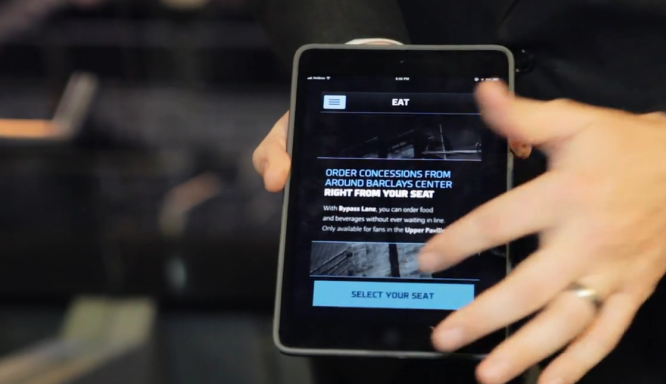
Concessions feature of Barclays Stadium app. Credit: Barclays Center

Concessions feature of Barclays Stadium app. Credit: Barclays Center

Sometimes, the best surprise is no surprise. That’s the case when it comes to technology deployments at the still-new Barclays Center in Brooklyn, where the Wi-Fi, DAS and live video on both fixed and mobile platforms are all performing pretty much as expected.

According to Chip Foley, vice president of building technology for Forest City Ratner Companies (the developer of Barclays Center), perhaps the only mild surprise so far at the just-over-a-year-old Barclays is that the biggest Wi-Fi usage came not during a sporting event, but instead at the MTV Video Music Awards ceremony this past August.

“We had 7,000 people using the Wi-Fi network at the VMAs, and I was a little surprised at that,” said Foley. At Brooklyn Nets games, Foley said, the average Wi-Fi load in the 17,500-seat arena is somewhere between 4,000 and 5,000 users per game. In a recent phone interview, Foley recapped the performance of the stadium’s cutting-edge technology, which also includes one of the first deployments of Cisco’s StadiumVision Mobile, which brings live video feeds to fans using the stadium app. There’s also Cisco-powered digital displays throughout the arena, and a robust DAS deployment to make sure regular cellular connections don’t fail.

HD Wi-Fi attracts 20 percent of attendees

Barclays Center, which opened in September of 2012, had the benefit that few NBA stadiums have in that it was built from the ground up with networking as a key component. If Foley has any regrets about the Cisco Connected Stadium Wi-Fi deployment, it’s that it hasn’t really been fully tested yet. Even during the VMAs, Foley said he was using the in-building Wi-Fi to watch 10 different streaming video views on his laptop, from the red carpet cameras to the behind-the-scenes views of stars getting their awards.

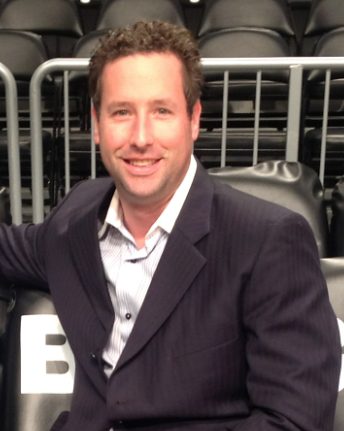
Chip Foley

Chip Foley

“Our goal was to build as robust a network as possible, so that we can handle big needs of one-off events [like the VMAs] as well as the 41+ Nets games every season,” Foley said. With two 1-gigabit backbone lines providing Internet access, Foley said the Barclays network is meeting its goal of being “as fast as your fiber connection at home.”

The only drawback so far seems to be getting more fans to try out the network connection when they are at the games or events. According to Foley, despite advertising and promotions, Nets crowds almost always hit a figure of between 20 percent and 25 percent of them being online, a “Groundhog Day” situation that has Foley wondering whether it’s a natural limit.

“That may just be the number of fans who want to use it [the network]” at a game, Foley said.

The Barclays Center DAS, deployed by ExteNet Systems using gear in part from TE Connectivity, is another non-surprise center for Foley.

“The DAS is great, we never get complaints [about cellular connectivity],” Foley said. “You dread hearing that people can’t send texts. That just hasn’t happened.”

Digital displays, both mobile and fixed

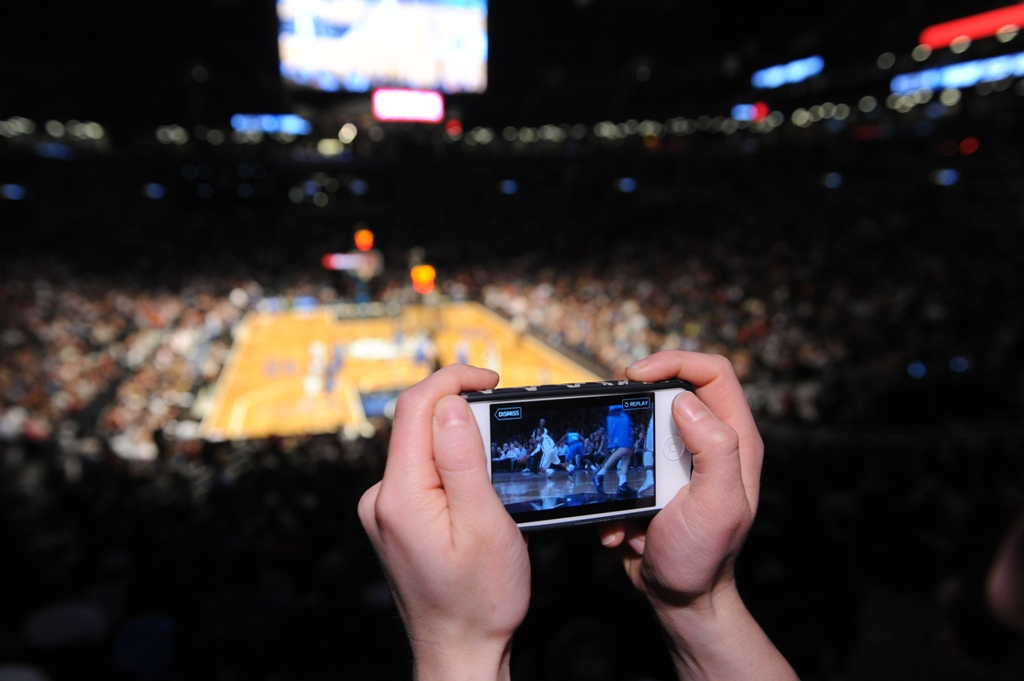
One of the more compelling features of the Barclays tech experience is the implementation of Cisco’s StadiumVision Mobile technology, which brings several live “channels” of video to any fan using the Wi-Fi connection and the stadium app, which was built by WillowTree. With views from the benches, behind the basket and quick replays, Barclays can bring an up-close and personal view to even those far away from the court.

StadiumVision Mobile app being used in Barclays Center. Credit: Barclays Center

StadiumVision Mobile app being used in Barclays Center. Credit: Barclays Center

“StadiumVision Mobile is great for the upper pavilion seats, you can now get a view from a different perspective, and get replays,” Foley said. According to Foley, Cisco engineers tested the technology’s performance to ensure that it worked at every seat in the house.

Fixed digital displays are also a key technology at Barclays, starting with the unique Oculus display built into the striking exterior of the building, and continuing to the hundreds of digital displays inside. Using the Cisco Stadium Vision digital display technology, Barclays Center is able to change and update information on single screens or on all screens on the fly, allowing for greater flexibility in terms of messaging and information like concession-stand prices. Barclays also uses its displays to show train schedules, giving fans better information to plan their departures from events.

“The Stadium Vision displays have been nothing but great for us — we sold a lot of advertising on them even before launch,” Foley said. “It’s fun for our content group to build out content for the L-boards [displays where an L-shaped advertisement brackets other information on the screen], and keep it changing. Restaurant operators can use an iPad to change prices [on their screens] right before an event. They don’t have to talk to us. Overall, it’s a lot less maintenance than I expected or anticipated.”

If Foley had one chance to do anything over again with displays, it would be to add more of them to the original mix. His lesson to future stadium display builders is: If you’re in doubt, put up more.

“We must have had 30-plus meetings regarding [internal] TV locations, with 3D modeling and fly-throughs,” Foley said. “For the most part, I’m happy. But if I could, I would have more clusters [of screens]. Wherever there is one screen now, I wish I had three. People always look at a cluster.”

Adding new screens after the fact, Foley said, isn’t as simple as going to Best Buy to pick up a discount TV.

“You might be able to buy a TV for a couple hundred bucks on Black Friday, but no one tells you that to put that in a venue, once you get past union costs, connectivity and everything else, it’s about $5,000,” Foley said. “It’s way more money to add them now.”

What’s next: iBeacon, Google Glass and more analytics

What’s in the future for Barclays technology? For starters, Foley will oversee deployment of Wi-Fi services for the outside spaces surrounding the arena.

“It’d be nice to have Wi-Fi for ticket scanning outside the venue,” said Foley. “That’s one of those things that you don’t understand the need for it until you open the stadium and see what happens.”

Barclays is also looking into testing the Apple iBeacon technology, which can send text messages to devices in very close proximity. Technologies like iBeacon and even digital signage must also cross internal administrative hurdles, such as simply training sales forces and alerting advertisers to the opportunities.

“For some of the streams, there’s the question of ‘how do we sell this’ — the team has never done this and sponsors may not be aware,” Foley said. “You also have to figure out things like how many notifications and emails should we send out. You don’t want to send out too many, because that turns people off.”

Foley said the Barclays social media team is also at the start of a process of mining statistics from places like Twitter, Facebook and other social media streams, to get a better handle on what fans are using the technology for and how the experience might be improved. One possible way is through a Google Glass application, something Foley agreed might not be for everyone.

“I’m fascinated by the possibility of something like an XML stats feed [in Google Glass] where you’d still be able to watch the game,” Foley said. “We’re getting closer! It’s not for everybody, but some portion of the population is probably thinking that way.”

NFL Championship games live streams: Fox for Niners-Seahawks, CBS for Broncos-Patriots, Verizon NFL Mobile for both

Are you ready for some streaming football? In case you won’t be near a TV for either of Sunday’s championship games, you still may have a chance to watch the games live on a PC, a tablet or a smartphone. Here are the details:

If you’re a customer of a participating provider for Fox Sports Go, you can watch Sunday’s NFC championship game between the San Francisco 49ers and the Seattle Seahawks on the Web or on an Apple iPad using the Fox Sports Go website or mobile app. The Fox Sports Go website address is foxsportsgo.com, and the list of participating providers includes AT&T U-Verse, Comcast Xfinity, Suddenlink, Optimum, Midcontinent Communications, and Wow!. Coverage starts with the FOX NFL Sunday pregame show at 6 p.m. ET. Joe Buck, Troy Aikman, Pam Oliver, and Erin Andrews will call the game at 6:30 p.m. If you’re like me, the mute button on Buck/Aikman comes into play at about 6:35.

CBS will also live-stream its coverage of the AFC championship game from Denver, starting at 3 p.m. ET on Sunday. The games can be watched online at CBSSports.com’s NFL page, or via the CBSSports app, which shows the games via a web page. I did see a little disclaimer that says live streaming is only available via iOS mobile devices.

If you are a Verizon Wireless customer and want to watch the games on your 4G LTE smartphone, you can sign up for Verizon’s NFL Mobile app and its live NFL service, which costs $5 a month extra to whatever cell plan you have. NFL Mobile customers will be able to see live streaming action from both championship games as well as the Super Bowl. Though it suffered glitches earlier this season, Verizon’s NFL Mobile app has been rock-solid for me, with lots of air time during my daughter’s Sunday afternoon music lessons. Don’t get caught without football this weekend, these games are possible classics you don’t want to miss.

NFL should take a chance on open APIs and gigabit Wi-Fi if it really wants to engage fans

When it comes to using technology, the NFL talks a really good game — but when it comes to decisions and deployments, the shield moves slower than a 3-yard cloud of dust. And it’s frustrating fans, who are looking for something along the lines of a run-and-shoot.

This week’s announcement of an agreement with Extreme Networks under which the technology company became the “official supplier of Wi-Fi analytics” is a good example of the NFL’s go-slow philosophy. While the deal is a small feather for Extreme and validation of its stadium Wi-Fi smarts, in the end it really doesn’t move many needles since it’s not a binding deal (meaning teams don’t have to use Extreme gear if they don’t want to) and also since many NFL stadiums don’t yet have fan-facing Wi-Fi. So while the NFL uses press events around such announcements to talk grandly of techno-fan engagement, what it really should be doing is spending some of its hoard of cash to help teams install super-fast networks in stadiums right now, instead of waiting for teams to do so on their own.

I get it that the networks are an asset for stadium owners, and in the long run they will want to reap the full benefits of their costs of deployment. And it’s hard to say there are things the NFL could be doing better, since the sport enjoys immense popularity for both its live and televised offerings. But nothing lasts forever. And if the NFL wants to keep justifying its hundreds-of-dollars ticket prices, it should offer its fans a game-day experience like no other — which should include super-fast, aka “gigabit” Wi-Fi. Fast Wi-Fi that connects instantly, and lets fans share photos, videos and more while at the game.

How much would that cost? Several million dollars to 10 million dollars per team? Even at the high end, it’s not like the league doesn’t have that kind of money to toss around. It does. Just its cellphone live-action rights contract alone — $1 billion from Verizon over 4 years — is enough to cover league-wide Wi-Fi deployments and more. And once those networks are in place, the NFL would be supremely set up to control and benefit from the possible coming explosion of in-stadium mobile device use. An explosion which could be even bigger if the NFL takes another radical step to open up its content and information to third-party developers.

Team apps are losing the battle

Right now whenever a stadium network is launched there is usually a grand accompanying plan for a “team app,” which promises just about everything a fan could possibly want, in the team’s eyes. The problem with these apps — which so far are largely being ignored — is that they are all developed from a team’s perspective, not a fan’s. My biggest complaint with most of the team apps (and this goes for other events and sports media channels as well) is that they try to do too much, and instead of being helpful are just a pain in the butt to use, with too much information and too many choices and constipated navigation.

I haven’t been to that many games lately but at the ones I’ve been to, here’s what I see people using their phones for at the games: Twitter. Instagram. Facebook. And text messaging. What’s the common denominator there? Simple, one-step apps that are already built into the user’s social sphere. And they’re more lively, too, with many pro athletes participating in places like Twitter with real, unvarnished conversations, unlike the team apps which are as boring and as sanitized as the only-good-plays replays on the stadium TV screens. If the NFL really wants to engage fans digitally, it should open up its APIs and free its video content, allowing third-party developers to build apps with real NFL content. (Why not try an open version of Megacast?) It’s a strategy that worked pretty well for Apple and the iPhone, where Apple gets a chunk of profits from an incredible ecosystem that was created simply by allowing the outside world to have access to the iPhone screen.

My guess is that what will happen is the exact opposite — the NFL, watching the success of MLB’s digital efforts, will sometime soon corral all its digital assets into a single NFL-sanctioned bucket, which it will then charge fans even more for. Get ready for your “NFL Digital Package,” maybe $200 more a year to get live video and highlights on your phone. And no, you won’t be able to share that content or create GIFs or Loops or Vines any of the other fun stuff that is going on right now in the sort of Wild West version of the digital sports world. Even though I would probably pay it, that direction sounds like hell. I’d rather see the NFL really embrace the future and let the creativity of all the fans and smart thinkers out there blossom. To revisit our opening metaphor, why not try a few deep downfield passes, NFL? Why keep running the ball inside?