NEW! Stadium Tech Report Podcast, Episode 1: What does Super Bowl 50’s Wi-Fi record mean for stadium tech pros?

Welcome to the inaugural episode of the STADIUM TECH REPORT PODCAST, with Mobile Sports Report editor Paul Kapustka and host Phil Harvey. In this first show Phil and Paul talk about the Wi-Fi and DAS records set at the recent Super Bowl 50 at Levi’s Stadium, exploring what those numbers mean for stadium tech professionals who are deploying their own networks — and whether or not there will ever be an end to the continuing explosive growth in demand for in-venue bandwidth.

Take a listen and let us know what you think in the comments!
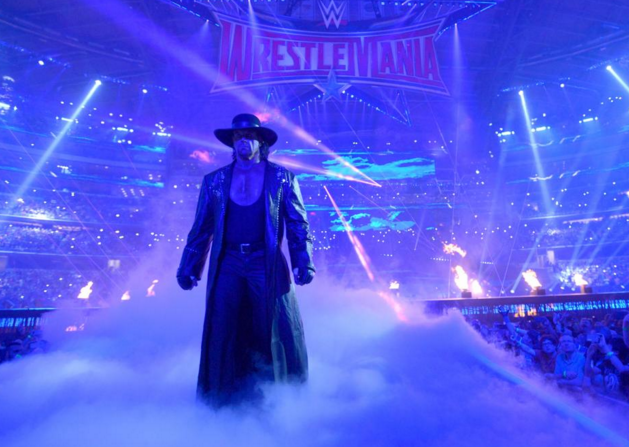
UPDATE: WrestleMania 32 sets new Wi-Fi mark at AT&T Stadium; total Wi-Fi + DAS hits 8.6 TB

The Undertaker arrives at AT&T Stadium for WrestleMania 32. Photo: WWE.com

The Undertaker arrives at AT&T Stadium for WrestleMania 32. Photo: WWE.com


UPDATE: Fixes an MSR calculation error on DAS figures.

The 101,763 fans who filled AT&T Stadium Sunday for WrestleMania 32 set new stadium records for Wi-Fi, according to figures provided by AT&T Stadium and AT&T, with 6.77 terabytes of Wi-Fi traffic and an additional 1.9 TB on the AT&T network on the stadium’s DAS for a total wireless figure of 8.6 TB.

The Wi-Fi numbers put Sunday’s signature WWE event (also the biggest WrestleMania by attendance) into second place in our unofficial record-keeping of the largest single-day Wi-Fi traffic stadium events. Only Super Bowl 50 at Levi’s Stadium earlier this year was bigger, with 10.1 TB of Wi-Fi traffic. So far, WrestleMania 32 is also now third in combined Wi-Fi and DAS figures, trailing Super Bowl 50 and Super Bowl XLIX (see charts below).

THE NEW TOP 3 TOTAL USAGE

1. Super Bowl 50, Levi’s Stadium, Santa Clara, Calif., Feb. 7, 2016: Wi-Fi: 10.1 TB; DAS: 15.9 TB; Total: 26 TB
2. Super Bowl XLIX, University of Phoenix Stadium, Glendale, Ariz., Feb. 1, 2015: Wi-Fi: 6.23 TB; DAS: 6.56 TB**; Total: 12.79 TB**
3. WrestleMania 32, AT&T Stadium, Arlington, Texas, April 3, 2016: Wi-Fi: 6.77 TB; DAS: 1.9 TB*; Total: 8.6 TB*

* = AT&T DAS stats only
** = AT&T, Verizon Wireless and Sprint DAS stats only

THE NEW TOP 5 FOR WI-FI

1. Super Bowl 50, Levi’s Stadium, Santa Clara, Calif., Feb. 7, 2016: Wi-Fi: 10.1 TB
2. WrestleMania 32, AT&T Stadium, Arlington, Texas, April 3, 2016: Wi-Fi: 6.77 TB
3. Super Bowl XLIX, University of Phoenix Stadium, Glendale, Ariz., Feb. 1, 2015: Wi-Fi: 6.23 TB
4. Alabama vs. Texas A&M, Kyle Field, College Station, Texas, Oct. 17, 2015: Wi-Fi: 5.7 TB
5. College Football Playoff championship game, AT&T Stadium, Arlington, Texas, Jan. 12, 2015: Wi-Fi: 4.93 TB

Wi-Fi not to blame for stadium entry issues

John Winborn, chief information officer for the Dallas Cowboys Football Club, said in an email that the reported claims of the Wi-Fi being offline Sunday — and that being the reason why entry lines were long and slow — were not true. While Winborn did admit that one single Wi-Fi AP (out of the more than 2,000 in the stadium’s network) was offline and there were “a couple issues” with ticket scanners, he said “there were no Wi-Fi issues that would have had a significant impact on ingress.” Other reports have claimed the doors were opened later due to extended show rehearsals, while commenters on MSR’s posts have claimed that a lack of wristbands for stadium-floor seating also led to seating issues even for fans already inside the main building entrances. So far, we have not seen any official explanation for the delays other than the official apology from the stadium and the WWE:

“To ensure the safety of WWE fans, increased security measures were put in place tonight. We apologize that it may have taken some fans longer than usual to get into AT&T Stadium.”

During Sunday’s event Winborn said the Wi-Fi network saw 20,462 concurrent and 34,951 total user connections, some via a network of 150 temporary Wi-Fi APs installed among the seats on the stadium floor.

Twitter to stream NFL Thursday night games to all platforms, including smartphones

Screen Shot 2016-04-05 at 11.00.55 AMThe big news from the NFL today was a deal signed with Twitter, under which Twitter will get to stream live NFL Thursday Night games online to any connected device, including smartphones. To us, that last bit is the most interesting part of the deal since it breaks the previous stronghold held by Verizon Wireless and its NFL Mobile deal, under which Verizon was previously the sole provider of live NFL action to smartphones.

While many NFL games have been streamed by various entities online — including recent years’ playoff games, the Super Bowl and Monday Night Football — for most of those “broadcasts” you could only watch on a phone-type device if you were a Verizon customer and used the NFL Mobile app. The only exception we know of for U.S. fans was the extra-price DirecTV Sunday Ticket package, which also allowed for mobile viewing; but for free online action, you could typically only watch on a PC, connected TV or a tablet — smartphones were the exclusive domain of Verizon.

Under the Twitter deal, fans who are Twitter users will be able to watch Thursday night games free of any other charge, on tablets, PCs, connected TVs and smartphones, according to a release today from the NFL and Twitter. In addition to live action, the league and Twitter promise pre-game extras like Periscope broadcasts from teams and players, meaning you will get low-quality jittery interviews instead of professionally produced material. But we jest. The Periscope broadcasts could be cool, especially if they are on the field where fans never really get to be.

The Twitter deal follows on the heels of last season’s Yahoo-streamed game, which attracted 15.2 million viewers. It will be interesting to see what the numbers are for Twitter this year, since the Thursday night games will be available on regular TV from both NBC and CBS, which have five games each, as well as on the NFL Network, which will simulcast all games on Thursday nights.

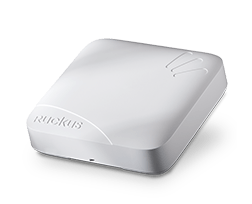
Wi-Fi consolidation continues: Brocade buys Ruckus for $1.2 B

Screen Shot 2016-04-04 at 11.08.16 AMFollowing last year’s $3 billion purchase of Aruba Networks by Hewlett Packard, the Wi-Fi gear industry consolidation continued today with the announcement of Brocade buying Ruckus Wireless for $1.2 billion.

For the stadium-networking industry, the news may mean that Ruckus gear may find its way into more potential deals, thanks to the deeper pockets and integration possibilities brought to the table by Brocade, which competes in the back-end network gear market against companies like Cisco. Though it’s not known to have scored many stadium deals, Brocade is the back-end network supplier for Levi’s Stadium, which is a close-by neighbor to Brocade’s San Jose headquarters. It is also part of the network gear being used at the new Golden 1 Center in Sacramento, where Ruckus will provide the Wi-Fi gear, perhaps a deal where the purchase relationship got started.

Ruckus, which had come close but lost two high-profile Wi-Fi deals (for the San Jose Earthquakes’ new stadium, and for the Wi-Fi network at NRG Stadium in Houston), had said publicly that it did not participate in “pay for play” deals, where a gear manufacturer might provide discounts or payments for stadiums to use their equipment. Ruckus has won some other high-profile stadium deals recently, including at Angels Stadium in Anaheim.

Minnesota Vikings pick VenueNext for U.S. Bank Stadium app

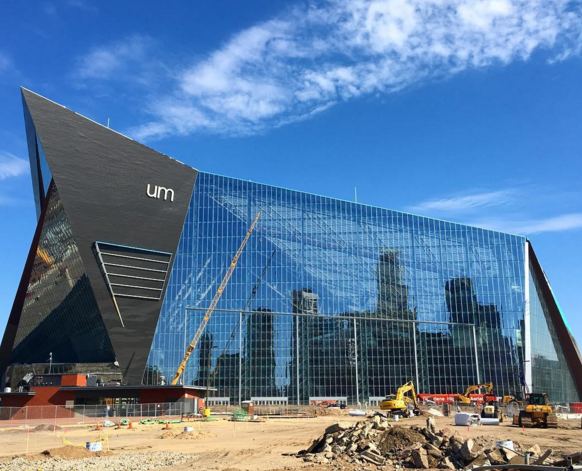
Outside view of U.S. Bank Stadium in Minneapolis. Photo: USBankStadium.com.

Outside view of U.S. Bank Stadium in Minneapolis. Photo: USBankStadium.com.

Stadium app developer VenueNext has scored another NFL client, as the Minnesota Vikings announced today that they would use VenueNext technology in the app for the yet-to-open U.S. Bank Stadium.

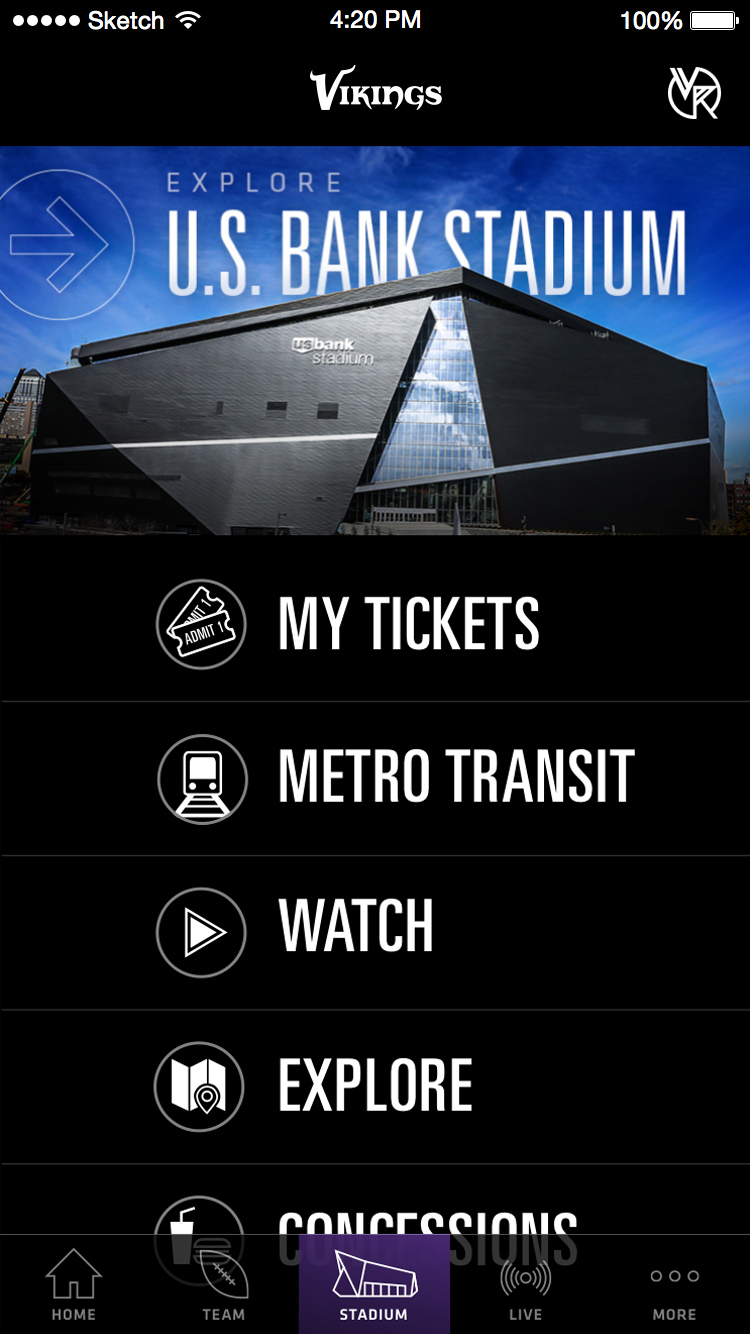
According to VenueNext and the Vikings, the U.S. Bank Stadium app will support many of the same unique game-day features found in the app VenueNext built for the San Francisco 49ers’ Levi’s Stadium, including beacon-based wayfinding, the ability to order food and drinks via the app for express pickup, digital ticketing and game-day upgrade availability, as well as “robust” video content and a loyalty program tied to game-day activity. One feature at Levi’s Stadium, the ability to have food and drink delivered to fans in their seats, is “still being explored” by the Vikings, according to VenueNext.

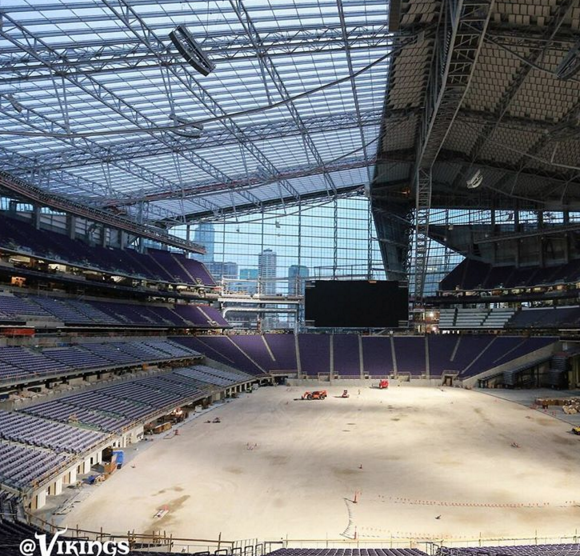
Due to open this summer ahead of the 2016 NFL season, U.S. Bank Stadium is slated to host Super Bowl LII on Feb. 4, 2018. A Wi-Fi network with approximately 1,300 Cisco access points will supply wireless connectivity to the 66,200-seat venue, along with a neutral-host DAS built by Verizon Wireless. Aruba is supplying the 2,000 beacons being used inside the venue, and overall network operations will be run by CenturyLink, which will oversee deployment of some 2,000 digital TV displays inside the stadium.

Screenshot of U.S. Bank Vikings app in development. Image: VenueNext

Screenshot of U.S. Bank Vikings app in development. Image: VenueNext

According to VenueNext, app development partners will include Ticketmaster, Aramark for food, point-of-sale solution Appetize, seat upgrade technology from Experience, fan loyalty programs from Skidata and content app developer Adept. The Vikings are the third NFL team to choose VenueNext technology, behind the Niners and the Dallas Cowboys. VenueNext also has built a stadium app for the NBA’s Orlando Magic.

“We look forward to launching this new, dynamically-upgraded app that not only will give all Vikings fans a better experience when consuming team content on their mobile devices but also will allow seamless access to the numerous amenities at U.S. Bank Stadium,” said Vikings Owner/President Mark Wilf in a prepared statement. “Our goals are always to provide the best game day experience possible and to continue developing deeper engagement with all Vikings fans, and the VenueNext technology will help achieve both.”

“We’re excited to extend our reach in the NFL through this collaboration with the Vikings,” said John Paul, CEO & Founder of VenueNext, also in a prepared statement. “We want to become the standard for bringing Silicon Valley innovation to fan experiences, and implementing in a state-of-the-art development like U.S. Bank Stadium brings us closer to that goal.”

Interior look at U.S. Bank Stadium. Photo: USBankStadium.com

Interior look at U.S. Bank Stadium. Photo: USBankStadium.com

Entry issues snarl start of WrestleMania 32 at AT&T Stadium; crowd uses 6.77 TB of Wi-Fi

While Sunday’s WrestleMania 32 eventually ended up with a record attendance for the WWE’s signature event with 101,763 fans in attendance, some snafus with the entry process had fans reporting as long as three-hour waits to get in, with some pegging a Wi-Fi outage that disabled ticket scanners as one of the roots of the problem.

We don’t as of yet have any on-the-record comments from AT&T Stadium so we can’t say exactly what the problem was. UPDATE, 4/4/16, 2:50 p.m.: According to John Winborn, chief information officer for the Dallas Cowboys Football Club (and the person who runs the network inside AT&T Stadium), despite the rumors that emerged there was no Wi-Fi outage at the stadium — in fact Winborn said the crowd used 6.77 TB of Wi-Fi data Sunday, a single-day stadium Wi-Fi total second only to the 10.1 TB used at Levi’s Stadium for Super Bowl 50. (More details on the Wi-Fi consumption coming soon.)

Wi-Fi rumors aside, on Sunday night Twitter and Instagram were full of photos from irate fans who were stuck outside the venue, with some reportedly unable to get inside or to their seats before the actual matches started. According to a blog post at the Fort Worth Star-Telegram, the WWE and the Stadium issued a joint press release halfway through the event that read:

“To ensure the safety of WWE fans, increased security measures were put in place tonight. We apologize that it may have taken some fans longer than usual to get into AT&T Stadium.”

Several other news outlets reported the problem, with all seeming to peg the issue on a Wi-Fi problem with the ticket scanners. Winborn, however, said there were no Wi-Fi outages in the stadium or with the ticket scanners.

According to the Fort Worth Star-Telegram report, the vitriol on Twitter and other social media outlets may not have been entirely correct; according to the report:

Do not believe the viral reports and unsightly online pictures that fans could not get to their seats by the time the early matches began — they could but they preferred to walk around, buy food, drink and merchandise. But the images and the complaints that flooded the Internet about #WrestleMania32 were so plentiful, and negative, joint press release was issued halfway through the event.

With 101,763 finally in their seats the event was the fifth-largest crowd inside AT&T Stadium, and as such most likely produced a large Wi-Fi and DAS traffic number once things finally got underway. We will update this post and have another when we get the wireless traffic stats from the stadium.