Friday Grab Bag: FIFA World Cup Tiff and will Loon Fly?

Microsoft is looking at educational institutions in an effort to jump start sales, or at least adoption, of its Surface RT tablets. According to BGR.com the company has started a policy of steep discounts to schools in an effort to push that platform’s acceptance.

How steep you ask? The tablet is available to schools and universities from now until August 31st starting at $199 for the 32GB model. Or you can go to the Microsoft store and buy the same model for $499. Such a deal.

Samsung Galaxy Note 8 cheap in bundle deal
If you are in the market for both the LTE-capable version of the tablet and a smartphone then Samsung might have just what you need. It has teamed with AT&T to bundle its Galaxy Note 8 tablet for $199 when coupled with a new activation of select Samsung smartphones.

The tablet, normally $399, has Samsung technology designed to ensure its safe adoption in the business as well as the more traditional consumer friendly apps that are more commonly associated with tablets.

It is World Cup disqualifier time
At this time of year nations are putting their best foot forward in an attempt to qualify for next year’s World Cup, which will be held in Brazil. Along the qualifying route there are always a few feel good stories about nations that qualify — this is not one of them.

FIFA has just launched an investigation into player eligibility regarding athletes on both the Ethiopian and Tunisian teams, both of which had just advanced to the final round of the African World Cup according to the BBC. Sanctions will be forfeiting the match that the players participated in, if found guilty.

Google up in the air with Loon
Google is seeking to deliver Wi-Fi connectivity to the large portion of the world that is currently without by using a series of high altitude balloons that will have the ability to bounce Internet signals to each other and support users on the ground.

The company will be releasing 30 balloons in all, all over New Zealand’s South Island in an effort called Project Loon. Each balloon will rise to the stratosphere and be controlled to stay in the same spot. The initial effort will only provide Internet access with speeds that approximate 3G to roughly 60 people.

Sony Xperia Z finds a home
Sony released the Xperia Z a few months ago but if you rushed down to the local consumer electronics store to sign up for the smartphone and start enjoying all that it has to give you would have come home upset because it was not initially supported by any of the carriers. Well that has all changed.

According to Slashgear, you will now be able to get your hands on one courtesy of your friends at T-Mobile. However before you head on down, no delivery date has yet been announced.

FCC provides peek at next-gen Nexus 7
The FCC, via TechRadar, has published what looks like the features of the next generation Google Nexus 7 tablet, which appears to be manufactured by Asus, with a 1080p display.

Other features will include 2GB of memory, a switch from an Nvidia processor to Qualcomm’s Snapdragon S4 Pro as well as a move to a 5 megapixel camera rather than the 1.5MP in the older edition. Also included will be NFC, LTE and wireless charging.
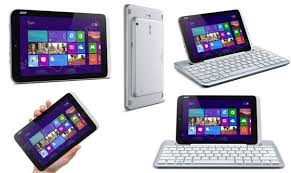
Acer Releases Windows Tablet and Android Phone

acerr

Acer has unveiled a number of new mobile devices at the annual Computex trade show this week and the products show the growing diversity in operating systems that are offered from a single company with a Windows powered tablet and an Android powered smartphone.

The company has been increasingly aggressive in its rollout of products recently and looks to establish itself alongside rivals such as Samsung and Apple as one of the top players in the smartphone and tablet space. .

The tablet is the Acer Iconia W3 which features an 8.1-ich screen with a 1280 x 800 resolution running Windows 8 operating system and features an Intel Atom 1.8Ghz Z2760 microprocessor. The tablet marks the first release of a small form factor tablet running the Windows operating system.

Reports are showing that the smaller form Tablets are starting to outsell the larger ones and it is a feather in Acer’s cap that it is the first with a model that supports Windows 8. Microsoft only recently said that it would be supporting smaller size screens.

Other features include either a 32GB or 64GB of internal storage that can be expanded with the addition of optional microSD cards, an eight hour battery, dual front and rear facing 2MP cameras it will come with a pre-installed copy of Microsoft Office. It is expected to ship in June and start at $428.

The smartphone is the Liquid S1, which with its 5.7-inch screen is not that much smaller than the Iconia W3. It has a 1280 x 720 screen resolution and will feature the Android 4.2 operating system. It has a 1.5GHz processor, 1GB of memory and 8GB of storage. However it does not support LTE.

The smartphone is the company’s first push into the phablet space, the hybrid smartphones with large screens that can double as a tablet.

WSJ: ESPN Thinking About Paying for Your Mobile Sports Jones

You have to fight your way around the paywalls to read it, but the Wall Street Journal had a story today about ESPN talking to wireless providers about paying part of the fees for people who watch sports via cellular connections. There’s nobody on record, but when the WSJ uses the familiar “according to people familiar with the matter” dodge you know that somebody wanted this story to get out.

For the carriers, this is a kind of a holy grail thing — if ESPN starts subsidizing watching sports via cellular, you can bet that AT&T and Verizon will step up their marketing machines to sell tablets and smartphones. I’m imagining a future where you pay something like $50 a month, which gets you live NFL games and a free iPad to boot. Think you’d sign up tomorrow?

Why would such an arrangement be valuable to ESPN? With more mobile users, the worldwide leader could jack up the fees it charges advertisers since it would have incredible amounts of granular user info, right down to where the user is watching. And I’d bet you wouldn’t be able to watch any other channel on that subsidized device. But then again — would you care?

Net neutrality worries aside, it will be interesting to see if this deal comes to fruition. With Verizon’s exclusive cell phone rights deal with the NFL coming up for renewal next year, it’s the right time for something new to happen. We’ll stay tuned.

Major League Baseball teams with Qualcomm to Boost Ballpark Wireless Service

mlb

MLB, like all major sports, and for that matter any large venue for sports or entertainment, seems to always have a connectivity problem but unlike many others which seem to have patchwork solutions MLB is actively addressing the issue.

The league’s Advanced Media arm (MLBAM) has teamed with wireless equipment developer Qualcomm in a multiyear effort that will first seek to survey the needs of mobile fans and then look at developing a plan to implement the mobile network technology needed to meet those needs.

They are entering a very fast moving space, where it is still hard to predict what the growth and demand will look like. You need only look at some of the numbers that Baseball has provided to see this. Two years ago fans were primarily looking for downstream data flow, that is downloading e-mails checking voicemail.

That has change so that now the primary need is for upstream connectivity, so that twitter, Facebook updates, Instagram photos and a host of other social media needs can be served. Also these types of files are often much larger than the simple text messages downloaded two years earlier. However the growth has been strong for data flowing in both directions, a 50% increase in downstream and a 300% increase in upstream per year over the last two years.

MLB in fact helps create demand for wireless in its parks. It has a range of apps that allow fans to do everything from find images of themselves in the stands as well as post that type of photo to upgrading your seats while at a game.

The range of services now at ballparks range considerably, and even after this effort is over will still have a good deal of variance since it appears that not all teams will be participating.

The deal is a first for Qualcomm in that in the past it has never had a direct relationship with a sports league. Its Engineering Group will provide in-ballpark assessments of select parks and develop a comprehensive plan for wireless access that will include Wi-Fi, 3G and 4G services. The effort is expected to take two years.

It will be interesting to see if the experts can accurately foretell the future and if the installations will meet with future needs. The San Francisco Giants’ AT&T Park is continually undergoing enhancements and growing pains as fans mobile usage continues to grow. But at least during the recent World Series it held up, while Comercia Park’s network collapsed under the strain of social commenting at games.

Wi-Fi Whispers: Giants Double Wi-Fi Access Points, Add Charging Stations at AT&T Park

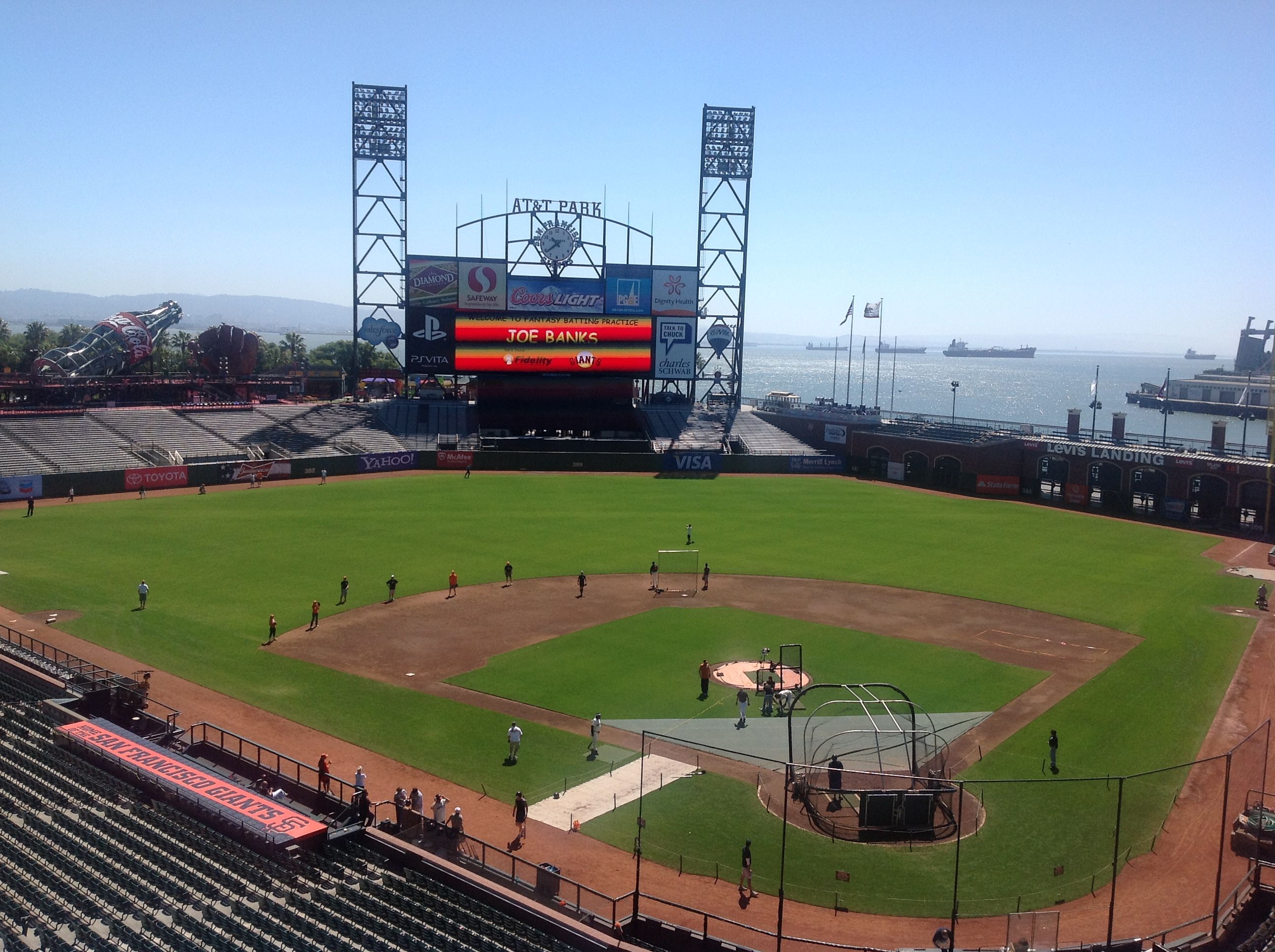
SFG_ATT_parkThe San Francisco Giants are making a case for keeping thier unofficial title of having the best wireless networked ballpark by doubling the number of wireless access points and adding mobile-device charging stations at AT&T Park for the 2013 season.

Already easily one of the best un-wired sporting arenas, the home field for the 2012 World Series champs isn’t resting on its tech laurels. According to an email from Giants CIO Bill Schlough, “the Giants and AT&T Wi-Fi Services are more than doubling the number of access points at the ballpark (760) to stay ahead of demand from our increasingly connected fan base.” Schlough said the Wi-Fi network at AT&T Park hosted 980,000 gameday connections during the 2012 season, up 90% from 2011. Total data usage, Schlouh said, increased by 140 percent over the previous year, with more than 16 million megabytes sent over the AT&T Wi-Fi network during the Giants’ regular and playoff seasons.

To better serve fans who probably burn out batteries sending tweets and Vine videos, the Giants and AT&T are helping make sure nobody has to crouch down by a concourse wall, looking for an outlet mid-game. According to Schlough, fans at AT&T Park will have access to more than 400 mobile device chargers throughout the stadium, with 10 mobile kiosks capable of charging 16 devices each. And perhaps most importantly, the Giants will keep their highest-paying customers well-charged, with four device chargers in each suite.

Schlough also gave us a Giants’ point of view on the announcement last week about Qualcomm and Major League Baseball “working together” to bring more Wi-Fi networks to MLB parks. While we cynically tweeted that such deals don’t mean much without monetary figures attached (I mean, the best way to bring Wi-Fi to the ballparks that don’t have them is to BUILD NETWORKS), Schlough said the Qualcomm deal would only help build better networks.

In an email reply to a question about how the Qualcomm-MLBAM deal might affect the Giants, Schlough responded: “We’ve actually been working with Qualcomm and MLB Advanced Media to benchmark the work that AT&T has done here with our Wi-Fi and 3G/LTE DAS networks, in hopes that this we can A) identify specific areas within the ballpark to be targeted for continued improvement and B) potentially serve as the model that other ballparks can follow.”

Charging stations sound like another good step in the fans’ direction. Now if only airports and convention centers would follow suit.

Xirrus Brings Wi-Fi to Liverpool FC

Our friends at Xirrus scored another big stadium deal for their new-era Wi-Fi networking gear, bringing wireless services to Anfield Stadium, the home of the club since its formation in 1892. Here’s a good writeup on the deal from TechWorld. We are guessing the ability for Xirrus’s antennas to cover more space and provide more capacity per access point was a selling plus for the ancient Anfield Stadium; here’s the official press release about the win.

ExteNet Bags Four Major Carriers for Barclays Center DAS

On the DAS (distributed antenna system) front the folks at ExteNet Systems scored a major win for their network at the new Barclays Center in Brooklyn. ExteNet, which builds DAS networks to improve in-building cellular connections, signed agreements with the big 4 U.S. wireless carriers — AT&T Wireless, Verizon Wireless, Sprint and MetroPCS — for the Barclays DAS, meaning that all the carriers will pay ExteNet to help bring better signals to their customers inside the arena.

Signing all four is a huge win for ExteNet, whose strategy of building “neutral DAS” networks and then acting as the middleman seems to be paying off not just for ExteNet, but also for cellular customers. By picking ExteNet, Barclays is putting the fan experience above the potential income of a single-carrier “exclusive” deal. Let’s hope more stadiums think of ExteNet and other neutral DAS players first, instead of deals that leave two thirds of the cellular users without better connections.

NL West Leads MLB Stadium Wi-Fi Scorecard, with 4 out of 5 Teams Offering Network Service to Fans

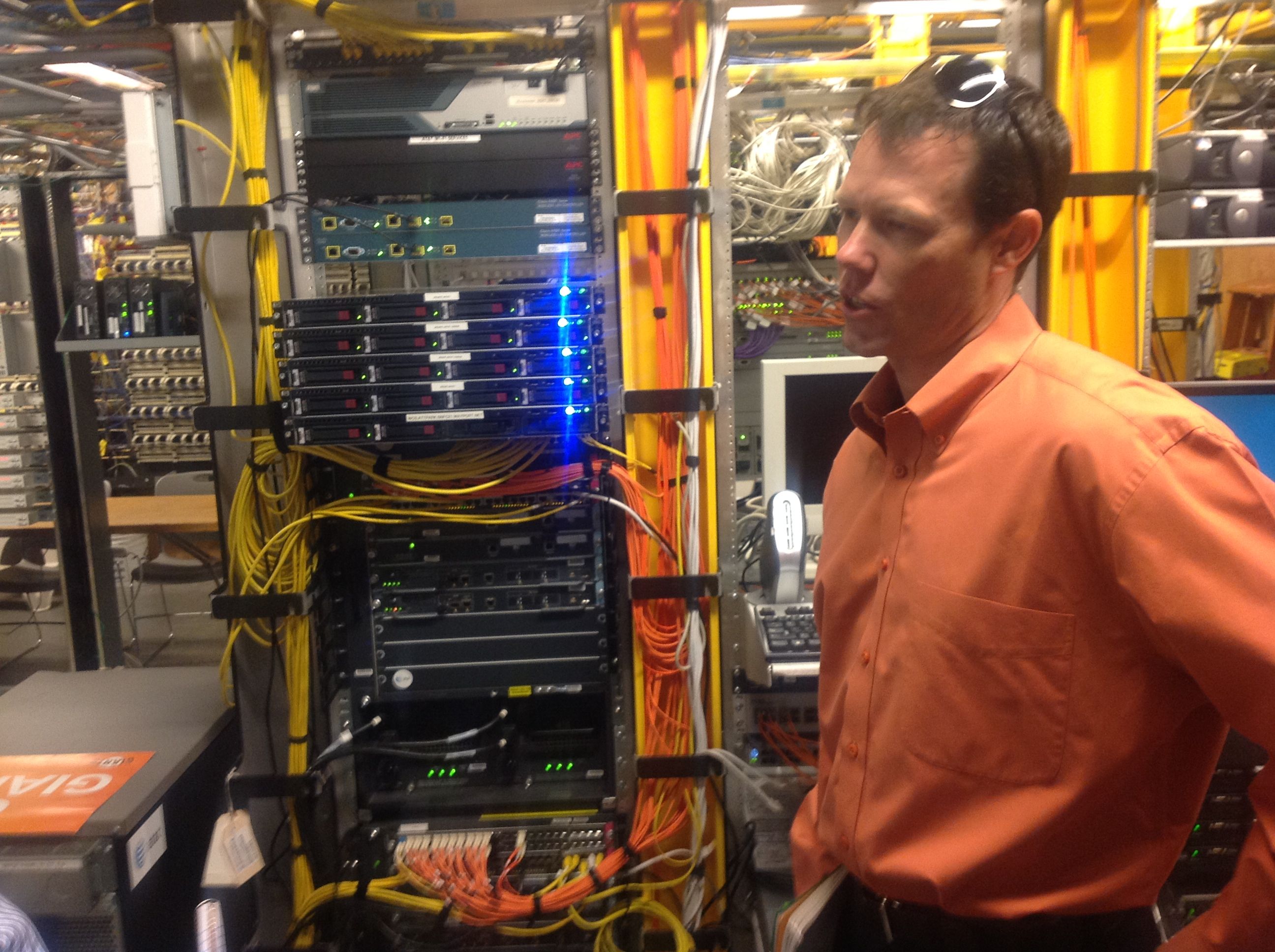
The Giants' Bill Schlough in front of some hard-working wireless network hardware. Credit: John Britton, AT&T.

The Giants’ Bill Schlough in front of some hard-working wireless network hardware. Credit: John Britton, AT&T.

Welcome to the spring training version of Mobile Sports Report’s annual roundup of Major League Baseball stadium Wi-Fi networks, where we tabulate which teams have networks for fan use. By our count, the National League West division is the sport’s network-savviest, as four out of the five teams — San Francisco, Los Angeles, San Diego and Arizona — will have free in-stadium Wi-Fi service for fans this season. For the entire major leagues, our research found 10 11 12 stadiums that definitely have Wi-Fi, two that are “maybes,” and 16 that don’t have public Wi-Fi service available. But just like baseball, which hasn’t started its regular season yet, we’re expecting our lineup to change before the games that count start.

FIRST UPDATE: Thanks to Jeff Baumgartner over at Light Reading, we have proof that Philadelphia and Citizens Bank Park can be added to the “has Wi-Fi” list, thanks to some work by hometown provider Comcast and equipment partner Cisco. Check out the great slideshow Jeff put together.

SECOND UPDATE: Wrigley Field, home of the Chicago Cubs, has Wi-Fi. More on this soon, but we have it from the horse’s mouth so we are moving the Friendly Confines to the “yes” list.

THIRD UPDATE: Maybe we shouldn’t count Dodgers Stadium yet, since the Wi-Fi service has yet to be launched according to this report from the LA Daily News. Will the lack of Wi-Fi keep the Dodgers from getting All-Star votes?

For the record, here are the 12 teams with networks that we can verify, some of which (like the Dodgers) are coming online for the first time in the 2013 season: San Francisco Giants, Los Angeles Dodgers, San Diego Padres, Arizona Diamondbacks, Atlanta Braves, Washington Nationals, Houston Astros, Chicago White Sox, Minnesota Twins, Philadelphia Phillies, Chicago Cubs and the Boston Red Sox. The two “maybes” are the Seattle Mariners and the New York Mets, which are supposed to have networks but as of this writing we can’t confirm services are available.

Why do we have “maybes,” you ask? Since this research was done completely online and on the weekend, we haven’t had a chance to contact teams directly for confirmation of services. And it’s pretty apparent to us that MLB and the teams do a good job of obfuscating whether or not there is Wi-Fi at the park — some of the teams that have networks don’t list the service anywhere on their MLB-approved team home page. In the weeks between now and the start of the season, we’ll try to figure out our maybes, and maybe add a few more teams in case deals get done before Opening Day. Anyone with definitive knowledge that differs from our totals, please feel free to contribute with a comment or a tweet to me, @paulkaps, with a verifiable link. Any fixes or adds, we’ll salute with a retweet and a hearty well done.

WHY WI-FI DEALS AREN’T PUBLICIZED

As an outlet that humbly boasts having stadium Wi-Fi news and analysis that is the equal of anyone else’s out there, we’re not that surprised that even some teams with networks are keeping things under wraps a bit. Some of that has to do with the secrecy that sometimes surrounds the contracts behind the deals; cellular service providers, for example, might not want to overly publicize the fact that they are subsidizing Wi-Fi at one stadium, since then others will want the same sweet deal. The Dodgers’ planned network, for example, is touted as being built by the Dodgers and MLB’s Advanced Media division — hiding from view whoever the service provider and equipment partners are (we suspect Time-Warner Cable and Cisco, but can’t verify).

The other reason why teams might not want to shout out loud about their Wi-Fi? In case they are worried about performance is one reason. Since these networks are notoriously hard to deploy and operate, if you are new to the Wi-Fi game you might not want to advertise it too heavily. But we expect that will change in the near future as more fans demand connectivity, and as Major League Baseball pushes its teams to all install networks so that MLBAM can sell more of its single, league-approved mobile app.

But on to the stats! Among the gems we uncovered was that among service providers backing networks AT&T had the most with four (San Francisco, Atlanta, Chicago Cubs and Arizona) while Verizon has one (San Diego), along with Time-Warner Cable (Houston), Boingo (Chicago) and CenturyLink (Minnesota). Among equipment providers with announced deals we have Cisco at two and Meru Networks at two (Washington and Boston), though we suspect Cisco is behind more deals (like LA’s) as a silent partner. Interestingly, Cisco also has already partnered with AT&T to do StadiumVision video deals in Yankee Stadium and Kansas City, so don’t be surprised to see Wi-Fi networks from the same partners in those facilities sometime soon.

Below is our list of stadiums with yes/no on Wi-Fi fan networks, and some news links we’ve scoured. Again, this is a working post so please — especially if you are with a team, provider or vendor — send us a message if you see an error. Remember, errors are part of baseball! And enjoy your Wi-Fi at the game this season.

MOBILE SPORTS REPORT MLB STADIUM WI-FI ROSTER, 2013 SEASON

NL WEST

YES:
San Franisco Giants, AT&T Park
The Giants, namesake sponsor AT&T and team tech wizard Bill Schlough are recognized widely as the Wi-Fi and in-stadium network leaders not just in baseball, but probably in all of sports and stadiums. Here’s our profile of the Giants from last year.

Los Angeles Dodgers, Dodger Stadium
As part of the team’s $100 million stadium renovation, Dodgers fans get Wi-Fi this season.

UPDATE: According to the Long Beach Press-Telegraph, the Wi-Fi and cell improvements won’t be live on opening day. Too bad.

San Diego Padres, Petco Park
This one was news to us — but it looks like fans in San Diego will finally get Wi-Fi in their park, thanks to Verizon’s first baseball play.

Arizona Diamondbacks, Chase Field
Another AT&T network, Chase Field has had Wi-Fi for some time now. They even have one of the better apps pages.

NO:

Colorado Rockies, Coors Field

NL CENTRAL

YES

Chicago Cubs, Wrigley Field
AT&T has helped the Cubs build Wi-Fi in Wrigley. More on the details soon.
NO:

St. Louis Cardinals, Busch Stadium

Milwaukee Brewers, Miller Park

Pittsburgh Pirates, PNC Park

Cincinnati Reds, Great American Ball Park

NL EAST

YES:

Atlanta Braves, Turner Field
Another AT&T network.

Washington Nationals, Nationals Park
Reportedly, this was one of the first 802.11n networks, thanks to gear from startup Meru Networks. However, we can’t find an official link on the Nationals home page, making us wonder if this service still exists. Natitude fans, what say you?

UPDATE 2: Nats are getting a Wi-Fi upgrade, thanks to Comcast. No word if Meru is still the AP vendor.

Philadelphia Phillies, Citizens Bank Park
See Light Reading’s excellent slide show cataloging Comcast’s Wi-Fi plans at its hometown park.

MAYBE:

New York Mets, Citi Field
Does it or doesn’t it? No answer on the Mets’ website, but the new place was supposed to have a Wi-Fi network… of course that was before its supplier, Nortel Networks, went out of business.

NO:
Miami Marlins, Marlins Park
No Wi-Fi, though Marlins Park does have a new DAS install which helps cellular reception.

AL WEST

YES:
Houston Astros, Minute Maid Park
The refugees from the NL are the only park that we can tell has tried to charge for services — wondering if this info about a $3.95 cost for four hours airtime still exists. Houstonites? Yea or nay? This is a Time-Warner Cable/Cisco deal.

MAYBE:

Seattle Mariners, Safeco Field
All we could find were some references to Seattle’s Nintendo having sponsored a Wi-Fi network for gaming. No sign that it still exists or has been replaced. Hello Microsoft? No network for the home of Windows Phones? For shame.

NO:

Oakland A’s, Oakland-Alameda County Coliseum

Texas Rangers, Rangers Ballpark in Arlington

Los Angeles Angels of Anaheim, Angel Stadium

AL CENTRAL

YES:

Minnesota Twins, Target Field
Good writeup from our friends at SportTechie.

Chicago White Sox, U.S. Cellular Field
This one courtesy of the folks from Boingo.

NO:

Detroit Tigers, Comerica Park
No fan network, though we like this picture showing SSIDs and passwords for the media networks. Hope those settings have been changed.

Cleveland Indians, Progressive Field
No stadium-wide network, but the Indians at least have a social media suite with Wi-Fi. What, only a few people in Cleveland use social media?

AL EAST

YES:

Boston Red Sox, Fenway Park
Here’s our profile of the Meru win at historic Fenway.

NO:

New York Yankees, Yankee Stadium
Do they still ban iPads?

Toronto Blue Jays, Rogers Centre
A bit embarrassing, since Rogers is Canada’s AT&T-like telco

Tampa Bay Rays, Tropicana Field

Baltimore Orioles, Oriole Park at Camden Yards