Wi-Fi Whispers: AT&T Beefs Up Wi-Fi and Cellular for Pebble Beach

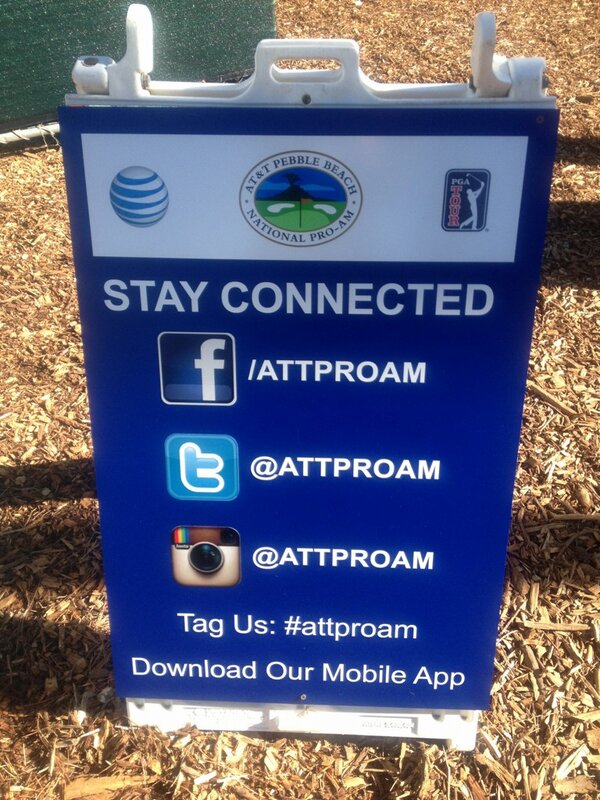
AT&T social media sign at the tourney. Credit: @James_Raia.

AT&T social media sign at the tourney. Credit: @James_Raia.

With a field full of entertainment and sports celebrities in addition to pro golfers, the AT&T National Pro-Am in Pebble Beach this weekend is a fan-snapshot nirvana — and AT&T has beefed up its wireless coverage yet again to make sure all those pictures, tweets and Facebook updates can get posted.

“Every year, the data volumes [from the event] go up significantly,” said Chad Townes, vice president of AT&T’s Antenna Solutions Group, in a phone interview last week. “Between the celebrities and the beauty of the course, there’s definitely a lot more [wireless] traffic than at other golf tournaments.”

According to Townes, AT&T has provided fans at the tourney with several Wi-Fi hotspot areas where AT&T customers can get a high-bandwidth signal for Internet connection. This year, AT&T also deployed three additional COWs, or cell towers on wheels, to augment the existing cellular infrastructure.

Bringing wireless signals to a golf course, Townes said, is always a challenge, due to the very nature of the venue, with hills, trees and other obstacles to surmount. There are also aesthetic challenges, such as the fact that most of these courses don’t want any cables to be visible during the TV broadcasts.

Townes said there is also the whole discussion about whether phones should even be allowed at golf tournaments, given the possibility of fans distracting players with loud calls or with camera noises. Still, he said, providers need to figure out how to bring better coverage to courses, since fans want to be able to use phones to communicate with friends and family at the event, say using text messages to say “meet us at the next hole.” The PGA seems to be on board with this idea, since it just introduced a course-finder app that not only shows players and scored superimposed on a Google map, but also adds in locations for amenities and concessions — meaning the PGA expects fans to have phones at events.
AT&T: Fans Set Cellular Data Record at Super Bowl, Again

According to the folks at AT&T, fans in the New Orleans Superdome Sunday night set another record for cellular traffic, with 388 GB traversing AT&T’s in-dome network during the game between the Baltimore Ravens and the San Francisco 49ers. What’s somewhat staggering about the number is that it doesn’t include any of the traffic that was sent out over the in-dome Wi-Fi network recently installed by Verizon and Cisco; AT&T’s numbers are just for the cellular infrastructure and the DAS deployment Ma Bell put in the Superdome last year.

Guessing that Verizon’s numbers will also be bigger — according to a recent story in Ars Technica Verizon saw 225 GB of bandwidth used during last year’s Super Bowl in Indianapolis, where AT&T saw 215 GB of usage on its networks. If Verizon’s numbers are similar to AT&T’s (from reports we saw on Twitter the Wi-Fi network performed well, even during the third-quarter blackout) then there was probably something like 800 GB of data flying out of the Superdome Sunday, maybe even close to 1,000 GB if you throw in Sprint and T-Mobile numbers, which we probably won’t get.

So it’s pretty damn clear: Fans like using mobile devices at big sports events. And we haven’t quite reached the peak yet, since every successive Super Bowl sets a new record. We are guessing this trend will continue for some time, since there isn’t even a good in-stadium app yet to really make people do things other than send pictures and texts to people who aren’t at the stadium. So — this journey has really just begun.

Some other interesting nuggets from the folks at AT&T, who said that their network didn’t go down during the blackout:

— AT&T’s peak hour of data usage at the Big Game occurred during halftime and during the stadium’s temporary power outage, from 8 to 9 pm EST. AT&T customers consumed 78 GB during this hour on the in-stadium mobility network, which is nearly double the amount of data that AT&T customers used during the peak hour at last year’s Big Game in Indianapolis.

— During the hour of halftime and the stadium’s temporary power outage, from 8 to 9 pm EST, customers made more calls, sent nearly twice as many SMS texts and consumed approximately 10 GB more data than they did during any other hour of the event.

— AT&T customers also made more than 73,000 mobile calls during the game.

Apple Expands Storage Capacity with Latest iPad Upgrade

ipad

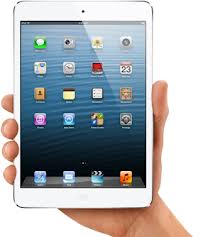
Apple has said that it has expanded the storage capacity options on its flagship iPad platform with the addition of models that will now have feature 128GB of storage, doubling what had been previously available.

The 128GB iPad with Wi-Fi and iPad with Wi-Fi + Cellular models will be available starting next Tuesday, Feb. 5, and will be available in both black or white models. The MSRP for the iPad with Wi-Fi model is $799 and will be $929 (US) for the iPad with Wi-Fi + Cellular model.

The models will have what is expected of this generation iPads including a 9.7-inch Retina display, Apple’s iOS 6.1 operating system that includes built-in support for LTE networks. It will be powered by the company’s A6X dual core processor and will include the FaceTime HD camera.

The move could be seen as designed to counter Microsoft which is planning to release its Windows Surface 8 Pro tablet on Feb. 9, a tablet that will also have a 128GB capacity. The Surface RT that was released late last year currently supports 64GBs of storage.

At the upcoming World Mobile Congress next month in Barcelona a number of tablets are expected to be shown, including four from Samsung. It will be interesting to see if that company follows along and has its latest offering available with 128GBs as well.

Apple has been under increased pressure from its competitors in the second half of last year and continuing into 2013 as they have started bringing out significantly better developed and built products that they had previously. Samsung and Amazon have been the two most aggressive but Microsoft has also entered the game late last year with its Surface platform, and is expanding that soon with a model that is expected to be much better received that its Surface RT.

While this move is certainly more evolutionary rather than revolutionary it will help it keep its products features at the top of the charts.

Sony Unveils Latest Tablet-The Xperia Z (Non-Smartphone Version)

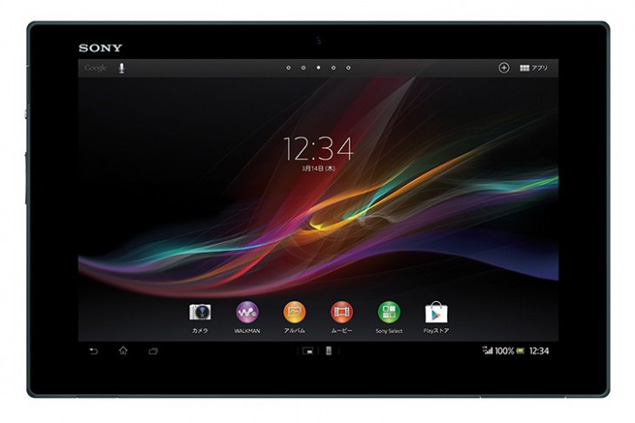
Sony released a smartphone at CES called the Xperia Z and has now followed that release up with its latest tablet offering, the Xperia Tablet Z as the company continues to battle for relevancy in the tablet space.

The tablet is a light, thin device that features a 10.-1 inch display with a 1920 x 1200 pixel high definition display, 2GB of RAM, and a 1.5GHz quad core processor. It will run the Android 4.1 operating system.

Included will be support for 4G LTE as well as NFC (near field communications) capabilities and weights a very light 495 grams and is 6.8 millimeters thick, making it slightly thinner than Apple’s iPad Mini. The case is waterproof and dustproof.

Other features include a microSD slot for memory expansion and an 8 megapixel camera that can automatically adjust its settings in low light and dark conditions to provide the best possible image. Overall storage capability and the frequency for the NFC have not been unveiled yet.

There are a number of questions that have yet to be answered about the device that received a very quiet launch that consisted of a simply press release in Japan. The two biggest questions are will it be released in the United States, or for that matter outside of Japan, and what will its pricing be? It appears that the tablet will be available this spring with pricing set at that time.

Still the move shows that Sony, despite some missteps in the tablet, and smartphone space, are not ceding them to Apple, Microsoft, Samsung or any other player without a fight. That will be good for the market as the increased competition will continue to help drive innovation in this space and provide new features and technology for users.

Verizon and the NFL: Pals Now, but What About the Future?

NFL commish Roger Goodell at CES. Credit: Paul Kapustka, Mobile Sports Report

On the surface the appearance of NFL Commissioner Roger Goodell at the Verizon CES keynote was all happiness and light, as chairman Rog traded pleasantries with Verizon CEO Lowell McAdam. But if you listened between the lines there was a bit of a disconnect, making us here at MSR wonder how in sync the two current partners will be in the near future.

The two areas where Verizon and the NFL seem headed in different directions are in mobile content delivery and in-stadium wireless networks, two huge matters for both entities. Currently Verizon is the NFL’s exclusive partner for providing mobile access to live NFL games, available only on Verizon devices via the NFLMobile app. Verizon currently can show live games on Thursday nights, Sunday nights and Monday Night Football, as well as the RedZone channel, which shows a lot of live content from games all around the league. Verizon paid something on the order of $700 million for the deal, which is said to expire after next season.

The unexpected appearance of Goodell during McAdam’s speech led us to initially believe there was some renewal announcement in the air — but instead Goodell left without talking about the future of NFL Mobile. Our guess for most of this season is that the NFL wants to take full control of its mobile/digital content offerings and sell them to fans at a steep cost, like Major League Baseball does. The silence in the presence of Verizon’s CEO can’t be good news for the phone carrier.

Likewise, Goodell has said he wants all stadiums in the league to install high-capacity Wi-Fi networks, to better serve fans with mobile content, social media and other connectivity options while they’re at the games. McAdam’s company, unlike its main competitor AT&T, has not made public Wi-Fi a priority and McAdam talked at CES about his hopes to use the company’s new 4G LTE video broadcast tools to help bring fans mobile coverage of events like the Super Bowl. He even made a pass at Goodell, telling the commish on stage that “we’d love to broadcast the big game [Super Bowl] in the 2014 time frame.” Goodell didn’t bite and didn’t comment. That doesn’t sound like much of a deal or even a promise. Akward stuff for a CEO to be floating, in front of thousands of witnesses.

Though we haven’t yet delved fully into how Verizon’s LTE video broadcast technology works, we’re skeptical that it can handle the big traffic demands of a full stadium of mobile users — more than half of whom are likely not Verizon customers and therefore unable to use any Verizon network technologies. Our guess is that the NFL will keep looking to Wi-Fi to solve stadium network issues — leaving Verizon on the sideline.

Just in Time for BCS, AT&T Adds 4G LTE to DAS at Sun Life Stadium

It isn’t Wi-Fi, but at least AT&T customers at the BCS Championship game next Monday should see an improved 4G LTE signal, thanks to an upgrade of the existing Distributed Antenna System (DAS) at Sun Life Stadium in Miami.

A local press release (no link) from AT&T’s Florida operations saluted the wireless upgrade, which was actually installed in time for the Jan. 1 Orange Bowl. According to the release, the 4G LTE upgrade was accompanied by more antennas, some facing outward from the stadium walls so that fans coming to the game wouldn’t find their signals lost. Here’s the money quote from the release:

“We know football fans at the stadium will want to use their smartphones to share photos, videos and texts during the big games with friends back home,” said AT&T Florida President Marshall Criser. “The investment we’ve made in the upgrades at the stadium will help make that possible.”

Mobile Sports Report will be watching the game in 3D in Las Vegas, courtesy of the fine folks at ESPN… drop us a line if you are at CES and want to talk Mobile Sports!