‘Big Four’ wireless carriers sign on to use DAS at Niners’ Levi’s Stadium

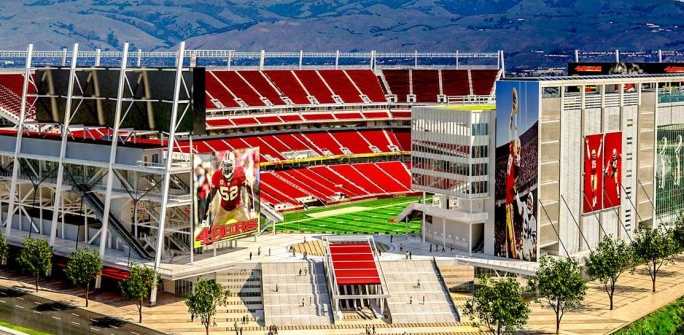
Levi's StadiumWhenever you are putting a neutral DAS in a stadium, one of the biggest challenges is convincing the major cellular carriers to participate in your deployment. Even before their new arena has opened, the San Francisco 49ers have scored a victory of sorts with the news that the four biggest U.S. cellular carriers — AT&T, Verizon, Sprint and T-Mobile — have all agreed to use the neutral-hosted DAS at Levi’s Stadium.

According to DAS Group Professionals, who are behind the DAS deployment at Levi’s, the system of small cellular antennas will also be synchronized with the stadium’s Wi-Fi coverage to produce “seamless” coverage for fans. Though we are historically wary of promises made before networks go live, the fact that the big players in U.S. cellular all agreed to use the neutral DAS shows at least in some way that the folks putting together the technology at Levi’s have a convincing story.

We’ll have more from DGP and the Levi’s DAS deployment at some point in the future, so stay tuned for the stadium launch that has everyone in the stadium tech marketplace watching and waiting.
New Year’s Prediction: No wireless data record at 2014 Super Bowl

Even though the steady march of smartphone and tablet use at sporting events seems to show no sign of decreasing anytime soon, I am going to go out on a small limb here on the last day of 2013 and predict that we will NOT see a new record for mobile data use at the upcoming Super Bowl XLVII.

Why? Because it’s outside, in New Jersey, and it will very likely be cold or snowy — so the lucky fans who get to freeze their behinds off will most likely keep their fingers inside their gloves or mittens, and not expose them to the elements just to text, post photos or view handheld video. Well, some if not many people probably will, since MetLife Stadium has (reportedly) one of the better Wi-Fi installations in the NFL. And maybe there will be a power outage, which is always good for more wireless use. But still — it’s not such a stretch to think that fewer people will be using their phones at MetLife than at the Superdome from last year, right?

Or will new records be set anyway, since probably more fans will have more devices and more people now know that they can get a decent signal inside a stadium? If you are reading this blog you are probably among the select crowd who cares about such statistics, so stay tuned and we will provide you with updates since we usually get them from the cell providers and stadium operators the week after the big game. For now, happy new year to all and here’s to a great 2014 in stadium technology and mobile sports.

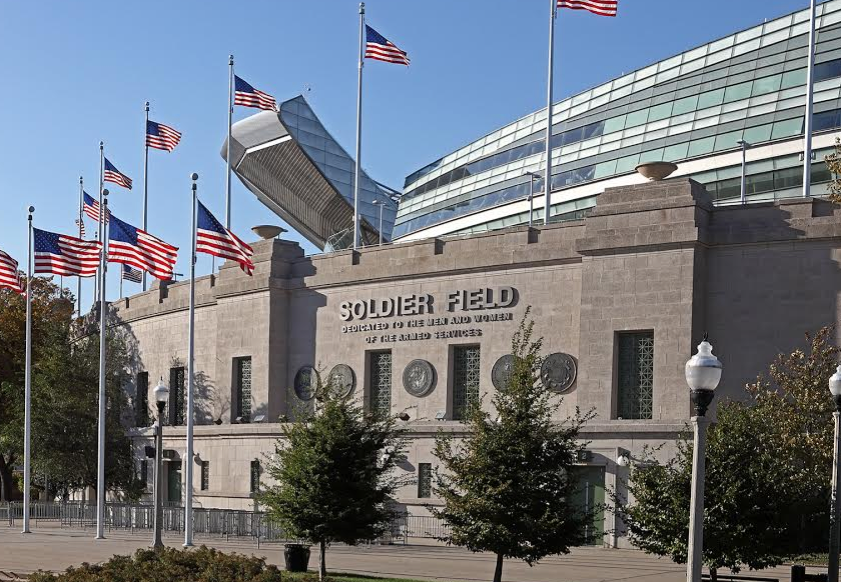
Stadium Tech Report: Boingo, AT&T answer call for more DAS bandwidth at Chicago’s Soldier Field

Soldier FieldWhether or not the Chicago Bears will beat the Green Bay Packers this Sunday is a question still answerable only by higher deities. But if those powers that be decide to unleash weather conditions of biblical proportions again, at the very least the Soldier Field folks can be confident that their in-stadium network will stand up to the challenge.

Earlier this year, tornado weather hit Soldier Field and caused an unusual 2-hour delay during the Nov. 17 Bears-Ravens game. While the deluge was too dangerous for football, for Doug Lodder and Luca Serra, it was a big test to see if the stadium wireless network upgrades they’d recently helped install could stand up to a huge, unexpected traffic surge.

“We thought we’d probably see some good [network] usage with the weather delay and tornados,” said Lodder, vice president of business development at Boingo Wireless, which recently concluded a big network upgrade at the home of the NFL’s Chicago Bears.

“We saw double the usual traffic from both AT&T and Verizon customers during the 2-hour delay,” said Serra, director of sponsorship and media for SMG, the outside entity that manages Soldier Field for its owners, the Chicago Park District. “During that break, we didn’t hear a single complaint [about the wireless network] from the media or the fans. It was a great test — not a desired one in any way, shape or form, but a great test.”

Upgrades needed at ‘oldest’ big stadium Wi-Fi network

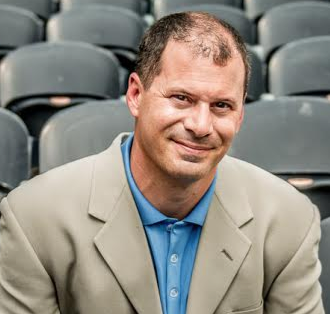
Luca Serra, SMG

Luca Serra, SMG

Even though you can’t really plan or design for surges that might happen during extreme situations, Serra and Lodder and others running the Soldier Field network knew last year that an overall upgrade was needed. Home of one of the earliest (if not the first) big-stadium DAS and Wi-Fi networks, Soldier Field was showing 80 percent year-over-year traffic growth on the Wi-Fi network, Lodder said in a recent joint phone interview with Serra.

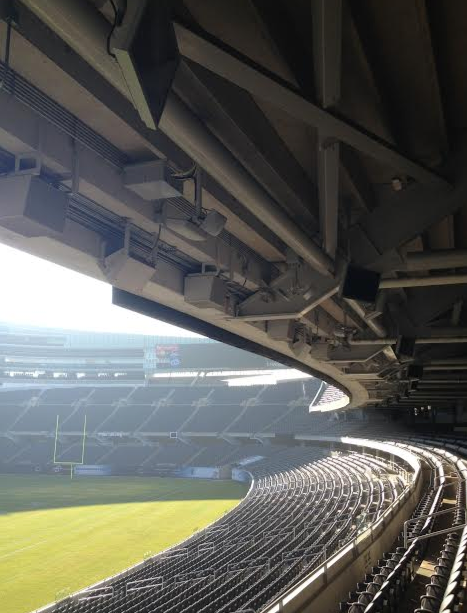
Along with DAS partner AT&T, SMG and Boingo spent last year adding more DAS capacity so that Solider Field now has 250 DAS antennas to go along an undisclosed number of new Wi-Fi APs. Though AT&T did some specific upgrades to its DAS presence at Soldier Field (including adding support for its new 4G LTE network), all the major wireless carriers are represented in the DAS via the neutral hosting of Boingo.

Why did the firms decide Soldier Field needed an upgrade? While Lodder said its DAS, which first started operating in 2011, was “pretty cutting edge at the time,” during the past couple years, data usage at Soldier Field has skyrocketed.

“Everyone has a device, and there’s a lot more social engagement and sharing,” Lodder said. “We’ve seen a huge increase in data use.”

“With this large increase in use, we said ‘let’s address the issue’ and not let it get to a point where it’s a problem,” Serra said.

Moving fast and finding space

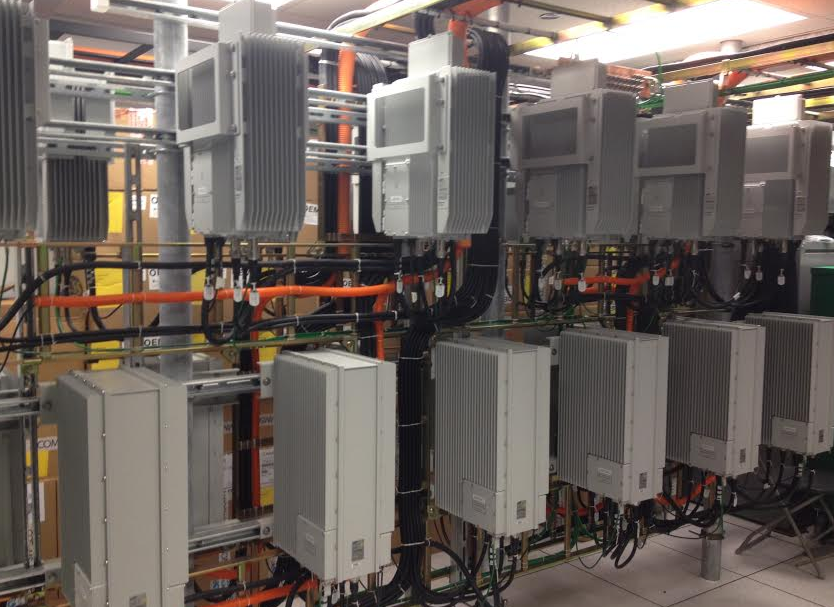
DAS gear at Soldier Field. Credit: Boingo Wireless

DAS gear at Soldier Field. Credit: SMG/Soldier Field

Both Serra’s and Lodder’s teams were familiar with the need to balance performance and aesthetics at the venerable stadium perched on the edge of Lake Michigan. Since the network was put in after Soldier Field’s extensive renovation was finished in 2003, special attention needed to be paid to placements of Wi-Fi and DAS antennas.

“It wasn’t just bolting APs on,” Serra said. “We had to be very protective of the aesthetics of the building.”

For Lodder, that sometimes means that the best placement isn’t always available.

“There’s always challenges with architecture at stadiums,” Lodder said. “In a perfect world, there might be a certain place you want to put an antenna. In the real world, you can almost always count on changing that 20 percent of the time.”

Doug Lodder, Boingo

Doug Lodder, Boingo

A bigger construction concern of late is where to put the extensive amount of back-end telco gear needed to support the DAS infrastructure and upgrades. “Carrier base stations need several thousand square feet of space, and those need to be rooms with connectivity and power,” Lodder said. At Solider Field, Serra said some unfinished space north of the stadium proper was converted into a DAS equipment room, since there wasn’t enough available space in the main building. Lodder said for the recent upgrade, additional power upgrades were installed as well.

Still, even with all the challenges the Boingo, AT&T and SMG teams were able to go from design to finished construction of the recent upgrade in 45 days this past summer, in part thanks to some interesting work schedules.

“After one preseason [football] game we had scaffolding going up at night, with three 24-hour shifts,” Lodder said. “It was a pretty accelerated build.”

There is no such thing as free Wi-Fi

One other interesting twist to the Boingo Wi-Fi network at Soldier Field is its cost — the company charges a $1.99 per day fee for Wi-Fi use, or you can purchase a regular Boingo monthly plan for $7.95 which will also provide access at Soldier Field.

Wi-Fi antennas hidden under stands at Soldier Field. Credit: SMG/Soldier Field

Wi-Fi antennas hidden under stands at Soldier Field. Credit: SMG/Soldier Field

While many if not most professional teams are making Wi-Fi services free to paying ticketholders, Serra and Lodder said that the Bears aren’t.

“The Bears are a tenant of the Park District, and no one [from the team] has ever said ‘we’re going to pay to turn it [Wi-Fi] on for free,’ ” Serra said. Lodder noted that in the end, someone somehow has to pay the cost of connectivity.

“Someone’s always got to pay for it — Wi-Fi isn’t free,” Lodder said. “Some teams may feel they’ve made enough on the tickets to offer [Wi-Fi] free, while in other cases users pay either with money or with eyeballs, by viewing some ads.”

While the NFL itself is still somewhat vague on its league-wide plans for in-stadium Wi-Fi — other than saying that teams should provide it — Serra and Lodder are confident that Soldier Field will be at the top of the chart when it comes to network performance.

“If and when they [the NFL] roll out standards for network performance, we’re going to exceed them,” Lodder said.

Friday Grab Bag: ESPN adds more SEC programming for 2014

Not enough SEC Football? ESPN has you covered
ESPN’s top markets for its college football broadcasts are all in SEC football’s heartland and apparently the powers that be at the sports broadcasting giant believe that you can never have too much of a good thing. (Apparently they have never sat by an unwatched plate of fudge.)

So with the kickoff of next season’s NCAA football viewers can expect “SEC Nation” according to SI, a two-hour program that will run from 10 to noon EST as the main component in its SEC Network. It will cover other sports aside from football, which is news to the rest of us that SEC schools

Facebook buys SportsStream
A month ago we mentioned that Facebook was looking to increase its profile in the sports markets in part with a partnership with sports analytics company SportsStream. Well according to TechCrunch it likes SportsStream so much it purchased it.

The move I designed to help it fend off rival social media companies such as Twitter that are increasingly becoming to the go to sites for up to the second news and gossip. Terms of the deal were not revealed.

Are those Twitter numbers real?
Good news! If you have 61 followers on Twitter you are a median poster and if your number has reached 1,000 active users then you, my friend, are in the 96th percentile. Since it seems like there are millions on Twitter what exactly does this mean?

Well according to Oreilly.com it means that the huge percentage of activity is much smaller than it appears. One interesting outtake from the article is that fake posters and infrequent ones often have huge followings.

Will Android fragmentation continue?
Ever wonder how many types of Android operating systems and devices are out there? How about Apple iOS? Well A recent Forbes article points out that there are currently 4,700 different types of devices using the two operating systems.

Now you can probably list the Apple devices off the top of your head, but the dizzying array of Android has caused concern for developers for some time, and the article points out that as long as it stays heavily fragmented it will benefit Apple.

Worst Announcers in the NFL
Some poor soul at SportsonEarth charted announcers for a series of NFL games in order to find out which ones used the most, and the fewest, clichés, leaps of faiths and illogical statements during a broadcast.

I am assuming that author is not now committed and I think most will agree with the general results, although people always have their favorites to dislike-I know that I certainly do.

5 Bars Inside now inside Anaheim Stadium
The Los Angeles Angels of Anaheim have announced that 5 Bars Inside is the official distributed Antennae system (DAS) and Wi-Fi provider for the team and that the stadium will get a makeover so that fans have solid connectivity.

AT&T adds 185 Wi-Fi antennas in Charlotte’s Bank of America Stadium upgrade

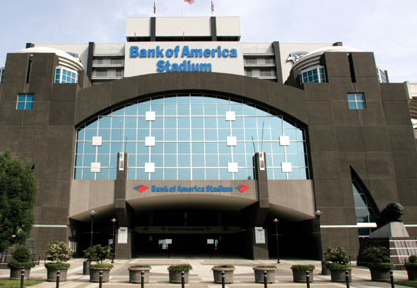
Bank of America StadiumA year ago, folks who run the Charlotte Panthers’ Bank of America Stadium were telling us how much the fans there liked the Wi-Fi network installed by AT&T. It’s possible Panthers fans like it even more now, with 185 new Wi-Fi access points to help improve coverage.

We haven’t talked to anyone in Charlotte this time around, but a press release from AT&T shares some interesting stats about wireless usage at BofA Stadium. According to AT&T, so far this season fans in Charlotte have sent 1.9 million MB across the Wi-Fi stadium network, 50 percent more data than during the same period in 2012. And the in-stadium DAS usage grew even more, by 90 percent compared to a year ago, according to AT&T.

What does that mean for stadium owners and operators? It may simply mean that whatever loads you think you are designing for, design for more. If AT&T and the Panthers had to go from 460 APs to 645 in less than a year, that’s a good sign that stadium Wi-Fi networks are like Fields of Dreams: If you build it, they will come, and they will download.

Stadium Tech Report: Cal Bears, AT&T get creative with DAS deployment for Memorial Stadium

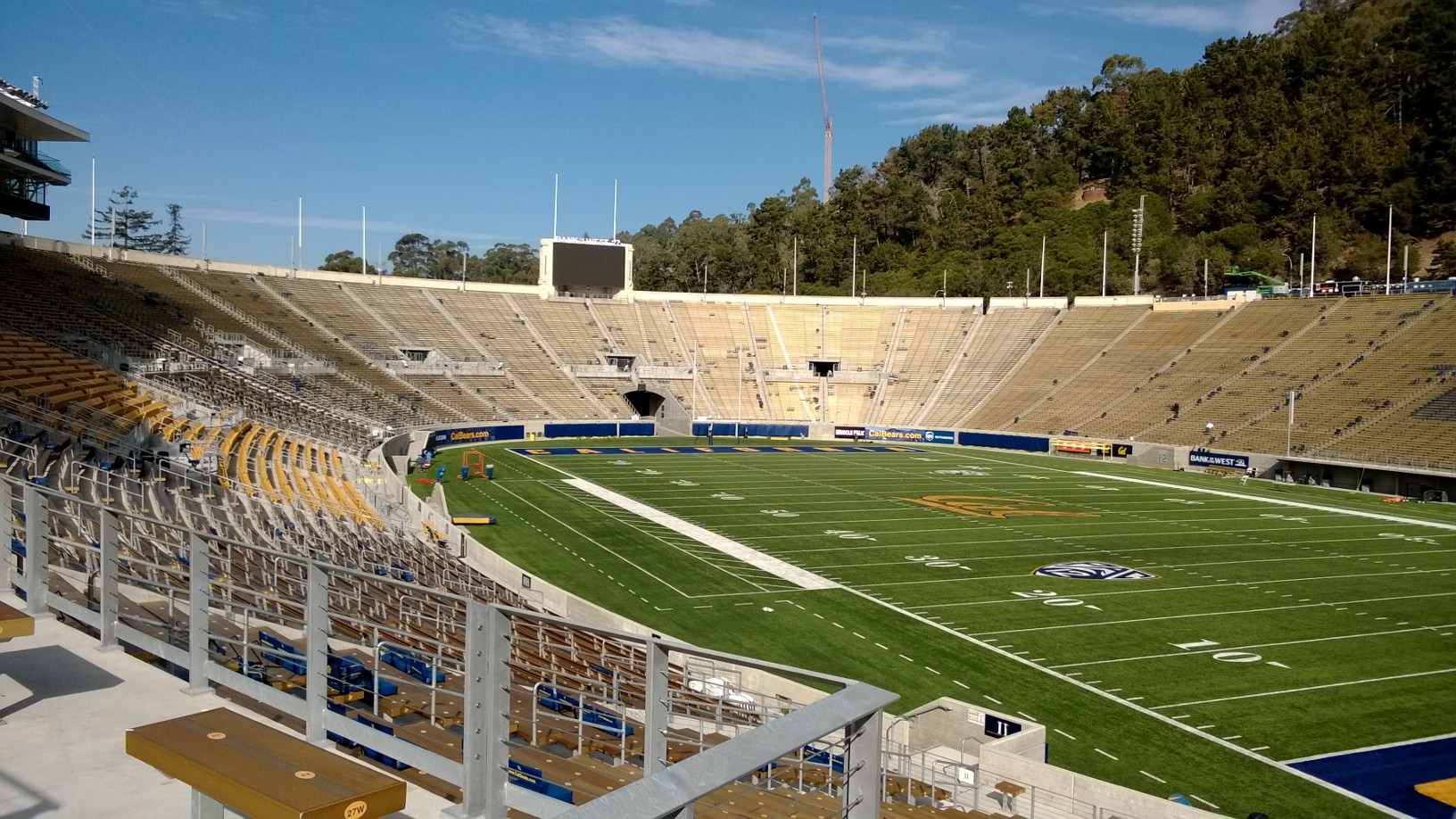
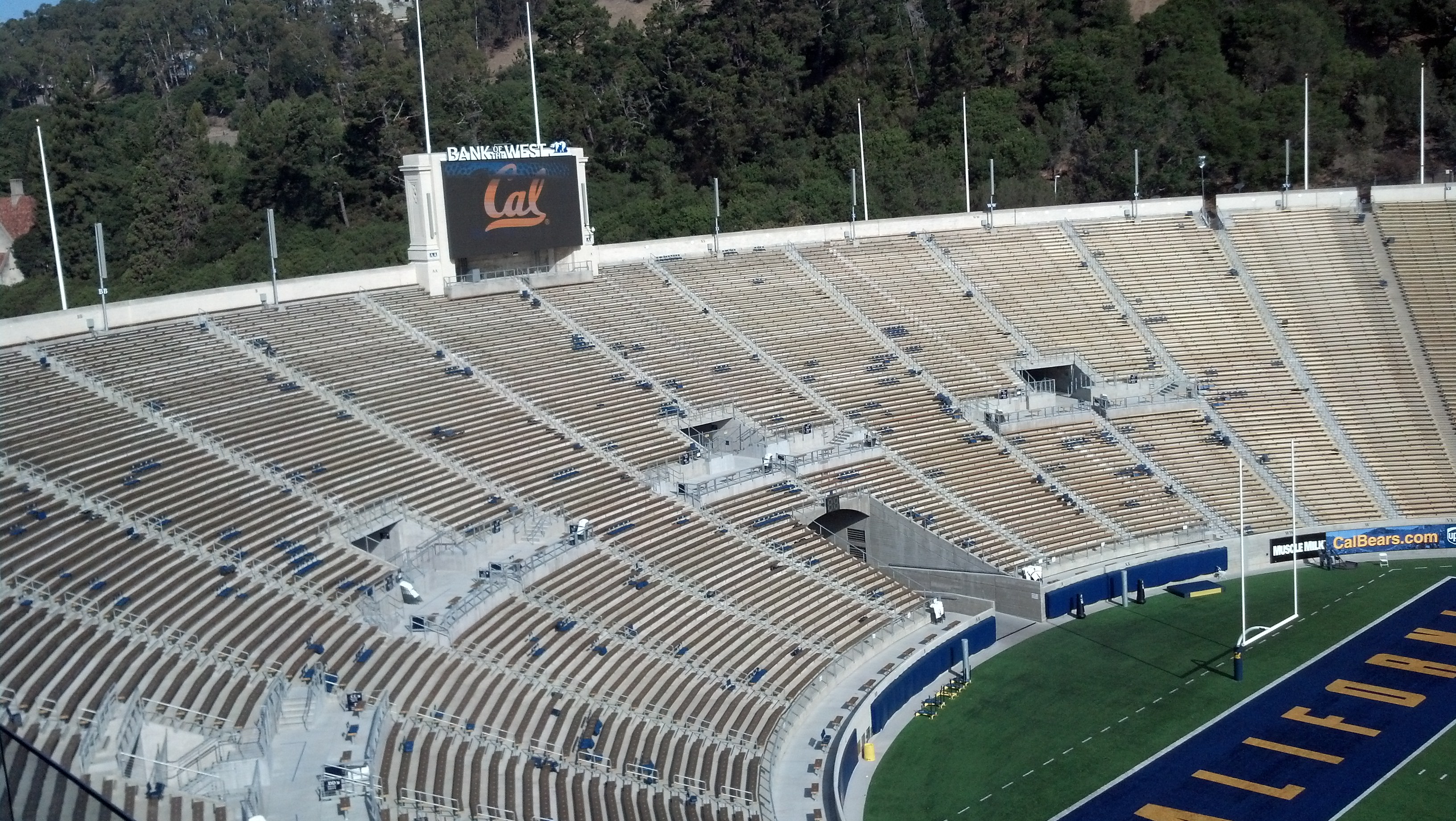
Cal's Memorial Stadium. Note the lack of overhanging structure.

Cal’s Memorial Stadium. Note the lack of overhanging structure.

What do you do when the construction of your big bowl stadium won’t allow you to install Wi-Fi? You start building the biggest DAS you can, to bring as much cellular capacity as possible to the fans who will fill the seats.

That problem and solution is now underway in Berkeley, at the University of California’s newly renovated Memorial Stadium. Though it now has a shiny new press box and suites on its west side, the 63,000-seat facility still has its old “big bowl” shape throughout the rest of the facility, an architectural quirk that leaves no place to put Wi-Fi antennas. To try and best overcome the design challenges, Cal and its partner AT&T are currently putting in place as big a DAS (distributed antenna system) as they possibly can, to bring as much cellular capacity as the stadium placements will allow.

At a press event Thursday to officially announce AT&T’s campus-wide Wi-Fi and DAS deployments — which are currently bringing welcome speedy connectivity to all the other parts of the school’s Berkeley footprint — Cal officials and AT&T execs noted that bringing better wireless to Memorial Stadium is also going to be a necessary evil, going forward.

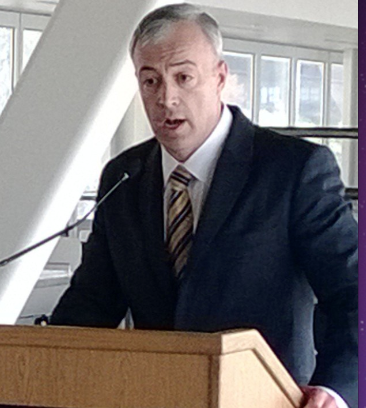
Solly Fulp, COO of Cal Athletics

Solly Fulp, COO of Cal Athletics

“We compete with the couch, and the HD TV,” said Solly Fulp, the Deputy Director of Athletics and Chief Operating Officer at Cal, at a quick press conference kicking off the Thursday events. “If we do not deliver an outstanding fan experience, people will do other things with their time.”

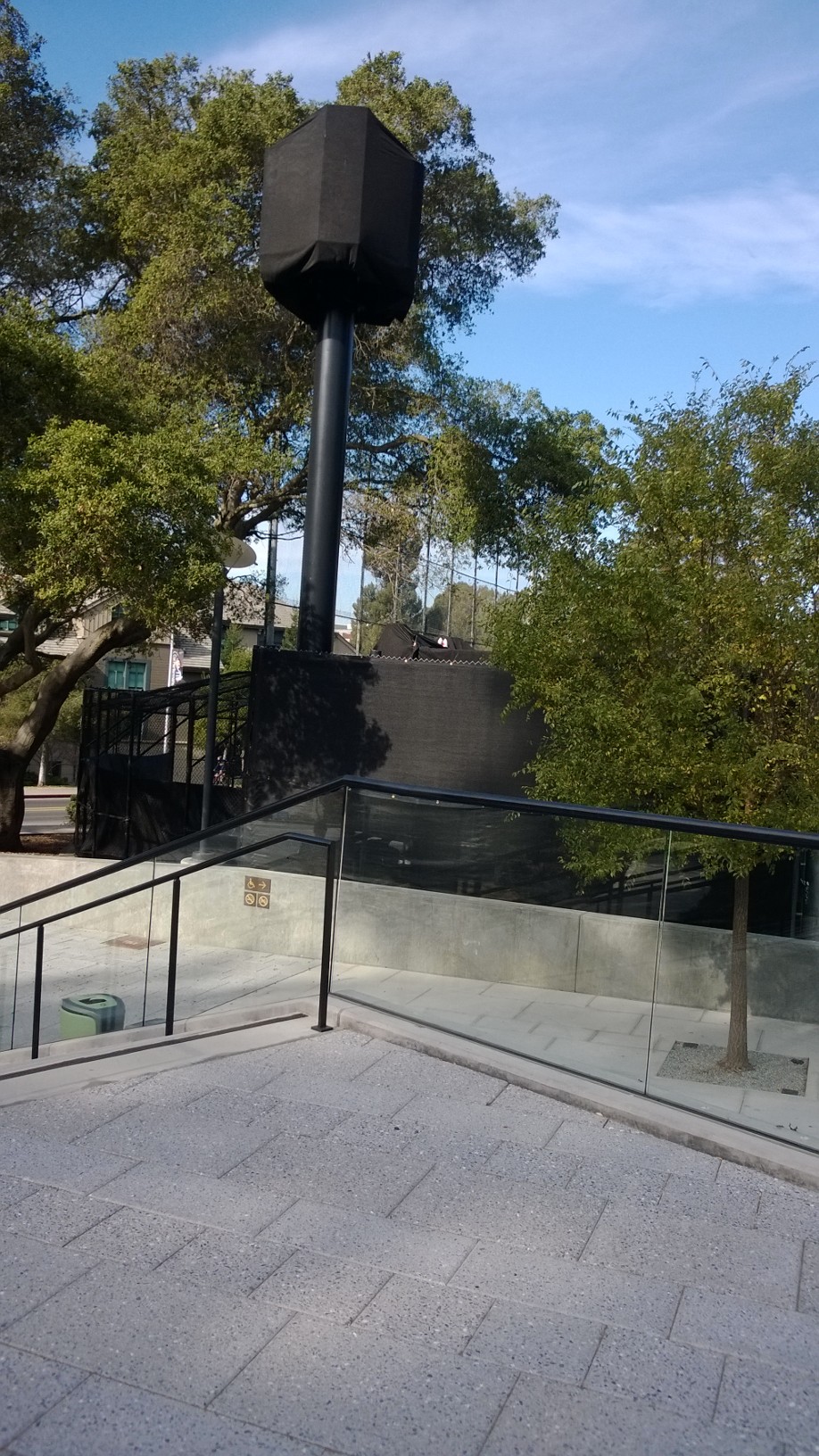
Right now, the wireless experience inside Memorial isn’t cutting edge. Basically a big concrete bowl filled with seats, Memorial has none of the overhanging levels that allow you to more easily attach antennas underneath, be they Wi-Fi access points or the small antennas used in DAS deployments. While the new press box and suites and internal construction improvements completed last year have brought the facility up to date on one level, for supplemental wireless coverage right now AT&T is using COWs (cell towers on wheels) in several spots around the stadium, covered with stealthy black cloth. But construction for a big, new DAS deployment is already underway.

North end of Memorial Stadium. The lower poles seen here will house DAS antennas

North end of Memorial Stadium. The lower poles seen here will house DAS antennas

According to AT&T, the low poles sticking up from the top of the bowl, currently used to house speakers, will by next season be equipped with DAS antennas focused down into the sections of seats. There will also be DAS antennas housed inside boxes mounted above tunnel entrances, and along the underside of the press/suite facility wherever possible. While Wi-Fi can typically support faster communications and more bandwidth, the DAS AT&T is putting in will support AT&T’s 4G LTE network, which is as fast as cellular gets. As in most stadiums we’ve talked to, putting in a DAS is priority one for wireless, since it helps eliminate the “no signal” problem common to big facilities that don’t have any extra cellular or Wi-Fi services.

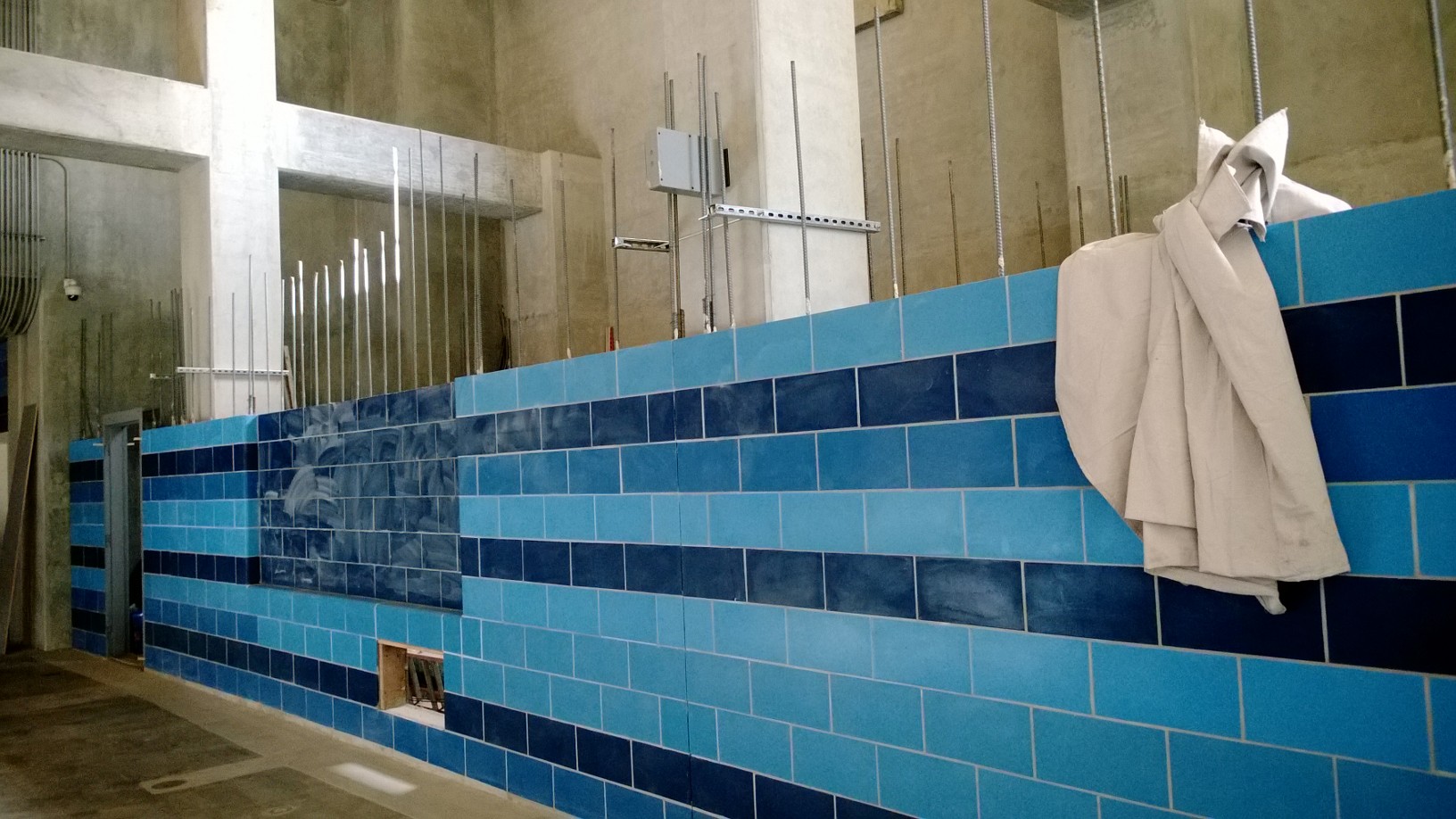
AT&T and Cal are walling off this section of concourse to house future DAS equipment

AT&T and Cal are walling off this section of concourse to house future DAS equipment

AT&T, which will act as a neutral host for the Memorial DAS (meaning that other service providers can connect their back-end systems to the AT&T-installed antennas) is even getting creative finding space for its head-end gear, the routers and switches needed on site to help complete the cellular connections. In one concourse underneath the stands, AT&T and Cal are walling off a small part of the internal walkways to house the necessary DAS gear.

One of the COWs (cell on wheels) installed outside Memorial's front gates

One of the COWs (cell on wheels) installed outside Memorial’s front gates

From there, optical fiber will connect the stadium to a nearby AT&T central office, where more call processing can take place.

Will the big DAS be enough to keep Cal fans connected? From what we heard at Thursday’s press event both the school and the carrier think that the wireless networks will always be a work in progress. And according to Cal’s Fulp, better cellular is already one of the top three concerns voiced by season ticket holders.

“It’s the simple things that matter,” Fulp said, saying that for the most part, fans at games want to be able to contact people at home — “sending a text to the babysitter, saying you’ll be late” — or to share a picture or a video with friends who couldn’t be at the game. “People expect to be connected, and at sports events it’s amplified,” Fulp said.

When the members of Cal’s class of 2014 toss their graduation caps into the air next spring, Fulp wants to see a “best in class” DAS in action at Memorial. What will that take from partner AT&T? “Every place we can find to put an antenna, we will,” said one AT&Ter who showed us around Memorial. Sounds creative to us.

(all photos credit: Paul Kapustka, Mobile Sports Report; user hint: click on photos to see more detail!)

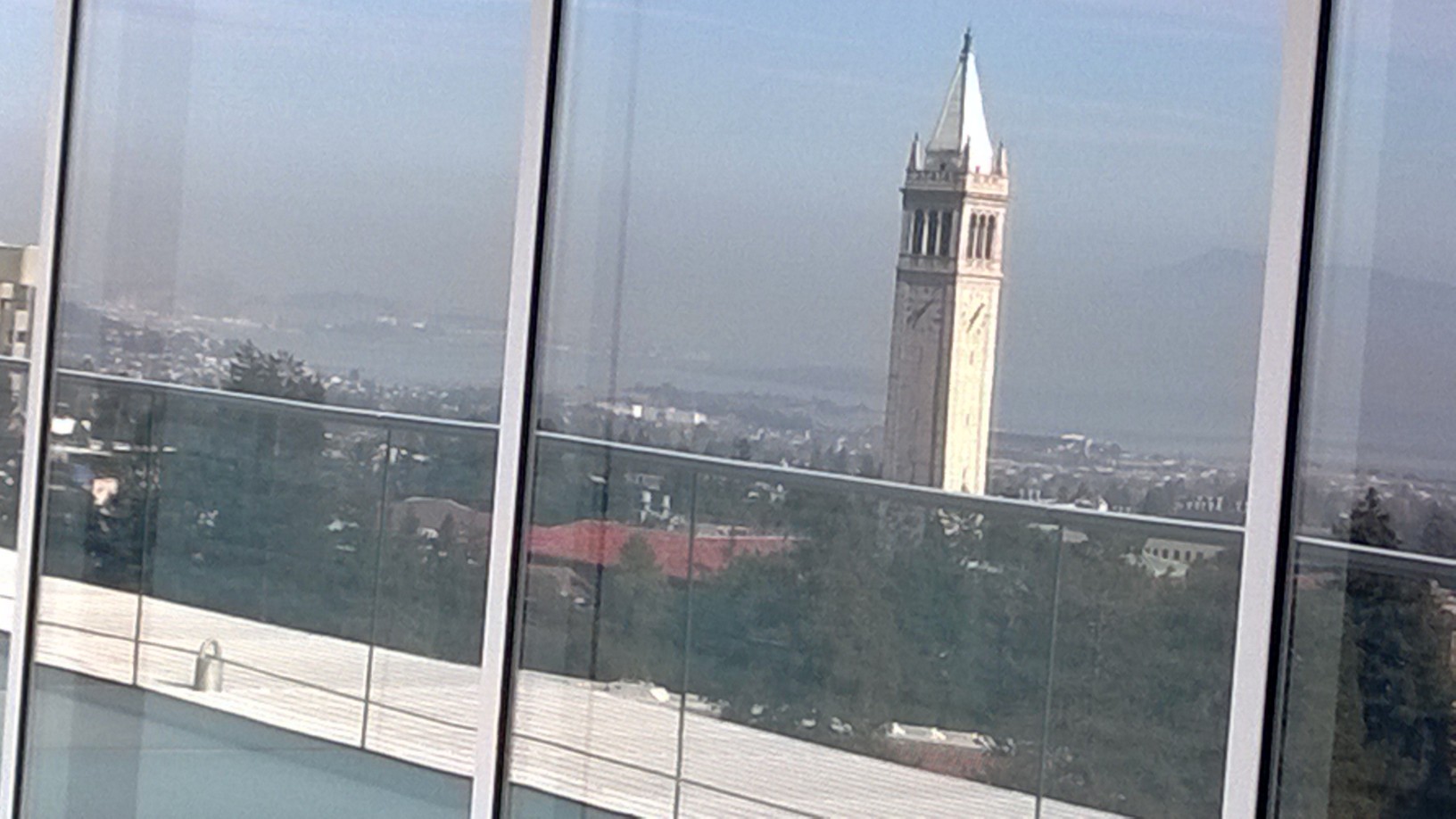
An artsy shot of Cal's famed Sather Tower, aka the Campanile

An artsy shot of Cal’s famed Sather Tower, aka the Campanile

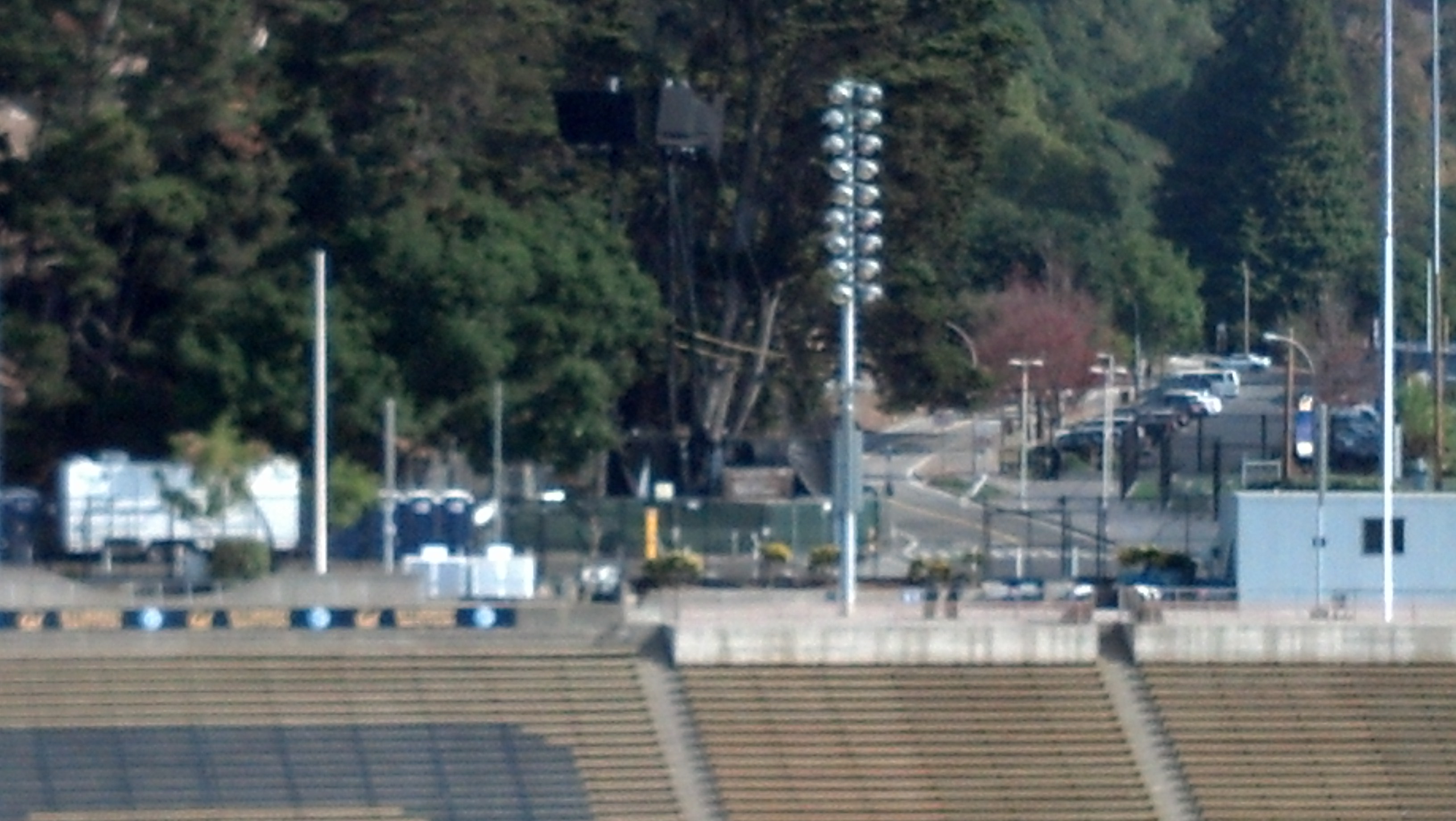
Another COW deployment, the fuzzy black things behind the stadium wall

Another COW deployment, the fuzzy black things behind the stadium wall

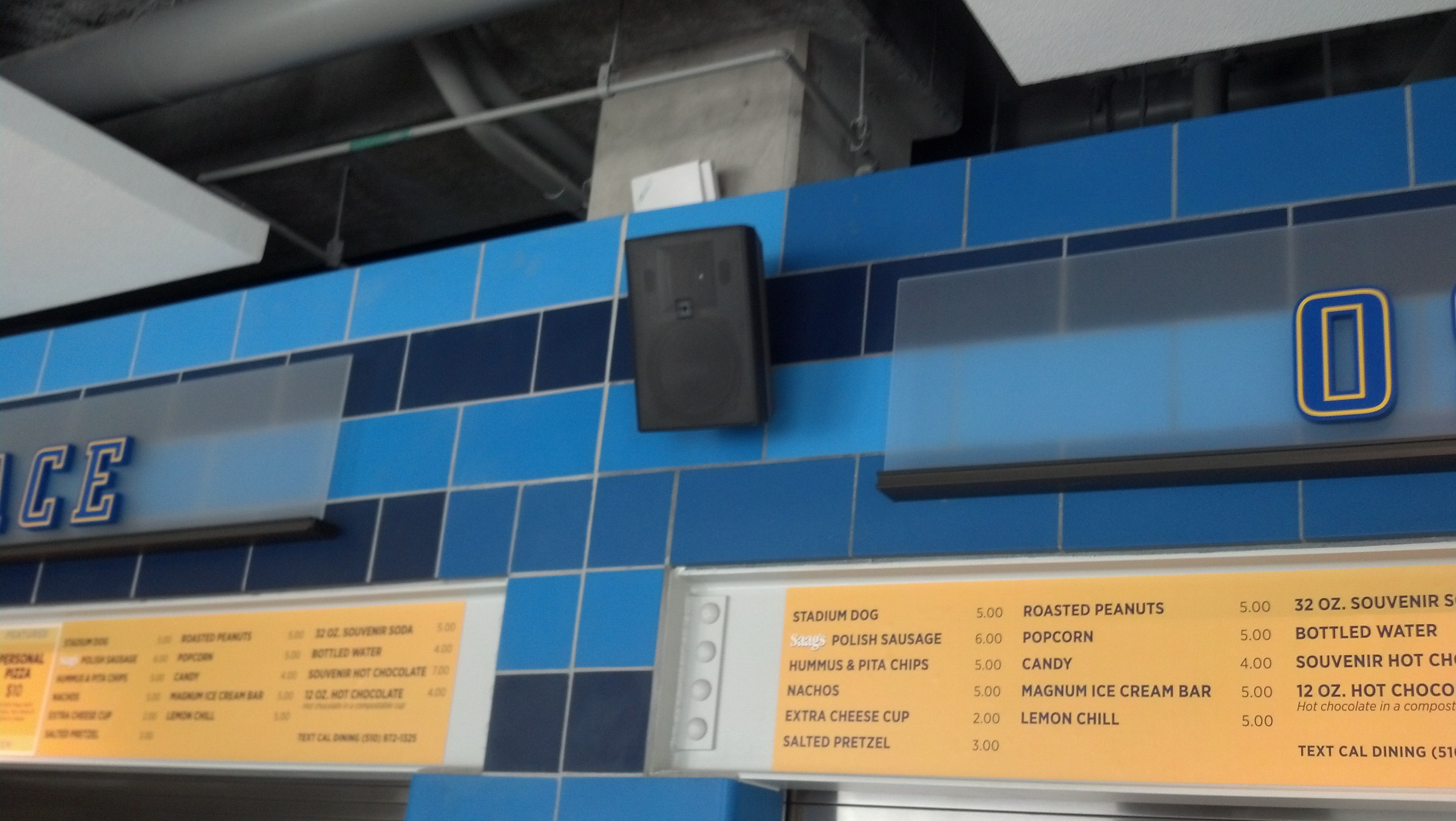
Find the antenna!

Find the antenna!