May 21, 2013

WSJ: ESPN Thinking About Paying for Your Mobile Sports Jones

You have to fight your way around the paywalls to read it, but the Wall Street Journal had a story today about ESPN talking to wireless providers about paying part of the fees for people who watch sports via cellular connections. There’s nobody on record, but when the WSJ uses the familiar “according to people familiar with the matter” dodge you know that somebody wanted this story to get out.

For the carriers, this is a kind of a holy grail thing — if ESPN starts subsidizing watching sports via cellular, you can bet that AT&T and Verizon will step up their marketing machines to sell tablets and smartphones. I’m imagining a future where you pay something like $50 a month, which gets you live NFL games and a free iPad to boot. Think you’d sign up tomorrow?

Why would such an arrangement be valuable to ESPN? With more mobile users, the worldwide leader could jack up the fees it charges advertisers since it would have incredible amounts of granular user info, right down to where the user is watching. And I’d bet you wouldn’t be able to watch any other channel on that subsidized device. But then again — would you care?

Net neutrality worries aside, it will be interesting to see if this deal comes to fruition. With Verizon’s exclusive cell phone rights deal with the NFL coming up for renewal next year, it’s the right time for something new to happen. We’ll stay tuned.

AT&T: Fans Set Cellular Data Record at Super Bowl, Again

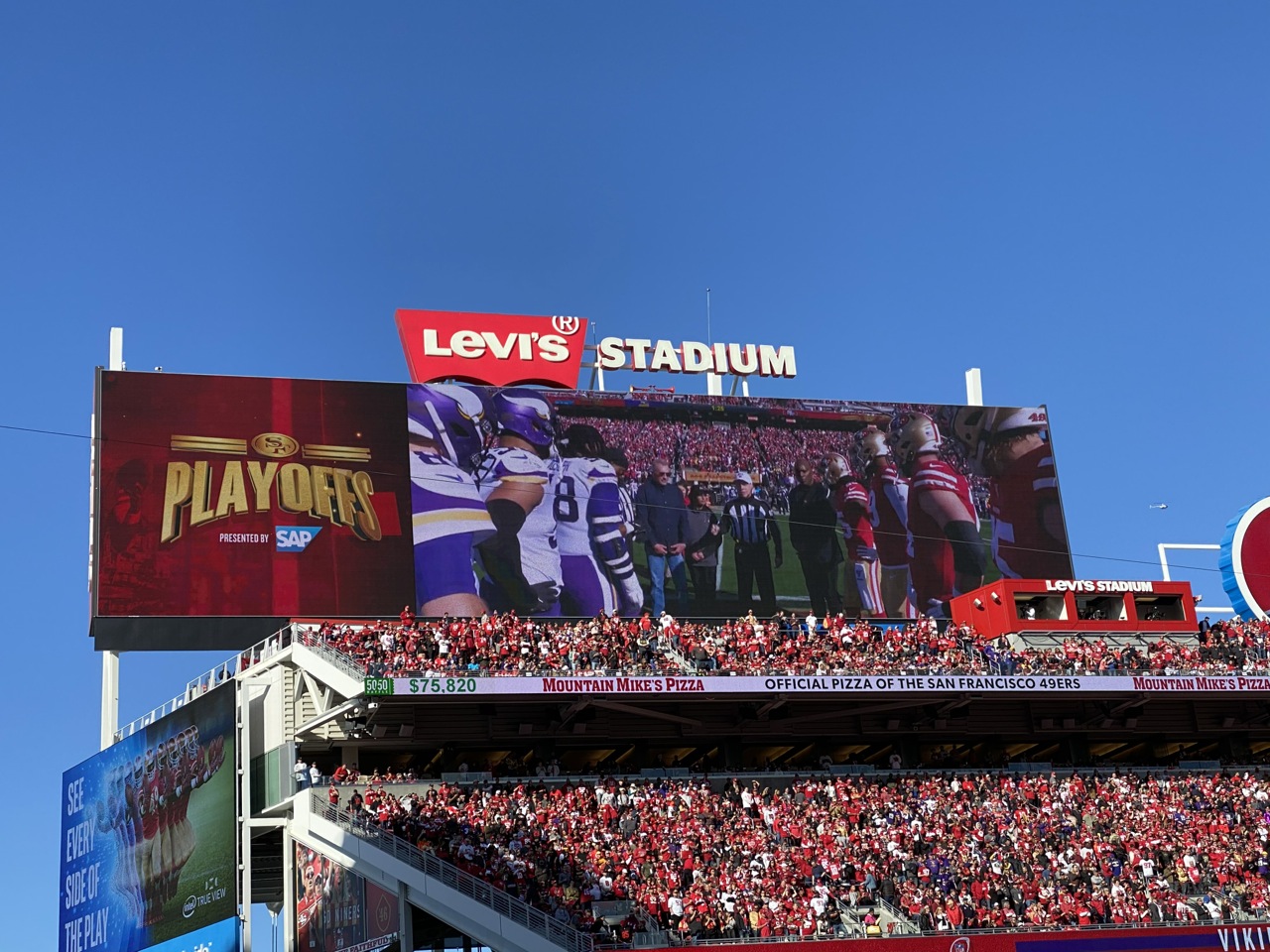
According to the folks at AT&T, fans in the New Orleans Superdome Sunday night set another record for cellular traffic, with 388 GB traversing AT&T’s in-dome network during the game between the Baltimore Ravens and the San Francisco 49ers. What’s somewhat staggering about the number is that it doesn’t include any of the traffic that was sent out over the in-dome Wi-Fi network recently installed by Verizon and Cisco; AT&T’s numbers are just for the cellular infrastructure and the DAS deployment Ma Bell put in the Superdome last year.

Guessing that Verizon’s numbers will also be bigger — according to a recent story in Ars Technica Verizon saw 225 GB of bandwidth used during last year’s Super Bowl in Indianapolis, where AT&T saw 215 GB of usage on its networks. If Verizon’s numbers are similar to AT&T’s (from reports we saw on Twitter the Wi-Fi network performed well, even during the third-quarter blackout) then there was probably something like 800 GB of data flying out of the Superdome Sunday, maybe even close to 1,000 GB if you throw in Sprint and T-Mobile numbers, which we probably won’t get.

So it’s pretty damn clear: Fans like using mobile devices at big sports events. And we haven’t quite reached the peak yet, since every successive Super Bowl sets a new record. We are guessing this trend will continue for some time, since there isn’t even a good in-stadium app yet to really make people do things other than send pictures and texts to people who aren’t at the stadium. So — this journey has really just begun.

Some other interesting nuggets from the folks at AT&T, who said that their network didn’t go down during the blackout:

– AT&T’s peak hour of data usage at the Big Game occurred during halftime and during the stadium’s temporary power outage, from 8 to 9 pm EST. AT&T customers consumed 78 GB during this hour on the in-stadium mobility network, which is nearly double the amount of data that AT&T customers used during the peak hour at last year’s Big Game in Indianapolis.

– During the hour of halftime and the stadium’s temporary power outage, from 8 to 9 pm EST, customers made more calls, sent nearly twice as many SMS texts and consumed approximately 10 GB more data than they did during any other hour of the event.

– AT&T customers also made more than 73,000 mobile calls during the game.

Super Bowl Gets Wi-Fi Network, Will be Checking for Rogue Hotspots

There’s a new Wi-Fi network in the Superdome, and they will be checking you at the door to make sure you’re not screwing it up with a rogue hotspot or a camera that is broadcasting a Wi-Fi signal. Check out our post over at WiFi Journal that explains why stadium network operators are already needing to do some fine-tuning due to traffic problems.

Also read the excellent article at Ars Technica, which breaks down the new Verizon-Cisco network inside the stadium. Verizon is quietly getting more involved in stadium networks, but is not publicizing their deployments — maybe because they don’t want everyone asking for the sweetheart deals Verizon may be giving NFL stadiums? Remember, Verizon and the NFL have an agreement over mobile coming up for re-negotiation soon… maybe Verizon is trying to win favor with Rog and the boys by putting in Wi-Fi for free? Stay tuned or tell us what you hear… the Wi-Fi whisperer is listening.

NFL has Major Digital Push on for Super Bowl

sbxvl

In the past it has seemed that MLB has had a lead on the NFL when it came to using alternative delivery mechanisms such as the Internet but the NFL has a huge bradth and depth of offering leading up to this weekend’s game

You can start with two areas that the average fan s probably well acquainted- The NFL.Com and Superbowl.com web sites that will provide the expected analysis, human interest stories and more prior to and during the game. Included will be live streaming of player and coach interviews all week long in a program called NFL.com Live: Superbowl XLVII that will be available on both sites.

Two additional live streaming events will be the annual NFL Commissioner Super Bowl press conference, and probably of more interest to the average fan, the unveiling of the 2013 Pro Football Hall of Fame Class, something that is always good for some dispute among fans.

0ap1000000130707

Mobile Users have Plenty of Options
For the mobile user there is also a set of options available from NFL Digital Media if they want to stay connected leading up to the game, as well as features that will help fans that are in New Orleans for the game or just to experience the Super Bowl atmosphere. For Verizon subscribers they can also watch the game on their phone.

A user can download the Super Bowl XLVII Digital Program on both Android and iOS run devices that feature the official game program in all of its 264 page glory and features the scouting reports, player and coach features and other information that will be found in the program that is available at the game.

The NFL’12 app is also available for free download for Android and iOS devices. This free app provides all of the data and stats from the past season as well as live scores and stats from the game. A user can purchase the optional Audio Pass that will enable them to listen to the game on their mobile device.

For a guide to official Super Bowl events as well as a handy tourist guide to New Orleans night life, restaurants and other sights there is the Super Bowl XLVII Mobile Guide, presented by Verizon. It includes the ability to get push notifications for events.

fan pass

Then for the fan that needs to be in touch constantly here is the NFL Fan Pass, which launches this morning. This will provide actual access to the players enabling fans to post question and it will host a also host a Google+ Hangout on Media Day connecting fans with their favorite players and NFL reporters. It will also feature exclusive interviews and videos of not only players but also celebrities that will be attending the game.

There are a host of other features that the NFL will be delivering, from game rewind that will show following the conclusion of the game. You can follow events of twitter at @superbowl and there will also be a range of podcasts available during the week.

It really looks like the NFL is covering all of its digital bases, if I can mix metaphors, and is really reaching out to fans in a solid, proactive way so that if you miss all of the action on Sunday the blame will sit on you.

Verizon and the NFL: Pals Now, but What About the Future?

NFL commish Roger Goodell at CES. Credit: Paul Kapustka, Mobile Sports Report

On the surface the appearance of NFL Commissioner Roger Goodell at the Verizon CES keynote was all happiness and light, as chairman Rog traded pleasantries with Verizon CEO Lowell McAdam. But if you listened between the lines there was a bit of a disconnect, making us here at MSR wonder how in sync the two current partners will be in the near future.

The two areas where Verizon and the NFL seem headed in different directions are in mobile content delivery and in-stadium wireless networks, two huge matters for both entities. Currently Verizon is the NFL’s exclusive partner for providing mobile access to live NFL games, available only on Verizon devices via the NFLMobile app. Verizon currently can show live games on Thursday nights, Sunday nights and Monday Night Football, as well as the RedZone channel, which shows a lot of live content from games all around the league. Verizon paid something on the order of $700 million for the deal, which is said to expire after next season.

The unexpected appearance of Goodell during McAdam’s speech led us to initially believe there was some renewal announcement in the air — but instead Goodell left without talking about the future of NFL Mobile. Our guess for most of this season is that the NFL wants to take full control of its mobile/digital content offerings and sell them to fans at a steep cost, like Major League Baseball does. The silence in the presence of Verizon’s CEO can’t be good news for the phone carrier.

Likewise, Goodell has said he wants all stadiums in the league to install high-capacity Wi-Fi networks, to better serve fans with mobile content, social media and other connectivity options while they’re at the games. McAdam’s company, unlike its main competitor AT&T, has not made public Wi-Fi a priority and McAdam talked at CES about his hopes to use the company’s new 4G LTE video broadcast tools to help bring fans mobile coverage of events like the Super Bowl. He even made a pass at Goodell, telling the commish on stage that “we’d love to broadcast the big game [Super Bowl] in the 2014 time frame.” Goodell didn’t bite and didn’t comment. That doesn’t sound like much of a deal or even a promise. Akward stuff for a CEO to be floating, in front of thousands of witnesses.

Though we haven’t yet delved fully into how Verizon’s LTE video broadcast technology works, we’re skeptical that it can handle the big traffic demands of a full stadium of mobile users — more than half of whom are likely not Verizon customers and therefore unable to use any Verizon network technologies. Our guess is that the NFL will keep looking to Wi-Fi to solve stadium network issues — leaving Verizon on the sideline.

Wednesday Wi-Fi Whispers: Lots of Networking at F1 Race in Austin

If you are a fan of F1 racing you might be headed down to Austin, Texas this weekend for the Austin Grand Prix at the new Circuit of The Americas course. From what we can deduce, it should be a good place to connect with your mobile device, since we have seen two press releases over the past weeks talking about wireless deployments at the track. But will there be free fan Wi-Fi? Probably, but we’re not sure yet.

We’re not sure because the main press release — from our friends at AT&T — talks mainly about how Ma Bell wired this place for high capacity data transfers, which we are guessing means lots of fiber for set video camera positions and the whole boatload of car-performance stats that regularly fly around the ether at any big-time motorsports event. From the sounds of it the new AT&T network should support fan Wi-Fi — but unfortunately neither AT&T nor the course/race website makes any mention of whether or not there will be free Wi-Fi for fans.

In case you’re wondering, we think such information omissions are a big mistake. But we are checking with AT&T and the race folks to see what’s up.

In the meantime, if you are a Verizon customer your cell phone should also work better at the track, thanks to an independent Distributed Antenna System (DAS) infrastructure put in place by our friends at ExteNet, a company that has built similar deployments at other sporting stadiums, like the new Barclays Center in Brooklyn. According to ExteNet its DAS will improve cellular reception around the track, mainly for Verizon customers this year since Verizon is the only cellular provider using the ExteNet solution right now. Since ExteNet builds independent networks — which means any provider can sign up and pay ExteNet to carry signals from their customers — other providers like Sprint or T-Mobile may join up for future events. Our guess is that AT&T won’t have to. The cool thing is, fans should be able to share photos and videos of the F1 racers as quickly as possible. And that is a good thing.