AT&T’s new antennas help deliver twin 12-Terabyte weekends at Coachella

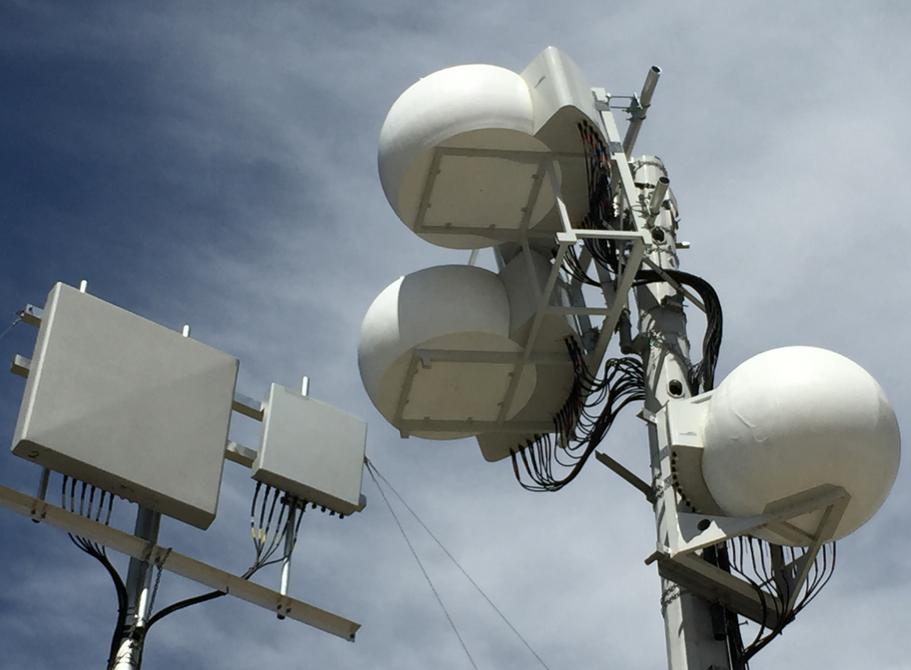
The two "sliced" balls in the center are AT&T's new "Ten-Ten-Antenna," so called because it delivers 10x the cellular coverage of any previous such device. Credit all antenna images: AT&T

The two “sliced” balls in the center are AT&T’s new “Ten-Ten-Antenna,” so called because it delivers 10x the cellular coverage of any previous such device. Credit all antenna images: AT&T

We know Coachella’s not a stadium per se and it has little to do with sports but when you get big crowds of people together for an event the logistics of providing wireless access are pretty much the same. So we’re guessing that our normal readership crowd of stadium tech professionals is interested in a concert story, especially when it involves cool new antenna technology and 12 terabytes of data two weekends in a row — right?

The Super Bowl-type wireless data numbers were reported by AT&T on its mobile networks at the recent Coachella Valley Music and Arts festival (aka “Coachella”) outside Los Angeles, which this year once again attracted about 100,000 people during the second two weekends in April. If you’re a music fan you may have already heard some of the stories about performers like Drake and Madonna, but here at MSR we’re focused on the wireless stuff and AT&T had some interesting new gear at the event this year, including something it called the “Ten-Ten-Antenna,” which AT&T claims is “one of the largest cellular antennas in the world.”

When we asked why it was called the “Ten-Ten-Antenna,” here is the official response we received from AT&T:

The Ten-Ten-Antenna consists of two spherical balls with their tops and bottoms cut off (like a cheese wheel) that send out radio frequency (RF) signals in various directions based on how the network engineers attach transmitting elements to each antenna. This allows technicians to send the cellular signals even more precisely where they need to go, allowing them to be more efficient and provide customers with a better experience. The Ten-Ten-Antenna is able to offer a whopping 10x the capacity of a traditional, single-beam antenna – the most ever for an AT&T antenna or any cellular antenna we know of.

Coachella headliner AC/DC. Credit: Coachella website screen shot

Coachella headliner AC/DC. Credit: Coachella website screen shot

Last year AT&T brought out the “big ball” cellular antenna at Coachella, which is proving to be a pretty worthy testing ground for AT&T and cellular coverage of huge, connected crowds. It’s a good bet that folks attending all-day music festivals may be among the heaviest event data users, given the large amounts of downtime and the numerous chances to take pictures, videos and send messages about sights seen at an event with multiple big-name headliners and lots of crazy regular folk in the audience.

So maybe 12 TB each weekend for two weekends isn’t such a stunning number — but the other factoid that leaped out at us is AT&T’s claim that it has seen data rates at the festival increase 20 TIMES since 2011, a staggering increase that shows no sign of slowing down or plateauing.

Any other big festivals out there with wireless stories to tell? Send them our way!
AT&T sees almost double DAS traffic for MLB’s season-opening series

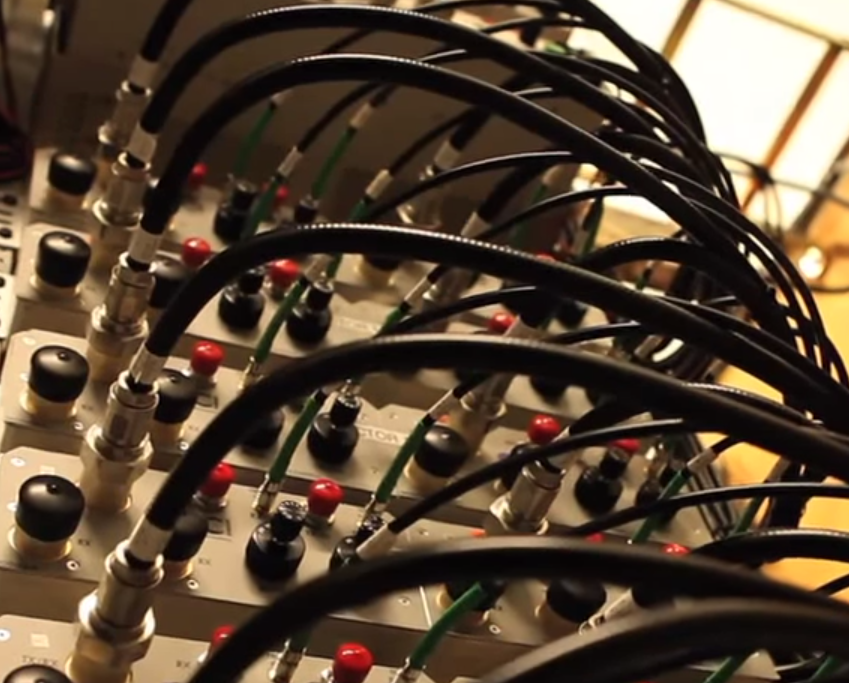
Head-end room cabling at AT&T Park. Credit: AT&T/San Francisco Giants

Head-end room cabling at AT&T Park. Credit: AT&T/San Francisco Giants

According to AT&T, the season-opening series for Major League Baseball saw fans use almost twice as much cellular data as the year before, across the 19 ballparks where AT&T has in-stadium cellular networks in place.

Remember, these numbers represent only cellular traffic and only for AT&T customers on the AT&T stadium-specific networks, which are almost all of the distrubuted antenna system (DAS) type. Though some stadiums saw much more traffic than others, the average series-long total of 215 gigabytes per venue was almost double the same statistic from the 2014 season-opening series, where AT&T saw an average of 111 GB per venue. And if AT&T’s traffic is doubling you can probably safely bet that all other metrics — Wi-Fi, and traffic for other carriers — has increased as well.

Thanks to our friends at AT&T, here is the full list for series-long DAS traffic at MLB venues where AT&T has stadium-specific networks. Stay tuned to MSR for our Q2 Stadium Tech Report later this spring, when we’ll take a team-by-team look at MLB technology deployments, specifically focusing on Wi-Fi and DAS. So far, it looks like fans are already in mid-season selfie form.

OPENING SERIES DAS TOTALS (AT&T customer traffic only, on AT&T stadium-specific networks)

1. Arlington, TX (Rangers): 655GB

2. St. Louis (Cardinals): 466GB

3. Los Angeles (Dodgers): 396GB

4. Atlanta (Braves): 375GB

5. Anaheim (Angels): 270GB

6. Denver (Rockies): 251GB

7. Philadelphia (Phillies): 250GB

8. Chicago (Cubs): 227GB

9. New York (Yankees): 189GB

10. Cincinnati (Reds): 185GB

11. Miami (Marlins): 183GB

12. Boston (Red Sox): 162GB

13. San Francisco (Giants): 158GB

14. Oakland (A’s): 149GB

15. Seattle (Mariners): 139GB

16. Washington, D.C. (Nationals): 132GB

17. Milwaukee (Brewers): 129GB

18. Houston (Astros): 102GB

19. Minnesota (Twins): 86GB

20. Phoenix (Diamondbacks): 85GB

21. New York (Mets): 80GB

22. San Diego (Padres): 58GB

WrestleMania 31 resets Levi’s Stadium Wi-Fi record with 4.5 terabytes of data used

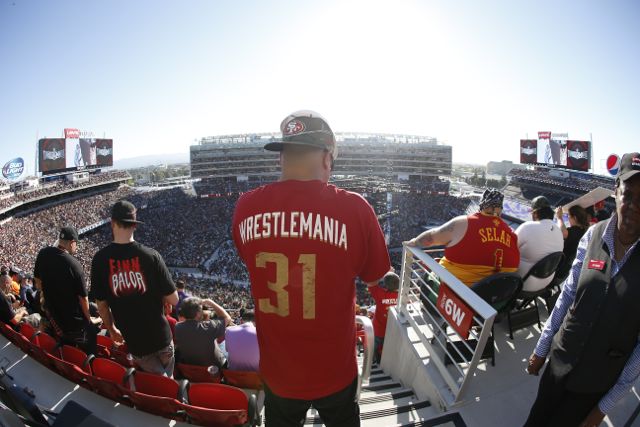
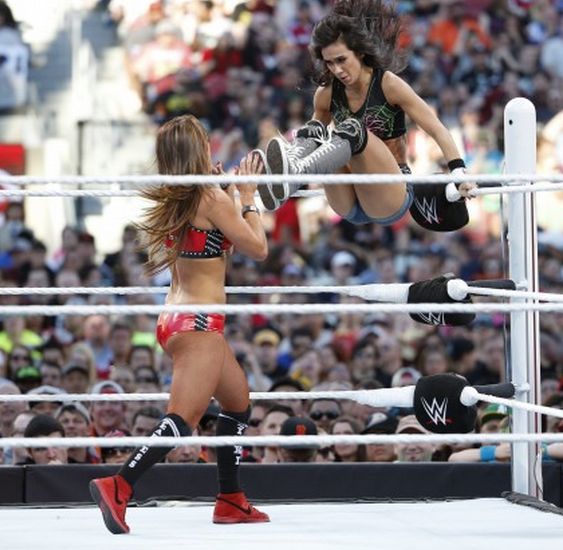
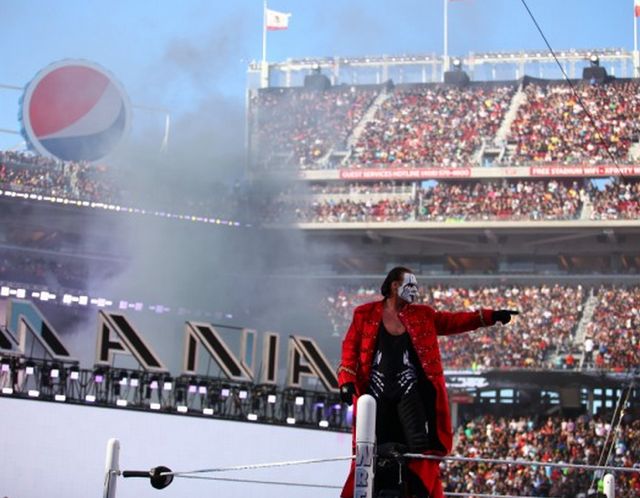
WrestleMania 31 at Levi's Stadium, March 29, 2015. Credit all images: 49ers.com (click on any photo for a larger image)

WrestleMania 31 at Levi’s Stadium, March 29, 2015. Credit all images: 49ers.com (click on any photo for a larger image)

The biggest crowd yet at Levi’s Stadium also reset the venue’s Wi-Fi usage records, as the 76,976 fans at the March 29 WrestleMania 31 event used 4.5 terabytes of data on the in-stadium network, according to representatives from the San Francisco 49ers, the stadium’s owner and operator.

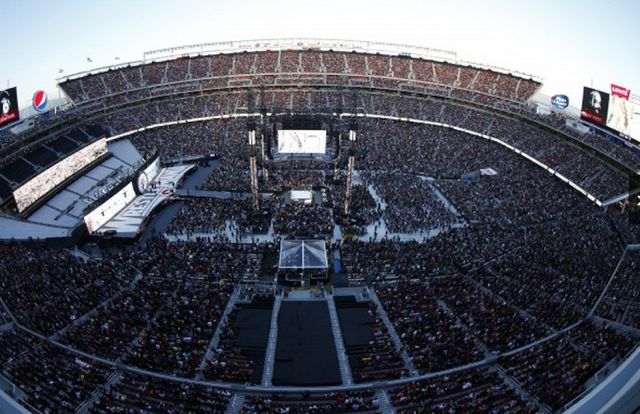
The WrestleMania mark eclipsed the previous Wi-Fi high-water figure of 3.3 TB, recorded during the Niners’ home opener at Levi’s Stadium on Sept. 14, 2014. However, the WWE event’s record should come with a bit of an interesting asterisk, since the Niners said they built a temporary ground-level extension to the Wi-Fi network that was used by approximately 3,700 fans who were sitting in seats on the field, surrounding the WrestleMania stage. The team also put in extra Wi-Fi coverage for the three temporary seating sections that were erected in the Levi’s Stadium southeast plaza, structures that will likely be part of the configuration for Super Bowl 50 next February.

WrestleMania competition

WrestleMania competition

“We considered the event a success from a Wi-Fi standpoint considering the temporary APs served almost 4,000 people and moved a large amount of data,” said Roger Hacker, senior manager, corporate communications for the San Francisco 49ers. “We moved a significant amount of traffic all the while seeing minimal negative comments on social media.”

In a related note, it seems like beefed-up train and bus service from light rail entity VTA kept lines and waits to a minimum, even with a record number of fans also using public transportation to the event. At the very least, the Levi’s Stadium team seems to be back on a positive path after some painful lessons learned during the Feb. 21 Coors Light Stadium Series hockey game. Remember also that WWE did not want in-seat food or merchandise delivery available during the event, which proabably helped make network operations easier.

Under-seat APs and handrail antennas

According to Hacker the field-level network used 76 extra access points, with 69 on the field level itself and seven more on the field-level walls. Hacker said a combination of picocell and handrail enclosures were used for the temporary network, which was necessary since the regular stadium-bowl configuration was never designed to handle traffic for events with fans on the field level.

wm4Hacker also said the temporary network had its own switching infrastructure, with eight portable switching pods connected by both fiber and outdoor Ethernet cabling. The results from the WrestleMania event, Hacker said, will help the Niners and Levi’s Stadium staff prepare for future events with on-field seating, like the concerts scheduled for later this spring and summer.

The Niners said their goal with the WrestleMania temporary network “experiment” (which they believe to be the first ever done for a large outdoor event) was to see whether the Levi’s Stadium under-seat design could be extended to the field for temporary events “in a cost-effective, safe and repeatable manner. From what we experienced with WrestleMania 31, every indication is that we will be able to do that.”

Some more network stats from the WrestleMania 31 event:

— The peak concurrent user mark was 14,800 on the Wi-Fi network at around 8:10 p.m.

— The Wi-Fi network carried 1.61 Gbps of average continuous bandwidth from 2:20 p.m. to 8:00 p.m., also a new stadium record

— The peak bandwidth usage was 2.474 Gbps at 7:10 p.m.

— Usage on the Levi’s Stadium DAS network was not reported.

Overhead shot of Levi's Stadium during WrestleMania 31, showing on-field seating

Overhead shot of Levi’s Stadium during WrestleMania 31, showing on-field seating

Time for The Masters — the best digital experience in sports

Gary Player (R) congratulates Jack Nicklaus after Nicklaus' hole in one (Sam Greenwood/Augusta National)

Gary Player (R) congratulates Jack Nicklaus after Nicklaus’ hole in one (Sam Greenwood/Augusta National)

There’s no small bit of irony in the fact that The Masters, one of the few places left on earth where you absolutely cannot carry a working cell phone, offers perhaps the best digital experience in all of sports. I’m biased, because I like golf and like the tradition and history of the Masters competition, but I would challenge you to find another event, team or league that offers the breadth and depth of the online/mobile experience brought forth by The Masters, CBS and IBM.

With live competition beginning Thursday morning, I’m not worried that I won’t be next to a TV set for the excellent, mostly commercial-free broadcast (Thursday-Friday on ESPN, Saturday-Sunday on CBS). That’s because if I am online or on my phone I will have access to no fewer than five different live feeds from Augusta, including featured groups as well as focused coverage on “Amen Corner,” the classic stretch between the 11th and 13th holes of the famed Augusta National course.

What makes the online and mobile experience so good? Production that parallels the TV broadcast, for one. No need for cable contract authorization, for another. That The Masters is like Harvard with its endowments — and as such doesn’t need to pander to advertisers — is nirvana for all golf fans, but especially so for those of us who watch a lot of sports action these days online. While TV commercials are easily endured (or muted, or skipped) it seems of late that broadcasters are doing their best to reclaim eyeball turf online, by subjecting digital viewers to more and more invasive ads.

During the recent NCAA Men’s Basketball Tournament there was a lot of praise for the online product, but nowhere did I see anyone report the fact we found out — that when you were watching online or on your phone, during commercials the Turner/NCAA folks kindly blocked your ability to mute the sound on the screen controls. On my phone during the great regional game between Kentucky and Notre Dame I also saw a small button with a Pizza Hut logo remain on the left side of the screen during play. You would never try that on a broadcast offering, but for many events it seems OK to smack the online viewers around for any profit possible.

During the Masters, that’s not happening. (Or at least it didn’t last year! Hope I’m not jinxing things.)

Anyway — when play starts Thursday just go to Masters.com or download the app, watch away and see if you don’t agree. If there’s another online experience that’s better, I’d like to hear about it.

BONUS: Watch the Golden Bear back one up for a hole in one during the par 3 contest.

AT&T: Final Four sees 1.52 terabytes of DAS traffic, almost double last year’s total

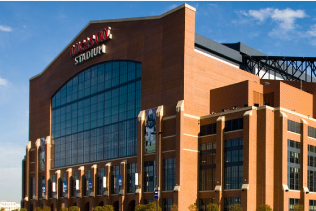
Lucas Oil StadiumSometimes we feel like a broken record when talking about data usage at big events — is the total ever going to stop growing? Not at the Final Four, apparently, where this year AT&T saw almost double the traffic on its in-stadium DAS, even at a smaller venue, the Lucas Oil Stadium in Indianapolis.

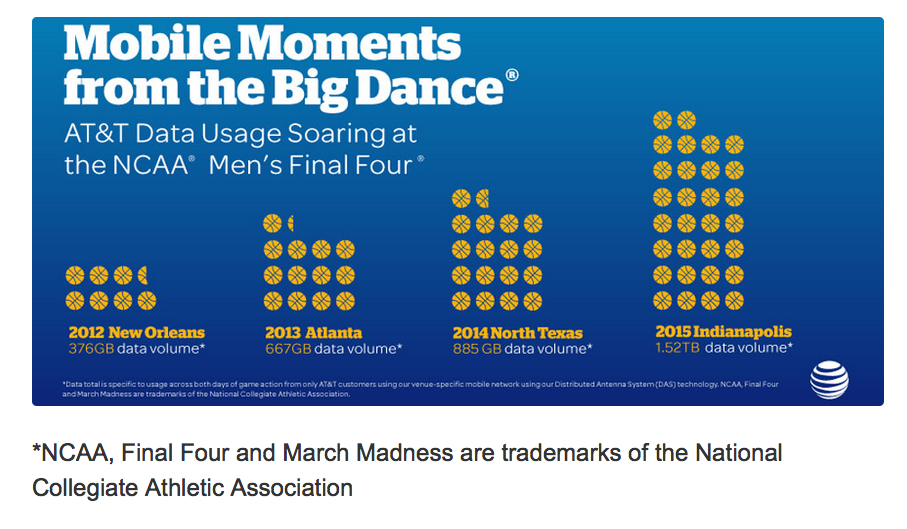
According to AT&T, its customers used a total of 1.52 terabytes of data on the in-stadium DAS at Lucas Oil Stadium during the three Final Four weekend games, a huge jump from the 885 GB of DAS traffic AT&T saw on its network at the last Final Four, held in AT&T Stadium. Remember, these numbers are for AT&T cellular customers only, and does not include traffic for any other wireless carriers or for the Lucas Oil Stadium Wi-Fi network. We have calls and emails in to the various players to see if we can get more numbers, but for now AT&T’s almost-double growth is pretty interesting.

Normally we’re not big fans of infographics but the one accompanying the AT&T press release about Final Four traffic is pretty interesting, since it simply shows just how much data use at big events keeps growing. AT&T’s DAS traffic numbers for the last four Final Fours (New Orleans, Atlanta, Texas and Indy) start respectively at 376 GB for 2012, then jump to 667 GB for 2013, then to 885 GB last year and the 1.52 TB mark this year. Maybe the release of the new iPhones this past fall helped with the ever-increasing totals, or the fact that new rich media applications like Vine and Instagram are gaining in use? And with new livestreaming video apps like Meerkat and Periscope joining the fray, how will wireless networks at large venues hold up?

For AT&T, big events now mean lots of resources not just inside the building, but in the surrounding public areas as well, to better handle the big crowds as they move about the event locale. Like it did for the recent South by Southwest festival in Austin, AT&T brought its big-ball antenna to Indy for the weekend, and supplemented downtown coverage with outdoor DAS deployments and improvements to the outdoor Wi-Fi hotspots it built for Super Bowl XLVI held at Lucas Oil in 2012.

AT&T Infographic about Final Four DAS data use

AT&T Infographic about Final Four DAS data use

March Madness online resets the record books with 17.8 million hours of live viewing

Screen Shot 2015-03-10 at 6.37.28 PMTurner Sports and the NCAA said that online viewing of the 2015 men’s NCAA basketball tournament once again set new records, showing (again) that the demand for live sports online is still growing steadily with no top in sight.

From the round of 64 to One Shining Moment this year’s March Madness Live audience racked up 17.8 million hours of online viewing, according to figures released by Turner Sports and the NCAA Tuesday. The 80.7 million individual live streams were an increase of 17 percent over the 2014 tournament coverage, and the total hours watched was up 19 percent from last year.

Things really ramped up online for this past weekend’s Final Four games, with the Saturday semifinal doubleheader recording 6 million live video streams (an increase of 59 percent over 2014) and 1.5 million hours (an increase of 53 percent) of online watching, according to Turner and the NCAA. Monday’s championship game saw 3.4 million video streams started, with 1 million hours of live video consumed — totals that increased 66 percent and 69 percent, respectively, from 2014 figures. Overall, the NCAA and Turner Sports also said that mobile-only viewing also surged, increasing 20 percent in both views and hours from last year, though they did not provide a breakout figure for mobile-only viewing.

What is helping the increase in online watching? For one the ease in which March Madness could be consumed — watching this year on various platforms I noticed that the sign-in procedure with my cable contract info didn’t need to be repeated — ever — on my desktop or on my mobile device; in previous years the sign-in technology had been somewhat of a gating factor, and in the earliest years the extra-charge fee for watching games online almost certainly kept the audience much lower than it could be.

And now that fans know the games will be available online in an easy to find place — MarchMadness.com — they seem to know to go there for the early games that take place during work hours. In fact, the most-watched game online after the Final Four was a Round of 64 game between Notre Dame and Northeastern, which took place in the morning of March 19 — with 3.9 million video streams, it was clear that people at work got wind of the potential upset in the making and tuned in.

For once I have no complaints about the technical parts of the online March Madness offering — I watched the entire second half of the gripping Notre Dame-Kentucky regional game on my phone over Wi-Fi, and had no glitches, buffering or any other transmission problems. The only nit I would pick is why broadcasters like Turner feel it’s OK to impose technical control over online viewers, like blocking the mute button on the video screen during commercials, or by floating the little “Pizza Hut” icon on the left of the screen during game play, a small annoyance but noticeable. You’d be crucified for trying stunts like that on broadcast TV, so why insult viewers online just because you can?