Levi’s Stadium, AT&T Stadium see lots of Wi-Fi for Seahawks visits

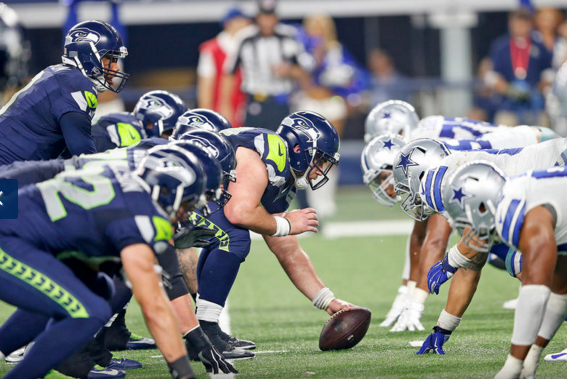
Seahawks vs. Cowboys at AT&T Stadium, Nov. 1. Photo: Dallas Cowboys

Seahawks vs. Cowboys at AT&T Stadium, Nov. 1. Photo: Dallas Cowboys

So far this NFL season we’ve seen something that we call the Patriots effect, where games featuring the defending Super Bowl champs as visitors produce big numbers on the stadium Wi-Fi networks. There appears to be a similar trend following the Seattle Seahawks around, especially when they’re playing NFC rivals like the San Francisco 49ers and the Dallas Cowboys, as both those teams’ stadiums saw big Wi-Fi days during recent Seahawks visits.

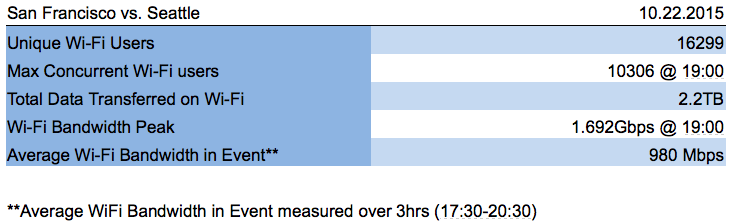
The Niners were first to get a Seahawks effect, carding 2.2 terabytes of Wi-Fi network usage during Seattle’s 20-3 victory over San Francisco at Levi’s Stadium on Oct. 22. According to figures provided by Roger Hacker, senior manager of corporate communications for the Niners, out of the 70,799 in attendance for the Thursday-night game there 16,299 unique users on the Wi-Fi network at Levi’s Stadium, with a maximum concurrent user number of 10,306.
Screen Shot 2015-11-03 at 10.16.54 PM

Last Sunday at AT&T Stadium, the Seahawks escaped with a narrow 13-12 win in front of 91,486 fans. According to figures provided by Dallas Cowboys chief information officer John Winborn, there were 36,388 unique users on the Wi-Fi network, with a peak of 24,667 concurrent users. The total tonnage used Sunday at AT&T Stadium was 4.12 TB, perhaps proving once again that 4+ TB is becoming the “new normal” for high-fidelity networks in the largest stadiums.
VenueNext adds Yankee Stadium, AT&T Stadium as app clients

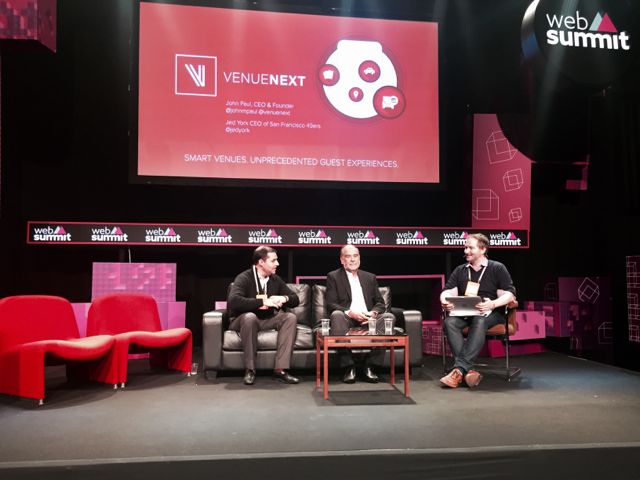
Niners CEO Jed York, left, and VenueNext CEO John Paul, center, announce new clients for VenueNext at the Web Summit in Dublin. Photo: Louise Callagy, VenueNext

Niners CEO Jed York, left, and VenueNext CEO John Paul, center, announce new clients for VenueNext at the Web Summit in Dublin. Photo: Louise Callagy, VenueNext

VenueNext, the company built to develop the Levi’s Stadium app for the San Francisco 49ers, announced two new customers today, venues that are leading icons in their respective sports: Yankee Stadium, home of the New York Yankees, and AT&T Stadium, home of the Dallas Cowboys.

Details are a little slim right now, but the formal announcement was made on stage at the Web Summit Tuesday in Dublin, Ireland, where VenueNext CEO John Paul and Niners CEO Jed York (who is also the chairman of VenueNext) jointly announced the news. According to a blog post on its site, VenueNext is now a “strategic partner” with Legends Hospitality, a provider of turnkey venue operations whose clients include the Yankees and the Cowboys. VenueNext said some elements of its technology are already being used in the AT&T Stadium app this season, including parking directions and instant replays of on-field action. In-seat food ordering and delivery, one of the more innovative features developed by VenueNext for the Levi’s Stadium app, is not yet available at AT&T Stadium, however.

More details to come, including whether or not this means that Yankee Stadium will finally be getting Wi-Fi, since the Bronx icon was one of just two MLB venues (Baltimore is the other one) without fan-facing Wi-Fi.

YinzCam sells equity stake to NBA, gets deal to re-do 22 NBA team apps

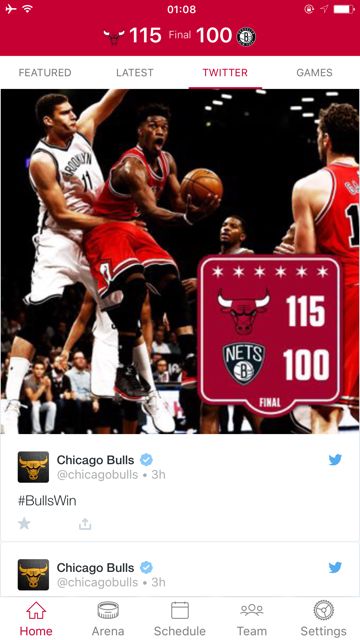
Screen shot of new NBA app under development. Photo: NBA

Screen shot of new NBA app under development. Photo: NBA

Stadium and team app developer YinzCam announced a big deal with the NBA Monday, a partnership that calls for YinzCam to redesign 22 NBA team apps during the 2015-16 season, adding features like location-based awareness, in-seat food ordering and delivery and seat upgrades. According to the company and the league, the NBA will also get an equity stake in the privately held YinzCam, a Pittsburgh-based business that has more than 140 clients, including teams from the NFL, the NHL, the NCAA and the National Rugby League.

Though YinzCam previously listed 23 NBA teams as current clients, including all 22 it will redesign apps for, under the new deal it appears that the team apps will have access to much deeper NBA content, including direct access to watch or listen to live games. Here is one of two very interesting paragraphs from the press release:

The new apps will personalize the home screen experience based on the fan’s location. Core game information, such as stats, play-by-play and box score, will remain accessible, however, the most relevant features, based on a fan’s location and game status, will be delivered to the home screen. Features such as seat upgrades and in-seat delivery will be surfaced within the app for fans at the game, while fans outside of the venue will be exposed to more extensive game coverage, video and news.

Treading on VenueNext’s turf

The most significant part of the above paragraph is the mention of features like seat upgrades and in-seat concession delivery, services that have not been a standard part of the YinzCam stadium/venue app offering, which in the past focused mainly on delivering content, like stats, live video and instant replays. We have an interview scheduled soon with YinzCam CEO Priya Narasimhan to find out whether or not YinzCam is building the software behind these features itself, or whether it is drafting a third party to supply the code.

Screen shot of Super Bowl app developed by YinzCam.

Screen shot of Super Bowl app developed by YinzCam.

Either way, having such features puts YinzCam in more direct competition with VenueNext, the company that built the Levi’s Stadium app and is also now building an app for the NBA’s Orlando Magic. Though VenueNext’s offering also includes content, at its core its focus is on supporting fan services like food ordering and digital ticketing.

On the content side, the new NBA team apps will have “watch” and “listen” features that will let fans listen to or watch live games. According to the NBA, the watch/listen features will deep-link fans to either a regional sports network broadcast, or national games via the WatchESPN app or the Watch TNT app, or to the NBA’s League Pass broadcast via the NBA app. To watch the games fans would need a qualifying cable contract for the RSN games, and would need a League Pass subscription ($199.99) for those broadcasts.

The NBA and YinzCam also said that the new apps would include support for Twitter’s mobile development platform, Fabric, which will allow fans who are logged into Twitter on their devices to “tweet, retweet and favorite directly from the team app.” Direct integration of Twitter activity is an interesting twist, since in most cases fans at games spend far more time using apps like Twitter, Facebook and Instagram than team or venue apps.

According to the release YinzCam will redesign team apps for the Atlanta Hawks, Brooklyn Nets, Charlotte Hornets, Chicago Bulls, Cleveland Cavaliers, Denver Nuggets, Golden State Warriors, Houston Rockets, Indiana Pacers, Los Angeles Clippers, Los Angeles Lakers, Memphis Grizzlies, Milwaukee Bucks, Minnesota Timberwolves, New Orleans Pelicans, New York Knicks, Oklahoma City Thunder, Philadelphia 76ers, Phoenix Suns, Portland Trail Blazers, San Antonio Spurs, and Utah Jazz. Though the Washington Wizards are listed as a YinzCam client on YinzCam’s website, they are not included in the new-app redesign list.

Equity for content rights

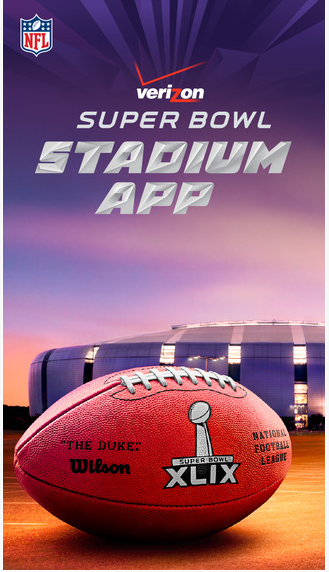
Though the terms of the NBA’s equity investment in YinzCam aren’t described, our guess is that the deal is similar to the one YinzCam struck with the NFL, where YinzCam provided a slice of equity in exchange for content broadcast rights via its team and venue apps. YinzCam founder Narasimhan, who has historically eschewed venture capital in building her 30-person company, said exchanging equity for access to content was a smart deal especially for a firm that couldn’t afford to pay rights fees like the $1 billion Verizon paid the NFL for the right to show live content via its NFL Mobile app. YinzCam has a great relationship with the NFL, and was the provider of the Super Bowl stadium app at Feburary’s Super Bowl XLIX in Glendale, Ariz.

In an interview with Narasimhan earlier this summer, she spoke of the growing importance of fans using apps both inside and outside the arenas; in the press release with the NBA some of that thinking apparently surfaced, in a description about having automated location-based content surface in each app:

The new apps will personalize the home screen experience based on the fan’s location. Core game information, such as stats, play-by-play and box score, will remain accessible, however, the most relevant features, based on a fan’s location and game status, will be delivered to the home screen. Features such as seat upgrades and in-seat delivery will be surfaced within the app for fans at the game, while fans outside of the venue will be exposed to more extensive game coverage, video and news.

The NBA deal follows YinzCam’s deal last year to become the preferred supplier of mobile apps for Learfield Sports, a partnership that Narasimhan said has already resulted in 30 new clients.

One final YinzCam nugget for now:

— Where did the company name come from? Narasimhan says YinzCam is a mashup of the Pittsburgh term “You ones” (a linguistic equivalent of the Southern “y’all”), which when pronounced quickly in a Pittsburgh accent sounds like “Yinz” and “camera” for the personal video the app supplies.

Nokia deal part of new wholesale/white-label strategy for Artemis Networks

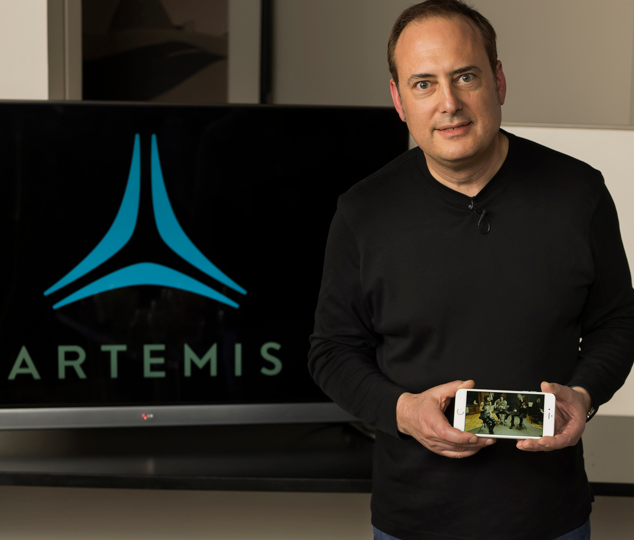
Artemis Networks founder Steve Perlman. Credit all photos: Artemis Networks

Artemis Networks founder Steve Perlman. Credit all photos: Artemis Networks

A deal by startup Artemis Networks to provide test deployments of its pCell wireless networking technology to select Tier 1 phone-network customers of telecom equipment giant Nokia Networks is both a “coming out party” as well as a significant shift in the Artemis business strategy, from a consumer and end-user focus to a wholesale, business-to-business plan.

Though no actual customers, users or live pCell networks have yet been announced, Artemis founder and CEO Steve Perlman said he can see the end to the “long and winding road” toward real-world deployments that officially started when Artemis went public with its ideas back in February of 2014. “We look at this [the Nokia announcement] as our coming-out party,” said Perlman in a phone interview with Mobile Sports Report. “You’ll be seeing [customer] announcements soon.”

In addition to the Nokia “memorandum of understanding,” which says that Nokia and Artemis will “jointly test Artemis pCell wireless technology in 2016 with wireless operators, initially in large indoor venues and other high density areas,” Artemis also announced a shift in its plans for its expected commercial network in its home town of San Francisco, which was originally supposed to launch this past summer. (For a detailed explanation of Artemis technology, scroll to the end of this post and its links.)

From consumer network to wholesale provider

Instead of operating its own network as originally planned and selling access to consumers, Perlman said Artemis will sell LTE capacity wholesale to any interested network provider as soon as the now-approved network is completed. Artemis, which obtained a lease of spectrum from satellite provider DISH, is now setting up antennas on 58 rooftops in San Francisco, Perlman said, after finally getting FCC approval for its plans a little later than expected.

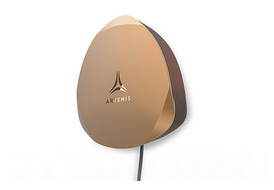
pCell antenna from Artemis Networking

pCell antenna from Artemis Networking

And instead of having to outsource or build its own customer-facing signup, billing and other back-end systems, the 12-person Artemis will instead sell capacity on its San Francisco network to any interested provider. According to Perlman, there are customers ready to buy, even though none are yet named. Potential customers could include MVNOs (mobile virtual network operators) like TracPhone, who don’t own their own networks, or other larger providers looking for roaming capacity or cheap LTE in the crowded city by the Bay.

While it’s less cool than having its own branded devices and network, being a wholesale provider makes sense for the small-size Artemis, instead of trying to compete with wireless giants like Verizon Wireless and AT&T. “Wholesale [capacity] was a market we really didn’t know existed,” said Perlman. “And when they [potential customers] told us what they would pay, it was easy to see B2B as being the way for us.”

Big customers more comfortable with big suppliers

On the networking gear sales side, Perlman said that teaming up with a big equipment provider like Nokia was a necessity to get any traction in the world of LTE cellular networks. As we said before, though pCell’s projected promise of using cellular interference to produce targeted, powerful cellular connectivity could be a boon to builders of large public-venue networks like those found in sports stadiums, owners and operators of those venues are loath to build expensive networks on untested, unproven technology. And big metro wireless providers are even more so.

“We had a lot of Tier 1 operators tell us ‘we love this [pCell technology], we really need this, but we’re not buying from a 12-person startup,’ ” said Perlman. So even while Artemis’ radio technology — which promises huge leaps in performance compared to current gear — was attractive, the company’s lack of any kind of integration with the boring but necessary part of telecom infrastructure, including billing and authentication systems, held it back, Perlman said.

“We were told we could get things done more instantly if we partnered with a large infrastructure company,” Perlman said.

And while real customers from the Nokia deal will probably surface first in a stadium or other large public venue — since such a deployment would be easier to test and install than a new metro network — one team that won’t be using pCell technology any time soon is VenueNext, the app provider for the San Francisco 49ers’ Levi’s Stadium. Though VenueNext was publicly listed as a testing partner last spring, VenueNext has not commented on any results of any testing, and according to multiple sources there was no testing of Artemis equipment at Levi’s Stadium this summer. Though it develops the application and backend systems only, VenueNext does need to work closely with equipment providers, like Aruba Networks at Levi’s Stadium, to integrate its app functionality with the network.

Perlman, who also confirmed there was nothing brewing anymore with VenueNext (“but we’re still friends with VenueNext”), said the app developer also preferred to work with a larger-size developer than the short-bench Artemis. VenueNext, which recently announced the NBA’s Orlando Magic as its second stadium-app customer, has said publicly it would announce an additional 29 new customers before the end of the calendar year.

“We [Artemis] could probably go and do one stadium,” said Perlman about his company’s deployment abilities.

Wi-Fi thrown in for free

And while the main business for Artemis out of the gate will probably be in adding capacity to LTE networks that are running out of spectrum, Perlman said that having Wi-Fi support built into the pCell equipment could make the technology attractive to venues who need or want to bring Wi-Fi services to fans. The Wi-Fi version of pCell technology was also an after-the-fact idea that surfaced after the original pCell announcements.

“The pWave radio heads have [support for] all LTE bands and both Wi-Fi bands,” Perlman said. “So everything that Nokia does [with pCell deployments] can also do Wi-Fi. That’s pretty exciting.”

What’s yet unknown is how the ongoing acquisition of Alcatel-Lucent by Nokia may affect any potential pCell deployments. In the best possible scenario for Artemis, the acquisition could provide more entry points if the pCell technology gets integrated with Alcatel-Lucent telecom gear.

Texas A&M’s fiber-backed Wi-Fi at Kyle Field records 5.7 TB of data during Alabama game

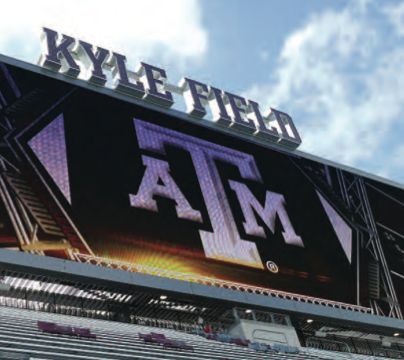
Scoreboard, Kyle Field. Photos: Texas A&M

Scoreboard, Kyle Field. Photos: Texas A&M

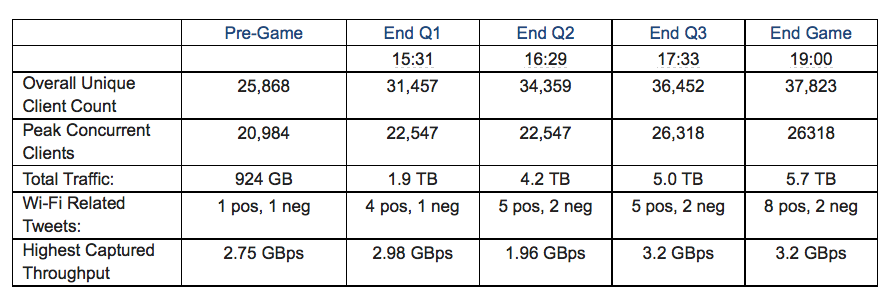
We’ve been hearing rumors about how much data was flowing at the new fiber-based Wi-Fi network at Texas A&M’s Kyle Field this fall, and now we finally have some verified numbers that are sure to pop some eyeballs: According to the networking crew at Corning, fans at Kyle Field used 5.7 terabytes of Wi-Fi data during the Oct. 17 game against Alabama, which the Aggies lost 41-23.

In case you are keeping score the 5.7 TB mark is the second-largest single-game Wi-Fi usage number we’ve seen, trailing only the 6.2 TB recorded at Super Bowl XLIX in Glendale, Ariz., earlier this year. Before you pin it all on the network, however, be aware that the newly refurbished Kyle Field can hold a whole lotta fans — the announced attendance for the ‘Bama game was 105,733, which is 35,000+ more fans than the 70,288 who attended the Super Bowl at the University of Phoenix Stadium on Feb. 1. Still, building a network to support basically another baseball stadium’s worth of fans is pretty cool, too.

Other related numbers from the Wi-Fi network are in Super Bowl territory as well, including the 37,823 unique clients recorded during pre-game and game time, as well as the 26,318 peak concurrent user count. We’re not sure why only 10 people tweeted about the Wi-Fi (8 good, 2 bad) but the 3.2 Gbps throughput should also turn some heads.

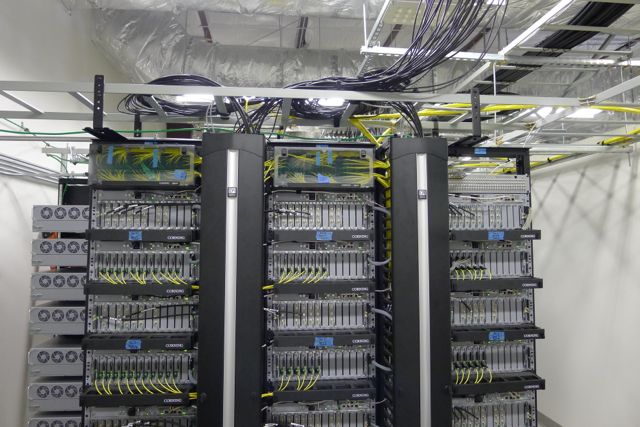
Corning ONE DAS headend equipment at Texas A&M's Kyle Field deployment

Corning ONE DAS headend equipment at Texas A&M’s Kyle Field deployment

The question this all raises for us is, has the availability of a fiber backbone allowed fans to simply use more traffic? And is the demand for mobile data at big events perhaps even higher than we thought? With a regular-season game at Nebraska hitting 4.2 TB earlier this season, it’s pretty clear that data demands are showing no signs of hitting a plateau. Or maybe we can deduce that the better the network, the more traffic it will carry?

It’s also worthwhile to note that stats this season from AT&T have shown several 1+ TB data totals for games at Kyle Field on the AT&T DAS network, which uses the same fiber backbone as the Wi-Fi. This “fiber to the fan” infrastructure, built by IBM and Corning, will also be at the core of the network being built at the new home of the NFL’s Falcons, the Mercedes-Benz Stadium in Atlanta, scheduled to open in 2017.

We’ll have more soon from Kyle Field, as Mobile Sports Report is scheduled to make a visit there for the Nov. 7 game against Auburn. If you plan to be in College Station that weekend give us a holler. Or a yell, right? We are looking forward to seeing the stadium and the network firsthand, to do some speedtests to see how well all areas are covered. With 5.7 TB of Wi-Fi, it’s a good guess the coverage is pretty good.

(Statistics provided by Corning for the Oct. 17 game are below.)

Screen Shot 2015-10-29 at 9.50.45 PM

NFL Stadium Tech Reviews — AFC North

Editor’s note: The following team-by-team capsule reports of NFL stadium technology deployments are an excerpt from our most recent Stadium Tech Report, THE PRO FOOTBALL ISSUE. To get all the capsules in one place as well as our featured reports, interviews and analysis, download your free copy of the full report today.

AFC NORTH

Reporting by Paul Kapustka

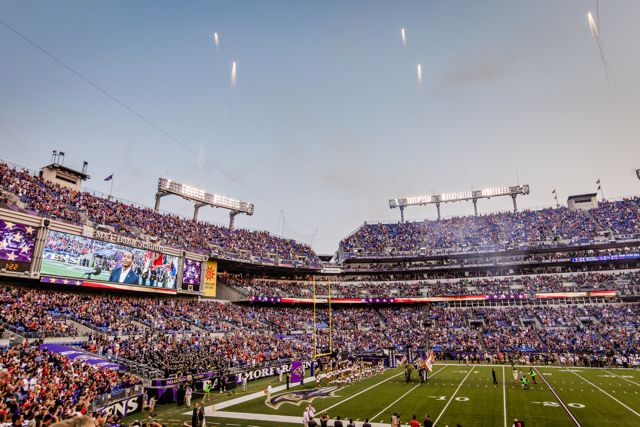
M&T Bank Stadium. All photos: Baltimore Ravens (click on any photo for a larger image)

M&T Bank Stadium. All photos: Baltimore Ravens (click on any photo for a larger image)

Baltimore Ravens
M&T Bank Stadium
Seating Capacity: 71,008
Wi-Fi – Yes
DAS – Yes

Extreme Networks picked up another NFL win this offseason, being selected to provide the Wi-Fi network gear for the Baltimore Ravens M&T Bank Stadium.

According to press releases from the team and Extreme, Extreme will install approximately 800 Wi-Fi APs to provide wireless service to the seating and concourse areas of the stadium. The $6.5 million network will be designed and deployed by integrator PCM Inc. of El Segundo, Calif., and the team app will be developed by YinzCam. According to the Ravens M&T Bank Stadium has a seating capacity of 71,000 for football.

The Ravens are also unveiling a new 3-D video system called freeD that the team said shows replays from every possible angle, like the replays seen on newscasts that can circle around the field of view.

Cincinnati Bengals
Paul Brown Stadium
Seating Capacity: 65,515
Wi-Fi – Yes
DAS – Yes

After putting Wi-Fi from Extreme Networks into Paul Brown Stadium for last season, the Bengals announced an additional $20 million in improvements for 2015, including newer, larger video boards. A TE Connectivity DAS in already in place, and the Wi-Fi network went through some upgrades especially in the stadium’s canopy level.

Cleveland Browns
FirstEnergy Stadium
Seating Capacity: 73,200
Wi-Fi – No, planned for 2015
DAS – Yes

While the Cleveland Browns continue to add improvements to FirstEnergy Stadium, Wi-Fi is not yet installed; according to news reports it should be available by the end of the 2015 season.

Pittsburgh Steelers
Heinz Field
Seating Capacity: 65,500
Wi-Fi – Yes/limited (club and suite areas only)
DAS – Yes

With room for 3,000 more fans in Heinz Field this season thanks to some offseason construction work, more Steelers fans than ever will be able to cheer on the Black and Gold.

Wi-Fi access, however, remains limited, not available in the full bowl but only in the FedEx Great Hall and the West Main Concourse. Clubs and suites also have free Wi-Fi, and the team said customer service reps will be available to deal with issues.