Massive MIMO is Sprint’s path to 5G, says CTO Saw

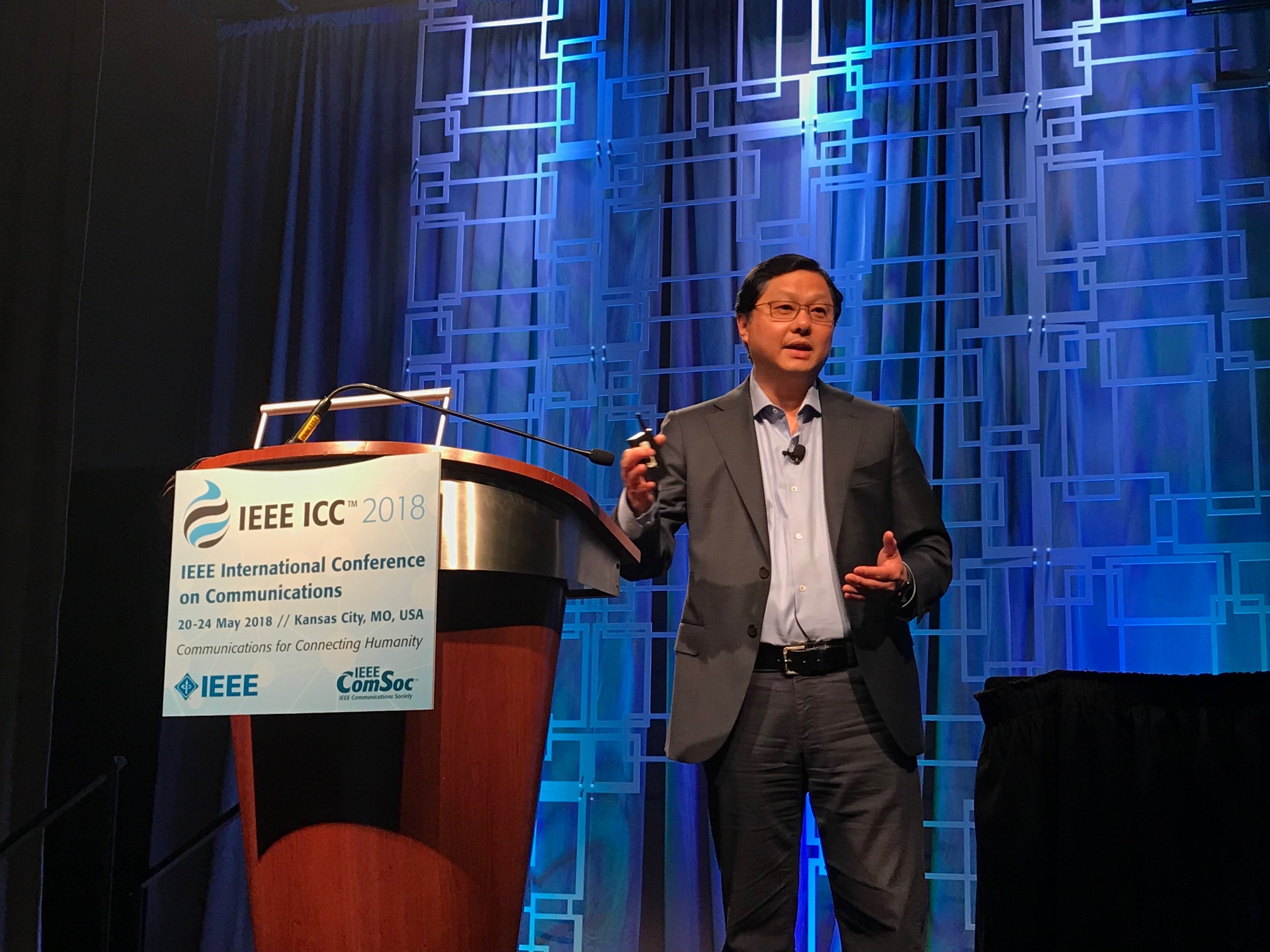
Dr. John Saw, CTO of Sprint, at an IEEE keynote speech. Credit all photos: Sprint

Sprint chief technical officer John Saw has seen the future of cellular wireless, and according to him it was at a sports event.

“I was at the [Winter] Olympics where KT [Korea Telecom] and Intel set up the first 5G network,” said Saw in a recent phone interview. “Stadiums will be a good showplace for the capabilities of 5G. It’s pretty impressive what you can do with 5G that you can’t do today.”

Saw, who was CTO at WiMAX play Clearwire before that company became part of Sprint, will be the first to admit that the network built for the PyeongChang Olympics wasn’t “true” 5G, but said it was a good precursor. He also added that it wasn’t a cost-conscious deployment, something MSR had heard from other sources who said Intel and KT didn’t hold back when it came to spending.

“They spent a lot of money [on the network],” Saw said.

But some of the services the Olympic network was able to support included local viewing of replays using Intel’s True View technology, which gives fans the ability to watch a play or action from a 360-degree angle. While Intel has had limited deployments of the technology at some U.S. sporting events, for the Olympics Saw said they used hundreds of cameras linked over millimeter wave frequencies, which can offer very low latency.

“They needed [to have the images] in real time,” Saw said, and built the millimeter wave network to do just that. While the network “wasn’t fully compliant to the subsequent 5G standards, a lot of what they built is the forerunner to 5G,” Saw said. “It was a pretty cool showcase, and will certainly find a home in stadiums.”

No Millimeter Wave spectrum for Sprint

Editor’s note: This profile is from our latest STADIUM TECH REPORT, an in-depth look at successful deployments of stadium technology. Included with this report is a profile of a new MatSing ball DAS deployment at Amalie Arena, a new DAS for the Chicago Cubs at Wrigley Field, and a look at the networks inside the new Banc of California Stadium in Los Angeles! DOWNLOAD YOUR FREE COPY now!

Millimeter wave networks, however, won’t be part of Sprint’s early push toward 5G, said Saw. Instead, he said Sprint will concentrate on deploying “Massive MIMO” networks in its rich space of spectrum at the 2.5 GHz frequency, where Sprint controls upwards of 150 MHz of spectrum in most major U.S. metro markets.

Without trying too hard here to explain exactly how Massive MIMO works — think splitting up transmissions between mulitple antennas then using lots of compute power to bring the data back together — the key here is Sprint’s spectrum holdings, which Saw said are still only about half used.

“When we launched LTE [on the 2.5 Ghz spectrum] we used less than half the spectrum we had,” Saw said. “With 5G, we will use all the spectrum we have in market. We’ll be one of very few carriers who launch 5G in the same [spectrum] footprint [as LTE].”

With the ability to carry “four to 10 times the capacity of regular LTE,” Saw sees Massive MIMO 5G as something perfect for large public venues like stadiums and shopping malls.

Dr. John Saw

“When you have sports events with 50,000 people in the stadium, you need this kind of capacity,” Saw said. “Were building out the footprint for [5G] this year, and we’ll launch next year.”

Saw said that part of the infrastructure support for 5G networks will be different as well.

“It’s more than just speed, or more capacity. It’s more than tonnage,” Saw said. “We’ll have a different way of deploying the new network, with a more distributed core, one [with more resources] out to the edge of the network.”

Why is such equipment redistribution necessary? According to Saw, a network with more components at the edge can help with content delivery for the new bandwidth-hungry apps like virtual-reality replays.

“Say you want VR at a hockey game, where you want to give real time [replay] viewing to customers, with different camera angles,” Saw said. “You literally have to have the 5G core inside the stadiums, so it can process [the content] without having to go back to the cloud.”

Will DAS trail in the path to 5G?

One type of network Saw doesn’t see leading the way to 5G is the traditional DAS, or distributed antenna system.

“DAS is going to have to migrate to 5G,” Saw said. “It’s not going to lead the pack.”

In fact, Saw said Sprint has been somewhat of a reluctant DAS participant at times, including at the most recent Super Bowls. In the last two of the NFL’s “big game” events, Super Bowl 51 in Houston and Super Bowl 52 in Minneapolis, Saw said Sprint used small cell deployments instead of the neutral DAS systems to augment its coverage.

“We had hundreds of small cells, inside and outside [the venues],” Saw said. “We got the same performance, maybe better, for a lot less money.”

Part of the issue for Sprint and DAS, Saw said, is that the carrier usually has to pay more for its unique spectrum bands, especially the 2.5 GHz frequencies which are not used by any of the other major wireless carriers.

“We always think through before we sign up for DAS fees… there’s more than one way to skin a cat,” Saw said. While in many cases there is no alternative except to participate in a neutral-host configuration, Saw said “we do prefer small cells.”

Will CBRS help?

One of the more hyped platforms being pushed this year is use of the CBRS spectrum at the 3.5 GHz range for not just more carrier networks, but even for “private” LTE networks, like for venues or campuses.

“It’s an interesting concept because it opens things up to more than just four operators,” Saw said. But he also called out the need for an online database to make sure CBRS spectrum use doesn’t interfere with systems run by the U.S. Navy, and added that without any definitive FCC action yet, the rules for future CBRS use are still unclear.

“There’s quite a lot of work to be done, and not a lot of spectrum there,” said Saw. While claiming that Sprint is “watching CBRS with interest,” he added that with its 2.5 GHz holdings, Sprint most likely won’t be at the front of any CBRS deployments.

“At the end of the day, CBRS is not 5G,” Saw said.

How will a merger with T-Mobile help?

Since our conversation took place just a day after Sprint and T-Mobile announced their renewed plans to merge, Saw didn’t have a lot of details to share, beyond his opinion that the two companies’ different spectrum holdings would build a more powerful competitor when put together.

“When you put our 2.5 (GHz) with their 600 MHz it gives you a much larger footprint with higer capacity,” Saw said. “There’s tremendous synergy. Both [companies] are enthusiastic about this deal.”

Editor’s note: This post is part of Mobile Sports Report’s new Voices of the Industry feature, in which industry representatives submit articles, commentary or other information to share with the greater stadium technology marketplace. These are NOT paid advertisements, or infomercials. See our explanation of the feature to understand how it works.
MatSing ball antennas to power new DAS at Amalie Arena

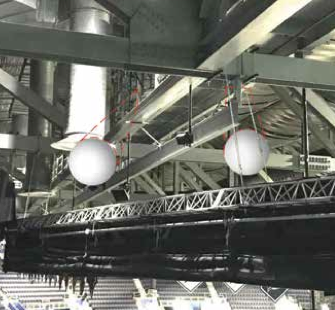
Artist rendering of MatSing ball deployment in rafters of Amalie Arena. Credit: MatSing

Can the curiousity become commonplace?

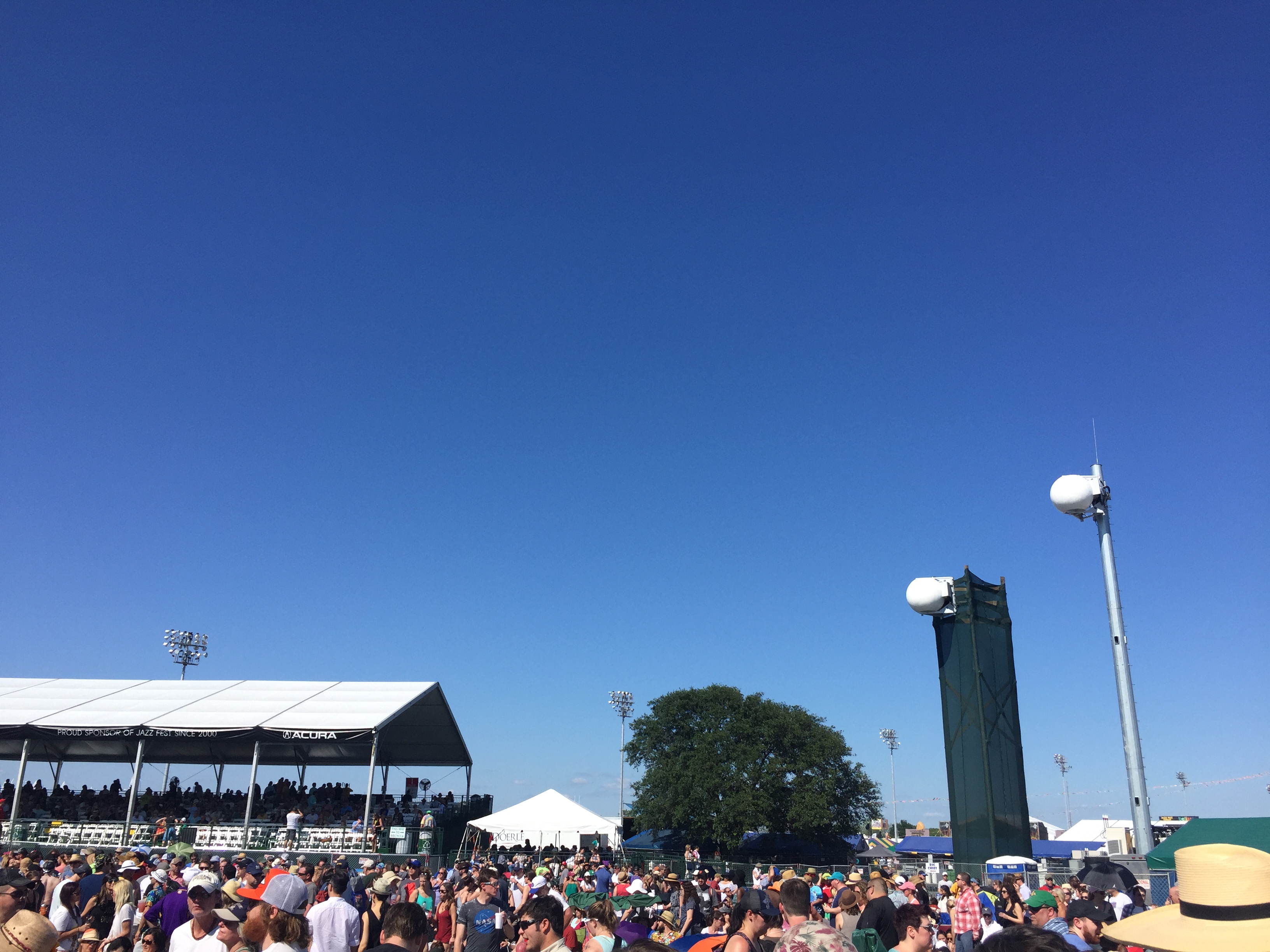
That’s the question that will be answered when the new DAS network at Amalie Arena in Tampa comes online — powered by 20 MatSing “eyeball” antennas, the big, white, spherical systems mostly previously seen as quirkily conspicuous portable cellular equipment for large gatherings like outdoor concerts.

Over the past year, however, the MatSing balls have been creeping inside sports venues, most notably making a permanent appearance at U.S. Bank Stadium for Super Bowl 52, when Verizon wireless hung two MatSing antennas from the rafters to provide cellular coverage for sideline-located media photographers.

Now in what is believed to be the largest single installation of MatSing balls at one time, AT&T is rebuilding the distributed antenna system at Amalie Arena (home of the NHL’s Tampa Bay Lightning) with 20 MatSing balls, which house a combined 362-plus antennas due to come online before the next hockey season begins. According to AT&T, the new system will boost LTE capacity by “nearly 400 percent” compared to the previous system installed at the arena.

MatSing balls in the rafters at U.S. Bank Stadium. Credit: Verizon

The new system is also sort of a coming-out event for MatSing the company, which has largely remained in the background the past few years as AT&T and Verizon Wireless have used its unique “lens” antennas to bring cellular coverage to events as diverse as the Coachella Music Festival, the presidential inauguration and the Indy 500. But as cellular carriers and venue owners and operators look for ways to increase density or granularity of coverage, MatSing’s unique gear may find its way into more permanent deployments, especially if the Amalie Arena network proves successful.

Longer reach, tighter concentration

Editor’s note: This profile is from our latest STADIUM TECH REPORT, an in-depth look at successful deployments of stadium technology. Included with this report is a profile of a new MatSing ball DAS deployment at Amalie Arena, a new DAS for the Chicago Cubs at Wrigley Field, and a look at the networks inside the new Banc of California Stadium in Los Angeles! DOWNLOAD YOUR FREE COPY now!

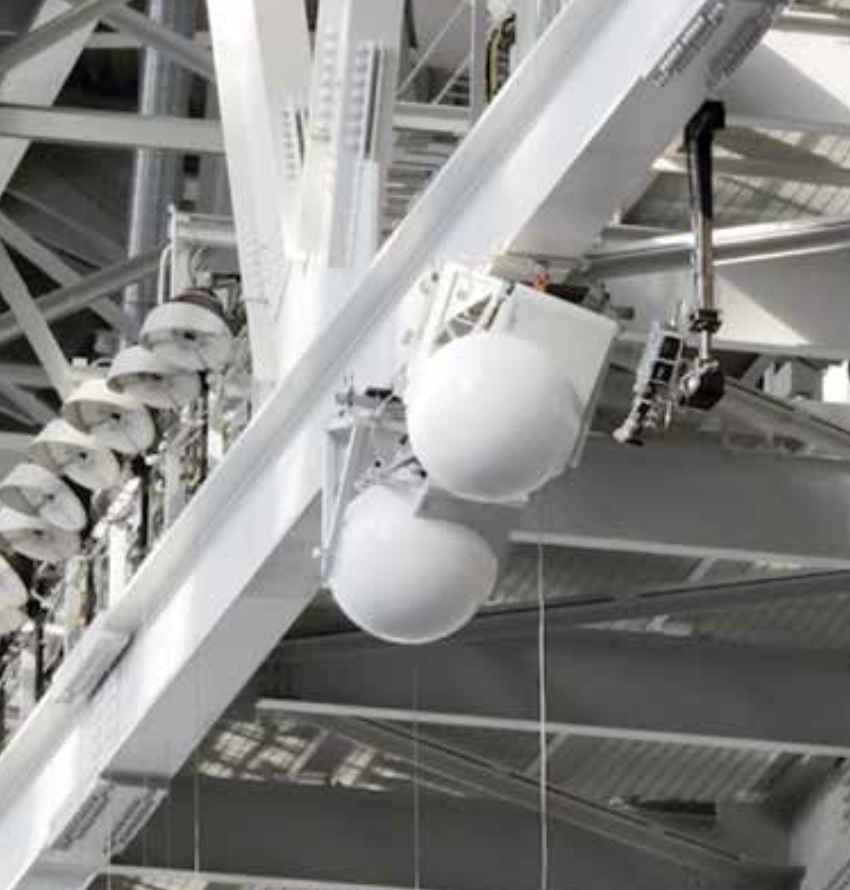
What sets MatSing ball antennas (also called “Luneberg Lens” antennas) apart from other wireless gear is the MatSing ball’s ability to provide a signal that can stretch across greater distances while also being highly concentrated or focused. According to MatSing its antennas can reach client devices up to 240 feet away; for music festivals, that means a MatSing antenna could be placed at the rear or sides of large crowd areas to reach customer devices where it’s unpractical to locate permanent or other portable gear. By being able to focus its communications beams tightly, a MatSing ball antenna can concentrate its energy on serving a very precise swath of real estate, as opposed to regular antennas which typically offer much less precise ways of concentrating or focusing where antenna signals go.

And while the “giant eyeball” or “golfball” antennas are often very easy to spot in outside deployments, for indoor arenas or domed venues the MatSing balls can be tucked up against rooftop beams and catwalks, where they can go unnoticed alongside the other structural attachments like heating ducts, speakers and lighting. For venues concerned about the number of antenna placements growing near seating areas, a ceiling-mounted MatSing ball network could be an elegant way to add capacity without compromising aesthetics.

MatSing balls deployed at an outdoor event. Credit: MatSing

The MatSing balls can also be used at outdoor arenas, as long as there is someplace to mount them; at the Saskatchewan Roughriders’ Mosaic Stadium in Regina, Saskatchewan, the antennas already have a nickname of the “dingle balls,” and are a key part of an aggressive wireless coverage strategy for the 33,000-seat home of the CFL’s Roughriders.

‘Like a contact lens’

Without getting too deep into the technology behind the antennas, MatSing chief product officer Tony DeMarco suggested comparing the focusing ability to that of a contact lens. For the Amalie Arena deployment, AT&T is using a version of the MatSing antenna that can provide up to 18 different beams of radio frequency, far more than most standard antennas. (Other larger versions of the ball antennas can support even more connections.) According to DeMarco, the beams can then be easily focused by using a laser to point down to seating areas, a much more precise configuration than other antenna technologies.

Unlike other deployement methods, like under-seat antenna enclosures, the MatSing balls typically have a clear line-of-sight path to potential users, which DeMarco claims can offer faster, better connections.

Since there haven’t been any full-stadium MatSing deployments before, there’s not enough evidence yet to fully compare whether or not going all-in on the ball design will offer greater performance or budgetary savings over other methods. The confident DeMarco, however, has a couple predictions he’s willing to bet on — that in 3 years’ time, “every operator will be using a lens antenna, and every venue will be using a lens antenna. It’s a graceful use of physics with a lot of potential.”

Eagles sign Appetize for new point-of-sale system at Lincoln Financial Field

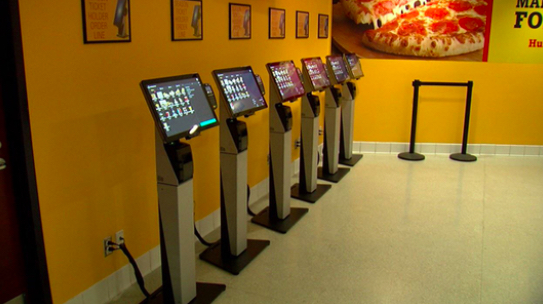
Self-serve kiosks from Appetize allow fans to order and pay for their own food for nearby pickup. Credit all photos: Appetize

The Philadelphia Eagles have signed a deal with Appetize to bring its technology-centric point of sale system into Lincoln Financial Field, a deal designed in part to help speed up concessions transactions for home fans of the new Super Bowl champions.

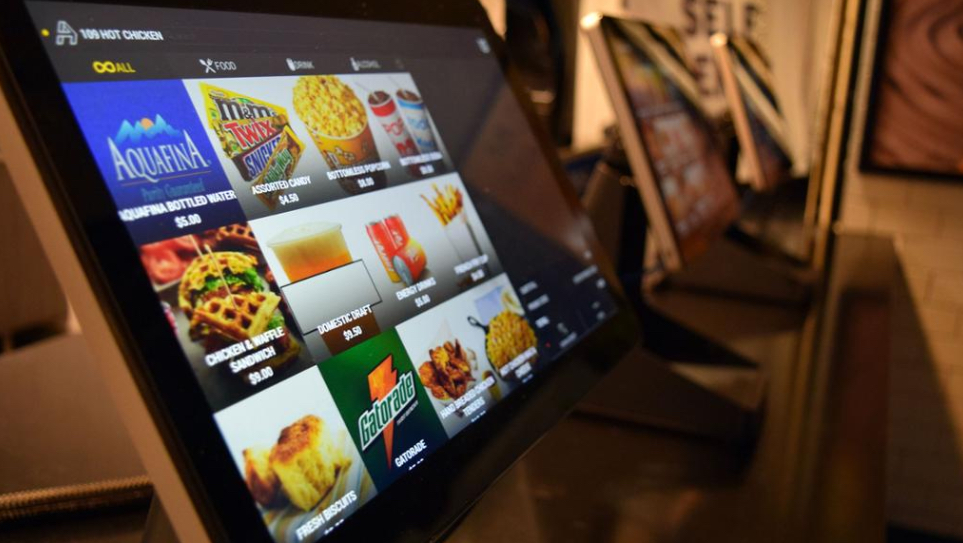
According to a press release out today, Appetize will install “more than 500” iOS- and Android-based terminals inside the Linc, including some touch-screen fan-facing checkout displays as well as self-service concession kiosks that are meant to function much like the terminals found at airports for checking in to flights.

Kevin Anderson, co-founder and chief strategy officer for Appetize, said in a phone interview that internal company tests have shown that the self-service kiosks can speed up a concessions transaction by as much as 20 percent, good news for fans who are tired of spending lost minutes standing in line waiting for a cheesesteak. The efficiency these kiosks bring is not unlike the streamlined experience found in online casino Greece, where intuitive interfaces and seamless navigation ensure users can focus on their gaming rather than cumbersome processes. For teams and venue owners, the 10-inch screens being installed at other, regular concession stands in the Linc can help with upsell, as Anderson said that the screen space allows the operator to program in add-on options (like adding a drink or fries to a sandwich order) via a side-of-screen advertisement that makes it easy to add to the order with a click.

In addition to the new customer-facing technology, Appetize is also gaining entree to venues for its cloud-based back-end systems, which Anderson said cuts out the need for teams to have localized infrastructure to buy and manage. Though he won’t name them all yet, in addition to the Eagles win Anderson said Appetize has claimed three other NFL contracts that were out for bid this summer, perhaps proof that the company’s mantra of having “enterprise and modern” facets in their systems is finding receptive ears.

Making sure the infrastructure is set up for kiosks

While MSR clearly needs to schedule a stadium visit sometime to check out kiosk wait times compared to older concessions systems, Anderson did note that teams can’t just plug the kiosks in and expect them to work with an existing infrastructure. “There is a shift in operations” that is necessary, he said, since kiosks can double or triple the number of orders in a given time to an existing kitchen location. However, having kiosks also means that self-service stands can be staffed with workers who simply put orders together, instead of having to train those workers on payment systems and devices.

New tablet-based POS terminals can entice fans into add-on purchases

One area where Appetize doesn’t see a lot of explosive growth is on the in-seat delivery end, a trend that seems to slowing down and finding its way mostly into premium seating areas at most venues. While Appetize can support mobile-device ordering and delivery (it even started its corporate life with an end-user focus on a mobile/delivery app) Anderson said the infrastructure and human engineering necessary to support a full-stadium delivery scheme is usually found to be unworkable. The San Francisco 49ers, who opened Levi’s Stadium in 2014 with mobile-app delivery of concessions to every seat, scrapped that service last season.

“We’re definitely not seeing [customers] asking us to do full-stadium” in-seat delivery, Anderson said. However, having the ability to place an order via a mobile device does have value in premium seating areas, where stadiums may already have systems like the Appetize-based one currently used at Lincoln Financial Field, where servers with wireless devices roam the seating areas offering in-seat ordering as a white-glove service.

“It’s a nice line-item for the season ticket sales sheet” to offer in-seat delivery services in places where it makes sense, Anderson said. “Venues are being smart [now] about where they are putting it.”

D.C. United picks VenueNext for Audi Field app

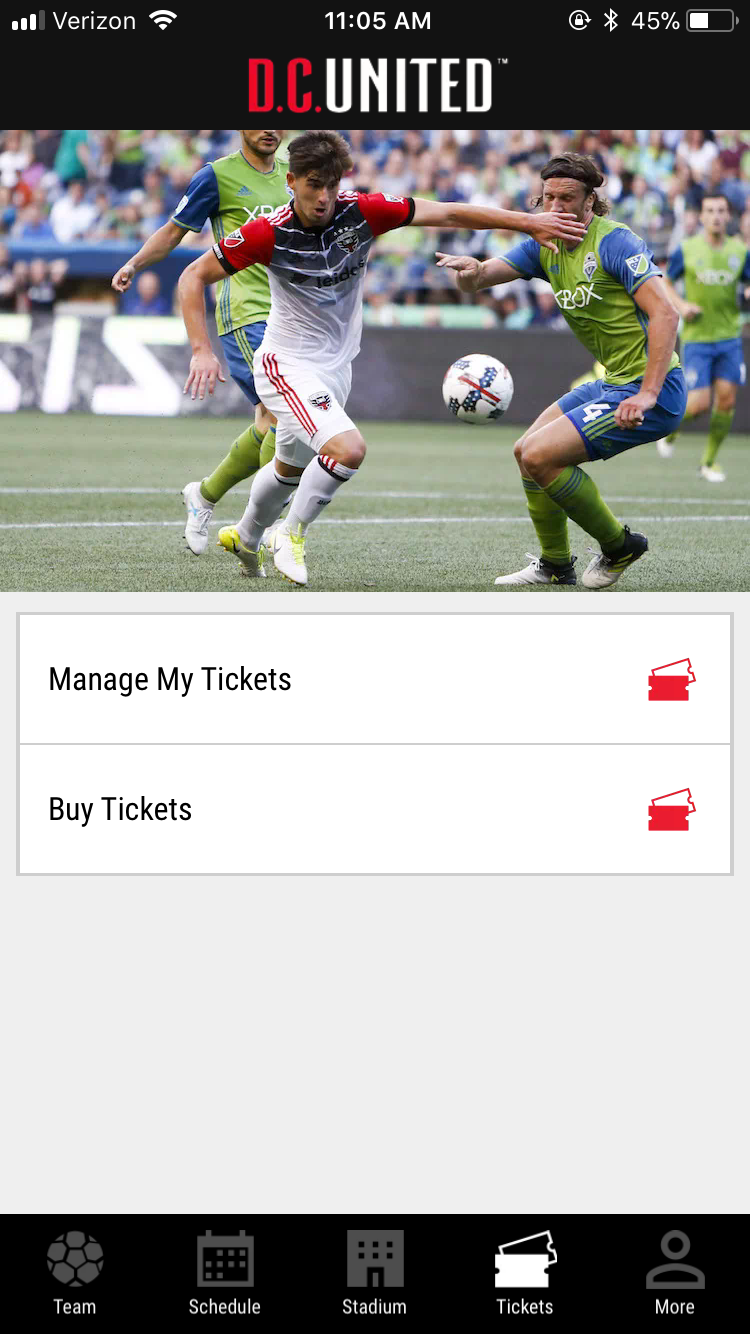
Screenshot of new D.C. United app. Credit: VenueNext

As D.C. United gets set to move into Audi Field, the team announced it has chosen VenueNext to supply a new stadium and team app, which will include support for a wide range of services including digital ticketing, video highlights and replays, and a virtual currency that will let fans purchase goods and services at the stadium via their mobile device.

The new deal is VenueNext’s first customer in Major League Soccer, following earlier wins with pro teams in the NFL and Major League Baseball, as well as the NHL and NBA. One of the MLS’ founding clubs, D.C. United will move into the new 20,000-seat Audi Field in the middle of July.

According to a press release from VenueNext, in addition to video and static content about the team, players and league, the app will also support mobile ticketing for stadium entry, the ability to order concessions via the app for express pick-up, in-stadium and public transit wayfinding, and directions to parking.

Giants, AT&T say new under-seat antennas triple cell capacity at AT&T Park

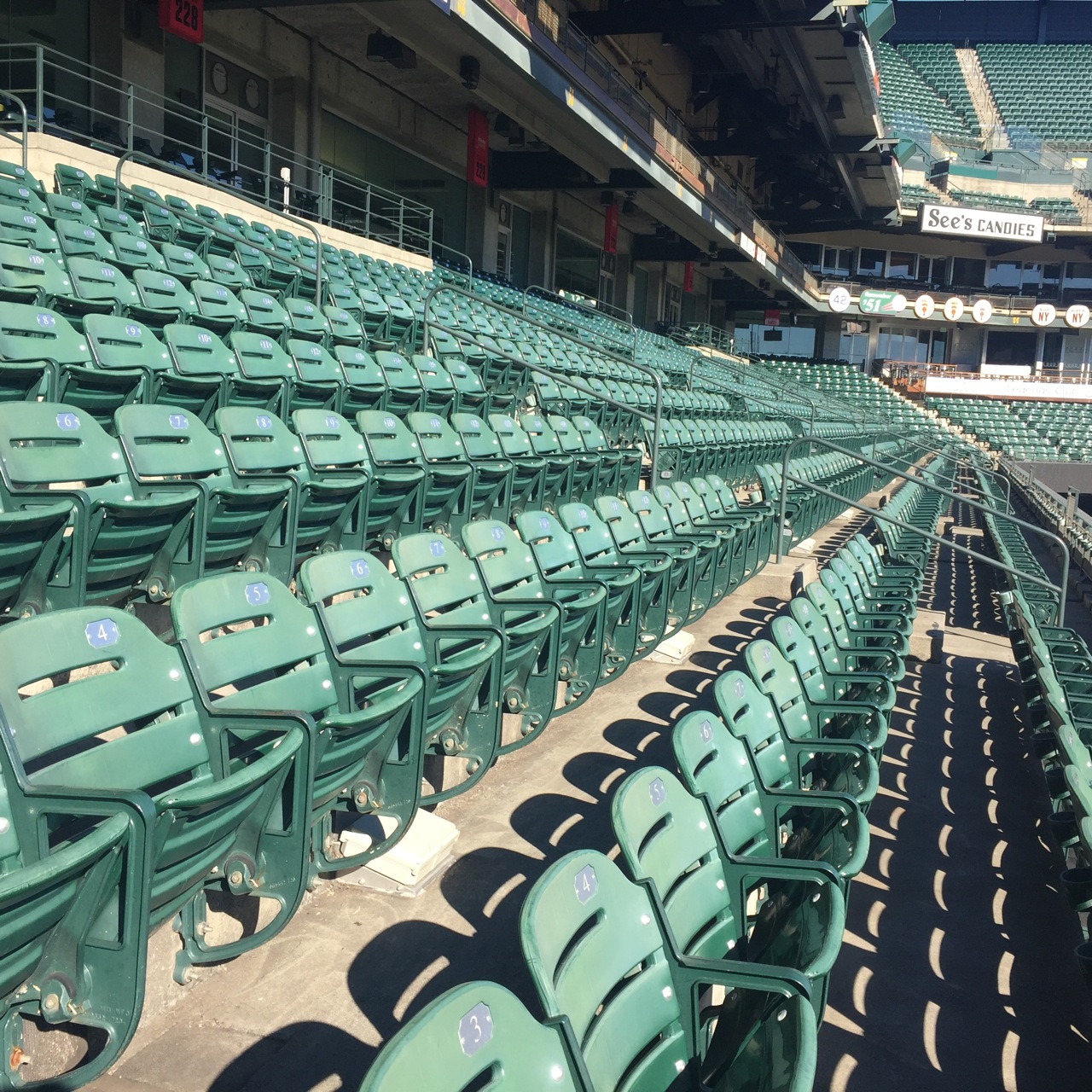
Under-seat Wi-Fi enclosures at AT&T Park now have DAS antennas in them as well. Credit: SF Giants/AT&T

An offseason experiment by AT&T and the San Francisco Giants may change the way sports venues and carriers think about cellular deployment, as a massive installation of under-seat antennas has significantly improved the cellular capacity at AT&T Park for AT&T customers, according to the team and the carrier.

By installing cellular antennas inside 916 existing under-seat Wi-Fi antenna enclosures, AT&T and the Giants made a huge bet that by densifying the coverage, they could significantly improve the cellular experience for AT&T customers at the ballpark.

While admitting that data accumulated so far is only a small sample, the Giants and AT&T are nonetheless convinced their move is already a win, as early season declines in Wi-Fi use and increases in cellular data use seem to point toward a conclusion that fans are using more cellular service because it’s providing a better connection. The change is so effective that it’s even making the Giants’ networking team wonder if Wi-Fi will be necessary moving forward, if other carriers added the same kind of network capacity to their cellular infrastructures.

‘Most significant upgrade, ever’

Editor’s note: This profile is from our latest STADIUM TECH REPORT, an in-depth look at successful deployments of stadium technology. Included with this report is a profile of a new MatSing ball DAS deployment at Amalie Arena, a new DAS for the Chicago Cubs at Wrigley Field, and a look at the networks inside the new Banc of California Stadium in Los Angeles! DOWNLOAD YOUR FREE COPY now!

With technologies like the multiple proposed iterations of 5G cellular and other plans to mine new spectrum territory on the near horizon, large public venues looking to keep up with wireless data demands are seeking whatever ways they can to keep customers connected. Historically, AT&T Park has been in the lead in this arena, from being the first pro venue to provide Wi-Fi to fans (in 2004) to staying committed to pushing the envelope, including the pioneering move of putting Wi-Fi access points under seats to improve and expand coverage.

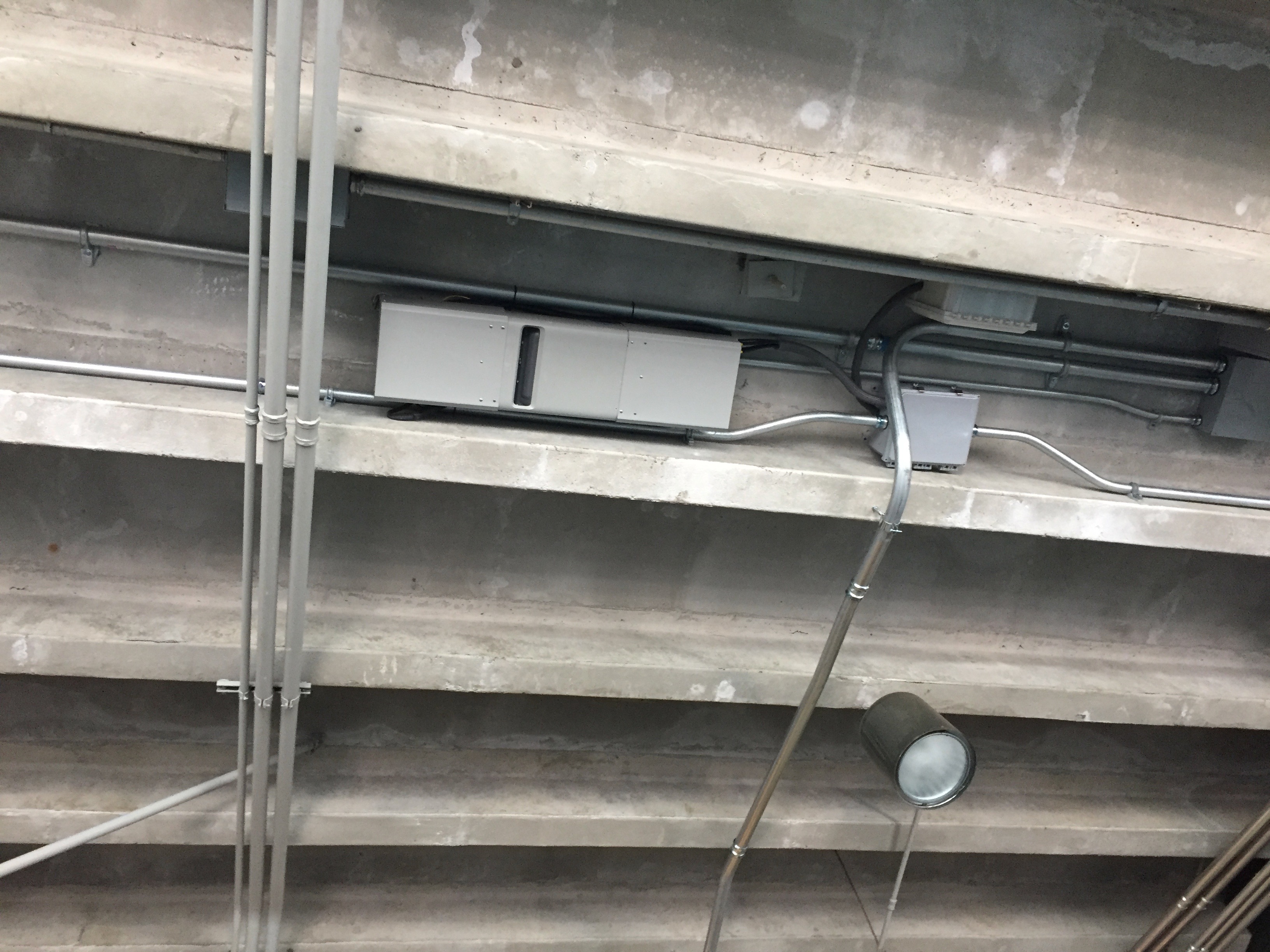
New Ericsson radio gear (long grey box) powers the new under-seat DAS antennas at AT&T Park. Credit: AT&T

As the neutral-host provider of a distributed antenna system (DAS) at AT&T Park to provide cellular coverage for its own customers as well as customers from all the top wireless service providers, AT&T has also kept its cellular systems at the top levels of performance, at least at the levels possible for traditional top-down antenna placements. However, as demand for wireless services keeps growing — pushed somewhat by the recent revival of so-called “unlimited” data plans — many large venues (especially those facing “bucket list” events like Super Bowls or World Series games) have been challenged to find ways to expand DAS capacity.

At the past three Super Bowls, Verizon Wireless has increased DAS capacity by using extra DAS antenna installations under seats (Super Bowl 50, Levi’s Stadium), under seating-area concrete (Super Bowl 51, NRG Stadium) and inside handrail enclosures (Super Bowl 52, U.S. Bank Stadium). According to Bill Schlough, senior vice president and chief information officer for the Giants, the team and AT&T conducted a small experiment last fall, to see if putting cell antennas inside the existing under-seat Wi-Fi enclosures could help provide a better signal for fans.

“We did a small swath of stands and it worked well,” said Schlough in a recent phone interview. “So we said, ‘let’s do the whole ballpark.’ ” Some 916 antennas later, installed by crews who worked every day of the offseason, AT&T Park had what Schlough called “our most significant connectivity upgrade, ever,” no small statement for a network that has required more than $30 million in spending in its existence, according to Schlough. What’s kind of funny is that this paradigm-changing “experiment” has so far only netted a one-paragraph simple explanation in a “What’s new” public press release from the Giants and AT&T Park.

WCS band comes into play

If the Giants and AT&T seem to be soft-pedaling the deployment a bit, some of that modesty may come from the fact that this deployment may not be easy to replicate. Gordon Spencer, an area manager in AT&T’s RAN engineering group, said the deployment uses only spectrum from the WCS band, a chunk of wavelengths near the 2300 GHz region. None of the other top carriers has any licensed spectrum in this band; by using only WCS wavelengths, Spencer said, AT&T easily avoided any interference with its existing DAS, which uses a number of more-common cellular frequencies. There was also a huge construction savings by using the existing under-seat Wi-Fi infrastructure, which meant there was no extra core drilling necessary to deploy the new cellular devices.

Another part of the program AT&T is reluctant to talk about is how exactly it got the WCS antennas to work inside a Wi-Fi box, without having to open up the boxes from the top. Spencer would not comment about specifics of the antenna deployment, but did say that having WCS spectrum close to the unlicensed 2.4 GHz spectrum used by some Wi-Fi communications “made construction pretty simple.” Like under-seat Wi-Fi, Spencer said the under-seat cellular network designs in the interference caused by human bodies (aka “bags of water”) to allow antennas to be placed closer together.

“It works much better when the stadium’s full of people… we designed it that way,” Spencer said.

Could more dense cellular replace the need for Wi-Fi?

While the public press release doesn’t give any exact throughput numbers for proof, it does state that “This densification initiative effectively triples wireless capacity for AT&T customers at AT&T Park,” and notes that approximately 32 miles of fiber and copper cable were used to enchance 97 cell sectors.

But since AT&T customers typically are in the majority at most AT&T Park events, by moving many of them to a new network, the team was able to effectively free up space on the regular DAS as well as on the Wi-Fi, a network Schlough said could soon fall out of favor.

“Imagine if the other carriers were able to leverage this new AT&T cellular network,” Schlough said. “Could it come to a point where we ask ourselves, do we need Wi-Fi anymore?”

Some venues, of course, may want to keep expanding their Wi-Fi systems since by owning the network they also own the network user data, a trove of information not usually shared by wireless carriers for DAS usage. But unlike some theoretical 5G designs — which may call for “microantennas” in a much larger number — the more-dense via piggybacking on Wi-Fi idea may have some legs.

“If you have a greenfield design it may make sense to use microantennas everywhere,” Spencer said. “This deployment was pragmatic, and it works.”

New Report: DAS deployments rule, with new networks at Wrigley Field, AT&T Park and Amalie Arena

Call it the ‘Connect the DAS’ issue — our latest STADIUM TECH REPORT is heavy on DAS news, with new deployments at Wrigley Field, AT&T Park, and Amalie Arena — all of them breaking news, as in you heard it here first!

At AT&T Park, the home of the San Francisco Giants, there is a brand new upgrade to the stadium’s DAS network, an AT&T-only deployment of DAS antennas inside the same under-seat enclosures used for stadium Wi-Fi. An experiment at first, just a few months into the season it has surprised both the team and the carrier with how well it’s doing. Get the details by DOWNLOADING OUR FREE REPORT right now!

Second at bat in the news-scoop arena is another DAS deployment, this one just getting underway at Amalie Arena in Tampa, home of the NHL’s Lightning. The twist on this new network — also being installed by AT&T — is that it will exclusively use MatSing ball antennas, those quirky-looking “big ball” antennas that you may have seen used in a temporary fashion at outdoor events. What’s bringing them inside? DOWNLOAD THE REPORT and read our exclusive story!

And at venerable Wrigley Field — the friendly confines of the Chicago Cubs — a long-planned upgrade to the venue’s cellular systems is finally in place, using JMA Wireless equipment deployed by DAS Group Professionals. Our in-person visit took a look at how DGP and the Cubs merged new technology with one of baseball’s most historic structures. Who says DAS is dead?

In addition to those stories we also have a complete, in-person visit and profile of the new networks at the newest stadium in MLS, the Los Angeles Football Club’s Banc of California Stadium. We also have a Q&A with Sprint CTO Dr. John Saw, all packed into one issue ready for FREE DOWNLOAD right now!

We’d like to thank our sponsors for this issue, which includes Mobilitie, Corning, Huber+Suhner, JMA Wireless, Cox Business/Hospitality Network, Oberon, Boingo, MatSing, ExteNet and DAS Group Professionals — without their support, we wouldn’t be able to make all this great content available to you for no cost. Thanks for your interest and we hope you enjoy the latest issue of our STADIUM TECH REPORT series!