Can 120 Sports find a niche in sports streaming video market?

Without any examples of what they will do, it’s hard to guess where the new sports streaming video concern 120 Sports will fit in. But with content partners that include Sports Illustrated, Major League Baseball, the NHL, NBA, NASCAR and major colleges, it’s a good bet sports fans will find something to watch among the two-minute clips that give the site its “120” moniker.

Our pal Todd Spangler has a great writeup of the details of the 120 Sports launch over at Variety, but I wonder how (especially without any football content) the new site will make a name for itself, with its obvious competition being the worldwide leader, ESPN. With the technical chops of MLBAM behind it, 120 Sports is probably going to look great and perform well online. And as long as it’s free it will get some eyeballs. But if you read the press release you see there is talk about the “premium” version for pay somewhere down the road. That’s where 120 Sports will face its real test and right now I don’t see a compelling reason to pay for yet another sports outlet.

What I do foresee in the near future is some real shakeout between teams, leagues and broadcasters, because right now it seems like some leagues — the NFL mainly — are in danger of alienating their big-bucks TV contracts with their league-owned digital plays, like NFL Now. In the early days many sports fans will no doubt pay to see what’s on, but I don’t think there is a limitless budget for anyone when it comes to viewing sports. At some point (like what’s happening now with cell phones) sports fans are going to pick winners and losers, and my bet is that whoever has rights to live action and/or replays is going to be the big winner.

I like the idea behind 120 Sports, as short clips are definitely the way to go when it comes to online video. But do people really want a mix of features and other etcetera from a wide range of different sports? Or are they going to go to sports-specific or team-centric sites first? I just don’t see how 120 Sports is going to be significantly different from what’s available now but maybe they will show us when content is actually live.

Could pCell score a big win in stadium wireless?

pCell antenna from Artemis Networking

pCell antenna from Artemis Networking

With a pretty impressive scheduled media blitz a new company called Artemis Networks hit the scene today with a technology that if it works as advertised, could bring a welcome revolution to stadium wireless networking.

Fronted by entrepreneur Steve Perlman, perhaps best know for his development of things like QuickTime and WebTV, Artemis claims to have solved one of the most vexing problems for large public-venue wireless, namely the congestion caused by a lot of cellular devices in a small geographic place. Though no details are yet available to explain exactly how it works, the company says its pCell wireless technology turns conventional cellular infrastructure on its head, using cell interference to amplify signals to each device.

We are reaching out to the company and to other cellular industry types right now to get reactions to the announcement. In the meantime, if this plan really works it could potentially make stadium and other large-venue wireless networks a lot easier and cheaper to deploy. Some good details can be found in this EE Times report.

Here is the company’s simple explanation of what its technology does:

“pWave radios transmit signals that deliberately interfere with each other, combining to synthesize tiny pCells, each just one cm in size. Every mobile device has its own pCell, a “Personal Cell,” each getting the full spectrum capacity.”

A little bit farther down its explanation page, the company adds more details, apparently pegging its strategy of mesh deployment of antennas as a cloud-based radio access network, or C-RAN.

“pCell is a pure software-defined radio C-RAN. Linux-based servers scale linearly with capacity. Fronthaul is conventional IP. pWaves self-synchronize. Seamless handoff to cell networks if desired.”

And just to tease more, the company also hints that it could set up its own networks, instead of just making cellular work better. Again, we will need more technical details about how pCell works to figure out its exact impact, but this statement is also interesting:

“Concurrently with LTE devices, pCell supports “pCell-native” devices, at far lower cost and power, each with its own pCell in the same spectrum. pCell-native devices can be faster than LTE with fiber-class latency. For example, an iPod-class device could be made pCell-native with minimal additional cost at the same size and power, and would provide better than LTE mobile performance in pCell coverage areas. This opens the door for low-cost pCell-native smartphones, wearables, UltraHD TVs, laptops, appliances, etc.: a broadband Internet of (inexpensive) Things.”

Our guess is that the reality of this design will mean some kind of client software or chip necessary to allow devices to connect to the pCell network; anyone with any details on the device or network, please chime in!

Stadium Tech Report: Orlando Magic will use Wi-Fi to improve connections with fans

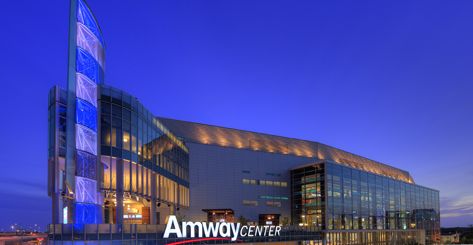
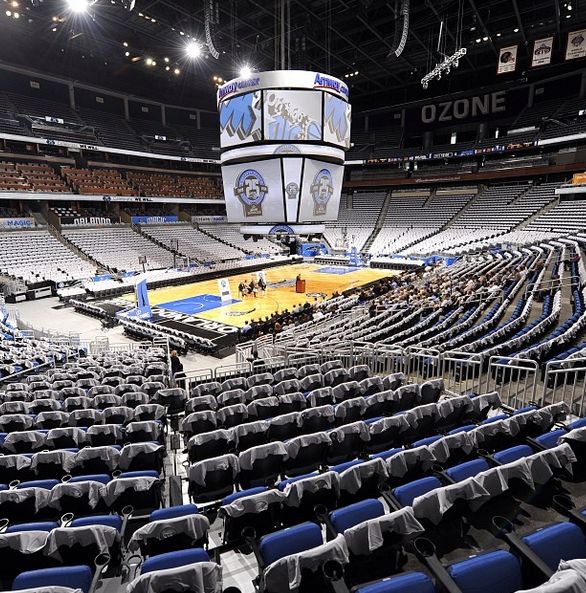
Amway Center prior to NBA opening night, 2013-14 season. Credit: Orlando Magic

Amway Center prior to NBA opening night, 2013-14 season. Credit: Orlando Magic

Here’s how fast things have moved in the world of sports fans using mobile devices: When the Orlando Magic’s Amway Center opened in 2010, it was considered a state of the art facility, with sustainable design and lots of creature comforts like bigger seats and 42-foot high main video screens on its center scoreboard. But for the new smartphones fans were starting to bring to games, there was no Wi-Fi network. So, like at many new arenas, the Amway Center tech team went back to the drawing board, to figure out how to best add the connectivity that is in demand at large public venues everywhere.

“When the Amway Center opened it was one of the most technically advanced buildings in the world,” said Jack Elkins, business innovations manager for the Orlando Magic, in a recent phone interview. Though the arena had Wi-Fi connectivity for luxury suites and for media, and a neutral-host DAS, there wasn’t a high-bandwith Wi-Fi network to service the balance of attendees at the 20,000-seat facility.

“At the time, public Wi-Fi for stadiums wasn’t [economically] viable,” Elkins said. But like smartphone design, Wi-Fi infrastructure equipment got cheaper, better and faster, and the arena team started making plans to deploy a network as quickly as possible, with an important caveat: They wanted to own the network themselves, to better take advantage of its ability to collect and share information with the fans who would be using it.

Amway Center outside shot. Credit: Amway Center

Amway Center outside shot. Credit: Amway Center

Owning your own Wi-Fi network

“We wanted to be one of the first teams [to put in Wi-Fi],” and by the 2012-13 season, the deployment was “financially palatable” to the building’s owner and operator, the central Florida city of Orlando. According to Elkins the Magic teamed with wireless infrastructure specialist AmpThink to help design and deploy the network, which the team wanted to own and operate instead of merely allowing a cellular carrier or another third party to run it.

“When we went to put in Wi-Fi we saw it as a capital investment — we wanted to own the network,” Elkins said. Jeff Lutes, vice president of technology for the Magic who also participated in the recent phone interview, said the team entered into a “unique relationship” with AmpThink, basically “giving them the arena as a testbed for new technology work.” What was the Magic’s overall goal? “Getting better analytics out of Wi-Fi,” Lutes said.

First came the difficult procedure of ripping into those brand new stadium walls to add technology, which included all the Wi-Fi access points and infrastructure.

“We had just opened this new and gorgeous building, and had to find ways to put up a Wi-Fi network incorporating antennas the size of 17-inch monitors in as an aesthetically pleasing way as possible,” said Elkins, expressing a frustration no doubt felt in many other existing facilities who are adding new stadium technology. “That was a very difficult thing for our venue.”

A strong partner means a deeper technical bench

On the technical side, the Magic’s tech team was able to rely on the bench strength of partners like AmpThink and Cisco, who made sure the deployment was forward-thinking enough to embrace the latest technologies, like the newer 5 GHz channels for Wi-Fi connectivity.

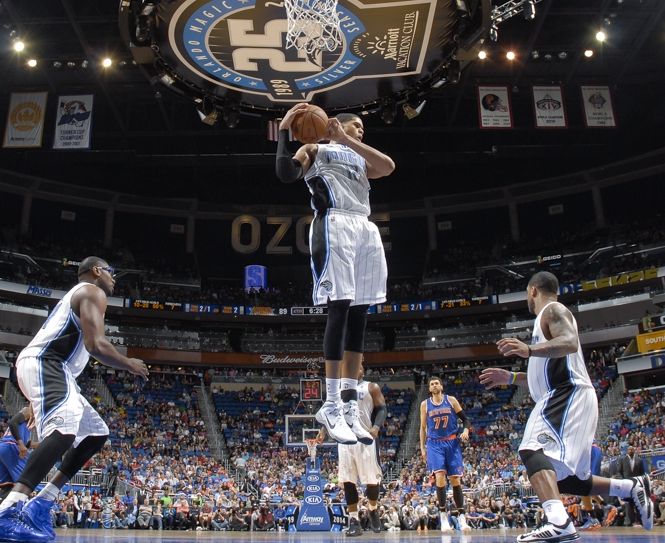
Orlando Magic in action at Amway Center. Credit: Orlando Magic

Orlando Magic in action at Amway Center. Credit: Orlando Magic

“The NBA is telling teams they’ll need to upgrade [networks] every 2 years but we won’t have to,” Elkins said. “Thanks to the foresight of Cisco and AmpThink, we have clients on both radios [2.4 GHz and 5 GHz] right now and as fans get newer devices they’ll be able to go to 5 GHz without us doing anything new.”

The fewer walls torn apart, the better.

“We had limited internal staff, many of whom needed to stay focused on day to day issues,” Elkins said. “AmpThink opened the door to keep us forward thinking.”

So far, Lutes said the Magic sees an average of about 2,700 fans using the Wi-Fi network during NBA games. Concerts usually see a higher use rate, something that also happens during “big” games — like when former Magic star Dwight Howard returned to Orlando a year ago while playing for the Los Angeles Lakers. According to Lutes, the network saw 4,000 users on the night Howard returned.

App rollout and future connectivity goes both ways

Part of the future of the team’s extended connectivity with fans is just getting underway, with the rollout of an official in-stadium app. And when fans access the network for the first time, they are presented with a registration page that gives the team the ability to fine tune its marketing and outreach messaging, a key part of its overall strategy going forward.

“Fans have to opt in [to the marketing program] and it’s very valuable for us if they do,” Lutes said.

In addition to Magic games, the Amway Center also has concerts and minor league hockey games, averaging about 150 events during a calendar year. Since the city attracts tourists from all over the world for conventions and its theme parks, Lutes said the arena also attracts an interesting out-of-town crowd who may be taking in an NBA game during their visit to the city. So it’s important for the team and city ownership to know as much as possible about who is coming through the arena doors.

With the team’s analytics implementation, the Magic can tailor marketing messages for specific types of fans. Though people might worry about getting a bunch of spammy email if they opt in, Lutes said the team’s system works in the opposite manner.

“Our business analytics group can quickly tell if a marketing campaign is effective, and if it’s not we shut it down,” Lutes said. “We don’t blast a lot of messages. It’s less intrusive and more effective.”

And it’s all based on data accumulated via the network the Magic made sure it owned.

“We wouldn’t have access to this type of information if we didn’t own the Wi-Fi network,” Lutes said. “It sets the stage for more personalized messages down the road.”

NBC’s own Twitter feed ‘spoils’ its live online video stream during Sochi super-G

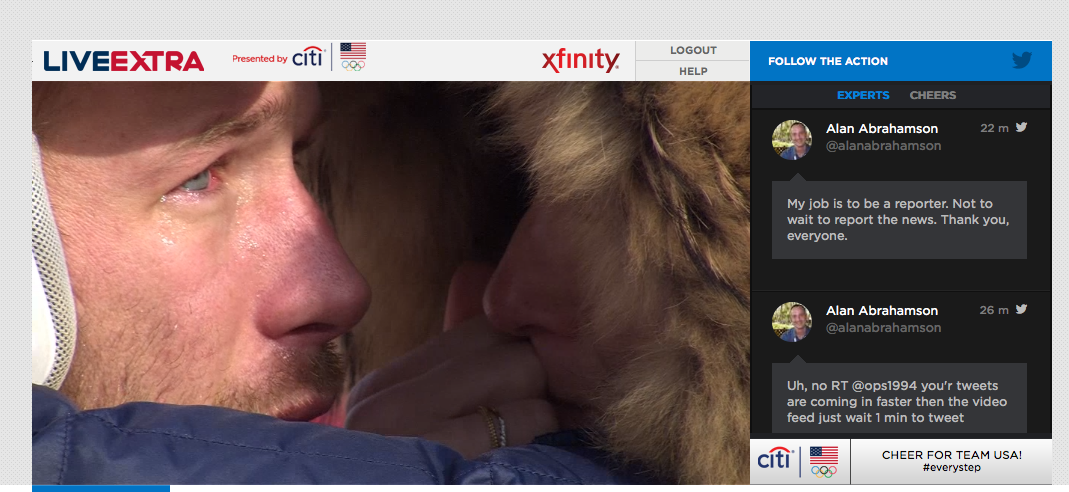
Screen shot of NBC live stream video with Twitter window to right.

Screen shot of NBC live stream video with Twitter window to right (click for larger image).

Even though American skiers Andrew Weibrecht and Bode Miller were fast enough to win medals in the super-G Sunday in Russia, it was Twitter outpacing NBC to the finish line during the broadcaster’s live streaming coverage from the Sochi Olympics.

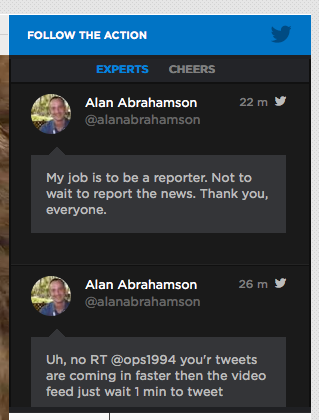
If you were up late in the U.S. watching the live online coverage via NBC’s Live Extra service, you could also see a window with “experts” Twitter feeds to the right of the video screen. As the super-G progressed, and as racers challenged Miller’s once-leading time, you could see race results being tweeted before they were shown via the “live” video. The spoiler effect got some Twitter users and live-stream watchers angry, and they took out their frustrations on the reporters whose tweets were being shown in NBC’s official window.

In a very unofficial review yours truly has noticed that NBC is jamming a lot more commercial breaks into the online streams than they did at the start of the games — the first night of action I watched online (men’s DH) had very few commercials breaks. The super-G coverage on Sunday/Saturday, however, had numerous commercial inserts, many right before racers were about to ski. There were also some buffering and streaming hiccups, which may be a result of my own connection and not NBC’s fault. Maybe it’s hard to blame NBC for the lure of trying to pump more advertising in; according to NBC press releases that come along almost daily now, the live streams are extremely popular and will probably become more so as the big-ticket events like men’s hockey and women’s figure skating get seriously underway.

Viewers expressing frustration at Twitter feed outpacing video

Viewers expressing frustration at Twitter feed outpacing video

But at some point during the super-G, because of the ads or because of physics, the Twitter feed on NBC’s page got well ahead of the event, and I had to resort to the full-screen option to keep the Twitter feed from playing spoiler. While we have messages and emails out to the reporters/tweeters and NBC to try and figure out the particulars, we can pretty much guess what happened — NBC probably had no buffer or filter in place at all, and the speed of 140 characters is going to beat video bits (which need encoding to traverse the interwebs) every time.

It is most likely an early-days problem of trying to do something ambitious like live stream every event, an undertaking NBC should be commended for. But with all the resources at its disposal and all its social media savvy, NBC should have forseen this kind of glitch. In this age of reporters tweeting from events there is always the problem of Twitter moving faster than even official broadcasts — but you rarely see a network spoil its own show with official Tweets that move faster than its own “live” video.

For us here at MSR it’s a glitch we can live with, since efforts to stymie the speed of Twitter are as futile as they are worthless. The easy solution will be to restrict or delay the Twitter feed, which will cripple the instant-feedback usefulness of Twitter. More live Twitter and more live video is what we say. But the glitch is also evidence that the desire to blend video and social media on the same viewing page may not always produce the results you are looking for. Maybe better design is the answer?

And sorry if we are playing spoiler for NBC’s prime time show later Sunday but hey, two medals in one race is pretty big news for the U.S. Ski Team, and what a killer effort from the old man Bode. And tying for a bronze — well that’s just a pretty Bode result too. And here’s an Instagram to show the proud teammates posing with the flag after their second- and third-place finishes.

NFL Mobile users watched 10.3 million video streams during Super Bowl week

Remember the Football on your phone video from last August? Pretty funny, right? Imagine, people wanting to watch football on their phones, no matter where they go. Well last week a whole bunch of them did just that. According to the NFL, more than 10 million video streams were watched on the Verizon NFL Mobile platform during Super Bowl week, a jump of more than 400 percent from the year before.

Football on your phone? You bet!

For some reason we can’t get the league’s media arm or Verizon Wireless to provide the one stat we really want — how many people watched live Super Bowl action on a smartphone? Verizon at least is consistent — they have never provided any kind of statistic on NFL Mobile usage. Today the NFL Media folks issued a press release with all kinds of “record” numbers (we will post the whole thing below if you want to dig through it), but no discrete number for the game itself. We’ll get to the reason for that in a bit. But for the overall stats, we can sum up the numbers quickly: If there was football programming available last week, a lot of people watched it. And if it was available online or to mobile devices, so much the better.

What really drove traffic across all NFL Media properties this year was the NFL Mobile package. Remember, this year the “NFL Mobile from Verizon” app was actually available for smartphones from any carrier; the catch was, you could only get live game action if you were a Verizon subscriber and paid $5 more a month. Everyone else, including Verizon customers, could see highlights and NFL Network video content, like features and reports from Super Bowl week. The opening up of the app is probably the biggest reason why unique users of NFL Mobile properties during Super Bowl week increased 88 percent this year versus last, 11.2 million users compared to 6.0 million, according to NFL statistics.

Here’s where the stats get interesting: While it’s impressive that video streams across all NFL Media properties during Super Bowl week increased 56 percent this year compared to last, 34.0 million to 21.8 million, what’s really mind-boggling is that 10.3 million of those streams this year were consumed via the NFL Mobile app, a 416 percent increase over last year.

To repeat: Almost ONE-THIRD OF ALL NFL MEDIA VIDEO STREAMS were watched last week… on a phone.

One possible reason why neither the league nor Verizon wants to release actual game-day live action viewing numbers for NFL Mobile is that they may not be that impressive. Remember, only Verizon customers who ponied up the $5 extra “premium” fee could have watched the Fox simulcast on their phones, so it’s a smaller subset to begin with. And really, for the big game itself, most likely you were on a couch watching a big screen. (We here at MSR HQ did find the NFL Mobile live feed effective for when we had to roam into the kitchen for more snacks, or for other “breaks” necessary during the game. But we didn’t watch more than a few minutes of the game on the phone.) Plus, the Fox stream was available to tablets using its app or for PCs or laptops watching online, so that probably took away some potential phone-watchers of live game action.

During non-game times, however, smartphones appear to be leading the mobile video explosion. Even though tablets seem to make more sense for watching sports while mobile, it’s pretty clear that people are watching a lot of NFL video on the thing that never leaves their pocket or purse — their phone. Are other sports taking note? And now do you know why the NFL is pushing toward NFL Now? Stay tuned. And keep your phone and checkbook handy.

(full press release content below)

COVERAGE OF SUPER BOWL XLVIII SETS VIEWERSHIP & TRAFFIC RECORDS ACROSS NFL MEDIA

Wall-to-wall coverage of Super Bowl XLVIII produces double-digit spikes for NFL Network, NFL.com, and NFL Mobile

NFL Media’s 11th year covering the Super Bowl produced record-breaking results across all platforms.

NFL NETWORK

Providing expert analysis, the latest news and reports, special guest appearances, and matchup-related programming leading up to Super Bowl XLVIII, NFL Network served up 140 total hours – including a record 86 live hours – of programming from 12 sets in eight locations across New York City and New Jersey, utilizing a roster of 40 on-air personalities with a combined 17 Super Bowl rings.

For Super Bowl week*, NFL Network averaged 175,000 viewers in Total Day and 226,000 viewers in Primetime – up +20% and +31%, respectively, compared to last year making this the most-watched Super Bowl week ever on NFL Network.

With more than 41 hours of Super Bowl coverage, SUPER BOWL LIVE averaged 141,000 viewers and up +60% over last year’s average audience (88,000 viewers).

On Super Bowl Sunday, NFL GAMEDAY MORNING averaged 657,000 viewers – up +10% over last year’s telecast (596,000 viewers), making this the most-watched NFL GAMEDAY MORNING ever.

NFL Network’s postgame audience peaked from 10:30PM-11:00PM with an average of 1.14 million viewers, up + 25% over last year’s highest postgame peak (906,000 viewers)

NFL Network averaged 313,000 viewers in Primetime on Super Bowl Sunday – up +52% compared to last year’s performance.

For the entire 2013 postseason, NFL Network averaged 148,000 viewers in Total Day – up +13% compared to last year’s performance (131,000 viewers) making this the most-watched postseason ever on NFL Network.

NFL DIGITAL MEDIA

Across all internet-connected devices, including PC’s, tablets, and smartphones, the official digital properties of the National Football League delivered original video programming, the latest news and information, as well as unprecedented access to players, celebrities and musicians. NFL Digital Media’s offerings included NFL Mobile from Verizon which provided fans access to live, streaming video of Super Bowl XLVIII and NFL Network, including exclusive Super Bowl content and commercials.

For Super Bowl week, visits to NFL Digital Media properties increased 24% versus last year, bolstered by a 149% increase in visits to NFL Mobile.

Unique users of NFL Digital Media properties rose 22% during the week versus last year (27.8M vs. 22.8M), driven by 88% growth in NFL Mobile Properties (11.2M vs. 6.0M).

Unique users and visits to NFL Digital Media properties were driven by an array of content around Super Bowl XLVII. The two highest performing long-form NFL Digital Media features were:

Ø Judy Battista’s piece on Super Bowl XLVIII’s impact on Peyton Manning’s legacy

Ø Mike Silver’s story on the Seahawks dominant defense being fueled by the tight bond amongst the ‘Legion of Boom’

Video Streams during Super Bowl week across all NFL Digital Media properties increased 56% versus last year (34.0M vs. 21.8M).

Video consumption to NFL Mobile from Verizon reached 10.3M streams for a 416% increase over last year’s Super Bowl Week.

The highest performing video of the week featured NFL Network analysts making predictions for Super Bowl XLVIII. The video was viewed more than 800k times.

Seen in 195 countries, NFL Game Pass consumption grew 49% year-over-year across all devices and 57% on desktop.

*Super Bowl Week is defined as January 27-February 2, 2014

— end press release —

And yes, we know the Football On Your Phone video was a promo for DirecTV’s Sunday Ticket, which is neither here nor there when it comes to Verizon NFL Mobile numbers. But the video is funny enough to watch again:

Adobe research finds mobile sports viewing driving huge growth in digital video

One namesake trend we focus on here at Mobile Sports Report — watching sports online or on mobile devices — is the primary driver of the continued worldwide growth in digital video consumption, according to the latest comprehensive study put together by software giant Adobe.

In the Adobe Digital Index Benchmark Report for Q4 2013, the survey looked at digital video, spanning 2012 and 2013 and using aggregated and anonymous data from more than 600 media and entertainment sites. According to Adobe the survey analyzed 22.5 billion online video starts, half a billion mobile video starts as well as 574 million authenticated streams from cable providers’ “TV Anywhere” implementations. The survey also asked 400 sports fans about their viewing habits. While there’s lots of chewy bits to digest, the killer line from the research says, in part: “The trends outlined in this report clearly demonstrate that sports viewing is the engine behind digital video growth.”

Well WE could have told you that. But it’s nice to see solid data backing up our directive assumptions.

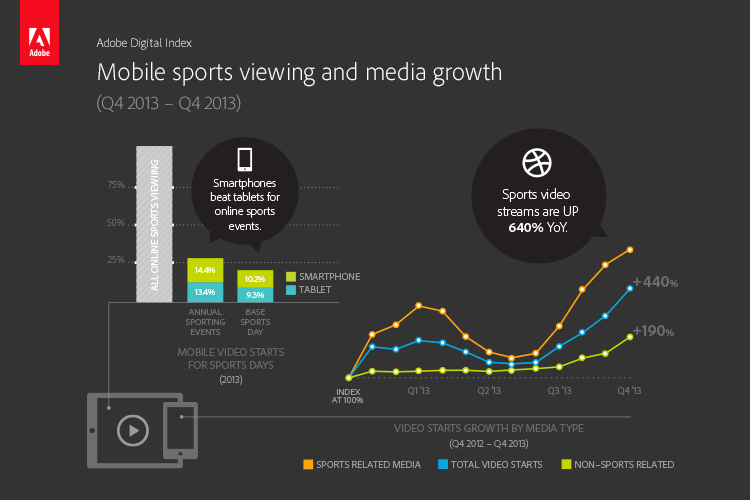
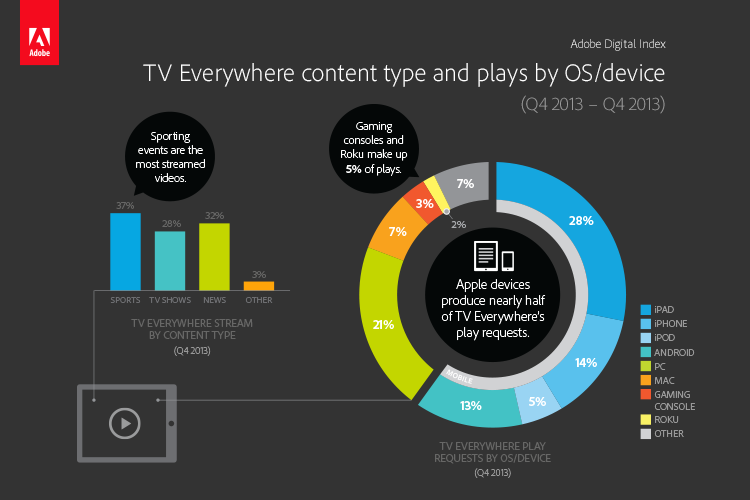
Just how potentially big is online and mobile sports viewing? While the Adobe report is just one (albeit comprehensive) set of data, some points jump out, like the one that found that sports video streams increased 640 percent, year over year, compared to an overall growth of 440 percent for all types of content. On the TV Everywhere side, sports events accounted for 37 percent of all streams, compared to 32 percent for news programs and 28 percent for TV shows. Again, no surprise to us: People like the ability to watch sports live, whenever they can. And mobile devices help them do just that.

Campbell Foster, director of product marketing for Adobe Primetime, the company’s TV publishing infrastructure platform for service providers, said the data back up what many other industry observers have noted about sports: It is engagement viewing that fans don’t want to miss, so they use whatever device they can to watch.

“The nature of the content [in sports] is perishable, so sports is something people want to watch live,” said Foster, in a phone interview to discuss the report’s findings. Another nugget from the report is that one quarter of all sports digital viewing now happens on mobile devices, a 73 percent year-over-year increase. And though tablets lead all forms of non-TV devices for video viewing, streams on smartphones and gaming consoles are also growing rapidly, a finding we take as meaning that the top of mobile and online viewing is a long way away.

Some other interesting points from the report include:

— Facebook leads the way with social referred video starts
— Half of visits referred from Facebook or Tumblr to sports related sites result in a video view (vs. 39 percent for YouTube, and 25 percent for Twitter)
— Most video starts come directly from search to branded sites, with social referrals accounting for just 6 percent of all streams
— Apple iOS devices are still killing the competition, with more than a 50 percent market share

It will be interesting to see how other industry outlets react to the Adobe report, which we think has the chance to become the online video industry’s informational equivalent of the Cisco Visual Networking Index. At the very least, Adobe’s attempt to quantify the surge of online sports video use we see in our reporting and analysis every day is admirable, and it puts some stakes in the ground for further discussions about audience value, ROI of mobile, and potential new businesses that can be crafted from the idea that a new audience type is not only emerging but continuing to expand.

Adobe chart showing growth in sports streams. (click for larger view)

Adobe chart showing growth in sports streams. (click for larger view)

Breakdown of video streams for TV Everywhere (click for larger view)

Breakdown of video streams for TV Everywhere (click for larger view)