Wednesday Wi-Fi Whispers: DAS, but no Wi-Fi, for Niners at Candlestick

There’s already buzz building in Silicon Valley for the new Niners stadium being constructed in Santa Clara, as the team is already out front saying the facility will be an example of how to do stadium technology right.

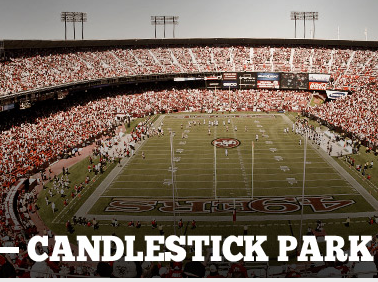
Unfortunately for Niners fans, the next two home seasons will still be played in San Francisco’s Candlestick Park, which has historically been one of the worst places to try to get a cellular signal. Though a new Distributed Antenna System (DAS) deployment should help matters some this season, there is no stadium-wide Wi-Fi in the cards, a bit of a bummer since the team’s new game-day app features lots of video — which you need Wi-Fi to watch.

With an edict from the commish Roger Goodell to put Wi-Fi into every stadium, teams across the league are moving quickly to figure out how to get that done (see the second part of this post about Carolina’s new spiffy network). Caught in the middle of this deployment strategy is Candlestick, which has to be one of the worst geographic locations for wireless traffic. Not only is the stadium hidden by a small hill directly to the west (which can block signals from nearby cell towers), it is surrounded on its three other sides by the San Francisco Bay — in case you weren’t aware, wide open spaces of water also play havoc with wireless signals, and you don’t see too many antenna towers floating around.

The historically terrible cellular situation at Candlestick was brought even more to light by last year’s “blackout” game, a Monday night tilt against the Steelers that saw the stadium lose power not once but twice. Though we didn’t hear any reports of fan panic (no shaking) we did hear from a lot of folks about how nobody knew what was going on because nobody could get a cell signal to check Twitter.

To help alleivate the problem the Niners and the top three wireless carriers — Verizon Wireless, AT&T Mobility and Sprint Nextel — collaborated on the installment of a DAS system at Candlestick, essentially a bunch of small cellular antennas mounted inside the stadium to make it easier for fans to connect. Apparently there is also a day-of-game Wi-Fi network in service at Niners games, though we haven’t been able to find any press material telling us where the service can be accessed. While we wait for the Niners’ reps to get back to us we will take a wild guess and post that it is a parking-lot or concession-area only network, and not something you can use at your seat.

So, Niners fans — even though there is a spiffy new game-day app, you probably aren’t going to get much use out of the video component at Candlestick. And since it doesn’t make sense to drop a few million bucks on a Wi-Fi network that will only be used less than a couple dozen times before the team moves south, unless the Niners can figure out how to bring in a portable Wi-Fi network the Candlestick fans are probably stuck with the DAS deployment as their best connection. Though DAS deployments are better than nothing, they simply don’t have the bandwidth that a robust Wi-Fi network can bring to the table.

Carolina Gets Stadium-Wide Wi-Fi, Courtesy of AT&T

In stark contrast to the situation at Candlestick is the news from the Carolina Panthers, who will have a powerful new Wi-Fi network at Bank of America stadium in Charlotte this year, courtesy of Ma Bell.

You can read the press release and from it what jumps out at us is the 460 Wi-Fi access points, a huge number that should keep everyone there connected. According to the release the Wi-Fi access is free and easy for AT&T customers, with users of other carrier systems having to connect via a “simple login.” Anyone out there in Panther land sample the new network yet? If so give us some SpeedTest results in the comments.

NFL’s Mobile Device Stadium Strategy Slowly Coming into View

There is no official announcement we have seen but if you peruse any NFL team web page you will see a bunch of little widgets popping up saying things like “Watch 49ers games online” with a link to the new preseason and rewind tablet apps that Greg Quick wrote about last week. There are also several teams, like the Niners, who apparently have some kind of GameDay Live-branded app — if this reminds you at all of MLB.com and its AtBat app strategy, it’s not a coincidence. You don’t need a press release to see what is happening, albeit a bit slowly — the NFL, like baseball, is moving to a single app for live mobile-device action, and it will cost you a bunch of extra dollars to watch it.

I think the fly in the ointment right now is the NFL’s current exclusive deal with Verizon for the NFL Mobile app, but I think that contract is up soon and I would be surprised if the NFL renews it. More likely we will see an MLB.com strategy emerge, where you purchase mobile-device access on a monthly or season-long basis. For the current year the NFL will take baby steps as it tries to help teams get networks put into stadiums. But I bet by next year there is a cohesive digital device content strategy that will cost fans a few more bucks. Might be worth it though, to get other games and RedZone while you are tailgating or waiting through halftime.

Verizon Kills Free NFL Mobile, Now Charging $5 per Month

Last year when Verizon was heavily promoting its new 4G LTE network, football fans who bought new smartphones that used the network got a great benefit: Free access to Verizon’s NFL Moble app and its limited schedule of live coverage, including Thursday night, Sunday night and Monday night games.

But without any fanfare — and without any visible information, until you load the app and try to watch a game — Verizon is now charging $5 per month to watch live games, according to the splash screen that greeted me when I tried to watch some preseason action Saturday night while my daughter was monopolizing the TV in the living room.

Though Verizon paid a bundle for rights to mobile access to NFL games, I will bet anyone a pint that it’s a contract that won’t be renewed whenever it comes due. From what we have seen so far it’s pretty obvious that the NFL is moving in a baseball direction, with its new watch online packages looking a lot like the MLB.com packages that make baseball hundreds of millions each year.

Though you will need a Verizon contract to watch games on a mobile/cellular device this season, we expect that by 2013 there will be a much wider range of options to watch NFL games online or via cellular devices — and they will likely cost a lot more than $5 a month, so we’re not going to bellyache too much here (though reviewers on the App Storses are already po’d). But it would be nice if Verizon was more honest and put the $5 per month charge somewhere folks could see it. The app may be free to download, but don’t be fooled. Your days of free NFL on mobile devices is over.

Lenovo Unveils its Windows 8 Tablet Early

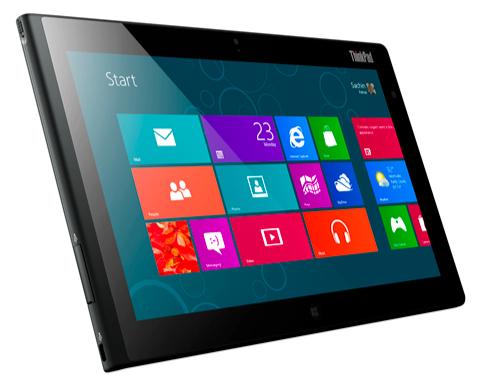
Lenovo ThinkPad Tablet 2

I guess it is never too early to get a jump on your competitors and with that in mind Lenovo has unveiled the specifications and look of its new ThinkPad Tablet 2 that will be running Windows 8 from Microsoft.

The tablet, which will not be available until late October when Microsoft officially makes the new operating system available to the public, is one of the first to be shown prior to the event, but we expect a number of others to show off their wares prior to the October 26 launch.

It is powered by an Atom processor from Intel code-named Clover Trail, and will run the Windows 8 Pro version of the operating system. Both are major changes from last year when Lenovo debut its first generation ThinkPad Tablet that ran on an ARM processor and used Google’s Android operating system.

The tablet is expected to weigh in at 1.3 pounds and will be available in either a 3G or 4LTE version. It will include a 10.1-inch display that has 1366 x 768 display, a front facing 2MP camera and a 8MP rear facing camera and is expected to have a 10 hour battery life. A few nifty options will also be available including a keyboard, dock and a digitizer that enables pen input. Pricing has not been released

Lenovo has previously said that it will target businesses as much or more than it will consumers with its tablets, which is the reason for going with both the Intel processor and the Windows OS. This will enable backward compatibility with existing x86 apps and documents, something that the ARM/Android combination does not.

There is a host of developers that will be releasing products into this space in the upcoming weeks, from Microsoft itself with its Surface tablet to Hewlett-Packard, Dell and Acer, among others. On the non-Windows front there is also a new Kindle expected soon as well as a refresh in Apple’s iPad family, so the options for a user looking for a new tablet continue to improve with more choices.

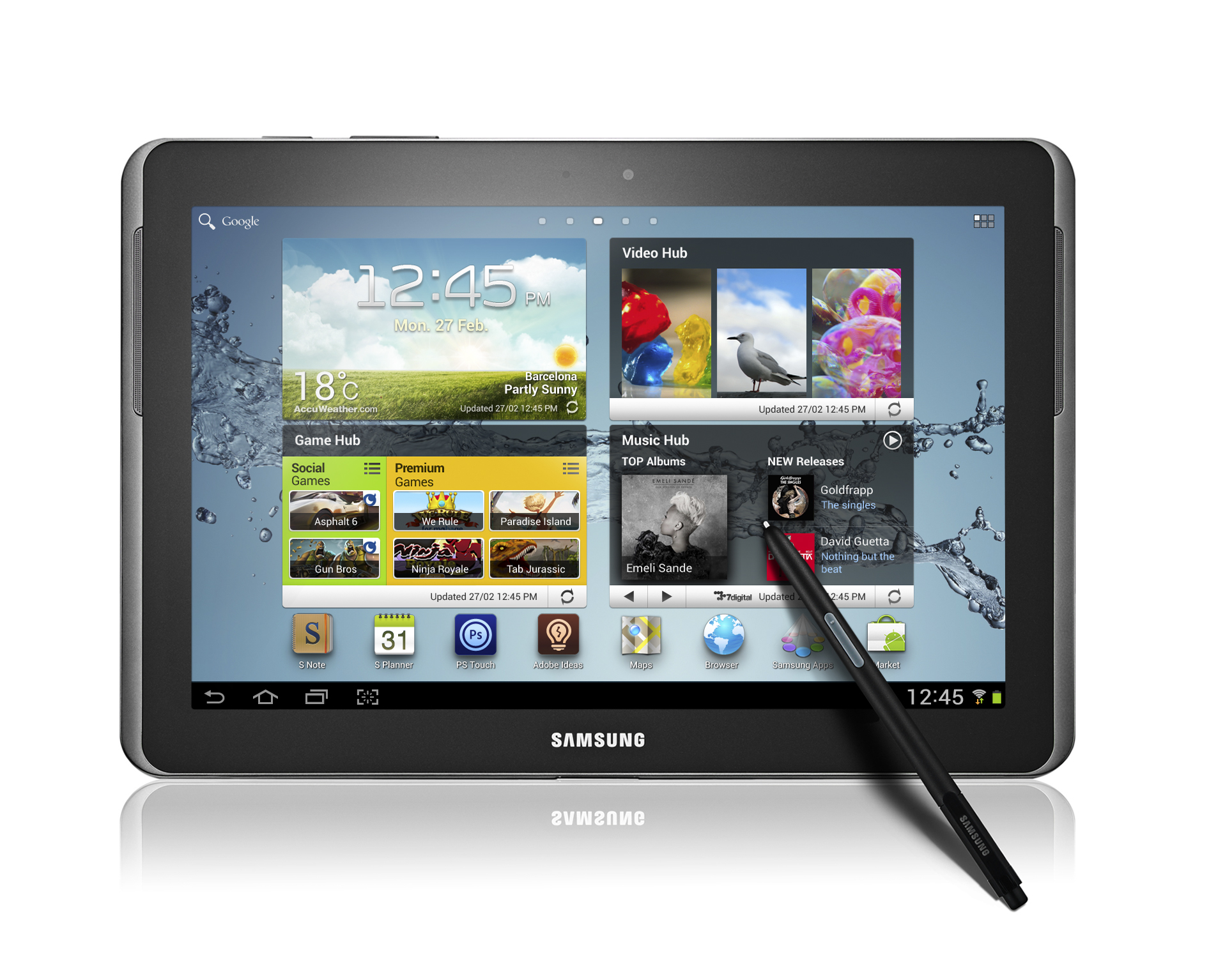
Welcoming the Samsung Galaxy Note 10.1-Again

Galaxy Note 10.1

At the most recent Mobile World Congress in Barcelona, Samsung brought out one of the more interesting products, its Galaxy Note 10.1, a hybrid device that was a mix between its existing Tab and stylus- product lines.

The product did not ship immediately afterwards, at least in the US market, and now the company is on the verge of delivering it to the waiting masses, with some subtle, but important improvements that should be happily greeted by users.

At the time that Samsung first showed the device it featured a dual core 1.4GHz processor stylus similar to its S-Pen, and a screen with 1280 x 800 resolution. Much of that has changed, or at least been enhanced with the newest version of the tablet.
http://youtu.be/qbgBxr4H59A

The latest version, expected to ship Aug. 15th, sports a significantly more powerful quad core processor, the Exynos 4 Quad that runs at 1.4GHz and some additional processing power in the form of a Mali-400MP graphics processor and 2GB of RAM. One last but interesting addition is that there is now a lot to house the stylus.

Other features, including that remain the same include the option of three different storage capacities: 16GB, 32GB and 64GB, two cameras including a 5MP that can record HD video and will be available in both Wi-Fi and 3G versions with an LTE version expected later in the year..

The big differentiator for Samsung is the S-Pen, and the templates and applications that are designed to specifically take advantage of that form of input. The company can position the device as a solution in education and select business niches as well as a more general public consumer electronics device.

New Antenna Design Helps AT&T Improve Stadium, Event Cell Coverage

When it comes to cellular phone innovation, the things that immediately come to mind are the highly advertised advancements, like 4G networks and the latest handsets. But AT&T has turned to the often overlooked cell-tower antenna to find an innovative way to help improve cellular reception in crowded public places, like big outdoor events and sports stadiums.

According to an AT&T blog post as well as an interview with some of the team members behind the innovation, Ma Bell has found a way to significantly improve cellular reception in crowded spaces by by building a new antenna that splits a regular signal into five separate “beams.” By splitting one spectral signal into several smaller but more focused ones, AT&T says it can gain approximately a 5x increase throughput from each antenna, a big necessary jump when confronted by crowds of tens of thousands of smartphone users.

Without getting too deep into the physics, the multi-beam approach is roughly the equivalent of adding four new cell towers, without the added expense of having to site, install and maintain new antenna placements. Though there is a tradeoff of having a narrower range of coverage (since the multi-beam signals are smaller in geographic footprint than those from traditional antennas) that isn’t a problem inside stadiums or at events, where phone users don’t move too much. AT&T has produced a cartoony video that kind of explains the advancements, albeit in a great-for-AT&T way (see end of post for the video).

According to AT&T folks we talked to the antenna was developed jointly by AT&T and a “boutique” antenna manufacturer AT&T declined to identify. The need for a better-performing antenna came out of AT&T’s challenges of bringing cellular service to the crowds at the Coachella music festival in Southern California, an event that can attract up to 85,000 fans each day.

Though we don’t have a geekout photo to share with you, the AT&T folks we talked to said the antennas are already being rolled out to numerous big-event venues, including NFL stadiums in Nashville and Minneapolis, collegiate stadiums in Hawaii and North Carolina, as well as golf and tennis events. The antenna seems to be a valuable part of AT&T’s ongoing arsenal of tricks to improve wireless coverage overall, which includes DAS installations as well as expanded Wi-Fi. For cell users at big events, any and all advancements are welcome.

Mobile Sports Report TechWatch: Windows 8 nears, Apple vs Samsung Rd 2 this Week

The Apple vs. Samsung lawsuit currently ongoing in a San Jose, Calif. Federal courthouse has a little for everybody, taunting, name calling, and a look into the past as the two tech rivals fight it out over the look and feel of Samsung’s smartphones and tablets and if it infringed on Apple’s designs.

The case, which started last week, provided a snapshot of how intertwined the people of Silicon Valley are during jury selection when it appeared that most potential jurors seemed to work for rivals high tech companies, but finally the jury was filled.

Apple opened predictably claiming that Samsung simply found it easier to copy than innovate and Samsung retorted that it was simply developing products along the same lines. Images of product development and prototypes have been submitted to show similarities in both companies’ offerings.

Samsung has leaked evidence that was excluded by the judge and Apple requested that the judge award it victory in the case-its request was denied. The case continues this week.

Microsoft Windows hits OEMs, on Street Oct 26
Microsoft’s tablet OEMs and other now have the final software code of Windows 8 to its hardware OEMs so that they can now start preloading the OS into their next generation products ranging from desktop and notebook computers to tablets.

The hardware OEMs, among which are Dell, Acer, Hewlett-Packard, Samsung and Lenovo are expected to have products available at the official public launch of the operating system that has been pegged as Oct. 26. I expect that for a good deal of the products we will see a lot of ‘unoffical’ leaks prior to that day.

Intel bets on motion sensing as future interface
Intel Capital, along with iSource and GIMV has invested 6.5 million Euros in Movea in a Series C funding round. The company develops motion sensing and data fusion technology that will be incorporated in a wide range of devices ranging from set top boxes, tablets, smartphones and even car infotainment units.

Samsung’s next-gen Galaxy Note due later this month
Samsung has told Reuters that the next generation Galaxy Note, its smartphone with the 5.5-inch display. According to the report the device will be first shown to the public at the company’s Samsung Mobile Unpacked event that is scheduled for August 29th in Berlin. It is interesting to note that the date is about two weeks prior to when Apple is expected to unveil its next smartphone and tablet offerings.

Apple rules the tablet space, market research shows
Market research company International Data Corp. (IDC) has released preliminary data on the the world wide tablet market for the second quarter has found that, to the surprise of no one, Apple continues to dominate this space.

The company found that the overall market shipped 25 million units in the quarter, a 33.6% quarter over quarter increase from the first quarter’s 18.7 million units, and 66.2% over the same period a year before. Of that 25 million Apple shipped 17 million of them, up from 11.8 million the previous quarter.

Its rivals do not compare well to Apple’s numbers. Top foe Samsung managed 2.4 million units, good for a 9.6% market share followed by Amazon with 1.2 million units, good for a 5% share. No other rival broke 1 million units. I will be interested to see how Google’s Nexus 7 does in the next quarters’ results.

Google and Rovi ink deal
Google has signed an agreement with Rovi that will enable Google to use Rovi’s interactive program guide technology for set top boxes, tablets and other mobile products. It is expected that the technology will be used in Google’s rollout of Google Fiber.

Google adds handwriting recognition to search
Speaking of Google, back in its core search business it is adding a new feature for mobile users, handwriting recognition. The technology will first roll out for Android smartphones and tablets and then move over to Apple’s iOS platform as well. It will have support for 27 different languages.

AT&T to shut down 2G-in 5 years
AT&T has said that the end is in sight for its 2G network as the carrier plans to discontinue support for the wireless network in five years. The company will redeploy that spectrum as part of its effort to focus on its 3G and 4G networks, which it said are facing capacity issues due to the increasing popularity of smartphones. Currently 12% of its customers use a 2G network.


Digg is back already

Digg, the once high flying news social news site has already relaunched itself just six weeks after it was sold to Betaworks. The service now has a reworked web site and has refreshed its mobile app for the iPhone. Its main page is broken into three categories: Top stories, popular and upcoming.