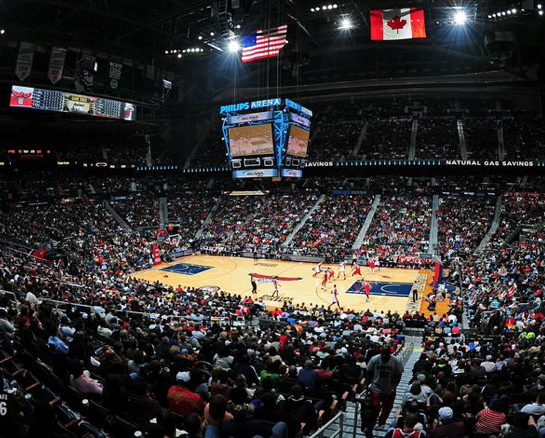
Stadium Tech Report: Atlanta Hawks’ Philips Arena signs Boingo for DAS, Wi-Fi

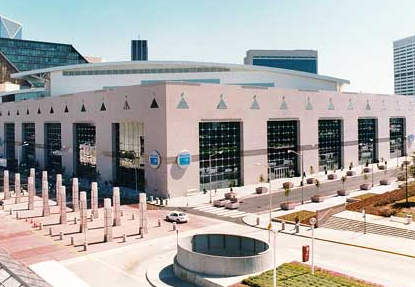
Philips Arena. Credit: Atlanta Hawks.

Philips Arena. Credit: Atlanta Hawks.

As the central event stadium of its kind in the region, Atlanta’s Philips Arena is well known for the entertainment options it offers, from professional sports to concerts, ice-show extravaganzas and even the circus. What it didn’t want to continue to be known for was its inability to provide service when fans at the stadium tried to connect to the Internet.

“We wanted to avoid the spinning [timeout] wheel of death,” said Andrew Steinberg, senior vice president and chief revenue officer for the Atlanta Hawks and for Philips Arena, in a recent phone interview. Home to the NBA’s Hawks, Philips stood out as one of just six NBA arenas without fan-facing Wi-Fi services, and with no cellular DAS.

That will change soon, thanks to a deal Philips signed with Boingo Wireless to provide free fan Wi-Fi and a neutral host DAS for the facility by the start of the next NBA season.

Andrew Steinberg

Andrew Steinberg

According to Steinberg, the area’s well-connected citizens, who probably trail only California’s Silicon Valley in devices per person, weren’t happy when they tried to access their social networks at Philips.

“We know people are coming to arena have been very challenged, just to tweet or post a picture to Instagram,” Steinberg said. “We needed to correct that.”

The process to do so actually started a couple years ago, when the Philips IT team put out a request for proposals that was very detailed in nature. “We wanted a robust backbone and infrastructure, and we were very thorough,” said Steinberg about the review process. “We wanted to find the best solution. And Boingo [Wireless] had the best fit for our plans.”

Neutral DAS a necessity
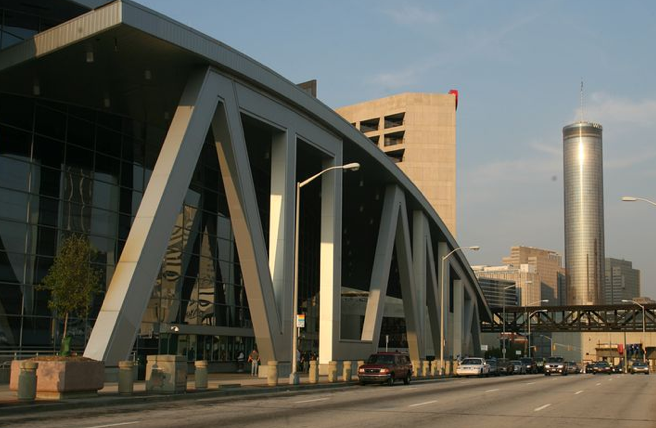
Philips Arena

Philips Arena

One of the requirements for Philips was that its DAS host needed to be a neutral third party, and not a single carrier. “I much prefer a neutral host DAS,” said Steinberg. “I’ve seen it done different ways. What I prefer is a best in class solution from a partner who can further engage the carriers.”

Boingo, Steinberg said, “delivered on that promise” and will have all the major carriers online when the DAS deployment is ready to go for the next NBA season.

Doug Lodder, vice president of business development at Boingo Wireless, said Steinberg and the Hawks were “very thorough” with their request for technology. “They took the time and did due diligence – they were way out in front of most venues [in their proposals],” Lodder said.

According to Steinberg, the infrastructure at Philips – which opened in 1999 – presented no special challenges to deployment. There was even plenty of space on site for the DAS head end, which is sometimes a challenge for stadium retrofits.

If there is a challenge, it could come from Boingo’s crews having to work around the extensive activity schedule at Philips, which includes concerts, games, and even the occasional “mudder” race with mud pits and obstacles. According to Steinberg, the arena averages about 130 events a year. But Lodder said Boingo is used to such deployment scheduling. “We can do three shifts in a row if needs be,” Lodder said.

Build it, then you can use it

Even though Philips hasn’t had high-end connectivity, that doesn’t mean Steinberg and his team haven’t been looking at what a good network will allow them to do.

“One of the foremost challenges is to increase revenue while improving the fan experience,” said Steinberg, “while also keeping the fans engaged with the game or event.”

From activities like seat upgrades to future apps, Steinberg said the Philips team knew they needed a good network, as soon as possible.

“The fan engagement potential and opportunities are large, but they require the necessity of connectivity,” said Steinberg. “We have a robust tech roadmap, and having connectivity like this was something we felt was paramount.”

Especially so in an area like Atlanta, which has more than its share of people whose lives already revolve around connectivity. Steinberg said that expectation shouldn’t end just because those people wanted to attend an event at Philips.

“We want people to experience a seamless transition from their office to our venue, and not have a disconnect,” Steinberg said.
AT&T scores Wi-Fi and IPTV deal at Wisconsin, DAS deal for Arkansas hoops

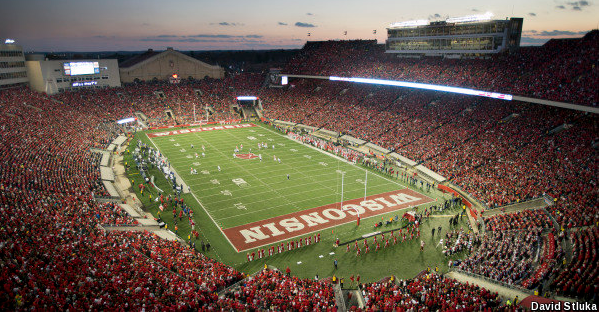
Camp Randall Stadium, University of Wisconsin. Credit: David Stluka/UW

Camp Randall Stadium, University of Wisconsin. Credit: David Stluka/UW

AT&T’s march into the college stadium marketplace continues apace, with announcements today of a Wi-Fi and IPTV deal for the University of Wisconsin’s Camp Randall Stadium, and a DAS deployment at the University of Arkansas’s hoops home, the Bud Walton Arena.

While AT&T has been extremely active pushing primarily DAS deployments into college and pro stadiums, the IPTV deal for the 80,321-seat Camp Randall Stadium is an interesting twist (and one we’ll try to find out more about in an interview later on). For right now all we have to work with is this press release, which says AT&T will deploy an in-stadium video solution that brings “innovative video and digital content distribution solution on nearly 700 high definition screens.” To us this sounds like it might be a Cisco SportsVision deployment, but we’ll double-check since it’s the first time we’ve heard of a video deployment with an AT&T branding behind it.

On the Wi-Fi side, it seems AT&T is doing its usual job of high quality engineering, with 750 access points planned, according to the press release.

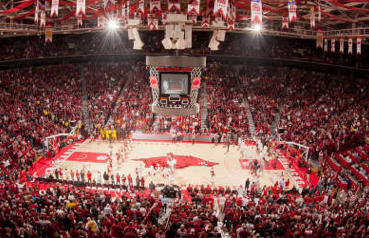
At Arkansas, where AT&T had previously deployed DAS in the football arena, it will now also do so in the 19,200-seat Bud Walton Arena. No word yet if this is a neutral host deployment that AT&T will allow other carriers onto, or if it is an AT&T-only deal.

More photos below!

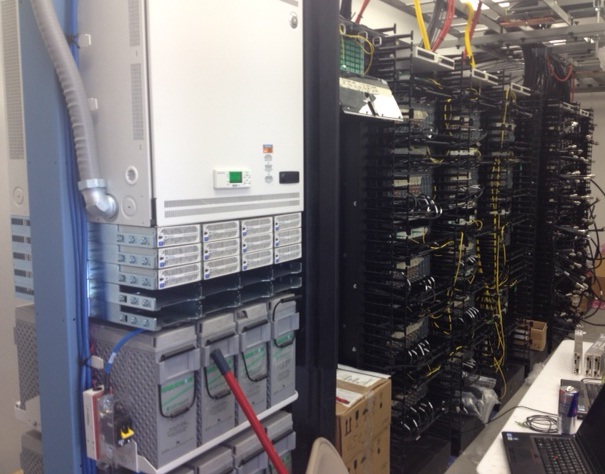
Head end gear at the Bud Walton Arena. Credit: AT&T.

Head end gear at the Bud Walton Arena. Credit: AT&T.

Bud Walton Arena, University of Arkansas. Credit: University of Arkansas website.

Bud Walton Arena, University of Arkansas. Credit: University of Arkansas website.

Philadelphia Eagles will test CrowdOptic’s Google Glass tech at Lincoln Financial Field

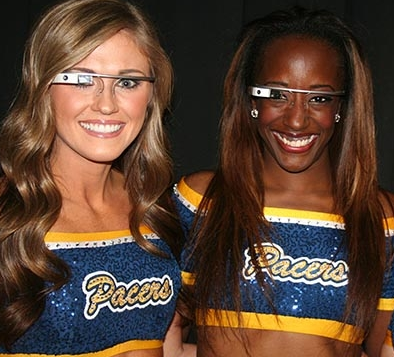
Indiana Pacers cheerleaders wearing Google Glass. Credit: Indiana Pacers.

Indiana Pacers cheerleaders wearing Google Glass. Credit: Indiana Pacers.

After successfully convincing several NBA teams to use its Google Glass infrastructure technology, San Francisco startup CrowdOptic has scored an NFL deal, with the Philadelphia Eagles agreeing to test the company’s wearable-device apps at their home stadium, Lincoln Financial Field.

According to a press release out today, CrowdOptic will work with the Eagles’ infrastructure provider, Extreme Networks, which brought high-quality Wi-Fi to the stadium last year.

So far, the CrowdOptic technology has been used by the NBA’s Indiana Pacers, Sacramento Kings and Orlando Magic to provide Google Glass views to stadium jumbotrons. While having such an intimate, new point of view is interesting, CrowdOptic’s technology actually goes much deeper than simple broadcast enhancement; it can also provide a “heat map” of what an aggregate of Google Glass wearers are looking at, a feature that has many possible future applications. However, it’s unclear how stadiums and arenas might eventually regulate or administer Google Glass wearing by fans, and whether or not fans will ever be able to “broadcast” their own Google Glass video views.

“We are looking forward to testing this technology and finding ways to incorporate it into our gameday presentation,” said Brian Papson, Eagles Vice President of Marketing, in a prepared statement. “Our goal is always to provide our fans with unique and behind-the-scenes perspectives through a variety of different sources and we’re excited about the potential of using Google Glass technology through CrowdOptic.”

Artemis Networks demos 20 iPads running HD video via one 5 MHz LTE channel

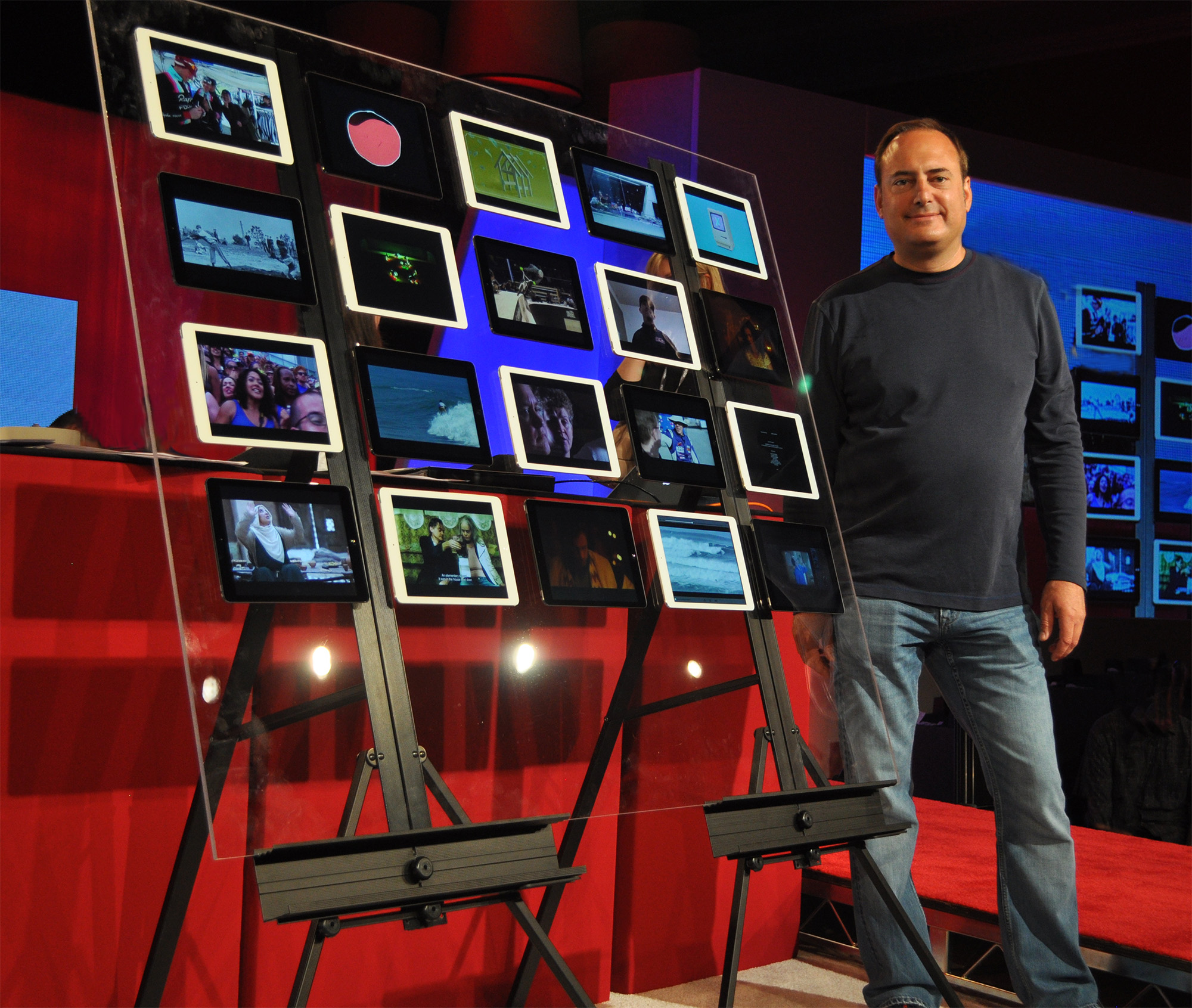
Artemis Networks CEO Steve Perlman shows off a "wall" of iPads, all simultaneously running video off one 5 MHz LTE channel via an Artemis pCell network. Credit: Artemis Networks.

Artemis Networks CEO Steve Perlman shows off a “wall” of iPads, all simultaneously running video off one 5 MHz LTE channel via an Artemis pCell network. Credit: Artemis Networks.

We won’t be there to confirm it, but Artemis Networks is scheduled to demonstrate its latest trick today at the Code Conference, using its revolutionary pCell network gear to stream video simultaneously to 20 Apple iPads via a single 5 MHz LTE channel.

In case you’re not a networking or cellular nerd, the ability to send that much data to a cluster of nearby devices is basically un-doable with currently deployed LTE technologies. What makes the trick possible is Artemis’s new method of combining signal interference to provide a direct connection to each client device, something that has worked well in demos but as of yet has no commercial deployment.

Still, with the track record of entrepreneur CEO Steve Perlman, best known for developing QuickTime and WebTV, it’s a good bet that Artemis will deliver something, sometime soon, to a paying customer. Artemis, which quickly added Wi-Fi and stadium networking to its target lists, says its technology addresses the big problem facing networks in large public venues, according to Perlman, who spoke with MSR in a phone interview earlier this week.

“The biggest strain on a [stadium] system is HD video,” said Perlman. And though many stadiums are adding Wi-Fi networks, almost all right now have some kind of enhanced cellular infrastructure or a cellular DAS, which these days includes LTE. A cluster of LTE devices close together trying to run video, Perlman said, “is exactly the problem [stadium networks] are facing today.”

Artemis’s pCell technology currently works only with LTE networks, though the company is working on developing a version for Wi-Fi as well. Part of the lure of the technology is that it works with off-the-shelf client devices; at the demonstration Thursday Perlman was scheduled to add the 20th iPad to his “wall of iPads” by unpacking it right at the event, to show how nothing needs to be done to client devices to add them to a pCell network.

IBM gets in the arena app game with LTE Broadcast support

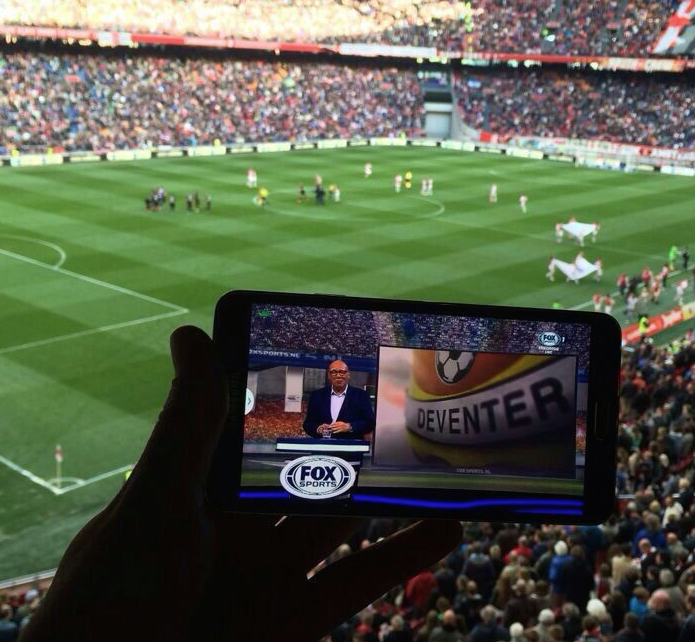
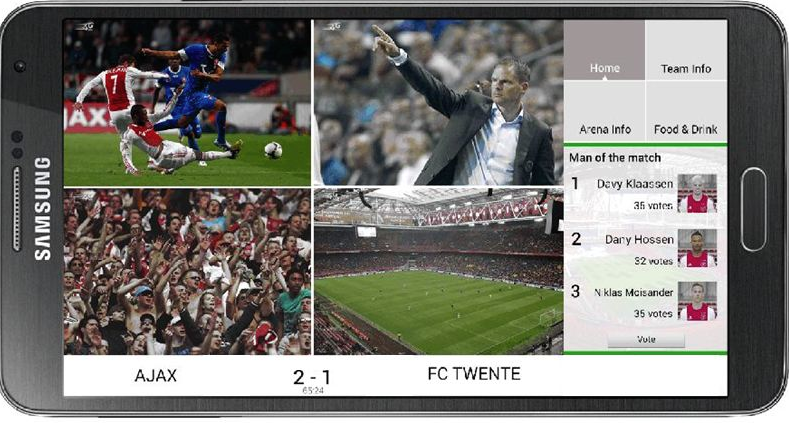
IBM app for AjaxThis one of the more nuanced press releases we’ve seen in some time, but there seems to be some meat behind the idea of IBM helping to design an LTE broadcast enabled stadium app for the Amsterdam Arena.

We’ve reached out to the principals and so far no luck getting anyone on the phone, but we did get some more email info so I think I can piece together most of the story. Basically it appears that IBM has a mobile development program that is called, somewhat obviously, MobileFirst. For the Ajax soccer team, which plays in the 53,052-seat arena (which holds 68,000 for concerts) IBM helped develop an app that uses LTE broadcast to show multiple live video screens, while also allowing fans to interact with the app, doing things like voting for player of the game.

LTE Broadcast support is the thing that makes this particularly interesting for us, since it would be a way to make live video work without having to have a Wi-Fi network. However there are no details about whether a carrier is actually supporting the app in this fashion yet, or if it is live and in use. Good first step, IBM, but you need to do a better job explaining this “news.”

Screen shot of IBM app for Ajax football club. Credit: IBM

Screen shot of IBM app for Ajax football club. Credit: IBM

If you’re not familiar with LTE Broadcast (sometimes also called LTE multicast), it is a development around the cellular standard that allows service providers and/or teams and stadiums to use select airwaves as “broadcast” channels, a tactic that can deliver video in a much more efficient manner than, say, thousands of fans hitting a web page and requesting their own individual video feed. The one-to-many concept of LTE Broadcast is being embraced by U.S. carriers as well, and Verizon Wireless, which showed demos of the technology during Super Bowl week, is supposed to be doing another demo this weekend at the Indy 500.

Cisco’s SportsVision Mobile uses a similar distribution method (currently in use at the Barclays Center), but that technology takes advantage of in-building Wi-Fi. What’s not clear about LTE Broadcast in a stadium situation is whether or not you need extra equipment, or whether existing DAS deployments can handle LTE Broadcast without modification. Also unclear is whether or not client devices, like smartphones and tablets, need modification to run LTE Broadcast enabled apps.

From the press release and the screen shots, the IBM app for Ajax looks pretty good, but again, we’d want to talk to the folks at the stadium to see if it’s actually being used by real fans, or if this is still slideware. Anyone who lives over there who might go to the stadium, let us know if you know.

Atlanta Hawks, Philips Arena sign with Boingo for DAS and stadium Wi-Fi

Philips ArenaBoingo Wireless continued its deal-winning streak by signing up another NBA stadium for Wi-Fi and DAS services, this time the Atlanta Hawks and Philips Arena. One of just six NBA facilities that didn’t yet have Wi-Fi, the 18,118-seat Philips will now have fan-facing Wi-Fi by the start of the next NBA season, according to a press release from Boingo.

We’ll follow up with the Boingo and Philips folks to get some more in-depth information (and maybe to find out why Philips hadn’t had Wi-Fi before now) but the deal is another in a recent string of contract wins for Boingo, the provider formerly known mainly for its Wi-Fi services in airports. A DAS deployment at Energy Solutions Arena in Salt Lake City, a Wi-Fi and DAS deal for the Air Force Academy, and a Wi-Fi and DAS deal for the University of Houston are all recent Boingo wins, showing that the company is serious about becoming a player in stadium wireless services.