Wednesday Wi-Fi Whispers: Brocade and the Niners, Part 2

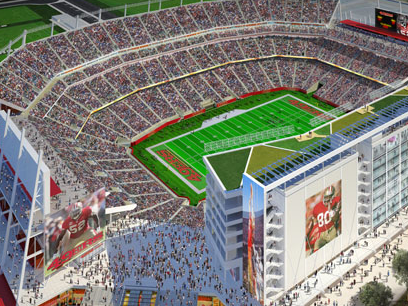
Just a quick promised expansion of last week’s top story, the official signing of Brocade as the provider for the upcoming network in the new San Francsico 49ers stadium. Dave Stevens, Brocade CTO, told us that the deal between the networking gear provider and the team had been brewing for several years, while Brocade was building its new headquarters near the team’s Santa Clara training and business facility.

“Brocade’s campus buildings were all about being green, with photovoltaic power and LEED certification,” said Stevens, noting that some similar design guidelines (solar, sustainable) are being used in the Niners’ new stadium. “I think there was some commonality between them and us with vision.”

In terms of whether or not Brocade has the experience to build a stadium-ready infrastructure, Stevens said the company has already installed a couple stadium networks, but hasn’t publicized them. He also noted that Brocade typically sells to customers like large national telecom carriers and other big mission-critical enterprise businesses. “We grew up on that, so we’re confident with that [high pressure] environment,” Stevens said. In terms of stadium networks, he added, “we’re familiar with what has to be done.”

For the new Niners stadium, Stevens acknowledged that its location in the middle of Silicon Valley raises the bar for expectations about network performance. “It’s a much higher bar than for any other venue,” he agreed. “It’s the middle of Silicon Valley. But we should be able to put an infrastructure in place with enough capacity to drive whatever apps people can dream up.”

Right now Stevens said Brocade is guessing that a lot of the Wi-Fi gear will incorporate the new 802.11ac standard, which holds the promise of much greater throughput and much better antenna performance. But he also knows that in the ensuing two years before the stadium is scheduled to open, advances in mobile devices will probably continue to push the envelope for mobile data networks.

“There’s just an unprecedented amount of I/O capacity that’s now being carried around in people’s pockets,” Stevens said. “If you’re a tech guy it’s scary. But we are looking to deliver an unprecedented [wireless] experience, and make sure it’s ready by day one.”

Apple Enters the 7-inch Space With iPad Mini

The suspense has been gone for some time but now that Apple has officially taken the wraps off of its latest member of the iPad family, the 7-inch iPad Mini we can actually look at the details and see how it compares to its rivals in this space.

Apple’s CEO Tim Cook officially unveiled the latest at an event held in San Jose, Calif. today, seven months after its last iPad release. Apple’s iPad Mini is 53% lighter than the last generation iPad at 0.68 pounds, and has a 7.9-inch Retina screen with a 1,024 x 768 resolution, the same resolution as the iPad . Apple said that since the displays are the same resolution there should be no issue using existing iPad apps on the newest tablet. It features a 5MP backward facing camera and is capable of connecting to a 4G LTE network.

The iPad Mini starts at $329 for a 16GB version, $429 for the 32GB model and $529 for the 64GB model and Apple will start taking orders for the tablet on Friday and said that it expects to ship the Wi-Fi version at the end of next week with the cellular version to ship two weeks later.

Apple’s senior vice president of worldwide marketing, Phil Schiller said that the iPad Mini’s rivals in the 7-inch space were failures. Well Apple will have the chance now to show that it is better since its two top rivals, Amazon and Google, sell their 7-inch tablets at cost with the Google Nexus 7 starting at $199 and the Amazon Kindle at $159, both significantly lower than what Apple is selling the iPad Mini for.

There is no doubt that the company has had tremendous success with the larger iPads since its debut, with over 100 million sold and a dominating, almost 70% market share so far. This might be why Apple had been originally disparaging of the 7-inch market but the success first of Amazon’s Kindle tablet followed closely by Barnes & Noble’s Nook and Google’s Nexus 7 have shown that there was a large demand out there for smaller devices.

Tablet market no longer just Apple vs. Android
It should be noted that while Amazon, Barnes & Noble and Google have been getting all of the press for their popular 7-inch offerings, more are expected from additional companies, starting with Acer’s announcement of its Iconia A110. The 7-inch tablet is approximately $30 less than the Nexus 7 at $230 and will have a 1024 x 600 resolution display, but this is another Android-based system.

However the Windows 8 revolution is about to hit us as Microsoft seeks to establish itself as a major player not only in the tablet operating space with its Windows 8 operating system but also as a provider of hardware with its Surface tablets, all of which will be unveiled this week.

Plenty of the Windows 8 hardware OEMs such as Hewlett-Packard, Dell, Asus and Lenovo have already taken the wraps off of their devices in advance of the official unveiling and Intel has talked about the features that t will bring to the space with its technology and processors. However, so far none of the OEMs, that I am aware of, have talked about 7-inch tablets, although Samsung has offered one in the past. I suspect that just like Apple they will be visiting the space, and soon.

It would not be an Apple event if there was just one center of attention. The company announced a new 13-inch MacBook Pro that features its retina display technology, a notebook that weights in almost a pound lighter and 20% thinner than previous versions. Currently available it has a $1,699 starting price tag. Then there is a Mac Mini at $599 and a new iMac with up to a 27-inch display and an interesting new hard drive/flash combo starting at $1299 for the version with a 21.5-inch display.

Wednesday Wi-Fi Whispers: Brocade, Niners Make it Official

After hinting about a relationship earlier this year, the San Francisco 49ers and networking vendor Brocade made it official Tuesday, announcing Brocade as the “exclusive and official network solutions partner of the San Francisco 49ers.” Though no details on the exact buildout are yet available, Brocade Chief Technical Officer Dave Stevens told MSR in a phone interview Tuesday that Brocade will be responsible for the “entire wired and wireless network infrastructure” for the new Niners stadium currently being built in Santa Clara.

We’ll break out more details from our interview with Stevens next week but the bottom line is, he says Brocade knows that this stadium will have to live up to a higher standard because of its location smack dab in the middle of Silicon Valley. That means the Niners and Brocade will aim for building the best Wi-Fi and cellular fan network that can be built, as well as a wireless network to run other stadium apps like signage, ticketing, security and more.

“The Niners and Brocade are looking for an unprecedented network experience,” Stevens said. What that will be is a bit of a moving target, since the stadium won’t be ready for a couple years at the earliest. While technology changes and improvements will affect deployments some, Stevens said you can probably count on Wi-Fi equipment that embraces the nascent 802.11ac standard, which supports much higher data rates than current Wi-Fi gear. As we said, more from our interview next week.

If there’s a loser right now in the game it’s Cisco, which like Brocade has its headquarters in the same San Jose/Santa Clara neighborhood as the stadium. (Cisco’s HQ is literally just down the street.) With a business unit dedicated to building out stadium networks, Cisco might have been seen as a lock for the bid and even earlier this month had hinted rather strongly that they wouldn’t be shut out of the Niners’ new stadium, which has a long list of corporate sponsors on its roster, like SAP, whose name is on the practice center. Maybe there will be some room for Cisco on the digital signage part of the buildout? Cisco reps contacted Tuesday had the “no comment” light on, but from the looks of it this Brocade deal doesn’t seem to leave much room for any Cisco gear. But it ain’t over until the access points get connected, or something like that.

Ericsson Intros Stadium-Specific Wi-Fi Gear

Telecom supplier Ericsson Tuesday announced a set of stadium-specific Wi-Fi gear, the first new products coming out of the company’s acquisition of Wi-Fi specialist BelAir Networks earlier this year. According to the press release, Ericsson now has a Wi-Fi access point and a Wi-Fi controller designed specifically for stadium use. Since Ericsson sells mainly to big telecom companies like Verizon and AT&T, look for this year to be used side by side with small-cell cellular technology as the big carriers continue their quest to make fans’ phones work in stadiums worldwide.

(hat tip to Phil Harvey at Light Reading for alerting us to the news release. Phil and his crew cover Ericsson… a lot.)

AT&T Adds 4G LTE DAS to… Some Stadium in Foxboro

From the “we can’t tell you but you can figure it out file” comes a press release from AT&T today telling us of the company’s newest DAS upgrade, a 4G LTE implementation that will make fans’ cell phones work better in… a football stadium in Foxboro, Mass. Yep, because of stadium naming rights AT&T apparently can’t use the name of the place but… we are under no such restrictions. So unless there is a spaceship stadium that landed during the night we are guessing that New England Patriots fans will find their AT&T iPhones connecting a bit better now.

Mobile Sports Report TechWatch: Acer, Huawei, Best Buy tablets on the horizon

Acer Iconia W510 tablet reaches FCC
Acer’s forthcoming Iconia W510 tablet, a Windows 8 ready device, is the latest forthcoming tablet to start testing at the Federal Communications Commission. This makes it very likely that the tablet will be available on the day of the launch, according to Engadget.

Amazon’s profit margin on Kindle is nil
Amazon has admitted what a number of research companies have already said, that its Kindle Fire HD and Kindle Paperwhite e-reader are sold at cost. Amazon CEO Jeff Bezos told the BBC as much in an interview late last week. This is not really that surprising since the company is using these tablets as tools to open up sales of other products and services that the company offers. Google’s Nexus 7 is also sold at roughly cost.

With Apple expected to enter the 7-inch tablet space later this month it will be interesting to see how it prices the new iPad since Apple does make money on its hardware, but then it develops the operating system and processor.

Kickstarter hits the UK at month end

Kickstarter, the ever popular crowd funding site, is opening its horizons a bit as the site is planning on going live in the United Kingdom on Halloween. The site will list projects in pounds but feature a conversion chart so that people interested in pledging can also see the dollar value.

Tablet due from Huawei
We mentioned a week ago that Huawei was looking to enter the tablet space and Slashgear has already gotten its hands on one of the offerings that are coming from the company. One is the MediaPad 10 FHD that features a 10-inch display with 1920 x 1200 resolution and runs the Android operating system using a Huawei-built 1.5GHz processor. Capable of supporting 4G LTE it will be available with 8GB, 16GB and 32GB of storage and feature 2GB of RAM.

Amazon admits Kindle Paperwhite flaw
Amazon has issued a statement that admits that there is a lighting issue with its Kindle Paperwhite e-reader. Apparently the device has uneven lighting that can create odd gaps at the bottom of the screen. In addition the company pointed out that the device had 2GB of storage, down from 4GB in earlier models and that it does not support text-to-speech or have audio.

Best Buy joins the tablet fray
Best Buy has developed the Insignia Flex, but has not really provided too many details on the device. It has a dual core 1GHz processor, a 9.7-inch form factor and will run the Android 4.0 operating system. However so far other details such as storage, camera and price are still lacking.

10 Million iPads on the horizon?

The Wall Street Journal is reporting that Apple as ordered sufficient components to build 10 million of the next generation iPads, showing the strength of demand that the company expects for the tablet that is expected to be released later this month. The paper said that the number is roughly double what Amazon placed for Kindle Fire tablets in the same quarter.

Google asks for do-over in patent appeal
After losing to Microsoft two weeks ago Google’s Motorola Mobility group is asking the U.S. Court of Appeals for the Ninth Circuit for a rehearing on an appeal that it had before the court once before. The court refused to hear its appeal two weeks ago. The appeal has to do with the courts preliminary injunction against Motorola prohibiting it from enforcing a German court injunctions. According to Foss Patents, the chances of an appeal being hear before the court are approximately 0.25%

Friday Grab Bag: YourSport-The Facebook for Sports? Kindle 4G Gets OK

YourSports: The Facebook for sports?
A new online sports publication is coming into being called YourSports and it is a customizable sports page that is designed to enable fans to get the sports news that they want, including local sports that might be missed by the larger rivals.

While currently in beta it is open to all for the first time to take a look, it claims that it will fill in sports that is not currently handled by its rivals such as ESPN, BleacherReport and others by using social media to help fill in what is not available on broadcast sports while also providing news feeds on your favorite teams.


Amazon gets FCC approval for 4G Kindle

While Amazon announced its 4G Kindle Fire HD tablet last week it was only this month that the company obtained permission from the US Federal Communications Commission to actual sell the high end Kindle Fire HD that has the ability to connect to high speed 4G cellular networks.

The FCC approval is required for any device that has wireless communications to ensure that it does not create interference with other wireless devices. The product has been on preorder and is expected to ship Nov. 20.

Microsoft accuses Motorola of map stealing
As if Apple’s map problems are not enough now Microsoft is claiming that the Android phones from Motorola that use Google Maps, infringe on a mapping patent that Microsoft owns. The patent in question covers a method of obtaining the map from one database, resource information such as Starbucks locations from a second database, and overlaying the two sets of data.

The lawsuit is just one of several that Microsoft has filed in Germany regarding patent issues with the Google-owned Motorola Mobility as Microsoft increases the pressure to get Android phone makers to pay it royalties, according to Computerworld.

The Hank Aaron Award

Time to vote for the Hank Aaron award
While League MVP, Cy Young and other awards seem to always dominate the off season, the Hank Aaron award, for each league’s best all around offensive player, is one award that fans can have an impact in by voting.

The fans, along with an all-star panel that includes Aaron, ony Gwynn, Paul Molitor, Joe Morgan, and Robin Yount will vote on which of a slate of players is the best in each league. Voting closes Oct 16.

Lenovo now top PC maker
Market research firm Gartner has found that Hewlett-Packard has been unseated as top PC seller worldwide by Lenovo. HP, the top gun in this space for the past six years owned a 15.5% share of the market while Lenovo grew to 15.7% of the market.

This comes at a time when overall PC sales are declining. Gartner reported that in the third quarter of this year sales fell 8%, but it looks like some of that decline is simply buyers waiting for the Windows 8 release later this month. Dell, Acer and Asus make up the top 5 PC makers.

HTC departs US tablet market
While there is a growing rumble about a host of new tablets expected to be announced in conjunction with the Windows 8 rollout by Microsoft later this month, HTC is jumping off the bandwagon just as others are jumping onto it.

The company has announced that it is dropping its HTC Flyer and other tablet products from the US market. It said that the products were at the end of their lifecycle and the company has said it will watch the tablet space but does not want to have an offering that is a “me too” offering.

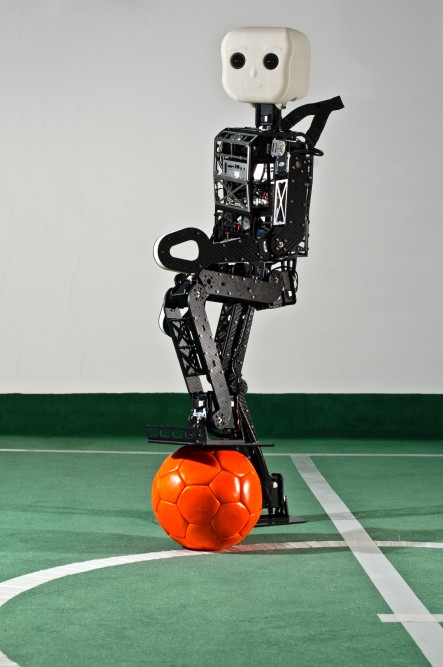
RoboCup Soccer gets champion robot
Don’t know what RoboCup Soccer is? Well join the club but an interesting piece in Gizmag talks about the state of modern robotics and how a league of five teams competed in the league that uses what it calls TeenSize robots, ones that are three to four feet tall.

They use an open source platform and cost roughly $26,000 apiece. The leagues goal is to develop a team that can beat the human champions, by 2050 that is.

Wednesday Wi-Fi Whispers: Ruckus Files for IPO, Qualcomm Stadium Gets DAS

It’s about as far from a whisper as you can get, but in the Wi-Fi world the big news of the week was Wi-Fi vendor Ruckus Wireless filing for a $100 million IPO last Friday. As you’ve read here earlier Ruckus is heavily involved with the growing market for big-space Wi-Fi (like stadiums, racetracks and other event areas) and with healthy revenues ($120 million in 2011) the long-rumored move became a reality with the SEC Filing that makes for such good hard-data reading.

The part we like the best in Ruckus’ S-1 is this bit about how big the market is getting for what Ruckus calls its “carrier class” Wi-Fi products:

According to Infonetics, the market for Wi-Fi networking solutions for carriers is expected to grow from $296 million in 2011 to $2.8 billion in 2016, representing a 57% compound annual growth rate. According to Gartner, the market for Wi-Fi networking solutions for enterprises is expected to grow from $3.4 billion in 2011 to $6.9 billion in 2016, representing a 15% compound annual growth rate. Carrier-class Wi-Fi addresses the needs of both of these markets.

Stadium and sports deployments probably fall somewhere in the middle of those markets, since many such deals are being done as partnerships between enterprises (teams) and carriers. But the good news for vendors like Ruckus is, there’s no getting away from the need for Wi-Fi. And the gear needs to be better than earlier technology to handle the needs of big events.

Qualcomm Stadium Gets AT&T DAS; N.Carolina State, U of Kentucky also get upgrades

We’ve always found it more than a bit ironic that Qualcomm Stadium in San Diego, namesake of the chip giant, didn’t have any Wi-Fi to speak of and from what we heard, it had bad cell coverage too. That should change going forward at least a little bit thanks to a new DAS (Distributed Antenna System) deployment AT&T has installed at the home of the Chargers, which will bring AT&T’s new 4G LTE network to football fans in SoCal.

AT&T is also putting some cellular upgrades into college stadiums, including N.C. State’s Carter-Finley Stadium in Raleigh, N.C., which is getting some of the cool new multi-beam antennas. The University of Kentucky’s Commonwealth Stadium in Lexington, Ky., is also getting an upgrade via an AT&T DAS, so SEC fans should be able to get their mobile game on better while cheering on the Wildcats.