Will mobile SportsCenter become the go-to stadium app for fans?

New version of ESPN SportsCenter app

New version of SportsCenter app

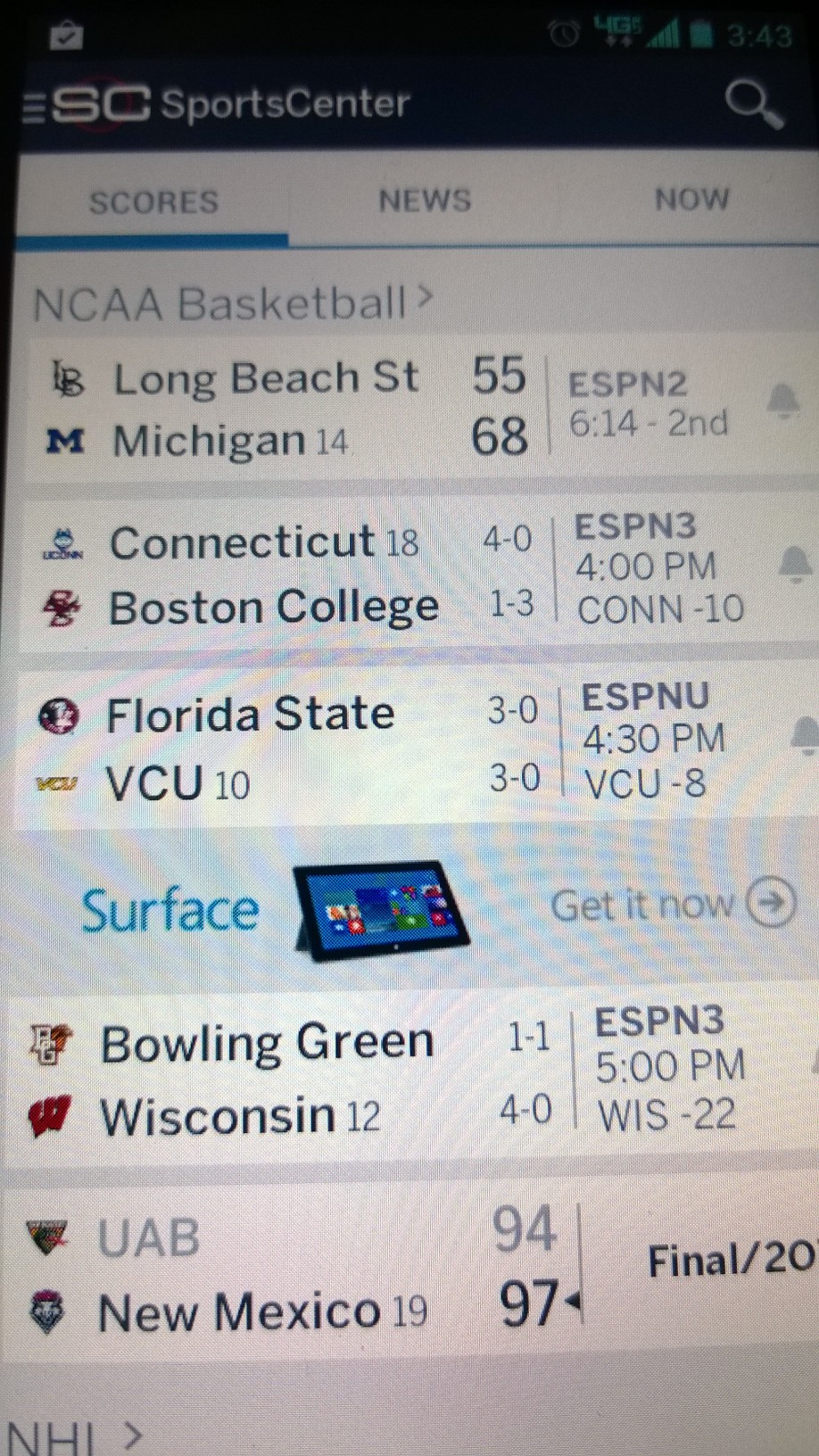
Now that ESPN’s mobile viewership has overtaken web readers, the worldwide leader in sports is ready to put its most iconic brand — SportsCenter — onto its main highlights mobile app. Our question: Can that app now become the go-to app for fans in stadiums who want to track activities at games they’re not at?

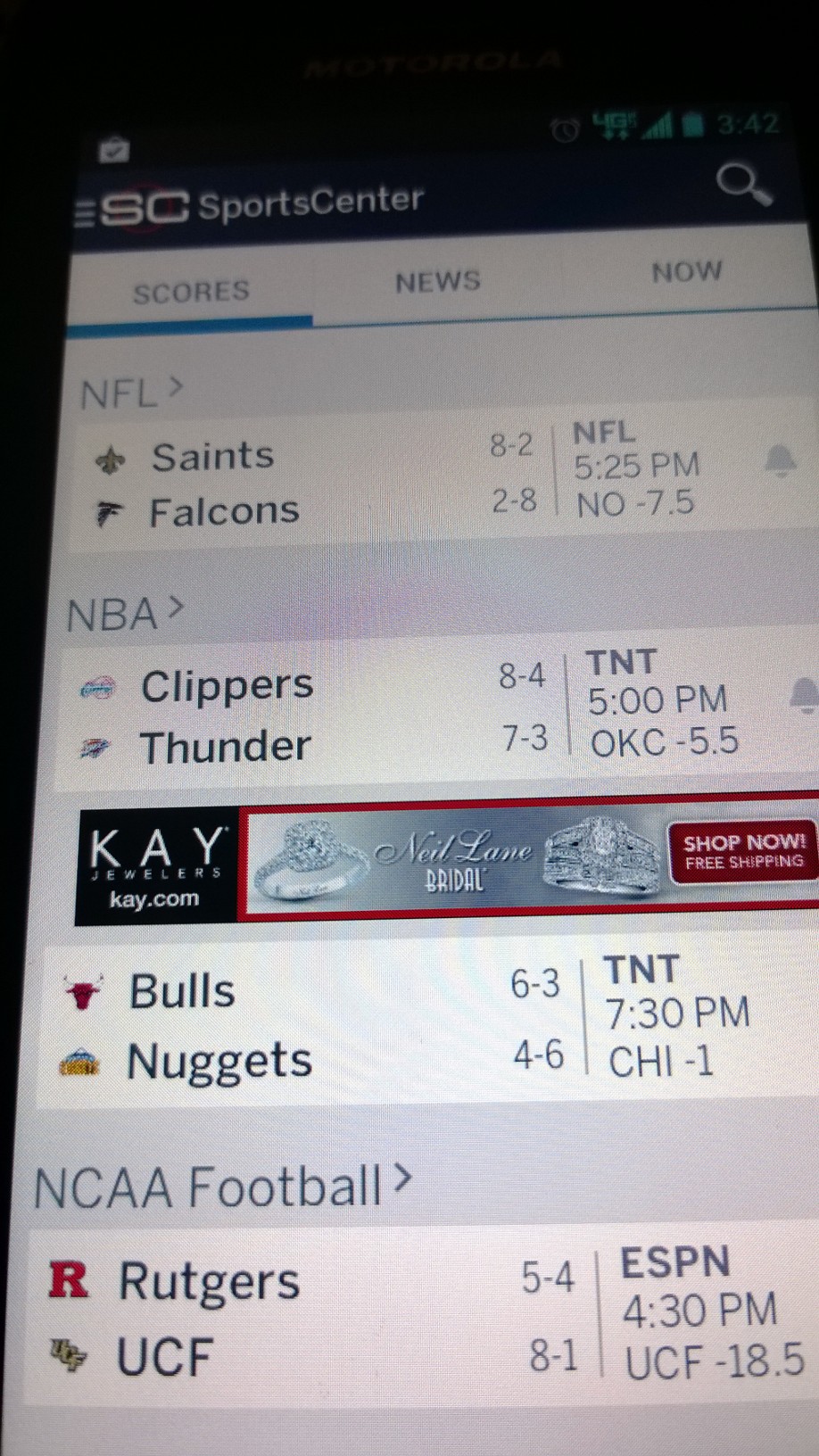
With today’s news that the old “ScoreCenter” app is now being called simply “SportsCenter,” ESPN seems to be going all in with its mobile strategy, which was already aggressive in the past. The main holdout was the ScoreCenter app, which while it conveyed a lot of information (mainly scores and headline links) the very fact that it was called something other than SportsCenter — the name for the network’s mainstay highlights show — seemed to signify that ScoreCenter wasn’t a full and complete offering.

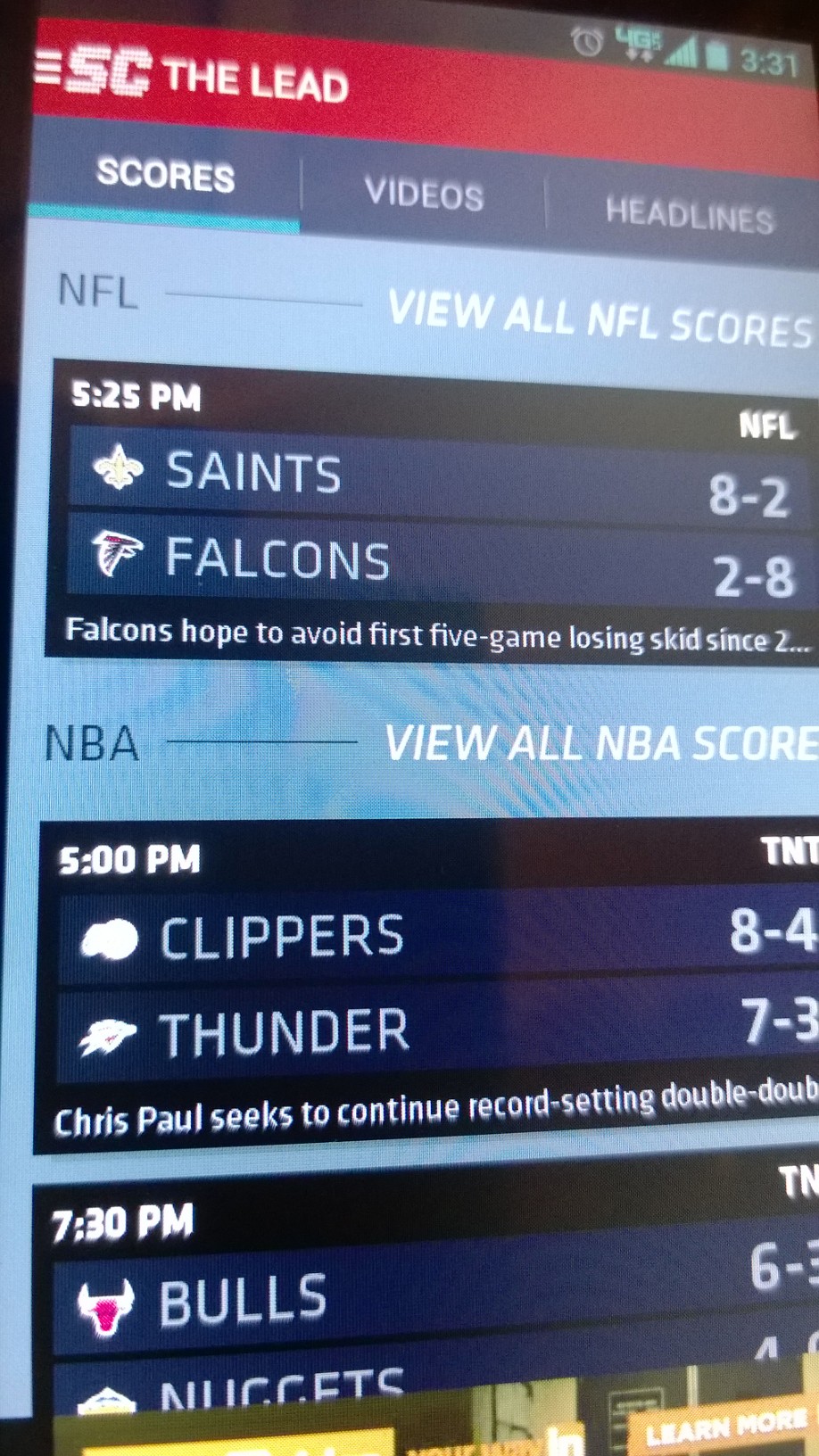
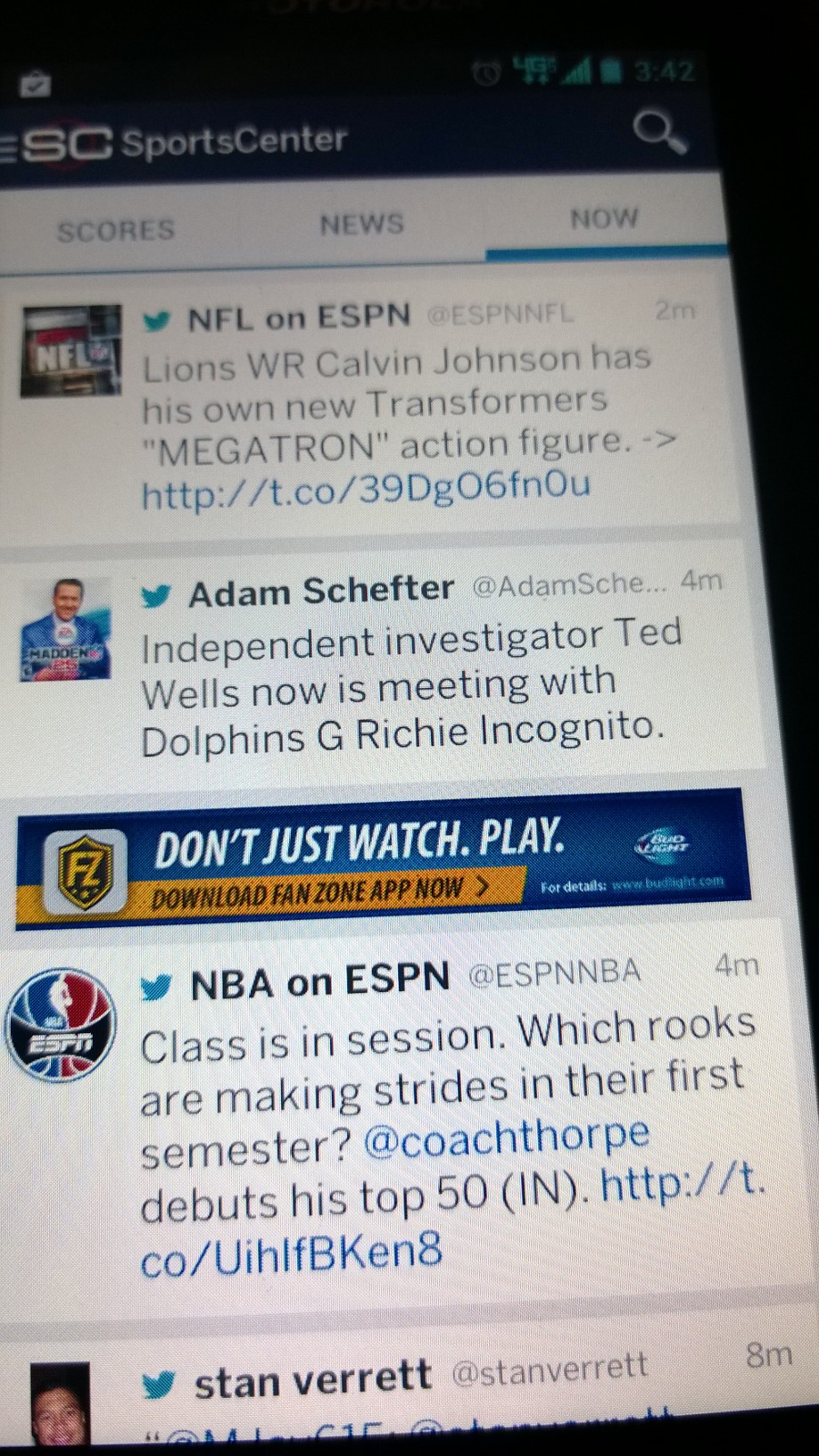
Ryan Spoon, ESPN’s SVP for digital media, was part of a panel I moderated last week at the Open Mobile Summit, where he told attendees that this fall, for the first time, ESPN’s mobile traffic surpassed web traffic, a trend we’ve seen happen for other sports properties. In an interview with GigaOM Spoon said the new SportsCenter app is meant to be “a very strong relative of the TV show,” and our initial download shows a stream of tweets from ESPN personalities along with the kind of news updates you might get while watching an episode of SportsCenter on TV.
Old 'ScoreCenter' app scores page view

Old ‘ScoreCenter’ app scores page

What will be interesting to see is if the mobile version of SportsCenter can become the go-to app for fans sitting in stadiums, since it’s a good guarantee that most of them go home and watch SportsCenter after the game, or on any other day in their life. With fantasy football fans and regular fans who just want to keep abreast of other games and other sports, SportsCenter is usually the starting place for highlights and news.

The real challenge as I see it in the stadium-fan space will be whether or not ESPN is able to provide real-time or at least close to real time replays and highlights, or whether teams and leagues will keep those away from mobile versions of SportsCenter so that their own apps have more pull. One of my biggest beefs with ESPN and online video is that it often puts videos of ESPN commentary inside stories instead of highlight videos, with misleading or unclear labeling that sometimes forces you to watch way more of Lou Holtz babbling than you ever wanted to. But if ESPN can deliver timely highlights to its app the same way it gets them on SportsCenter, other stadium apps might never be able to catch up.
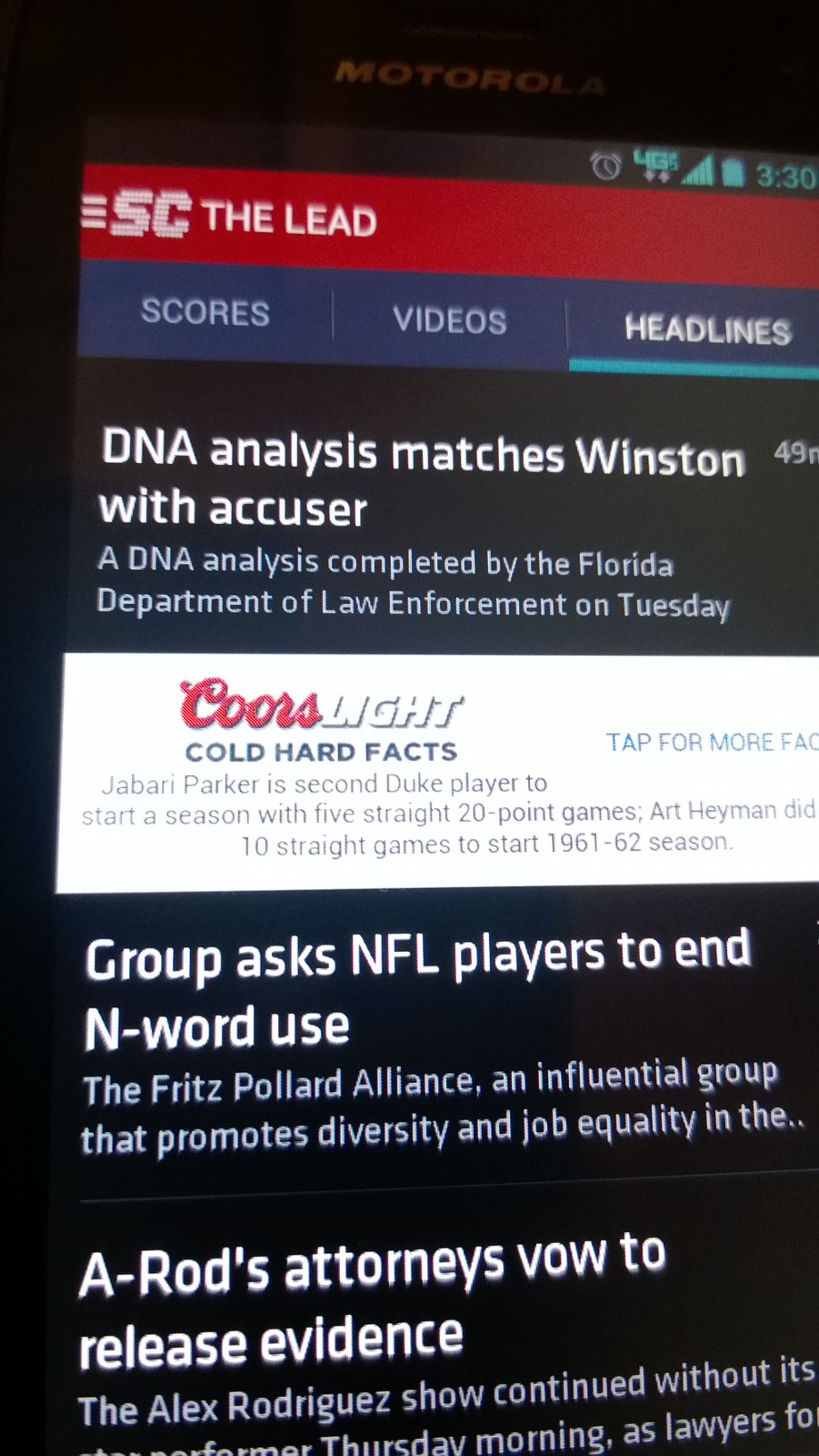
Old ScoreCenter headlines page.
Old ScoreCenter headlines page.

New 'Now' page with Twitter feeds

New ‘Now’ page with Twitter feeds

Better TV info should help with college games
Better TV info should help with college games
Under Armour joins sports-community race with $150M MapMyFitness buy

Today’s news that sports apparel giant Under Armour has bought sports community concern MapMyFitness for $150 million is just more proof that the big brands will be driving the bus in the race between sports social networks.

MapMyFitness, one of the more popular activity stat-recording and sharing site businesses, better known through its MapMyRun and MapMyRide services, will now have a deep-pocketed parent to help it compete against players like Nike and its FuelBand, Jawbone and Fitbit, and newcomers like Adidas. Then there are software-only or web-only players like Strava.com who are all angling for a part of the new, popular field of athletic and everyday biometrics.

What will be really interesting is if the biometric information from pro athletes becomes more readily available to fans — the Tour de France does an interesting job recently with showing wattage and other exertion information while cyclists are out on the road. Why not have heart rate or calorie-burning levels for marathoners, or basketball players? Recorded stats so you can compare your workouts to LeBron James? It will be interesting to see where the biometrics and social data sharing ends up, now that the big marketing dollars are taking over.

Team stadium apps vs. Twitter: Which one will win?

Screen shot of the home page for the Niners' Gameday Live app

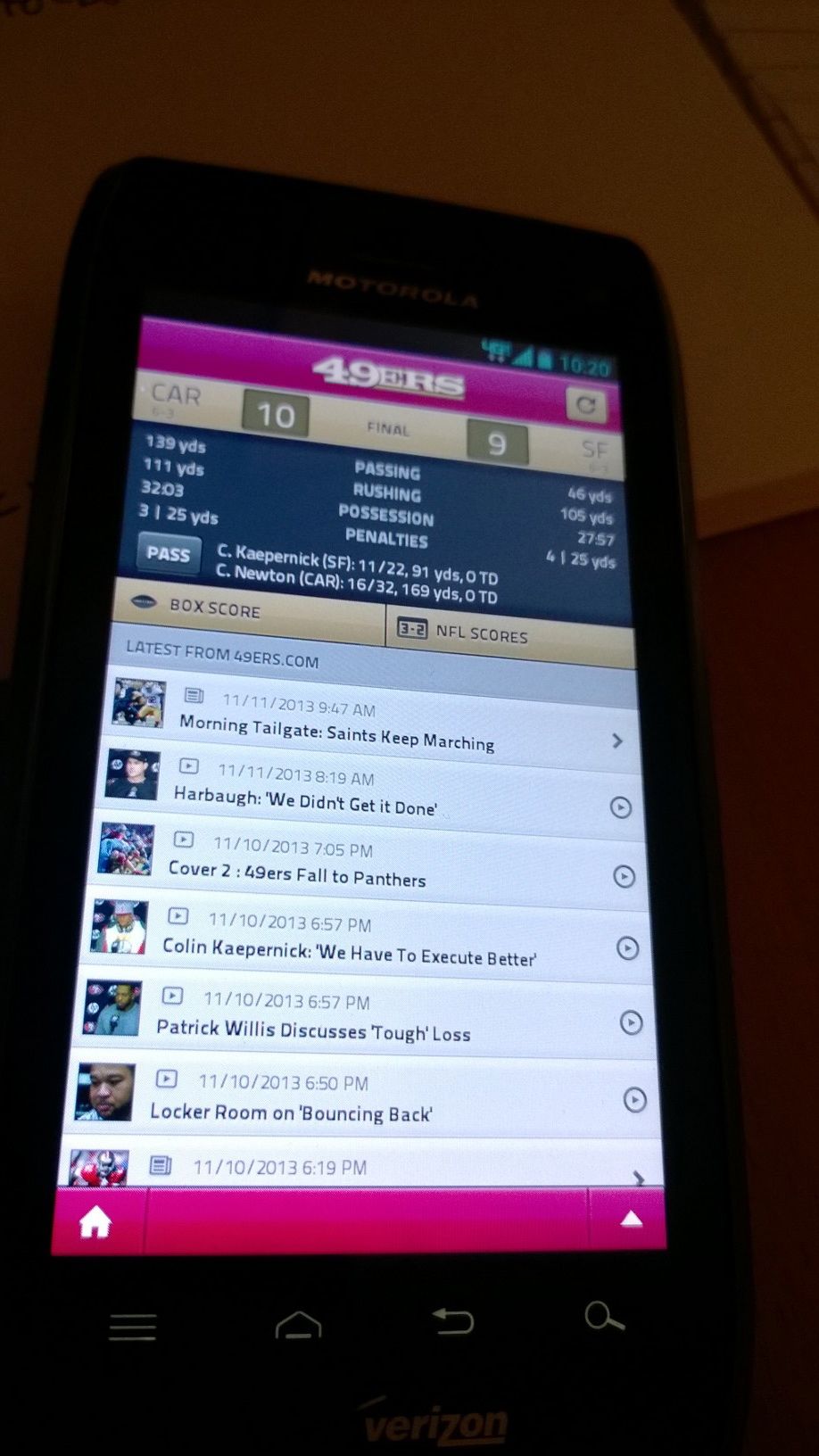
Screen shot of the home page for the Niners’ Gameday Live app

Will team stadium apps be able to hold off the challenge from independent apps like Twitter? This matchup came to mind Sunday when the Mobile Sports Report team convened for a get-together at Candlestick Park, the on-the-way-out home of the San Francisco 49ers.

Since Candlestick is going to be all blowed up after this season, it’s probably not fair to single out the Niners’ app and network for poor performance this year. I mean, why build a Wi-Fi network in a place that’s going to be torn down? I will say that the new DAS seems to be working well, since I had no problems getting a cell signal all day. But when I tried to watch live video via the Niners app, it told me I had to be on stadium Wi-Fi to watch video.

But the Wi-Fi network wouldn’t connect. After long minutes and several attempts. Finally I gave up. I tried my Verizon NFLMobile app, which lets me watch RedZone on Sundays. But no! Verizon NFLMobile, which monitors your location via GPS, won’t let you watch live video or RedZone while in an NFL stadium. The only person around us with live video of anything NFL on his phone was a guy who gets the Sunday Ticket service from DirecTV. Tell me, if you’re a fan, you’re not frustrated with the idiotic hurdles the NFL puts in front of its best content to satisfy its rights deals. Guys, you’ve had several years to figure this out. It’s the biggest C’mon Man I can think of. LET US WATCH LIVE VIDEO! MAKE IT EASY!

Again to be clear: This isn’t an app review, or a formal survey. But just looking at all the phone use in the stands, I didn’t see anyone else on the Niners team app. I saw a lot of people on Facebook, on Instagram, on Twitter. Or just sending picture and text messages. What is the common thread for those apps? They are simple to use, they are fast, they have great and easy interfaces on a mobile phone. They are already filled with the people who I want to follow or communicate with. With any one of those apps, you are doing something within one or two clicks.

Fan Zone page of Niners stadium app.

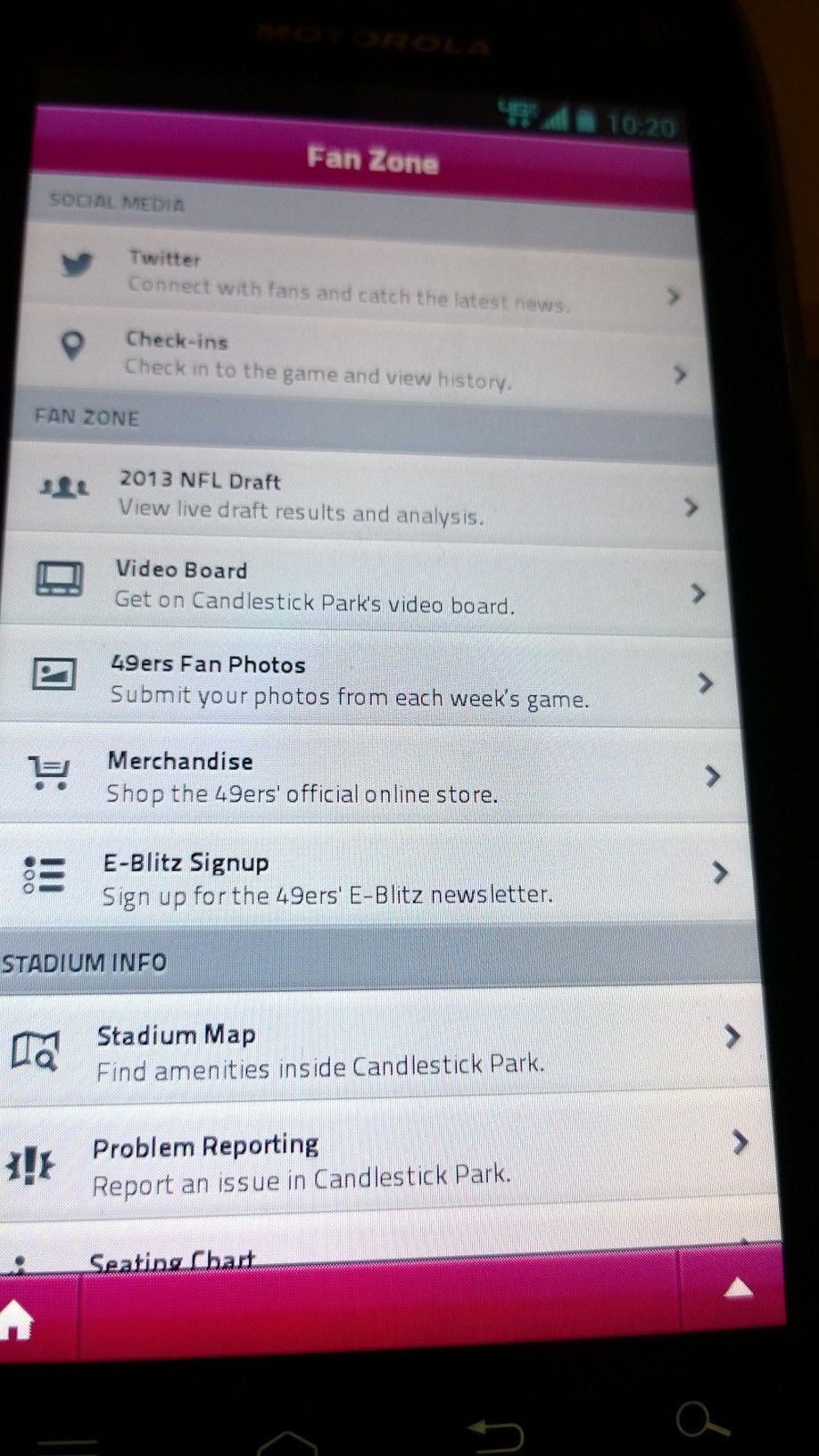
Fan Zone page of Niners stadium app.

With the team apps, that’s just not the case. The Niners app — which looks like a lot of other team apps, since it’s built by stadium app market leader YinzCam — is incredibly dense, with lots of very small type. Which, while it looks OK in a screenshot like the ones here, is almost impossible to see in the harsh outdoor light of a stadium. Opening it up for the first time at the Niners game, I was underwhelmed by the overload of information and choices available. And then when the live video didn’t work… I mean, really, what else is there in the team app that could be different, or make me want to go there?

Stats? Yardages? That stuff isn’t crucial to people sitting in the stands. Where the team app could really make a difference is if it gave detailed information on what just happened in front of my eyes — you know, the kind of stuff that is instantly delivered to people at home watching games on their couch. Someone is hurt? Injured? You’re up there in the stands, you have no idea of what happened or why there are people standing around on the field. I couldn’t find an audio feed of the TV broadcast on the team app — why not have that available? Or at least the radio simulcast? What about that last play? Was it a fumble? How did Vernon Davis get a concussion? In the stands, you have one chance to see what happens. And in many cases, no way of knowing what the outcome was, especially since most teams (Niners included) only show replays of “positive” events for the home team. Again: treating fans like idiots or children is no way to make the stadium a better experience.

My simple thought, as I switched back to Twitter — where, by following some of the beat writers who cover the Niners, I was able to get almost-instant info from their press box tweets — is that the team apps seem designed to be sold to the teams and the leagues, and not with the fan in mind. I have no desire to go to the Niners’ app to find other people on Twitter to interact with or follow. If public sports websites are any guide, anything open to the public is already overrun by ignorant trolls. I’ll stick with my own Twitter feed, thanks. And now that Twitter is adding in NFL highlights, I probably have a better chance of seeing live video there than via the team apps. How are team apps, with their rights restrictions, clunky design and team-sanitized information, going to keep up with fast-moving folks like Twitter, especially now with tools like Vine or Instagram video? Anyone want to bet that we start seeing more fan replay videos on Twitter before we get good, easy to get official team replays?

Maybe these apps are working better in other stadiums, where the networks are better. My guess is, even at those places there is slow uptake. If teams really want to use technology to make the stadium a better experience than the couch, they’ve got to do more to make connecting easier. The network hookup needs to be drop dead simple. If I don’t have Wi-Fi turned on, the app should figure out how to do that itself. (Or ask when it’s first opened up, not after I’ve gone three clicks in to find the “live video” button.) Activities should be one or two clicks, not a laundry list of choices and treed menus. Though there is a lot of down time at games, it’s not that long. Apps should work faster than a play clock… if you can’t get there in 45 seconds, it’s a fail.

Safe to say, we are going to cover app development AND uptake as part of our stadium technology focus. I think right now it is the weak link in the whole connected stadium equation. One scene on the way out of the Niners game made me realize just how far behind the apps are; instead of staying in their seats to watch the crucial possible last-minute drive, many San Francisco fans were outside on the concourse… watching the TV coverage on the high-def screens above the concession stands. Because on TV, they know, they will get multiple replay angles and explanations. These fans weren’t bad fans for leaving their seats. They were, actually, just trying to find the best game-viewing experience. They should be the people interviewed next about what should be in a team app. Because what’s there now obviously isn’t reaching them. Or keeping them in their seats.

Aruba scores with new Wi-Fi deployment for Portland Trail Blazers; Toyota dealers sign on as Wi-Fi sponsor

Wireless networking vendor Aruba Networks scored a big-time NBA deal as the centerpiece technology behind an enhanced Wi-Fi deployment at the Moda Center, home of the Portland Trail Blazers. With more than 400 Wi-Fi access points reportedly deployed, the 20,000-seat arena should have great connectivity for fans as the 2014 NBA season kicks off this week.

While we haven’t yet talked to Aruba folks about the deal (we are working off the numerous versions of the press release we found yesterday) there seems to be a really interesting financial twist, one that could prove a model for others if successful: According to the press releases the local Toyota dealerships in the greater Portland area have signed on as title sponsor for the new Wi-Fi service, which will appear to user devices as “Toyota Free Wi-Fi” in the SSID list. With teams and stadium owner/operators facing the question of how to pay for Wi-Fi infrastructure deployments, title sponsorships could be one way to help offset the millions in sunk costs.

We’ll try to circle back with all the companies involved in the deal, since there are many fingers in this pie: According to the release there is participation from Crown Castle on the deployment side, and popular team-app provider YinzCam scoring yet another team-app deal.

Horned Frogs get AT&T Wi-Fi, DAS for TCU Stadium

In case you had any doubts that AT&T is serious about this whole wireless-in-stadiums market, we have yet another announcement: AT&T announced availability of a Wi-Fi and DAS network for Texas Christian University’s Amon G. Carter Stadium, located in Fort Worth (“Foat Wuth”). There’s also a mobile app available for Horned Frogs fans, complete with the Bypass Lane powered concessions ordering feature.

For a company that claimed it wasn’t doing Wi-Fi networks in stadiums anymore, AT&T has sure been busy launching them. I guess we can alter the “no Wi-Fi” plan to “we’ll put in Wi-Fi if we get to own the network.” For TCU, AT&T’s implementation looks pretty robust, with 345 Wi-Fi access points and another 140 DAS antennas. At 45,000+ seats, the TCU stadium is what you might call middle-big, but 345 APs and 140 DAS should do pretty well, especially with an AT&T operation behind the scene.

Looks like our friends from Cisco might have a win in purple-land too, since the AT&T press release said the facility also now has a StadiumVision deployment, bringing high-definition information to all the digital displays in the stadium. No mention of Cisco in the release, but that’s pretty standard. We’ll circle back with Cisco folks to see if they can shed more light.

If we were doing a BCS-type ranking for college stadium deployments, you’d have to make AT&T the Alabama equivalent at No. 1, right? Any Verizon networks going in at colleges that we haven’t heard about? Let us know…

AT&T Bosox fans set wireless data records during World Series opener

It’s a bit of a broken record — another big sporting event, another huge wireless data usage event — but the numbers never fail to amaze me: According to our friends at AT&T, fans at Fenway Park Wednesday night set new records for wireless data usage during the Red Sox victory over the St. Louis Cardinals in the opening game of the 2013 World Series. How much data? Try 248 GB of data, bigger even than the Bosox’s Big Papi.

Mind you, none of these figures represent traffic that might have traversed over the Meru-supplied Wi-Fi network inside Fenway. The following figures are all from AT&T’s Distributed Antenna System (DAS) network, the collection of small cellular antennas that bring better connectivity to crowded public places. And this is only AT&T carried data, which means that the total of all wireless customers in the park is almost certainly a multiple larger. But for your enjoyment here are the AT&T stats, direct from our AT&T sources:

— Data usage on the AT&T in-stadium network during Game 1 was 248 GB (gigabytes) of data
— 248 GB of data is equal to more than 700,000 social media posts with photos
— AT&T fans made more than 17,361 voice calls and sent more than 56,335 SMS text messages Wednesday night on our in-stadium network
— The peak hour for data traffic on the in-stadium network was from 10–11 p.m. EST
— The 248 GB total surpassed the record for data usage for the AT&T in-stadium network at Busch Stadium in St. Louis in 2013, which was 183 GB set on 10/11/13

We’ll see if the Meru folks can provide any Wi-Fi stats before the series ends. Like football, baseball is perfect for data dalliances because of all the downtime between action. Just more proof that this mobile sports thing is more than just a fad.