Baltimore Ravens pick Extreme Networks for M&T Bank Stadium Wi-Fi

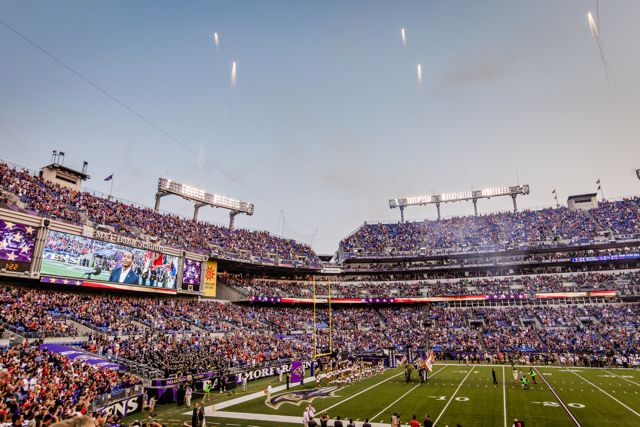
M&T Bank Stadium. All photos: Baltimore Ravens (click on any photo for a larger image)

M&T Bank Stadium. All photos: Baltimore Ravens (click on any photo for a larger image)

The NFL regular season hasn’t started yet, but Extreme Networks picked up another NFL win this week, being selected to provide the Wi-Fi network gear for the Baltimore Ravens M&T Bank Stadium.

According to press releases from the team and Extreme, Extreme will install approximately 800 Wi-Fi APs to provide wireless service to the seating and concourse areas of the stadium. The $6.5 million network will be designed and deployed by integrator PCM Inc. of El Segundo, Calif., and the team app will be developed by YinzCam. According to the Ravens M&T Bank Stadium has a seating capacity of 71,000 for football.

The Ravens are also unveiling a new 3-D video system called freeD that the team said shows replays from every possible angle, like the replays seen on newscasts that can circle around the field of view.
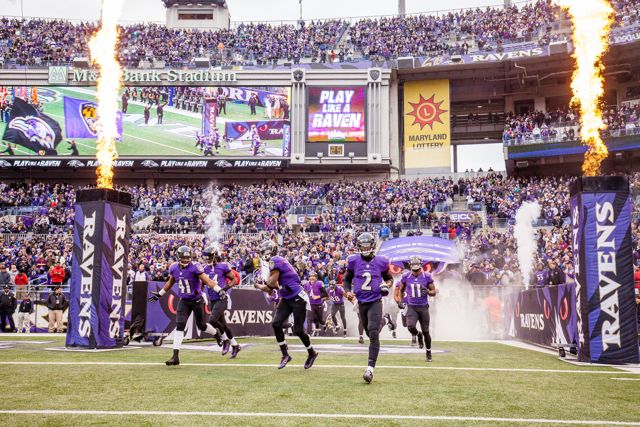
Team coming onto the field at M&T Bank Stadium

Team coming onto the field at M&T Bank Stadium

The first preseason game for the Ravens is against the New Orleans Saints on Aug. 13 and according to a video accompanying the announcement the Wi-Fi and the freeD TV will be available then. (Any Ravens fans who can confirm next week, please feel free to do so here!)

We’ll try to get more details on the deployment but by our count this is the seventh NFL team to use Extreme Wi-Fi gear for stadium Wi-Fi, joining the New England Patriots, the Philadelphia Eagles, the Seattle Seahawks, the Tennessee Titans, the Jacksonville Jaguars and the Cincinnati Bengals. Like in other deployments, the Ravens plan to use Wi-Fi coaches to help fans connect to the network. Extreme Networks is a preferred supplier of Wi-Fi technology to the NFL, a deal that does not guarantee that teams have to use Extreme but one that does provide preferential pricing if they do. Extreme is also the official Wi-Fi analytics provider to the NFL, and its Purview analytics software will be used in Baltimore, according to Extreme and the team.


Former co-CEO files counterclaims against Sporting Innovations, denies ‘conspiracy’

Asim Pasha

Asim Pasha

The second shoe has dropped in the lawsuit filed by Kansas City’s Sporting Innovations against its former co-CEO Asim Pasha, with Pasha filing counterclaims denying the company’s charges against him while also alleging that he was denied promised ownership stakes in the company for providing the technology behind its stadium-application business.

In case you missed the first episode, that came in June when Sporting Innovations fired its former co-CEO, alleging basically that he used company resources, trade secrets and relationships in a plot to build a competing entity. In his first response to those claims, Pasha denied the company’s allegations and replied with some legal fire of his own, claiming basically that Sporting Innovations’ other co-CEO, Robb Heineman, was jealous of Pasha’s public recognition for Sporting Innovations’ stadium app work, and refused to provide legal documents that would confirm Pasha’s promised ownership stake in the company.

While the Sporting Innovations lawsuit sought $75,000 in retribution from Pasha, Pasha’s counterclaims want his ownership stake — which is either 20 percent or more — confirmed, while having himself cleared of all the conspiracy charges, which his legal filing claims were trumped up mainly to try to get him to give up his ownership stake in the company and a key patent. Pasha’s filing also seeks “actual and punitive damages” for harm caused to Pasha and his son Zain by the lawsuit.

As Pasha’s filing claims:

Sporting Innovations’ use of legal process is not for the purpose of recovering on the claims stated in the Complaint, but for the illegal, improper and perverted purpose of intimidating and coercing Asim into surrendering his 20% interest in Sporting Innovations, along with his interest in U.S. Patent Application No. 13/789,372.

The next planned step in the proceedings, according to Pasha’s lawyers, is a hearing scheduled for Sept. 2, to talk about the schedule for the case going forward. Sporting Innovations refused to comment on the case. The lawsuit and the counterclaims have been filed with the U.S. District Court for the Western District of Missouri, Western District.

Will fallout cripple Sporting Innovations?

There’s lots of conflicting drama in the two legal sides of this case, and eventually we are guessing a judge or jury will hear all the details. As we said before, we’re not lawyers, but it seems from reading through Pasha’s filings that he has documented answers to refute many of the company’s original claims, including what looks like a personal note from Heineman under which the claimed intent was to transfer more of an ownership stake to Pasha.

However the case ends up, what seems to be clear is that Sporting Innovations is going to have a tough time drumming up new business in the meantime. Sporting Innovations was a business that grew out of technology developments for the Sporting KC professional soccer team and its home stadium, which was one of the first to have full fan-facing Wi-Fi and a specialized fan app. But the company’s vision to provide similar technology to other teams and stadiums may have hit a roadblock with the legal entanglements.

As we already reported, the company’s deal to provide a stadium app for the Pac-12 is dead, and one of the other clients still highlighted on the Sporting Innovations website, the Tampa Bay Lightning, said they are currently moving to a different app platform after using Sporting Innovations technology for their app through last season.

Chicago Cubs tap NFL deployment expertise of Extreme, DGP for new Wi-Fi, DAS at Wrigley Field

Artist rendering of the proposed fan plaza outside Wrigley Field. Renderings courtesy of the 1060 Project.

Artist rendering of the proposed fan plaza outside Wrigley Field. Renderings courtesy of the 1060 Project.

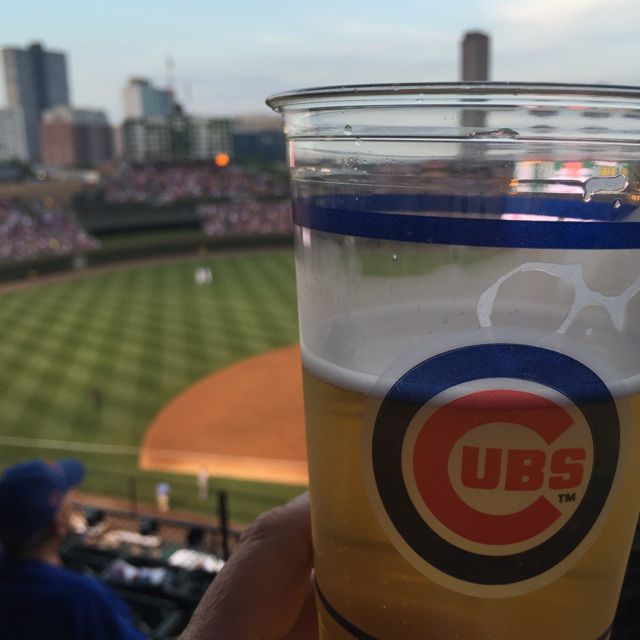
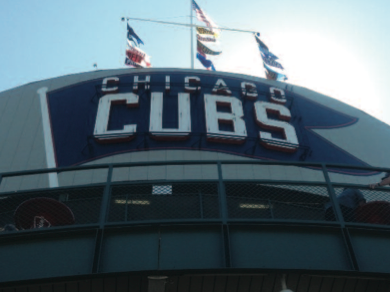
The video boards above the historic ivy-covered outfield walls are only the first clue that this isn’t your grandpa’s Wrigley Field anymore.

And though you won’t be able to see it, new Wi-Fi and DAS networks are coming soon to the Friendly Confines, as part of the Ricketts Family’s ambitious remake of Wrigley Field and its surrounding area. And according to Cubs IT executives, the team is tapping firms with NFL stadium expertise to bring not just fast and thorough wireless coverage to fans, but also back-end ownership and analytics so that the team can more effectively track online activity to improve the fan experience as well as improve the team’s return on infrastructure investment.

Though Wrigley Field has had full fan-facing Wi-Fi for longer than most Major League Baseball stadiums — the AT&T-built network arrived in 2012 — with the major overhaul of not just the park itself but the surrounding areas outside beginning this offseason, it was time to rethink the team’s overall approach to wireless connectivity, said Andrew McIntyre, senior director of information technology for the Chicago Cubs.

As part of the team’s ongoing 1060 Project the Ricketts family (which owns the Cubs) is not only adding more concessions and other fan amenities to Wrigley, they are also building a fan plaza outside the main gate as well as building a retail/office building and eventually a boutique hotel on the edge of the famed ballpark property at Chicago’s somewhat slanted corner of Clark and Addison. (If you don’t get the “1060” label, we suggest you ask Elwood Blues what the address of Wrigley Field is.)

“As it all starts looking more like a campus, it changes the dynamics” of how you provide wireless coverage to all areas, said McIntyre. As a regular attendee, speaker and steering council member of the SEAT Conference — the premier gathering of stadium technology professionals — McIntyre was well aware of all the new trends for large-venue Wi-Fi and DAS deployments, some of which were taking place in football stadiums across the country.

“We understood what was happening with other leagues in regards to Wi-Fi and DAS from what we saw at SEAT,” said McIntyre, in an interview at this summer’s SEAT Conference in San Francisco. “We started to evaluate those deployments and ideas as we were getting ready for our restoration.”

The Winners: Wi-Fi with a heavy side of analytics, and team-owned DAS

Cubs fans know how to enjoy a day at the park. Photo: Lisa Farrell, MSR

Cubs fans know how to enjoy a day at the park. Photo: Lisa Farrell, MSR

As major construction took place this past offseason, the Cubs de-activated the AT&T Wi-Fi network that had previously served fans inside the ballpark. Even though it doesn’t sound very old, McIntyre notes that many other stadiums around the country have had to completely overhaul Wi-Fi networks built just several years ago, due to the ever-increasing demand for more bandwidth and the rapid introduction of new phones and devices that fans are bringing to games.

“AT&T had previously controlled both the DAS and the Wi-Fi, and [to them] the Wi-Fi was kind of a ‘check the box thing,’ ” McIntyre said. “The scope [of the network] was just for Wrigley Field only. When we took down the Wi-Fi while we replaced the bleachers, we looked more toward the future.”

What McIntyre and the Cubs IT team saw was a future where Wi-Fi was used not only to provide connectivity, but to also provide a deep link between venue owners and operators and the digital activities of their visitors, through advanced analytics of Wi-Fi traffic. In the end the Cubs selected Wi-Fi provider Extreme Networks for the Wrigley project, in no small part due to Extreme’s experience in deploying Wi-Fi networks and Wi-Fi analytics inside numerous NFL stadiums.

“We saw patterns emerging in other leagues, and especially in the NFL, where the league and teams called out analytics,” said McIntyre. Extreme, which has a partnership deal with the NFL as its preferred provider of Wi-Fi analytics for its Purview software, has provided analytics help at recent Super Bowls in addition to being part of stadium Wi-Fi deployments for the New England Patriots, the Philadelphia Eagles and the Seattle Seahawks, among others.

“A lot of times talk about Wi-Fi is simply about coverage and capacity, and more, more, more,” McIntyre said. “The question of ‘what are you doing with the service’ becomes an afterthought.” McIntyre noted that in some cases, the NFL has deployed Extreme analytics on top of Wi-Fi infrastructure with gear from another manufacturer. “What they [Extreme] are able to provide [with analytics] is night and day compared to the competition,” McIntyre said.

Back of the iconic Wrigley bleachers, circa 2014. Photo: Paul Kapustka, MSR

Back of the iconic Wrigley bleachers, circa 2014. Photo: Paul Kapustka, MSR

John Brams, director of Sports and Entertainment at Extreme Networks, called the coming Wrigley Field network “a signature deployment.” Wrigley Field itself is expected to have Wi-Fi service in time for the 2016 season, McIntyre said.

DAS: Neutral host instead of carrier-led

On the DAS side of the wireless equation, McIntyre and the Cubs team were impressed with the cellular network deployment at the San Francisco 49ers’ new venue, Levi’s Stadium, a deployment done by the lesser-known firm DAS Group Professionals, or DGP. While many may have first heard of DGP for its Levi’s Stadium deployment, DGP does have other large-venue experience, having built previous cellular networks for airports and the San Francisco Bay area’s BART light-rail service.

At Levi’s Stadium, DGP worked with the Niners to build a neutral-host DAS deployment that is owned and controlled by the team, an emerging trend for stadium owners and operators who don’t want to simply concede control to wireless carriers. Under a neutral-host deployment the owner or operator of the DAS typically builds a non-carrier-specific antenna infrastructure, and then charges wireless carriers to connect their systems to the back end of that network.

At a prior SEAT event McIntyre said the Cubs team talked to the Niners about why they went with DGP, and liked what they heard.

“The venue-owned DAS solution was a business model we liked,” McIntyre said, “It perfectly aligns with our strategy of being closer to the fan base and not one step removed.”

Steve Dutto, president of DGP, said the Cubs contract “validates our work at Levi’s Stadium.” The new DAS, McIntyre said, should be fully functional by 2017.

Artist rendering of the home plate view after all construction done.

Artist rendering of the home plate view after all construction done.

Futbol Fans like Wi-Fi: Barcelona vs. ManU match at Levi’s Stadium uses 2.62 TB

ManU and Barca at Levi's Stadium. All photos: Levi's Stadium.

ManU and Barca at Levi’s Stadium. All photos: Levi’s Stadium.

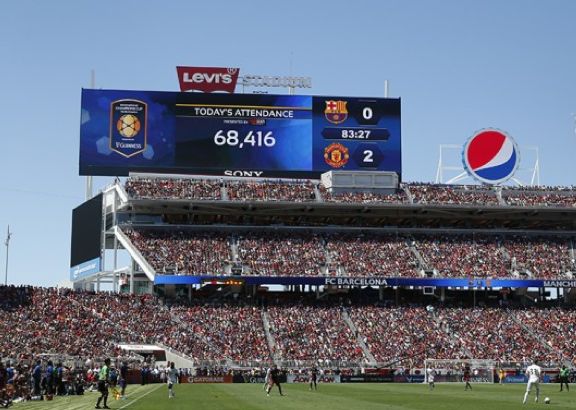
It was futbol, not football, that drew 68,416 fans to Levi’s Stadium July 25 for a match between European powerhouses FC Barcelona and Manchester United, a game that finished in a 3-1 ManU victory and with 2.62 terabytes of Wi-Fi data used, according to the Levi’s Stadium networking crew.

With fans arriving early for the 1 p.m. start the Wi-Fi measurements were taken over 7 hours from 9 a.m. to 4 p.m., according to Roger Hacker, senior manager, corporate communications for the San Francisco 49ers, who own and operate Levi’s Stadium. During that period there were 25,643 unique users of the stadium’s Wi-Fi network, with the maximum number of concurrent users of 18,322 taking place five minutes after the game’s start.

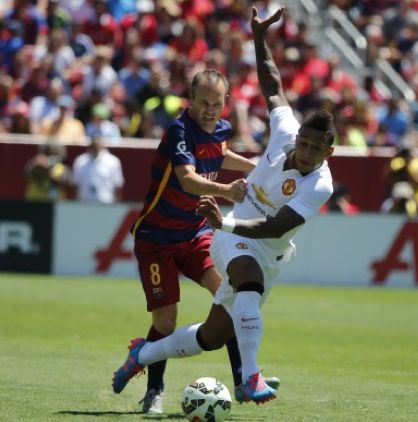
Action from the pitch!

Action from the pitch!

The Wi-Fi peak usage bandwidth of 2.966 Gbps was reached five minutes later, no doubt as the sellout crowd started sending the pictures and videos they took of the start of the match. The average Wi-Fi bandwidth used during the 7 measured hours of the event was 1.584 Gbps, according to the Niners.

Though the Wi-Fi usage didn’t come close to the stadium record mark of 4.5 TB set at WrestleMania 31 in March, or even the high-water Wi-Fi mark for football set on Sept. 14 at last year’s regular season home opener against the Chicago Bears, it did eclipse some football Wi-Fi totals near the end of last season, showing that soccer fans will find and use Wi-Fi even though their sport has much less non-active time than American football.

One event on the Levi’s Stadium calendar that may dwarf even WrestleMania for Wi-Fi usage is the upcoming Taylor Swift concerts Aug. 14 and 15; it will be interesting to see how Taylor Swift fans use the network, and if they can surpass WWE fans even though it looks like the stadium will have fewer available seats because of the concert stage setup.

manu3

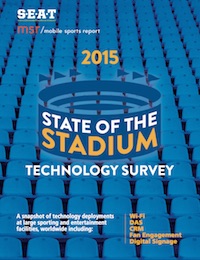
Huge jump in stadium Wi-Fi deployments, according to our latest State of the Stadium Technology Survey

2015_SoS_thumbA clear trend toward greater Wi-Fi and DAS deployments is the main point our “State of the Stadium” research tells us this year, especially with Wi-Fi, where now more than half of the venues surveyed said they have fan-facing Wi-Fi services to all seating areas.

To be precise, a full 65 percent of our respondents said they now have full-seating Wi-Fi services in their venues – a huge increase from the 35 percent number we saw in last year’s survey. Full-stadium DAS deployments increased as well, with 80 percent of respondents claiming stadium-wide DAS deployments this year, up from 71 percent in the 2014 survey.

Input for the survey came from more than 100 respondents representing arenas that host the top U.S. professional league teams, including the NFL, Major League Baseball, the NBA, the NHL, as well as top U.S. university facilities for basketball and football, European and U.S. professional soccer teams, professional golf and car-racing venues. The data provide a clear snapshot of how teams are deploying technology to both improve the fan experience while helping increase business opportunities.

And thanks to a sponsorship from Mobilitie, the entire report can be downloaded for free from our website.

Why more Wi-Fi?

Why the sudden shift to more Wi-Fi deployments? Most likely it was the maturation of plans that had been in the works for several years, speeded up no doubt by the ever increasing demands for mobile data connectivity. Even facilities that have had Wi-Fi services for years noticed that over the past year data usage has climbed even as the number of connected users plateaued; what that tells us is that the trend of devices and apps to stay well ahead of the networks’ ability to keep up still has legs, and will likely keep climbing for the near future.

For more analysis and a breakdown for each category, download the report now to get the only independent, numbers-based research available for the stadium technology marketplace.

PGA Tour’s live-action online service for Thursday-Friday rounds debuts this week at $4.99 per month

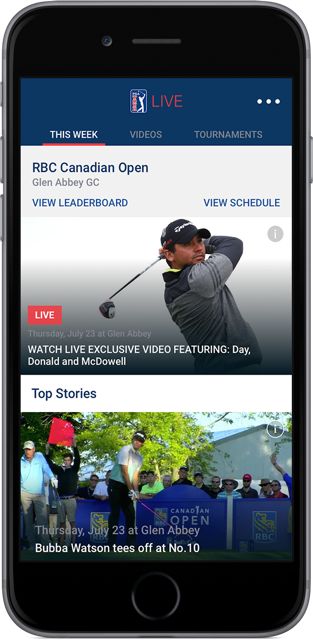
Screen shot of PGA TOUR LIVE service on iPhone. Photo: PGA Tour

Screen shot of PGA TOUR LIVE service on iPhone. Photo: PGA Tour

The PGA’s over-the-top live action service for Thursday and Friday rounds debuts this week during the Quicken Loans National event, with a seven-day free trial before the $4.99 per month charge applies.

Announced earlier this year, the service produced by Major League Baseball’s Advanced Media (MLBAM) operations will be initially available for any desktop devices at PGATOURLIVE.com, but only for Apple iPhones and iPads on the mobile front. According to the PGA Tour the service will be available through Android and other platforms “at a later date.”

Here’s the official skinny on who you’ll be able to watch live (yes of course tournament “host” Tiger Woods will be part of the coverage) as part of the service’s “marquee group” format, which basically follows selected groups of players over their entire round. For those who can’t get enough golf it will be an interesting “second screen” to the Golf Channel cable coverage of Thursday and Friday rounds.

PGA TOUR LIVE debuts Thursday at 7:30 a.m. ET and will provide exclusive shot-by-shot coverage of the following groups on Thursday: 8:10 a.m., THE PLAYERS champion Rickie Fowler paired with Ben Crane and James Hahn; 8:21 a.m., former Quicken Loans National champion and The Presidents Cup 2015 International Team vice-captain K.J. Choi from host country South Korea with International Team hopefuls Danny Lee of New Zealand and John Senden of Australia.

Friday’s 8:10 a.m. feature group includes three former Quicken Loans National champions: tournament host Tiger Woods, Bill Haas and Nick Watney. At 8:21 a.m., defending Quicken Loans National champion Justin Rose tees off with Jimmy Walker, No. 3 in the FedExCup points standings with two wins this season, and David Lingmerth of Sweden, who won his first PGA TOUR title last month at the Memorial Tournament presented by Nationwide Insurance.

Following the conclusion of the featured groups on Thursday and Friday, PGA TOUR LIVE will shift its live broadcast coverage to the Featured Holes at the Robert Trent Jones Golf Club – a pair of par-3s, the 11th and 16th. Overall, PGA TOUR LIVE will deliver access to more than 11 hours of live coverage to fans each day.

For the remainder of the season, PGA TOUR LIVE will be available during the following tournaments: next week’s World Golf Championships-Bridgestone Invitational (Aug. 6-7), the Wyndham Championship (Aug. 20-21), and then the FedExCup Playoff events: The Barclays (Aug. 27-28), Deutsche Bank Championship (Sept. 4-5, which actually is Friday-Saturday with a Monday finish), BMW Championship (Sept. 17-18) and the TOUR Championship by Coca-Cola (Sept. 24-25). According to the PGA, the $4.99 charge is good for 30 days whenever it is purchased, so time your buy accordingly.