Dear Cell Companies: Event Upgrades Aren’t News. They Tell Us Your Network Stinks.

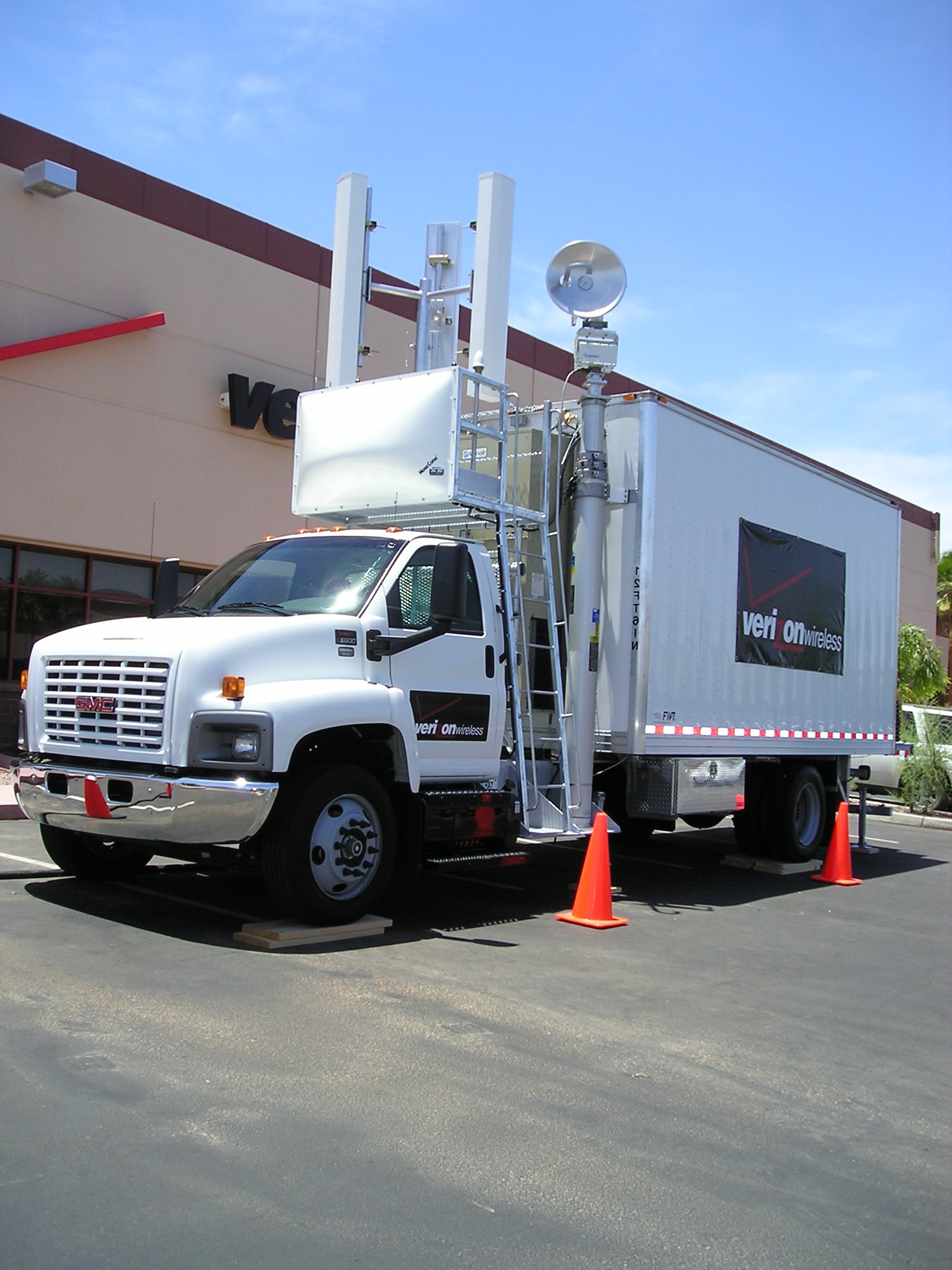
Portable cellular tower on light truck -- aka a "COLT." Credit: Verizon Wireless

Are you getting as tired of this as we are? Every time there is a big sporting event now, the major wireless carriers in the U.S. are racing each other to put out press releases saying how the companies are rushing extra gear to the event stadium and surrounding area, all to ensure good performance of their customers’ devices. We hear tales of new antennas, new infrastructure equipment and the now-ubiquitous COWs, aka cell trucks on wheels. Is this news?

No. What it means is that the wireless networks stink, and the companies are trying to make a positive out of what is really years of neglect and shortsightedness in network design and deployment. This week’s offender is Verizon Wireless, which wants you to know that among other things it has “installed powerful base station equipment for both the 4G LTE and 3G networks inside the arena” for the upcoming NBA All-Star Game in Orlando, and “recently completed high-tech in-building systems at various hotels and other facilities in the Orlando area.”

Wow, “high-tech” systems! What will they think of next?

And for the Daytona 500, an event that has roughly been going on since cars were invented, Verizon needs to truck in a couple COWs (“each featuring a 75-foot telescoping antenna and advanced hardware for both 4G LTE and 3G voice and high-speed data channels”) because apparently the existing network in the greater Daytona area will fall to its knees when the hundreds of thousands of “race fans” gather there later this week for the NASCAR season opener.

Leaving aside the offensive tone of the press releases, which assume a level of ignorance on the customer/press part (what exactly is a “high-tech” system, and how does that differ from the old stuff? Was that all coal-fired?), the bottom line is that Verizon and other carriers who put these press releases out are glossing over the fact that their standard cellular system deployment is way behind the times, especially in areas surrounding big sporting arenas. Even though the iPhone revolution has been going on now for almost 5 years, it seems as though carriers are still being caught by surprise by fans showing up at games wanting to use those whizzy phones that Verizon, AT&T and Sprint are selling them.

Get over it. Get out there and rebuild those networks, and make the necessary extra improvements around stadiums. You’re certainly charging folks enough to be do so, since your execs are all pulling down Prince Fielder paychecks. So spare us the “news” about having to compensate for bad network design and deployment. And get more of that “high-tech” stuff out there.

Verizon Used Cisco Gear for Super Bowl Wi-Fi Network

Cisco Sports and Entertainment Solutions Group SVP and GM David Holland

Nobody’s talking yet about how much traffic it carried, but from a recent Cisco blog post we learned that Verizon’s Wi-Fi network used inside Lucas Oil Stadium for Super Bowl XLVI was a Cisco Connected Stadium deployment.

David Holland, the Sports and Entertainment Solutions Group SVP and GM at Cisco, revealed the partnership Tuesday in a company blog post where he claimed that the Super Bowl was the first time fans had used an in-stadium Wi-Fi network for the big game. Cisco representatives, however, declined to say just how well that network was used during the Giants’ win over the Patriots. If Verizon ever credited Cisco for being the gear behind the Wi-Fi network at the stadium, we haven’t seen it.

Verizon has also remained mum on just how much traffic traversed its in-stadium Wi-Fi network for the big game. In its follow-on press release Verizon did note that its own customers used “2.75 times more data than last year’s Super Bowl in Dallas and 4.5 times more data than a regular-season game at the stadium,” but without hard numbers it’s hard for us to judge how big a deal that really was.

Verizon did note that other cellular customers, and not just Verizon customers, were able to use the in-stadium Wi-Fi network during the game. And neither Sprint nor T-Mobile has yet to reveal any discrete traffic numbers from the game, unlike AT&T which provided a very detailed description of the cellular traffic its customers generated.

So the question of “how much wireless data did Super Bowl fans really use” remains unanswered. But as Holland said in his blog, it’s a practice that will quickly go from being unique to mainstream:

Most importantly it shows that this is headed mainstream, and a tipping point has been reached. Just as people walk into an airport today and expect to be connected to a Wi-Fi network, so fans in stadiums around the world are beginning to look for and demand the same thing.

LTE iPads, More Mobile Data: Who’s Going to Pay for All This?

Two stories in the news today — the potential of LTE-enabled iPads and new projections for mobile data growth — seemed to me to be closely related and both lacking a final explanation: Who’s gonna pay for all the new toys and bandwidth?

As sports fans know, the Apple iPad and its imitators are great devices for watching sports on the go. The screen is big enough to approximate a TV experience, and the device is light enough to not be a bother. And the 4G LTE networks from Verizon Wireless, AT&T and soon from Sprint will make mobile video better thanks to faster download speeds and overall better behind-the-scenes technology.

But my question again — who’s going to pay for all this? At what point do we decide we’ve got enough devices, and that we’re not going to pay premiums just to get content whenever we want it? Are the devices and services so alluring that consumers will simply find a way to budget for them, or are they giving other things up from their disposable income buckets? Or will we see a backlash soon?

For all the heat the two stories have generated in the tech news world, my guess is that both are slightly overrated. Since LTE data contracts still remain fairly expensive — right now Verizon is charging $80 a month for 10 GB of data, its highest plan for tablets — I think folks might buy an LTE-enabled iPad for the convenience but will probably go for the lower-priced plans and use Wi-Fi whenever they can, especially when watching things like sports. Some smart guy already reported that Verizon’s 4G LTE phones aren’t big sellers because there isn’t anything compelling enough to make people pay a premium for the service. I think the LTE iPads will follow a similar lukewarm adoption curve.

On the mobile-data projections there are already some signs that Cisco’s predictions have shot past reality; AT&T, for example, said that its most recent figures showed data use growing more slowly than previously predicted. With cellular services prices expected to remain constant or rise even higher, my guess is that people may want to consume mobile data at the rate Cisco predicts but budgetary pressure will keep it from happening until lower-cost Wi-Fi networks reach out to more places than coffee shops and airport waiting lounges.

What will be really interesting to see is what happens if the LTE iPads fly off the shelves and crowd the networks, bringing back the original iPhone network jams. Think that won’t happen? Want to bet on it?

Are Carrier-Exclusive Sports Deals Good for Fans?

If you have a Verizon Wireless phone and are a hockey fan, good news today — Verizon extended its deal with the NHL and NBC Sports to add live streaming capabilities to its NHL GameCenter Premium app, presumably meaning that you might be able to watch those fisticuffs in real time on your handset.

CORRECTION: Thanks to a friendly note from the folks at the NHL, hockey fans are not tied to one provider for the NHL’s GameCenter Live app, which provides live out-of-market coverage (for $79 for the rest of this season) to a number of different platforms, including Andriod phones, iPhones and iPads. The new Verizon deal with the NHL provides “bonus” coverage not offered in the regular GameCenter program. But fans with other carriers’ devices can still watch live NHL video. We apologize for the reporting error, and have edited the original post to eliminate confusion.

Even though fans can still watch NHL games live using any provider’s device, my greater worry is whether these deals in general are at all good for fans, or if they are short-sighted pacts made by leagues and broadcasters who are choosing some easy-picking rights fees over what’s best for their fan base at large. Though the NHL deal sounds more like a bonus for a Verizon subscriber, other pacts like Verizon’s NFL Mobile deal and Sprint’s NBA pact seem to put the deal before the concern of the fan.

Is that a good long-term strategy for any league? I mean, I understand all about rights deals — and why you have to switch from Fox to ABC to ESPN to NBC to watch different events at different times. But usually you can watch all those on the same TV. On a mobile device it’s different because for most of us the device is tied to the network via a subsidized contract. And few of us can afford another cell phone plan just to watch a certain sport.

The NHL, perhaps, should be praised for moving to a “carrier agnostic” plan this year for its GameCenter app. Let’s hope that practice catches on with other sports. Maybe the deals could simply result in a price discount for customers of a certain carrier; but exclusion of content by contract seems a slippery slope.

Friday Grab Bag: Microsoft talks Windows 8 Tablet

The top Windows exec at Microsoft, Steve Sinofsky, has published a huge blog entry that details Microsoft’s plans for Windows 8 on low-powered platforms driven by processors built around the ARM processor technology.

Since that is the primary chip technology driving most tablets, this blog entry shows how the company sees the space and what it believes it can bring to the market that its rivals cannot, or are not doing well.

A few of the key talking points are that versions of Windows for ARM platforms will carry a Windows for ARM branding; there will be a special version of Office for this platform and there will be a major effort to have the hardware and software tightly integrated, much like Apple does with the various iOS products.

Phoenix Suns latest to grab tablets as in-game tool
If you happen to watch closely the next time you are viewing a Phoenix Suns game expect to see branded products from Samsung and Verizon Wireless on the sidelines in place of the old school chalkboards.

The team has signed a deal that will provide the players, scouts and coaches with Samsung Galaxy 10.1 Tab tablets and Verizon 4G wireless service. The team plans to use them for a winde variety of tasks including in-game play calling by head coach Alvin Gentry.

While the NFL and Major League Baseball have been very aggressive in developing and deploying tablets as part of a training regime the NBA has lagged behind. This is probably going to be watched very closely and probably imitated by a number of other teams in the off season.

Asus admits bug in Transformer Prime
Asus has released a firmware update that will fix the random boot problem that has plagued some but not all owners of its Eee Pad Transformer Prime Tablets. The move comes after a flow of negative comments on line and at least one retailer, UK’s Clove to cease selling the product.

The tablet has had several flaws since it was debuted last year including simple lack of product available and a GPS accuracy issue. In the past the company has denied that there was a reboot issue but has now finally admitted it.

Patent Wars
Apple continues to battle and seems to be losing ground at a slow and steady rate. Its latest setback was a German court ruling that Samsung Galaxy Tab 10.1, called the Galaxy Tab10.1N in the German market does not appear to be a copycat version of the iPad.

Apple had won an initial ruling preventing Samsung from selling n the German market last September and the 10.1N is a work around that has been found acceptable by the court, reopening the market to the Apple rival.

Apple has been particularly aggressive pursuing Samsung in both the iPad but also iPhone space claiming that it carefully copied its devices. So far its success has been lackluster in courts but that does not seem to have changed Apple’s determined drive in the patent space.

Google’s bid for Motorola Mobility likely to be approved next week
Multiple sources are reporting that the $12.5 billion purchase of Motorola Mobility by Google will get antitrust approval from the United States Justice Department sometime next week. Among other assets that Google will acquire is a patent portfolio that is 17,000 strong in the mobile phone area.

This patent portfolio is likely to be used for both offensive and defensive purposes by the company. It is aggressively seeking huge payments from Apple over all iPhone and other iOS devices, but will likely also be used to simply be leverage in cross patent licensing agreements.

At the same time the Justice Department is likely to approve of the purchase of Nortel by a consortium of Apple, Microsoft Sony, Research in Motion, EMC, and Ericsson AB. This deal will include 6,000 wireless patents.

Super Bowl Online: 2.1 Million Uniques, Lots of Room for Improvement

The stats are in and as expected, the live Internet streaming of Sunday’s Super Bowl game was by far the biggest online audience ever for a sporting event with 2.1 million unique viewers, according to a press release from the NFL.

Broadcast both on the NBC Sports website as well as to smartphones via Verizon Wireless’s NFL Mobile app, the online showing of Super Bowl XLVI racked up some impressive numbers, according to the NFL:

Online Traffic Data
Unique Users – 2,105,441 (live stream online)
Live Video Streams – 4,589,593 (live stream online)
Total Minutes Streamed – 78,624,422
On-Demand Clips – 1,838,812 VOD clips viewed
User-Generated Camera Switches – 1,835,676
Engagement – More than 39 minutes per visit.

Verizon Wireless also confirmed that the Super Bowl was the “most viewed” game on the NFL Mobile platform all season (what a surprise!) but the company’s weak press release didn’t reveal any actual numbers. We’ve asked Verizon PR for more info but have not gotten a reply as of yet.

We also find it hard to agree with the canned quotes in the NFL’s release from Kevin Monaghan, senior vice president, business development & managing director digital media, NBC Sports Group, who claimed the online show lived up to fans’ expectations. This fan for one didn’t like the fact that the online show was 3 to 4 plays behind the TV show, making it nearly impossible to use as a “second screen” device since it was so far behind what was happening in front of you. Monaghan had a different view, according to his quotes in the press release:

“Increasingly, sports fans are looking to digital coverage as a complementary ‘second screen’ experience, and we delivered on that promise with unprecedented robust coverage. The record traffic that grew throughout the event, as well as the record high engagement numbers, underscores the complementary aspect of digital as an enhancement to our exceptional television coverage.”

With no way to question Monaghan (we tried tweeting @NBCSportsPR asking why the broadcasts were so far apart but got no reply) we’ll just have to stomp our digital feet a little bit louder to hope for a closer sync in the future. And others around the web didn’t think too much of the limited screen choices and sometimes skippy transition process — and the fact that getting Silverlight installed on a Chrome browser for a Mac was a chore (we got it done on the laptop Sunday but it took two tries because the download screen hung the first time).

But all in all those are some small problems to what will likely be viewed as a watershed moment in sports broadcast history, when we all switched from thinking, “Wow, cool, it’s online — I never expected that!” to something more like “how many different online options to watch do I have?” Especially since Sunday’s TV broadcast was the latest Super Bowl to win the “most watched program ever” award with 111.3 million viewers, it’s obvious that having an online choice — even one that attracts 2.1 million viewers — doesn’t detract from the live TV audience.

For all other promoters the question now becomes: What are you going to do to get your event online, and to make it more competent than the Super Bowl? Getting the broadcast at least close to the same time as live TV would be a start.