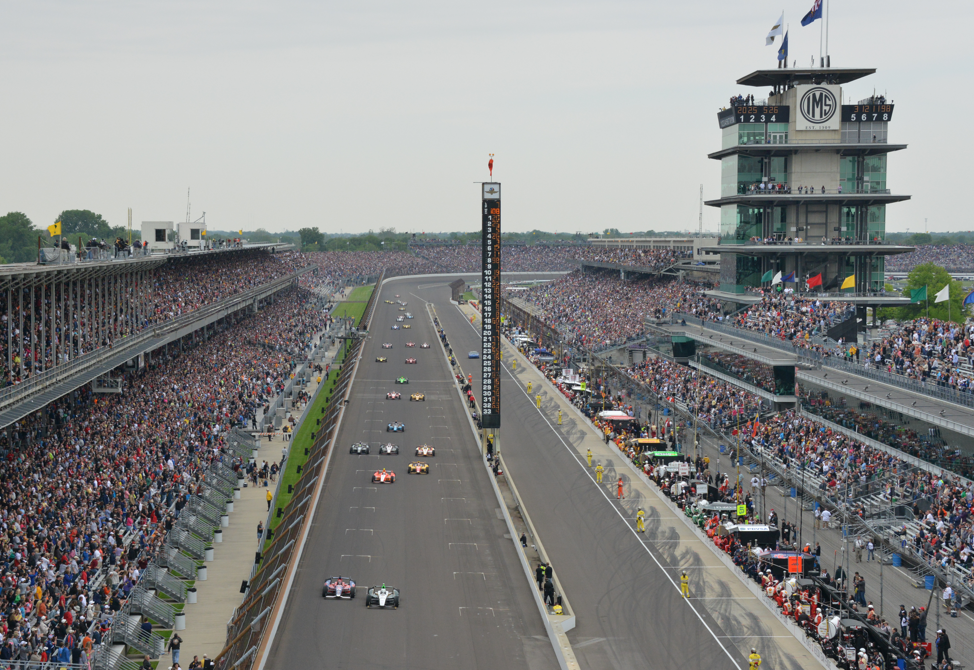
Indianapolis Speedway adds Verizon DAS

Indianapolis Motor Speedway, home of the Indy 500. Credit all photos: IMS Photo.

Indianapolis Motor Speedway, home of the Indy 500. Credit all photos: IMS Photo.

It’s still a work in progress, but Verizon Wireless customers who attend this year’s Indianapolis 500 race should see improved cellular communications, thanks to a DAS buildout currently underway.

According to Rhonda Winter, CIO for the Indianapolis Motor Speedway, Verizon was recently selected to build a neutral-host DAS which will add more than 200 internal and external antennas to the speedway’s main stands and buildings. While other carriers are slated to join the DAS in the future, only Verizon will be on the infrastructure this year. According to Verizon, it will also have two COLTs (cell on light trucks) mobile units at this year’s race, to improve coverage in far-flung areas like the fields of parking that are necessary to host the 250,000 fans who may show up to watch the May 25 event.
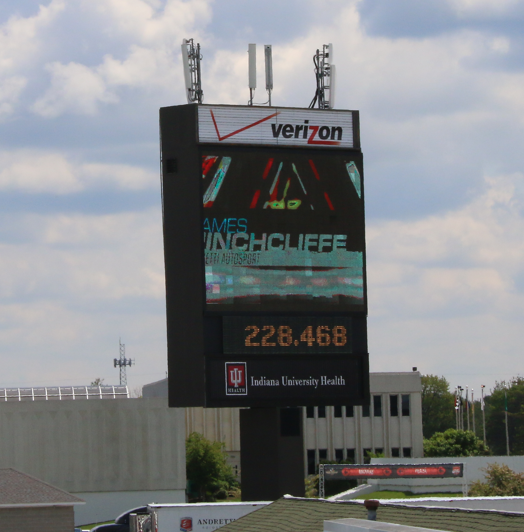
Verizon antennas atop Indianapolis Motor Speedway scoreboard.

Verizon antennas atop Indianapolis Motor Speedway scoreboard.

Winter, who responded to questions via email, said Verizon offered “the best solution” when it came to picking a DAS host. The spread-out nature of the huge, 2.5-mile track makes Indy a fairly unique situation when it comes to wireless coverage. Added to the spacing requirements, Winter also noted that the track’s network sees a huge and sudden surge when fans arrive for race day. Among some of the experiments Winter and her staff are trying are some selected uses of public Wi-Fi, this year at special pre-race concert events and also in the VIP areas.

“Coverage and capacity on our busy race days continues to be a challenge that we are working to improve,” Winter wrote.

With the added capacity, Verizon customers should have no problems accessing the Verizon IndyCar Series INDYCAR 14 mobile app, which for Verizon customers only offers live features that include driver and pit crew audio, race radio broadcast coverage, as well as a track map. Winter said there is also an Indianapolis Motor Speedway app called Brickyard Mobile, which is the digital version of the track’s guest guide.
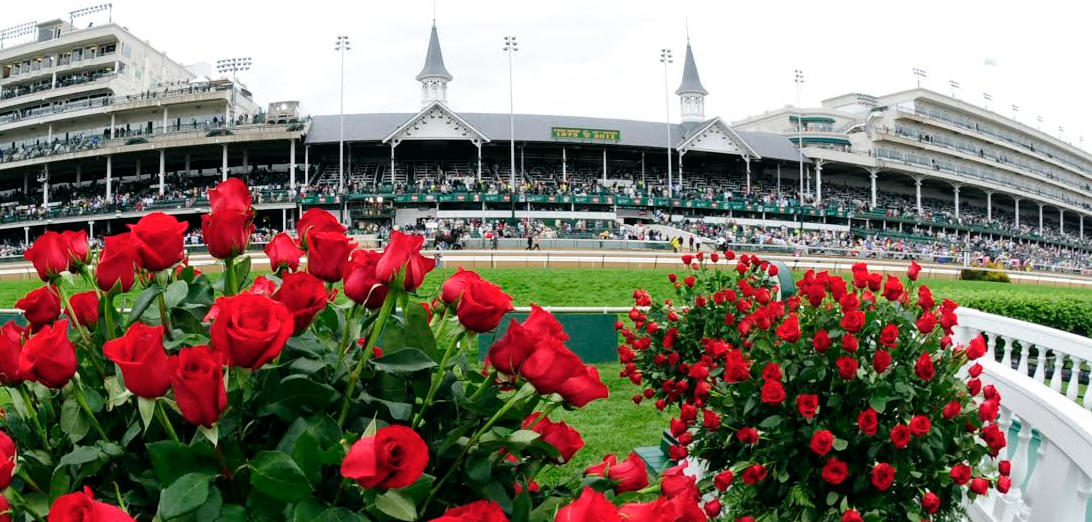

Stadium Tech Report: Churchill Downs picks a winner with Mobilitie DAS

The iconic twin spires of Churchill Downs, home of the Kentucky Derby. Credit all photos: Churchill Downs

The iconic twin spires of Churchill Downs, home of the Kentucky Derby. Credit all photos: Churchill Downs

Move over, Super Bowls — there’s a new wireless-traffic event king on the U.S. sports landscape, and it’s one that’s been around longer than anything else. Thanks to a new distributed antenna system installed this year at historic Churchill Downs, fans at the recent Kentucky Derby were able to set single-event wireless traffic records, at a place where not too long ago getting a decent signal on your phone was a longshot at best.

According to Churchill Downs Racetrack general manager Ryan Jordan, up until last year cellular connectivity was a pain point at the historic facility, which opened in Louisville, Ky., in 1875. Though recently cellular providers tried to address the smartphone crunch by bringing in technology like COWs (cellular towers on wheels), the spread-out nature of the track and its architectural challenges made the COWs an unsatisfactory solution.

“The temporary COWs really couldn’t handle the traffic,” said Jordan in a recent phone interview. In post-race surveys, he said, the track heard complaints about connectivity, as did the cellular carriers.

“We heard it [the complaints] and the carriers heard it,” Jordan said. “But we never had a solution to handle the problem.”

In 2013, however, Churchill Downs enlisted infrastructure provider Mobilitie to deploy a neutral-host DAS to bring better cellular connectivity to the entire facility. While the deal was struck too close to last year’s race to allow for a full buildout, by this year’s 140th running of the “Run for the Roses,” a full-scale, 253-antenna DAS was in place to produce some winning results. According to AT&T, the Churchill Downs DAS carried event-record traffic over the Kentucky Derby and Kentucky Oaks weekend, with a total of 2 Terabytes of overall traffic and a peak hour of 180 Gigabytes of traffic, in the 60 minutes just before the Derby race on May 3.

Ryan Jordan, general manager, Churchill Downs

Ryan Jordan, general manager, Churchill Downs

By comparison, during the most recent Super Bowl at MetLife Stadium in New Jersey, AT&T saw a peak hour of 119 GB of traffic before kickoff, and 624 GB of total traffic on game day. Of course, some of the specifics of the Kentucky Derby make the big numbers easier to understand, including the 160,000 fans on race day as well as the full day of attendance, which featured less than a half-hour total of actual horses running fast. It’s important to note that the Derby figures are for AT&T traffic only, and do not include any potential traffic from Verizon Wireless customers, whose carrier also used the Mobilitie DAS to improve reception at the track.

“Derby Day is 13 races, each about 2 minutes long,” Jordan said. “When you figure out that the gates open at 8 a.m. and the Derby doesn’t start until 6:30 p.m., that’s almost 12 hours [of fans in attendance] and only 26 minutes of action.”

In other words, there’s a lot of time for selfies and other Internet activity.

Bucket list pictures, and race handicapping

Like the Super Bowl and other big sports events, the Kentucky Derby is a “bucket list” type of happening, one made even more receptive thanks to the see-and-be-seen nature of the event.

“People spend a lot of time taking in the things that make [the Derby] special, like hats, fashions, and the singing of ‘My Old Kentucky Home,’ ” Jordan said. “It’s the kind of event where people take pictures and send them to their friends to show them what they’re missing.”

Jordan said that in addition to social media activities, many fans at the track used the new DAS connectivity to try to improve their betting odds, using the Internet to help them handicap the races. (Churchill Downs also has a small amount of public Wi-Fi available only in the main building, used mainly to support an on-site mobile betting application.)

In previous years, fans at the event might not have been able to perform all those wireless functions. If the decision to upgrade the communications was an easy one, the decision to go with a “neutral” third party partner like Mobilitie came from a desire to serve all wireless customers equally. Though wireless carriers like AT&T and Verizon can and do act as lead contractors for many DAS deployments, the negotiations to get each carrier what it wants in terms of antenna deployments and other technology needs can get complex in a hurry.

“We know how to put on a great event,” said Jordan of the Derby’s owners and operators. For communications, Jordan said, the track sought out a firm with an equal amount of smarts and reputation in their field.

“We wanted to find someone who was an expert in the conversations [with carriers],” Jordan said, “and to make sure our system could cover as many of our fans as possible.”

Old buildings a challenge for new technology

Among the challenges encountered by Mobilitie at Churchill Downs were some structures dating back to the 1890s, including the iconic twin spires structure, which Jordan said dates back to 1895.

“Some areas have a lot of concrete and steel, and then there are seating areas open to the outside with enclosed dining rooms behind them,” Jordan said. “There were a lot of things for Mobilitie to design around, and it wasn’t easy for them. But walking around the facility, you don’t see a lot of large antennas. Everything is pretty discreet. We’re very pleased with Mobilitie. It was a great win for us.”

AT&T sees massive traffic on new Kentucky Derby DAS deployment from Mobilitie

Churchill DownsWe’ve got a more in-depth review of the wireless experience at the Kentucky Derby on the way, but we did want to share with our readers the somewhat amazing stats from the AT&T wireless network over the weekend of racing at Churchill Downs. With a new DAS from Mobilitie in place, AT&T said it saw a total of 2 Terabytes of traffic over the weekend and a stunning total of 180 Gigabytes of traffic during the peak hour of 5-6 p.m. EDT, just before the 140th Kentucky Derby race went off on May 3.

According to a press release, that peak hour of wireless traffic was the most ever for AT&T at any in-venue event, including the various Super Bowls. What’s even more impressive is that the new DAS also hosted traffic from Verizon Wireless, which did not provide any statistics from the event; however, it’s a good guess that Verizon customers among the 260,000 attendees during race weekend were doing the same things AT&T customers were, taking pictures and sending messages from one of the pure “bucket list” events in sports.

Like we said, more details on the network deployment and challenges at Churchill Downs, in our next Stadium Tech Report. Stay tuned!

Stadium Tech Report: Utah Jazz, Boingo Wireless bring DAS to Energy Solutions Arena

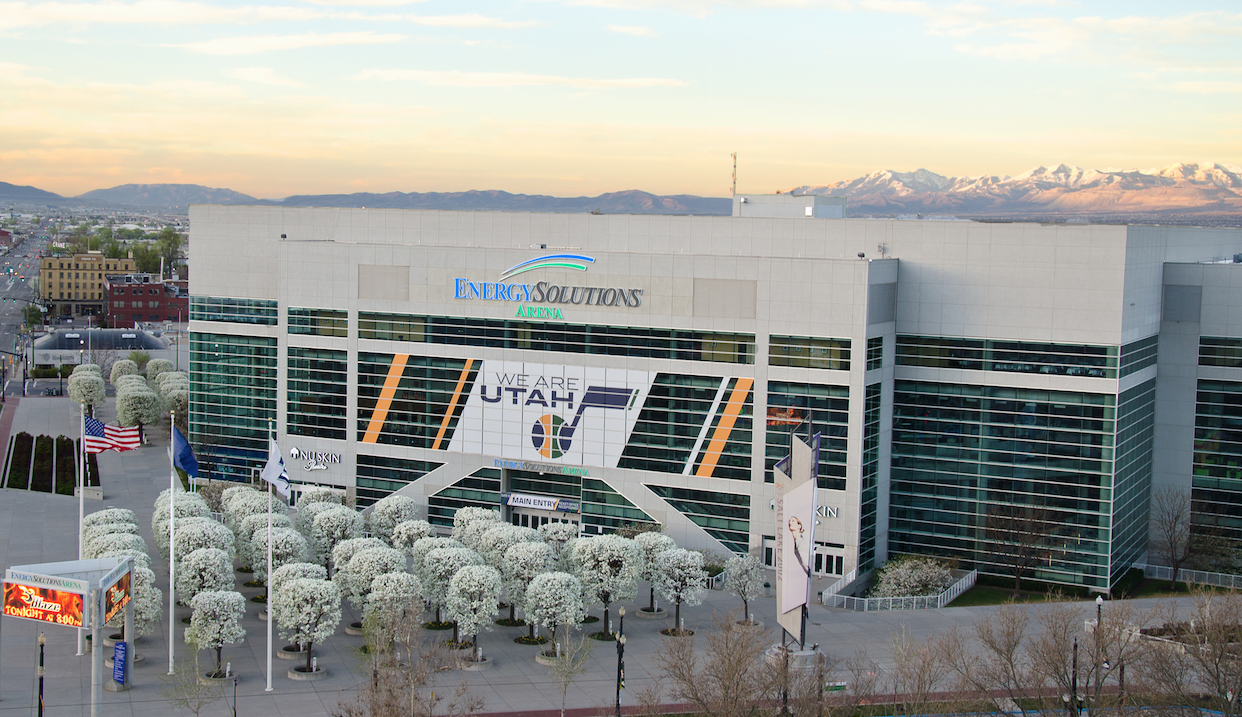
Energy Solutions Arena. Credit, all photos: Utah Jazz

Energy Solutions Arena. Credit, all photos: Utah Jazz

With a big new video board added this year, the Energy Solutions Arena had taken a signficant step toward improving the experience for fans at Utah Jazz basketball games. But when those fans went to look at the small screens in their hands, they often experienced frustration.

“It’s really important to our fans to be able to text or post something to Facebook,” said Jamie Galileo, vice president for facilities at the Energy Solutions Arena in Salt Lake City, Utah. But without Wi-Fi or a modern distributed antenna system (DAS) in the building, sometimes fans were left disconnected.

“Even our employees were able to watch the [cellular] service degrade quite sharply during games,” Galileo said. Next year, that shouldn’t be a problem thanks to the new neutral-host DAS currently being installed at Energy Solutions Arena by Boingo Wireless. With the ability to support all major carriers and their new 4G LTE technology, the new DAS should significantly improve connectivity at Jazz games and other events inside the 19,911-seat arena.

DAS first, Wi-Fi maybe later

Opened in 1991 (known then as the Delta Center), the Jazz’s home is one of the few NBA arenas without advanced wireless connectivity. One of only six NBA arenas without fan-facing Wi-Fi, Energy Solutions Arena is still studying Wi-Fi deployment, Galileo said.

Jamie Galileo

Jamie Galileo

Wi-Fi is still “something to look at,” Galileo said. “We want to first get past [installing] the DAS, and see what that does for the fan base.”

Through this past NBA season, fans at the arena had limited enhanced connectivity. According to Galileo, the building only had small DAS-style infrastructures for Verizon Wireless and T-Mobile customers, and an older system for AT&T customers that was installed prior to the 2002 Winter Olympics, when the arena was used for figure skating and short-track speed skating competition.

“There was some legacy DAS equipment [in the building],” Galileo said. “But you wouldn’t consider it a DAS by today’s technology.”

Neutral host was key

After what Galileo called an extensive RFP and review, Boingo Wireless was chosen for the DAS deployment, which is scheduled to be ready for the start of the next NBA season, beginning in the fall. According to Galileo, Boingo’s ability to be a neutral host was extremely attractive to Energy Solutions Arena.

“Neutral was the key word,” Galileo said. “We did not want to have every carrier have its own antennas. One set of antennas is much easier to blend in.”

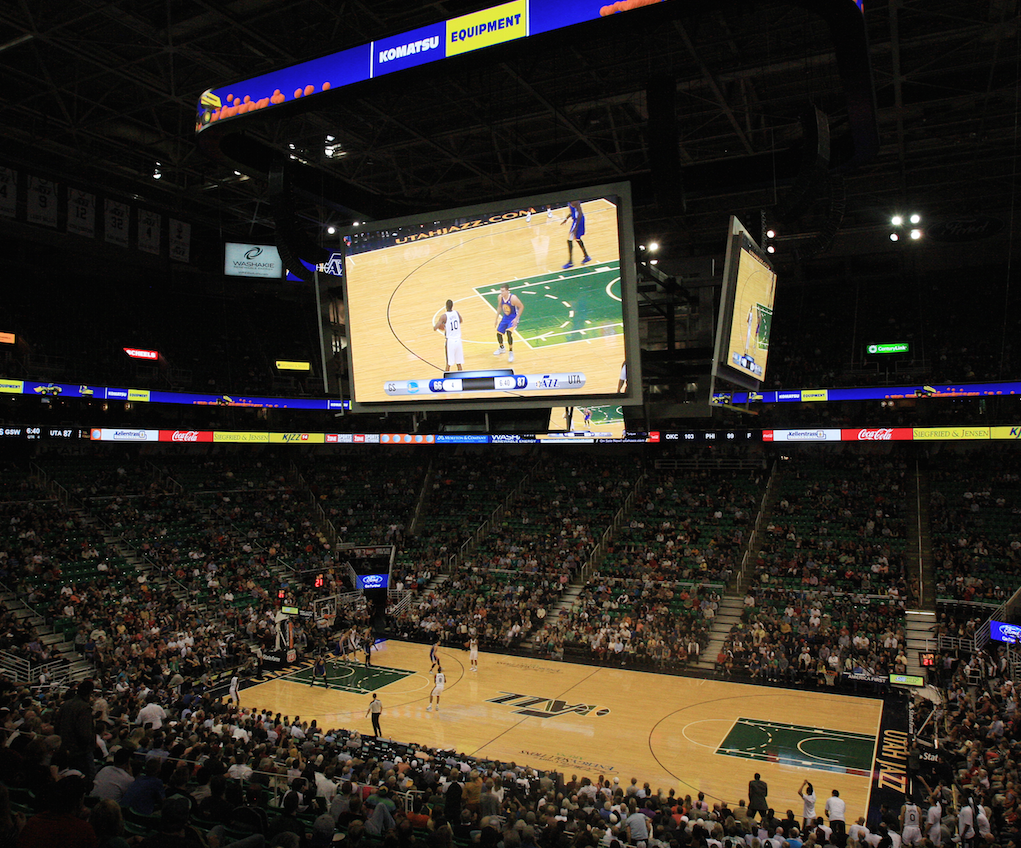
Inside shot of Energy Solutions Arena, with big new video board

Inside shot of Energy Solutions Arena, with big new video board

Doug Lodder, vice president of business development at Boingo Wireless, said Energy Solutions Arena has good cabling runs, which should make deployment of the DAS a fairly straightforward task.

“The bowl is always challenging,” said Lodder, who added that Energy Solutions Arena’s somewhat vertical shape of its main seating area might mean a little extra deployment work for Boingo engineers. And while no major carriers have yet signed deals to be on the DAS, Lodder is confident that most will want to have a presence in the building and will sign on before the Jazz start playing again.

“The demand is very high to be in a tier 1 NBA building,” Lodder said.

Galileo said that the arena has plenty of room for the DAS head end equipment, a space requirement that is sometimes challenging for older structures.

“We are on 3.5 acres of a 10-acre site,” Galileo said, “so we have some auxiliary areas. We won’t have to build out additional [head end] space.”

Between Jazz games and other events, Galileo said that Energy Solutions Arena typically has guests in the building 100 times a year. It is also a regular host to NCAA basketball tournaments, and Galileo said the new connectivity should help with future bids.

“It doesn’t hurt to have a DAS,” he said.

Boingo adds University of Houston to growing stadium Wi-Fi and DAS customer list

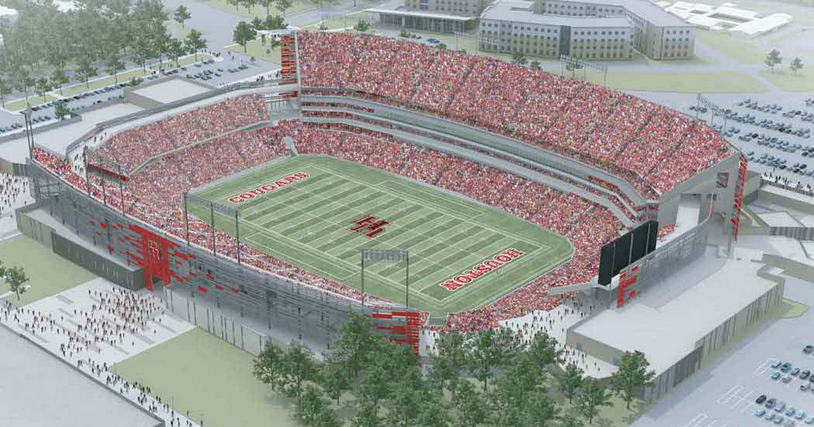
University of Houston stadium rendering. Credit: University of Houston

University of Houston stadium rendering. Credit: University of Houston

Boingo Wireless, once known best for its Wi-Fi deployments in airports, is rapidly building up a big resume of stadium customers for Wi-Fi and DAS installations. The latest in a string of recent announcements is a Wi-Fi and DAS deployment deal for the new University of Houston football stadium, a 40,000-seat facility scheduled to open for the 2014 college season.

We’re working on setting up a call with the Houston folks to learn more about their deployment plans but in the meantime you can peruse the Boingo press release as well as the website about the new stadium, which has been under construction for a few years. Like the deployment underway at the Air Force Academy, Boingo’s wireless plans for Houston include a neutral third-party DAS installation as well as Wi-Fi for fans at the stadium as well as for internal stadium operations.

“A world-class facility like the Houston Football Stadium requires a state-of-the-art wireless network on par with major league venues,” said Mack Rhoades, Vice President for Intercollegiate Athletics at the University of Houston, in a prepared statement complete with a bad sports/Wi-Fi metaphor that publicity people just can’t resist. “Boingo brings experience in managing networks for professional and university stadiums and arenas nationwide, and they’ll provide a comprehensive wireless solution that’ll keep Cougars’ alumni, fans and staff connected from kick-off to the final touchdown.”

Like we said, more soon when we speak with the folks from U of H.

Stadium Tech Report: Boingo brings Wi-Fi, DAS to Air Force Academy stadiums

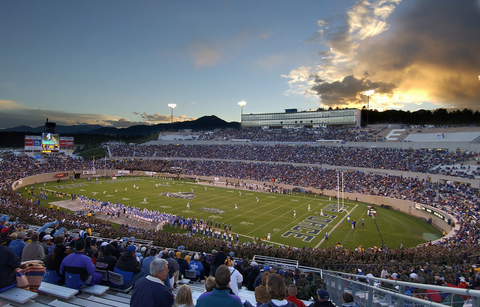
Falcon Stadium, Air Force Academy

Falcon Stadium, Air Force Academy

Perched dramatically in the foothills of the Rocky Mountains, the architectural gem known as Falcon Stadium is a great place to watch Air Force Academy football games. As a place to install a new wireless network, however, it’s not quite a beautiful site.

“It looks beautiful from the highway, but it’s not modern,” said Dermot “Derm” Coll, CEO of the Air Force Academy Athletic Corporation, in a recent phone interview. Though its many of its 46,692 seats offer soaring views across the field and across the plains and foothills just north of Colorado Springs, Coll said the stadium, which was built in 1962, was something of a black hole when it came to cellular or wireless communications.

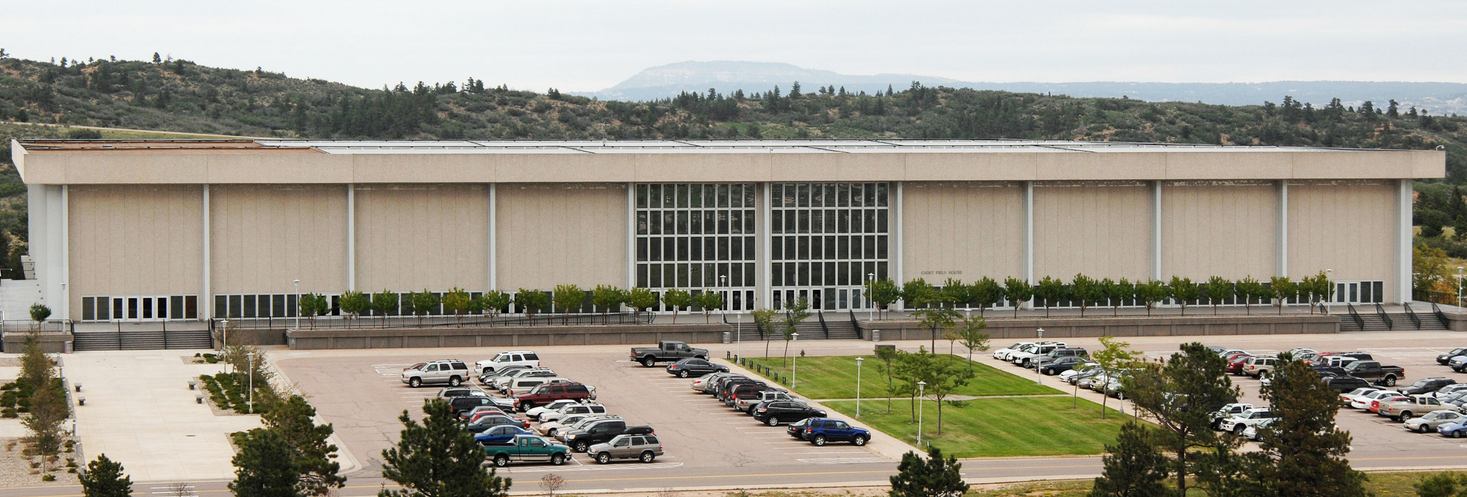
Over the past few years as smartphones have become popular, Coll said fans were frustrated by their inability to make calls or connect to the Internet, and even staffers on site couldn’t communicate wirelessly. “Fans wanted to do what they do at home, so we saw a great need” for better connectivity, Coll said. And thanks to a new deal with Boingo Wireless, fans and cadets and any other visitors to Air Force Academy sports facilities will soon have both high-speed Wi-Fi and cellular DAS connectivity, which should make communications as pleasing as the mile-high views. In addition to Falcon Field, the deal also calls for Wi-Fi and DAS networks inside the AFA’s Cadet Field House, a cavernous 1960s-era building that hosts a basketball arena, a hockey arena and an indoor track.

Historic landmark status a challenge

Coll, who runs the organization that deals with all the business activities for Air Force athletics, said that signing the deal was the easy part of the long-planned installation. What proved tougher was bringing new wireless technology to facilities that were not only built in the ’60s, but also had historical landmark status.

“It was really challenging just to do things like run cable,” said Coll. “We had to be a little bit creative.”

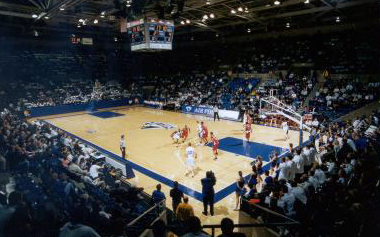
Clune Arena, Air Force Academy

Clune Arena, Air Force Academy

Doug Lodder, vice president of business development at Boingo Wireless, said installers had to hide some Wi-Fi antennas behind specially designed shielding that sported the Air Force Academy lightning-bolt logo, so as to blend in with Falcon Stadium’s distinctive architecture. “There were not a lot of places to hang stuff,” Lodder said.

For the 5,900-seat Clune Arena for basketball and the 2,500-seat Cadet Ice Arena, there were similar challenges. “The Fieldhouse is pretty old and dated, a real Cold War building,” Coll said. “It was not great for tech to prosper there.”

Yet to show how tech-savvy fans have become, Coll said that a small Wi-Fi network installed for internal use was seen by fans who were looking for SSIDs they could connect to.

“We got beat up because people could see the SSID and wanted access to the [internal] Wi-Fi,” Coll said. “So we knew fans had the desire to connect.”

Boingo’s airport rep helps land the deal

When it came to finding a provider for the DAS, Coll said the Academy wanted a neutral third-party host and Boingo fit that bill.

“Boingo gave us a great opportunity without having to go with one carrier over another,” Coll said. Though carrier hosts will often pledge that all their competitors will be welcome to join a carrier-built DAS, Coll didn’t want to have to worry about whether negotiations might keep one provider or another from joining the enhanced cellular network.

“You don’t want to [have to] hope your carrier is on the tower,” Coll said.

Boingo, which provides Wi-Fi service to Denver International Airport, was no stranger to Coll and the Academy.

Cadet Field House, Air Force Academy

Cadet Field House, Air Force Academy

“We knew their reputation, and they brought a lot to the table,” Coll said. The network at the Academy facilities will be free of charge, unlike some other Boingo public Wi-Fi deployments (such as at Chicago’s Soldier Field) where fans are charged a small amount for network access. The network inside Falcon Stadium is scheduled to be live in time for this year’s spring graduation ceremonies; Coll said the Academy is also looking into the possibility of having Boingo provide more wireless services to the rest of the campus, which is widely spread out through the hillsides just north of Colorado Springs.

Though the Academy has a game-day app, according to Coll you couldn’t really do much with it at the stadium because of the connectivity problems. In the near future, Coll said the idea is to bring more live info to the app, including updated stats and video replays.

“In the past you could sit in Falcon Stadium and launch the app, and not much would happen,” Coll said. “Now we’re looking forward to seeing it perform on game day.”