SignalShare assets auction postponed as SignalShare files for bankruptcy

The planned auction of assets and contracts of Wi-Fi provider SignalShare is now on hold, due to a bankruptcy filing by SignalShare in New Jersey, according to auctioneers hired by NFS Leasing, a company that is suing SignalShare for $7.8 million over alleged fraudulent activities.

In an email Thursday, the auction company said NFS was postponing the planned July 14 auction, which sought to find buyers for SignalShare assets, including software source code and Wi-Fi installment contracts for arenas including the Golden State Warriors’ Oracle Arena. Legal representatives for NFS did not comment, and no case information is yet available from the U.S. Bankruptcy Court, District of New Jersey. We will continue to update this post as more information is obtained.
Minnesota Twins’ Target Field: Photo Essay and Wi-Fi tests

Great sight to see when you get off the plane in Minnesota.

Great sight to see when you get off the plane in Minnesota.

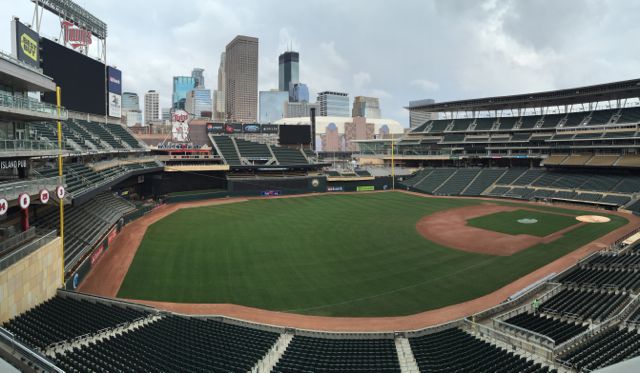
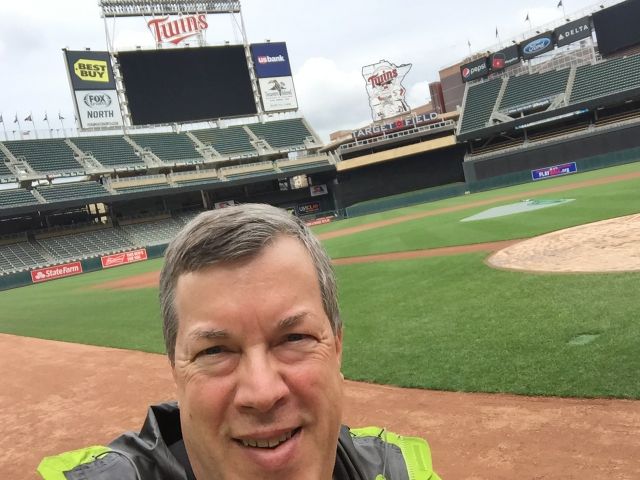
During Mobile Sports Report’s visit to Minneapolis earlier this summer, we had a free afternoon so we took the public tour of the Minnesota Twins’ Target Field, home of the 2014 MLB All Star Game. Though it was a kind of drizzly day we still got a lot of looks (and tests) of the thing we came to see: The park’s new Wi-Fi and DAS networks, which were operational and since it was an empty house, probably running at full capacity for all our tests.

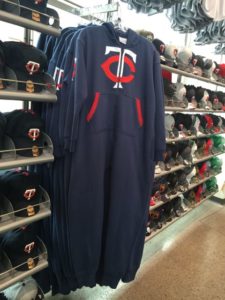
After a short (~30 min.) light rail trip from the airport to downtown, we dumped our bags at the hotel and hoofed it over to Target Field, staying dry by cleverly using the city’s skywalk pathways. Once at the stadium it was just a short wait for the 3 p.m. tour to start, so we cruised the Twins’ gift store where the full-body Twins jammies made us think of cold September nights.

Tech you can and can’t see

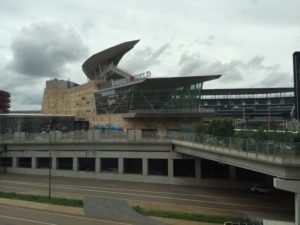
Target Field from a nearby walkway. Notice the freeway running underneath.

Target Field from a nearby walkway. Notice the freeway running underneath.

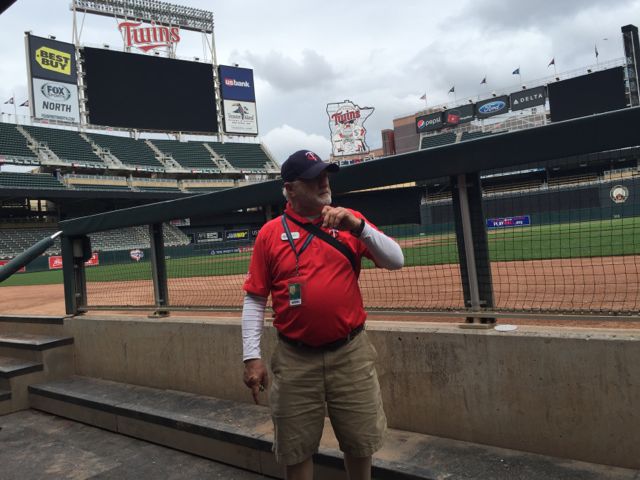
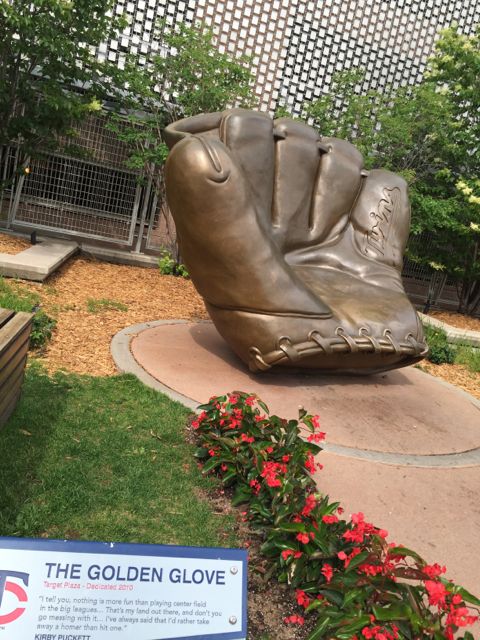
I’d never been on one of these public tours before, but our group of 7 dudes learned a lot of lore from our excellent guide Rick, who had his stats down cold. The big glove outside the stadium, he let us know, is 522 feet from home plate, the longest home run recorded by Twins legend Harmon Killebrew. That home run was hit in 1967 at the old Metropolitan Stadium, where the Mall of America now stands.

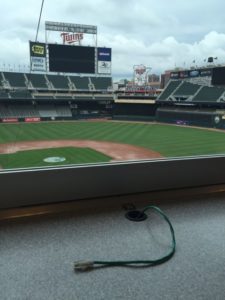
Rick started out our tour by informing us that the $600 million Target Field, which opened in 2010, has a whole lot of technology under the field, pipes that heat the field and carry water away from it; there’s no dirt on the playing field, just sand underneath a very thin covering of grass. Baseball capacity now is 38,868, Rick said, though on opening day the park had 40,000+ there. That’s great stuff, man, but what about the Wi-Fi? Though I couldn’t get a Wi-Fi signal outside the gates, once inside the network was clearly humming: As Rick took us through the press box, where there were Ethernet cords in front of each seat, I wondered how necessary those were with a reading of 59.26 Mbps down and 62.67 up as I sat in a front-row seat.

Twins jammies for those cold Minnesota nights.

Twins jammies for those cold Minnesota nights.

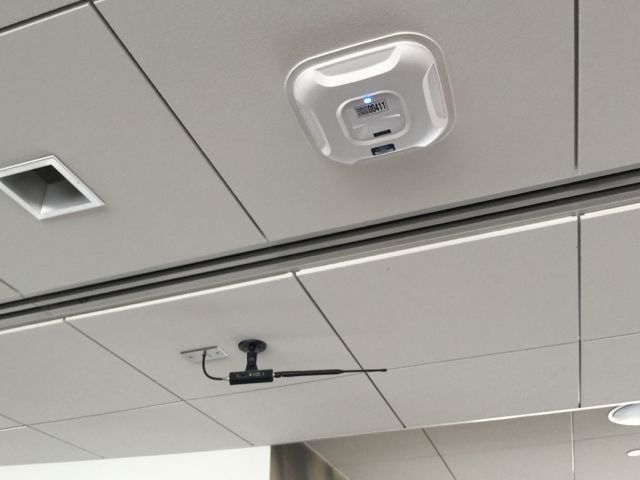
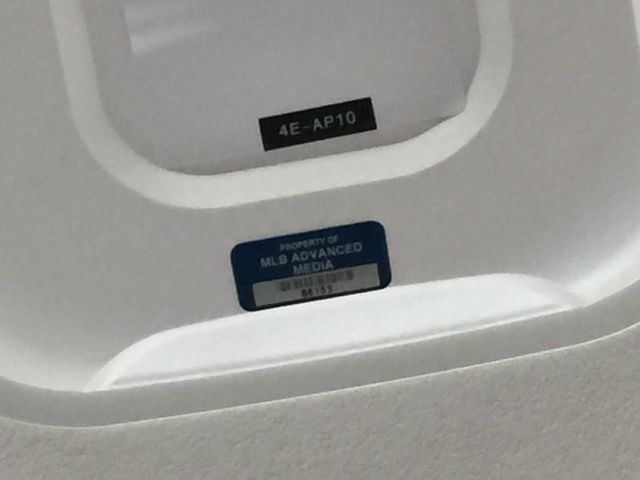
As one the MLBAM-led technology deployment deals (in part to get ready for the All Star Game demands) the Wi-Fi inside Target Field is mainly Cisco gear, at least those that you can see. The familiar white boxes (now with MLBAM ID stickers) are fairly ubiquitous. Since we weren’t able to get ahold of the Twins’ IT crew before our visit I’m not sure what the final AP or DAS antenna count is these days. But if you know where to look, and we do, you can see a lot of antennas around.

Dealing with outside-the-park interference

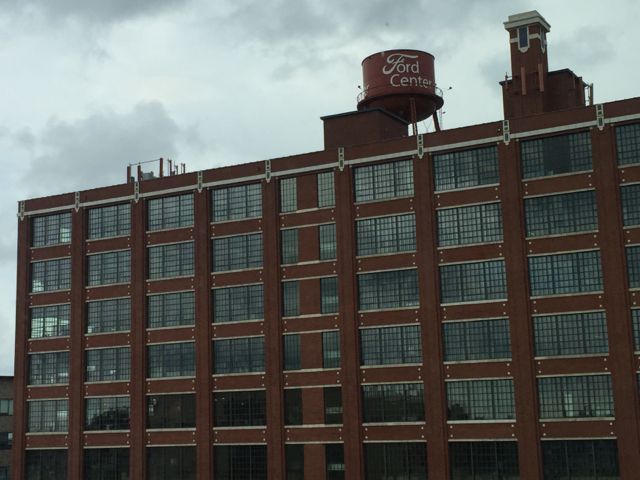
One of the interesting things we learned in our profile of the park prior to the All Star Game was that since the stadium is right downtown, the Twins and the major carriers had to figure out how to keep macro antennas on buildings outside the ballpark from bleeding into the stadium’s DAS. According to another source we spoke with in Minnesota, this year was the first year that Target Field’s DAS didn’t need any more alterations; as you can see by one of pictures here of the Ford Center, which is across the street from the back side of Target Field, there’s a lot of RF on rooftops in the near vicinity.

Inside the press box. Grandpa, what's that cord for?

Inside the press box. Grandpa, what’s that cord for?

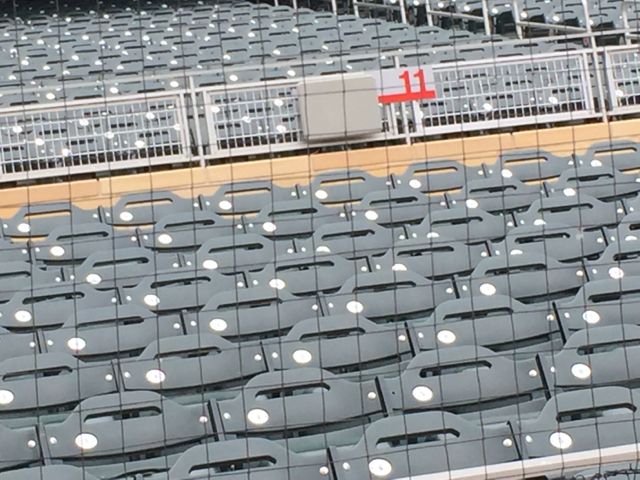
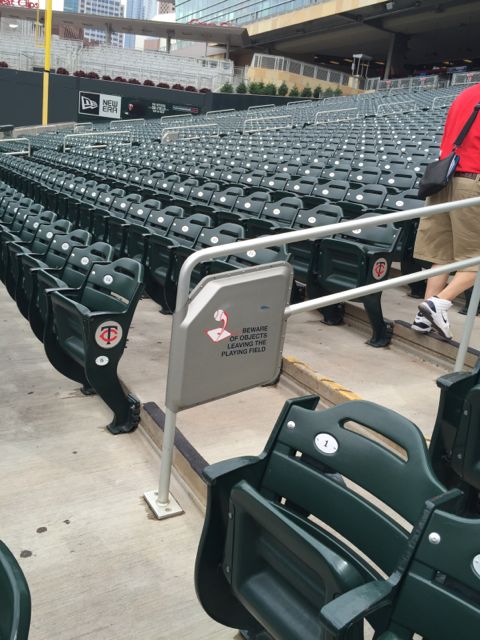
Down near field level, the Wi-Fi was still cranking in the mid-40s, an excellent score for a place that’s normally hard to cover. Looking around I didn’t initially see any APs, with none on the wall facing backwards as some stadiums do it. Then after some more inspection I saw the source of the bandwidth, some well-covered railing APs mounted on the railing behind the 10 or so rows of near-the-field seats. On our way out I saw some of the distinctive AmpThink-designed sideways railing enclosures, for the open-bowl seating not covered by overhangs.

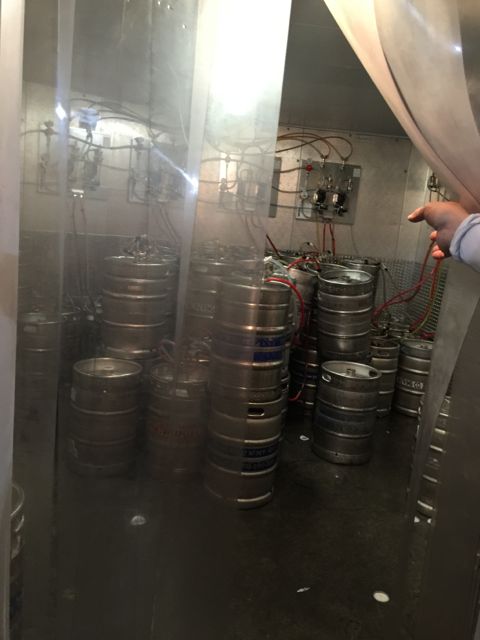
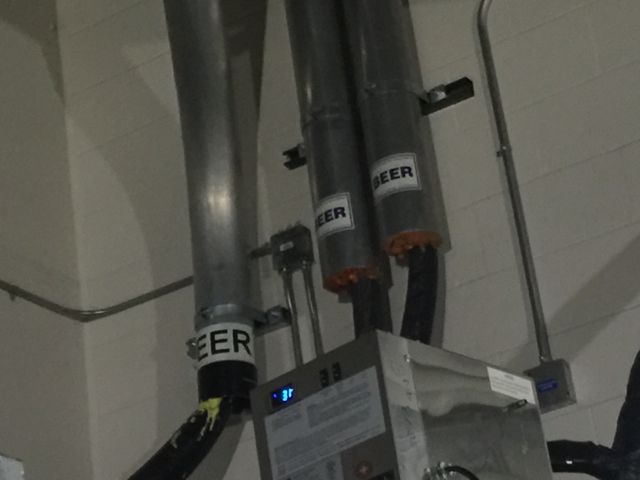
Though ideally we’d love to come back on a game day, from the looks of the physical placements we were able to see and the tests we took, it seems like both the cellular and Wi-Fi networks at Target Field are high performers, good news for Twins fans who need connectivity. And if you need to drown your sorrows or celebrate, there is also an in-stadium beer network, which supplies suds from main keg rooms through conduits that are definitely more tasty than copper or fiber. Prosit!

Credit all photos: Paul Kapustka, MSR

tf7

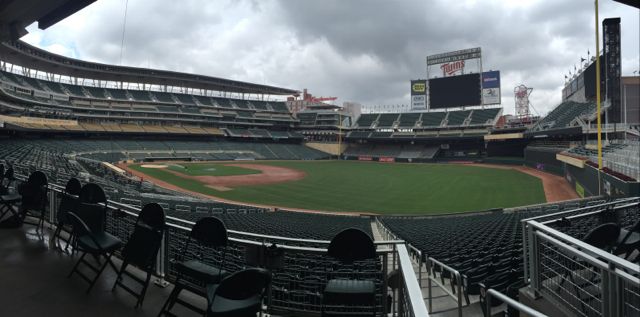
Target Field in panoramic view.

tf8

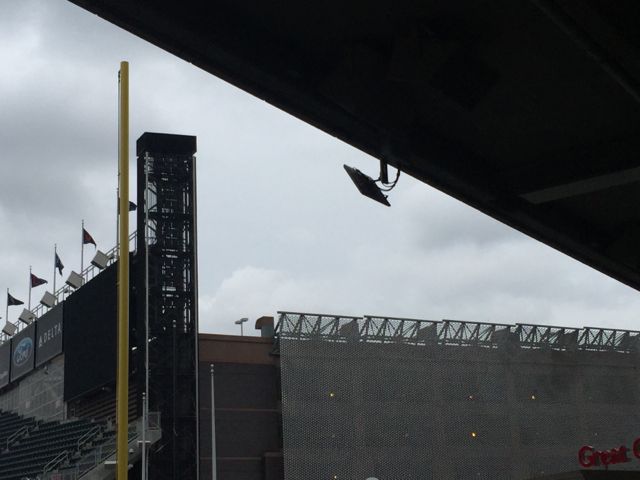
A silhouette of a Wi-Fi antenna. MSR geek art.

tf11

A Wi-Fi AP and some kind of gun antenna. Anyone know what that is?

tf12

You bought it, you put your name on it.

tf14

Another panoramic view, showing how close downtown is.

tf16

The Ford Center is across the street from the back of the park. We’re guessing those macro antennas on top had to be tuned to keep their signals from interfering.

tf18

Not Wi-Fi, but a network worth building for thirsty fans.

tf19

Anyone want to test download speeds of these pipes?

tf20

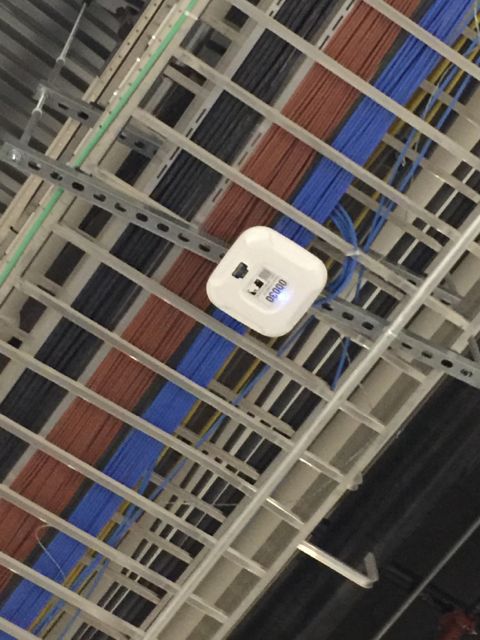
Great quote overheard in Minnesota: “It takes a lot of wire to make a park wireless.”

tf21

Tour guide Rick getting set to take his “team” out on the field. BUT NOT ON THE GRASS!

tf25

The railing APs that cover the field-level seats.

tf26

An AmpThink railing enclosure. Rick didn’t know what those were, but he does now.

tf23

Nice hardware in the Twins’ high-rollers club area.

tf22

Our tour didn’t get to see inside, but we can guess what’s behind that door.

tf27

If you can hit one here, the Twins want to talk to you.

tf24

That’s about as close as MSR will ever get to being in “The Show.” Until next time!

Stadium Tech Professionals: LAST DAY to take our 2016 stadium tech survey!

2015_SoS_thumbIf you are a stadium technology professional working for a school, team or stadium ownership group, it’s that time of year again — we need your participation in our 2016 State of the Stadium Technology Survey. Now in its fourth year of existence, the “State of the Stadium” survey is the only independent, large-public-venue research that charts deployments of stadium technology like Wi-Fi, DAS, Digital Signage and Beaconing, and the use of digital sports marketing tools like Wi-Fi analytics, CRM and social media. If you are part of a stadium operations group and know what goes on inside your venue, take the 2016 survey right now!

Because this is an ANONYMOUS, AGGREGATED INFORMATION ONLY survey, that means that answers aren’t tied to any school, team or individual. Just look at last year’s survey to see how the answers are reported. That also means that all answers are completely confidential, and will not be sold, marketed or otherwise communicated in any way, shape or form outside of the ANONYMOUS TOTALS used in the survey report.

So since we’re trying to find out aggregate numbers — not individual details — it’s just as important for all of us to know who doesn’t have Wi-Fi as well as who does. So even if your school or team or stadium doesn’t have Wi-Fi — and may never have Wi-Fi — you should still TAKE THE SURVEY and add your organization’s information to the total. The more answers we get, the better the data are for everyone.

Survey time is time well spent

And that “everyone” thing leads me to my next point: If you’re a regular reader here you can and should consider the few minutes it takes to complete the survey as a small way of “paying back” to the rest of the members of this fine industry, many of whom make time for the interviews, visits and emails that form the core of all the excellent free content available here on the MSR site and through our long-form reports (and now our podcasts as well). We know you are busy, and that spending time answering a list of technology questions may not seem like the highest priority on your to-do list. But a little bit of your time can really help us all.

That’s because we also know, from our website statistics and from our report download numbers and just from conversations with many of you, that our audience of stadium technology professionals appreciates the honest, objective stories and analysis we provide. (We humbly thank you for continuing to make us a regular reading choice.) And now, by taking the survey, you can help make the site and our work even better, just by adding your team, school or stadium’s technology deployment information into the 2016 State of the Stadium Technology Survey. The more results we get, the better and more informative the survey becomes — and that’s something that’s truly a win-win situation for all involved.

Once again the State of the Stadium Technology Survey will be exclusively delivered first to the attendees of the SEAT Conference, being held this year in Las Vegas, July 17-20. Production of this year’s survey is made possible by the sponsorship of JMA Wireless, and through our partnership with the SEAT Consortium, owners and operators of the excellent SEAT event. All those who participate in the survey will receive a full digital copy of the final report, whether you attend the SEAT Conference or not. As a bonus, all SEAT attendees will get a print version of the survey results. If you haven’t already, you can sign up to attend SEAT.

Final reminder: This survey is meant to be taken ONLY by stadium technology professionals, executives, and team or school representatives who can accurately describe the deployments in place at their organization. It is NOT a survey to be taken by everyone, only by those who have a deployment to describe. If you have any questions about whether you should take the survey or not, send an email to me at kaps at mobilesportsreport.com. Thanks in advance for your time and participation!

Virtual Reality and sports stadiums: What will fans see?

Why are stadiums testing out virtual reality (VR) technology for fans, and what is the goal of giving event attendees a “virtual” experience to go along with the one they’re getting in person? Episode 6 of the Stadium Tech Report Podcast takes a look at VR use in stadiums, with hosts Phil Harvey and Paul Kapustka breaking down the reasons behind the trials, and whether or not VR will succeed or flop in stadium situations. Listen now!

SUBSCRIBE TO THE PODCAST:

Here is the link to the podcast on iTunes!

Please let us know what you think of the podcast in the comments below!

Golden State Warriors’ Wi-Fi network lease part of planned SignalShare assets auction

Screen shot of nGage Fan Feed. Credit: SignalShare

Screen shot of nGage Fan Feed. Credit: SignalShare

The contract covering the operation of the Wi-Fi network at the Golden State Warriors’ Oracle Arena is up for auction, as part of the fallout from a lawsuit involving alleged fraudulent business practices by Wi-Fi deployment concern SignalShare.

UPDATE, 7/7/16: According to the auctioneers, the auction is currently postponed, due to their claims of a bankruptcy filing by SignalShare. More details as we learn more.

SignalShare, which has installed and operated Wi-Fi networks in a number of large sports venues, including arenas used by the Detroit Red Wings, the Houston Rockets, the Sacramento Kings, the University of Maryland and others, is being sued for $7.8 million by NFS Leasing, an equipment leasing company, over a dispute involving allegedly fraudulent leases by SignalShare and SignalShare’s default on an agreement to pay back money obtained through those leases. As part of the ongoing legal proceedings, NFS has apparently scheduled an auction of SignalShare assets it claims, including leases, software code and hardware, for July 14 through Paul E. Saperstein Co., Inc.

So far, Mobile Sports Report has not been able to get any comments on the lawsuit or the auction from SignalShare, NFS, or any of the venues where SignalShare had installed networks. According to the auction site, NFS will make available for auction the contracts between SignalShare and the following list of teams and venues: The Golden State Warriors and Oracle Arena; the Carolina Hurricanes and PNC Arena; the Houston Rockets and Toyota Center Arena; the Detroit Red Wings and Joe Louis Arena; the Jacksonville Jaguars and Everbank Field; the Milwaukee Bucks and Brady Harris Arena; and the Las Vegas Sands Convention Center.

According to sources familiar with some of the SignalShare deals, some of the networks were run under a lease agreement, where the team or venue owners paid SignalShare a monthly fee for operation of the Wi-Fi network, with SignalShare retaining ownership of the actual equipment. According to legal documents filed in the case, NFS provided the financing for many of the existing SignalShare deals, as well as millions more in financing for deals NFS claims never actually existed. So far, there has been no public accounting for where the millions provided by NFS for the allegedly fraudulent leases ended up.

Live-Fi code also up for auction

While the leases are potentially interesting to many possible parties — firms who could take over the network operations, or who might be interested in purchasing the leased equipment — the asset with perhaps the most tangible worth is SignalShare’s “Live-Fi” software, a kind of customer portal program meant to help teams and venues engage more closely with fans and to also facilitate advertising sales. According to legal documents filed in the case, SignalShare owners apparently attempted to transfer the ownership of the Live-Fi code to a subsidiary firm to apparently keep it out of any claim proceedings, a move that was recently blocked when the courts granted an injunction requested by NFS.

Aside from whatever happens in the ongoing legal case and at the auction, for the venues involved the bigger question is more likely what happens to their existing or planned networks. In several of the mentioned deals, including the Jaguars, the University of Maryland and the Detroit Red Wings, SignalShare publicly partnered with Wi-Fi gear provider Extreme Networks; Extreme representatives declined to comment on any specifics of the SignalShare lawsuit.

One common trait shared by several of the SignalShare deals was that they involved Wi-Fi networks at arenas that were scheduled to be replaced or abandoned by the teams in the near future — the Warriors, Kings and Red Wings are all already building or planning to build new stadiums. The SignalShare “leasing” model may have seemed more attractive than spending the potentially millions in upfront costs for a network that may only have been used for a few years. The only thing for sure now is that the future of Wi-Fi at the venues mentioned seems to be on hold until the legal questions around SignalShare’s operations are answered.

St. Louis Cardinals team with MLBAM for Busch Stadium Wi-Fi

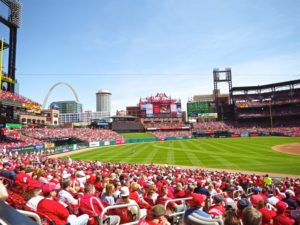
Busch Stadium, St. Louis, home of a new MLBAM Wi-FI network. Credit all photos: St. Louis Cardinals

Busch Stadium, St. Louis, home of a new MLBAM Wi-FI network. Credit all photos: St. Louis Cardinals

Working closely with Major League Baseball’s Advanced Media initiative, the St. Louis Cardinals activated what’s being billed as the league’s largest wireless deployment, at least if you measure by overall square footage. The system went live in a phased introduction the week before Memorial Day, according to Cardinals’ director of IT Perry Yee.

More than 740 Wi-Fi access points were installed to accommodate fans at Busch Stadium, including the AT&T Rooftop, as well the Busch II Infield and the Budweiser Brewhouse rooftop deck across Clark Ave. from the stadium at Ballpark Village, where the Cardinals played til 2005. The Cards’ wireless deployment was part of a $300 million initiative headed by MLBAM to build out Wi-Fi and DAS in all the league’s ballparks, with MLB, wireless carriers and teams all sharing in the costs. (While Busch may be the largest MLBAM deployment, AT&T Park in San Francisco has baseball’s most-dense Wi-Fi and DAS network by antenna numbers; the networks at AT&T Park are run by the Giants and AT&T.)

Yee said the Cardinals experienced relatively few engineering issues, in part because of the relative newness of the stadium. He also credited MLBAM, which took the Cardinals’ design and selected a systems integrator and an equipment vendor (Cisco).

“It’s a real turnkey solution where you submit the blueprint [to MLBAM] and they start locating the APs,” Yee said. “Where we come in is we have the background experience to tell the design team where people congregate and how often different spaces get used.”

Putting Wi-Fi in the railings

Editor’s note: This profile is from our most recent STADIUM TECH REPORT, the Q2 issue which contains a feature story on Wi-Fi analytics, and a sneak peek of the Minnesota Vikings’ new US Bank Stadium. DOWNLOAD YOUR FREE COPY today!

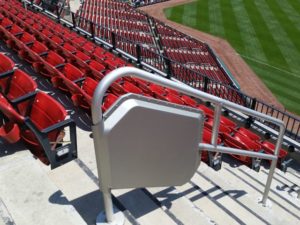
Wi-Fi railing enclosure.

Wi-Fi railing enclosure.

Busch Stadium, with a capacity of 46,861, is also blessed with good lines of sight to the field; the only real obstructions are near the foul poles. That’s great for fans, but creates challenges in that there are consequently fewer structures on which to mount antennas. That meant getting inventive in some areas, like installing Wi-Fi antennas in the handrails, and drilling the conduits from underneath seats to keep trip hazards and visual distractions to a minimum.

“Over in Ballpark Village, we had brick on the outside of building so we had to be careful — that was an issue for the electricians to figure out,” Yee said, quickly adding that the electricians on projects like these rarely get the recognition they deserve. “The designer can say where the antennas go, but the electricians have to figure out how to get power to that spot and do it in a manner that fits the building,” he said.

Cardinal fans trying to access the network hit a gated page that asks which cell carrier they use and also to accept terms and conditions; the Cardinals can then track usage and capacity by carrier and take that information back to the three carriers with DAS service in Busch Stadium: AT&T, Sprint and Verizon Wireless. “If Sprint, for example, notices they have lot more customers than anticipated, it might be time for them to review their capacity,” Yee said.

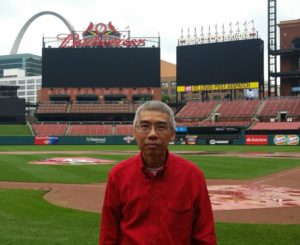
Cards director of IT Perry Yee

Cards director of IT Perry Yee

There’s also an option on the gating page for users to share their email if they want to subscribe to the Cardinal newsletter, Yee added.

MLB app the center of activity focus

The Busch Stadium Wi-Fi network is new enough that MLBAM still is in the process of handing over management and oversight to the Cardinals’ organization; that makes it hard to track certain numbers — like what the budget was the for the project and how much money each entity contributed, numbers which MLBAM has not revealed for any of the many deployments it led throughout the league.

The Cardinals also aren’t releasing any official throughput or usage thresholds yet. Yee said he has seen speeds of 100 Mbps up and down and up on his Samsung S5 phone during more exciting parts of a recent game when fewer users were online. That number dipped to 20-30 Mbps during quieter parts of game. “It was a really good game — for half an hour no one was on the Wi-Fi, then when the score went in one direction I began to see speeds going down as people got online,” Yee said.

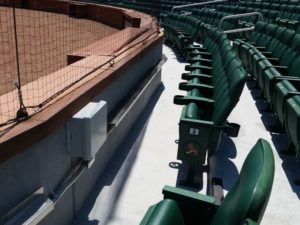
Lower level seats are covered with APs that shoot backwards into the stands.

Lower level seats are covered with APs that shoot backwards into the stands.

The Cardinals are looking to use the league’s Ballpark mobile app as the focal point for digital ticketing and inseat ordering plans. One hurdle to inseat ordering isn’t technical; it’s making sure the concessionaire can receive the data. “There’s lots of backend components to establish and flesh out before it becomes a real thing — lots of logistics to make these things happen,” Yee said.

The Cardinals have been using Bluetooth-based beacon technology for a couple years now. “We use it at our gates to greet people and it works via the Ballpark app,” Yee said. For now, the beaconing only works with iPhones; they’ll add support for Android devices at some point. But Yee foresees using beacon technology all around Busch Stadium at points of interest like the Stan Musial statue, providing information about who he was, what he did, to fans in proximity of the monument.

The Cardinals are still considering whether to deploy ambassadors in the stands during games to help people with connectivity issues and other questions. Longer term, they’re looking at geofencing with the concession areas or team store for specials and sale items — “Hot dogs on sale for this inning,” Yee mused. That’s way off in the future, the Cardinals’ IT director added.

In the meantime, the focus will be on “infrastructure that allows fans to see more and do more that makes the games more enjoyable,” Yee said.