Verizon: MNF a ‘Big Draw’ for NFL Mobile App

The ability to watch Monday Night Football on your phone — like tonight’s game between the Philadelphia Eagles and the Chicago Bears — has drawn a lot of new fans to Verizon Wireless’s NFL Mobile app, according to a company executive in charge of the service.

“The NFL Mobile app is very popular, and we continue to see growth [in user numbers],” said Mitch Dornich, Verizon Wireless marketing director for entertainment and sponsorships, in a phone interview. Though Dornich would not disclose updated subscriber numbers, last year Verizon reportedly had at least 4.5 million of its wireless customers using the NFL Mobile app — a number that has almost certainly grown thanks to the addition of live Monday Night Football games to the app’s premium-service tier this season.

“Last year, we had Thursday night games, Sunday night games, the NFL Network shows and the RedZone,” said Dornich. “This year we added Monday Night Football and it’s been a big lift. RedZone as a companion device during other broadcasts and Monday Night Football seem to be our biggest draws.”

Audio Broadcasts Also Popular

Though Verizon’s promotions of the NFL Mobile app center around live video and the company’s new, fast 4G LTE network, it is good old audio broadcasts that account for another big chunk of NFL Mobile use.

“Audio consumption is very high, probably because it’s the perfect companion if you’re doing something like driving, where you can’t watch the screen,” Dornich said. With both home and away audio broadcast choices NFL Mobile can satisfy fans of either side of any NFL contest, and couples the live audio with instantly updated text play-by-play.

According to Dornich, many Verizon wireless customers may start out with the basic free version of the NFL Mobile app, which supports features like the audio broadcasts and play-by-play, and then upgrade to the premium version after getting a taste of the video choices available. Verizon added some video-on-demand features, like in-game highlights, to the basic package this season and Dornich guessed the appetizer has enticed many fans to upgrade for the full meal deal.

For Verizon customers with 3G phones that support video (like the iPhone 4 or the iPhone 4s) the premium NFL Mobile package requires a $10 per month “Verizon Video” fee in addition to any other data plan.

“This year we put the VOD into the basic package so people could see the value,” Dornich said. Verizon is also waiving the $10 monthly fee for the rest of the 2011-12 season for customers who purchase 4G LTE phones. In and of itself, the NFL Mobile app is a bit of a promotional tool for the 4G LTE network, Dornich said.

“It’s really good for us, because [the NFL Mobile app] helps us differentiate our network from the competition,” Dornich said. “It shows customers what the network is capable of.”

Technical Challenges: Getting Good Video to Handsets

One of the biggest challenges for Verizon is optimizing the video streams to the many different handsets that are supported, which include Android smartphones as well as a long list of BlackBerry devices. “It’s not just about delivering the highest bit rate, since you may deliver something that a handset processor could choke on,” Dornich said. “The challenge for us is how to optimize the stream, so it’s right-sized for a particular handset.”

Though the NFL Mobile app is not yet supported on what is fast becoming the couch potato’s favorite companion device — the Apple iPad and its tablet imitators — Dornich said to “stay tuned” for news about iPad and NFL Mobile.

Verizon also takes care to alert potential NFL Mobile heavy users that watching a lot of video on your phone may be hazardous to the health of your monthly data plan. “We are always pretty clear up front that high usage [of NFL Mobile video] may impact your data plan,” Dornich said. One way fans can keep data consumption under control is to seek out Wi-Fi hotspots when they know they are going to watch a lot of video, Dornich said.

Verizon Wireless, which also has mobile apps for fans of the National Hockey League and IndyCar auto racing, said it is happy with the results of its $720 million deal with the NFL, which gives Verizon exclusive rights to cellphone viewing (though fans with other paid packages, like DirecTV’s Sunday Ticket or the Slingbox can also watch their services via a mobile connection).

“We’re very happy with the agreement,” Dornich said. “Our expectations have been validated.”
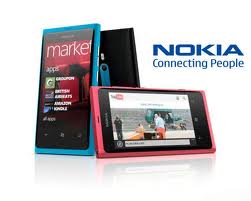
Nokia Teams with Microsoft in Smartphone Space — But Not in U.S. Yet

The two companies seek to establish themselves in the smartphone space

Finnish handset manufacturer Nokia has teamed with Microsoft for its latest generation of phones, a move that starts moving Microsoft’s smartphone operating system further into the mainstream market.

The move comes as the two partners seek to establish themselves as major players in the smartphone market. Nokia has been seeing very strong erosion of its position in the last year, dropping from owning 33% of the smartphone market in the third quarter last year to 14% this year. Microsoft, while garnering solid reviews for its OS, has not seen that translate into wide scale adoption.

The two have been working together for eight months and Microsoft’s Windows 7is a major upgrade for Nokia over its aging Symbian operating system, one that was failing to match the latest features of the rival Android and iOS platforms.

However Microsoft, never a power in the smartphone OS, has also seen its share in this space decline. A recent report by analytic firm ComScore showed Microsoft’s share drop from 7.5% to 5.8% between March and June 2011.

The two phones in this release are the Nokia Lumia 710 and the Nokia Lumia 800, with the 810 being the model targeted at the Apple iPhone and high end Android offerings. Currently available in Europe the smartphones are slated for rollout in Asia later this year. Nokia said that it is in talks with all four major US carriers and intends to release them in the US in the future.

The Lumia 800 has an 8-megapixel camera and a bright 3.7-inch OLED display that’s slightly larger than the screen in the iPhone. It has 16GB of storage and the phone is powered by a single core Qualcomm 1.4GHz processor. It includes an 8 megapixel rear facing camera.

The entry level Lumia 710 features the same processor and comes with 8GB of storage, a 5 megapixel rear facing camera and 3.7-inch WVGA display. The smartphones will run on high-speed 4G networks that use a technology called LTE, or Long Term Evolution, as well as on older 3G networks.

The Windows operating system still appears to be catching up to its rival iOS and Android rivals but is now a much fuller featured OS and includes cut and paste and other features that show it is on the road to parity. However it is a long road.

The Windows 7 OS uses “smart tiles” that show information about an app without needing to launch the app. It comes with a range of apps built in- People Hub, Pictures Hub, Microsoft Office Hub, IE9 Mobile, Xbox Live, and 25GB SkyDrive storage. There are currently tens of thousands of apps for Windows 7 but that seriously trails Android and iOS apps, which now number roughly half a million each.

This looks to be a good first effort for the pair but they still have a ways to go, particularly in getting both more features in the OS and a greater app market. Many top sports sites make no mention of Windows support at this time. However with the massive number of Microsoft developers out there this looks to be a relatively easy issue to fix.

Monday’s Tech Tidbits-AT&T loves Wi-Fi!

Looking for a Wi-Fi hotspot? Well according to AT&T the number has been growing by leaps and bounds as users made 301.9 million AT&T Wi-Fi connections in the third quarter. The biggest growth areas? Stadiums and hospitality facilities.

Motorola Mobility seeks to reestablish Razr with the new Droid Razr, an LTE Android smartphone expected to be released next month. Can the company regain its pre-iPhone glory?

I feel old this morning. Apple’s iPod turned 10 years old last Sunday.

Google delivered Ice Cream Sandwich last week replete with a host of features-the first product with the new OS is Samsung’s Galaxy Nexus. I wonder how developers like it compared to the rival iOS or earlier Android versions?

Looks like Samsung’s Galaxy Tab 7 Plus tablet is headed to the US. Expect it to cost around $400 for the 16GB version and be available Nov 13th from Best Buy and Amazon, according to Gizmodo.

Apple’s iPad market share has peaked. Apple’s iPad market share is growing. Who do you believe? Speaking of bad iPad news stories are emerging that you can partially hack an iPad2 with a simple magnet.

Microsoft says that it will target the mid-market smartphone segment with future releases of its Windows-based phones. Rumor is that a platform code-named “Tango” is in the works, following up on its current “Mango” release.

Continued bad news for BlackBerry– a study by Enterprise Management Associates shows that 30% of RIM users in enterprises with 10,000 employees or more plans to switch to a different platform.

AT&T takes on Verizon on Washington Capitals’ home ice

In a sign of the times, AT&T announced Wednesday significant improvements to mobile broadband coverage at Washington, D.C.’s Verizon Center. The announcement underscores the growing importance of providing superior connectivity around sports facilities.

AT&T will likely use added capacity as a way to convince Washington Capitals, Washington Mystic and currently-locked-out Washington Wizards fans to keep using AT&T services to get a 360-view of the live sports experience, or defect to AT&T if their current mobile carrier is substandard.

That AT&T has brought its in-stadium network improvement push to the Verizon-branded Verizon Center with better connectivity is a cagey move by AT&T.

Rob Forsyth, greater Washington/Baltimore area vice president and general manager for AT&T, said:

We’re committed to our investment in the local wireless network, and providing enhanced wireless coverage at major sports and entertainment venues is just one way.

There are interesting wrinkles to the AT&T upgrade. The owner of Verizon Center is Ted Leonsis, who was an pioneer in creating digital content during the early days of AOL.  Now owner of the Washington Capitals, Leonsis is also one the most wired sports executives in America. Whether AT&T will seek to buy favor with Leonsis as the sports viewing experience shifts toward social media and watching broadcasts on smartphones and iPads remains to be seen, but giving NHL fans really good digital throughput when they go to watch their 4-1-0 Capitals can’t hurt.

How Sports Fans May Benefit

If Verizon chooses to reciprocate, fans in Oklahoma City, San Antonio, Chattanooga, Tenn. and San Francisco are most likely to benefit. In all of those markets, AT&T owns sole naming rights to stadiums, including the home of the San Francisco Giants and the San Antonio Spurs. Though AT&T probably doesn’t need Verizon to help out inside the Giants’ ballpark, Verizon does have its new speedy 4G LTE service active in San Francisco, while AT&T’s LTE service is not yet there.

Verizon has sole naming rights at the Verizon Wireless Center in Mankato, Minn. and the Verizon Wireless Arena in Manchester, New Hampshire.

Sprint owns sole naming rights only at Sprint Center in Kansas City, which currently does not house a major professional sports team.

Verizon Using 4G LTE, not Wi-Fi, for Stadium Upgrades


Though putting dedicated Wi-Fi networks inside stadiums and other large gathering areas is all the rage this year, Verizon Wireless seems to be taking a different path and is instead adding more cell towers with its 4G LTE cellular service to handle the bandwidth crush brought on by phone-wielding fans.

According to two recent press releases Verizon Wireless is beefing up its 4G coverage by adding four cell towers around the football stadiums at both Notre Dame and the University of Wisconsin, to better handle cell traffic at each place on game days.

Though the self-serving press releases sound wonderful — who doesn’t want better cell coverage? — the caveat in this case is that you may only benefit from the improvements if you have one of Verizon’s newer, expensive 4G phones. Other carriers, most notably Verizon’s chief competitor AT&T, seem to be leaning in favor of adding Wi-Fi coverage to stadium sites, perhaps because A) it’s typically easier and cheaper to put in Wi-Fi and B) it can accomodate all types of smartphones since most advanced handsets these days also come with Wi-Fi connectivity built in.

The caveat for the AT&T Wi-Fi announcements is that to benefit you must already be an AT&T customer, meaning that many fans might not see any improvements. There is some talk about AT&T possibly allowing non-customers to use their public Wi-Fi hotspots for a daily fee — such as the one AT&T just turned on in downtown Palo Alto. More on this tomorrow, when we are scheduled to speak with some Ma Bell types at an event in that very university town.